Instruments Review
Akai Professional MPC XL Review: Standalone Dawless Powerhouse
The Akai Professional MPC XL is a standalone production center with 3D-sensing MPCe pads, a 10.1 inch touchscreen, and professional studio-grade connectivity. This research review covers what the listing confirms and the weight and power details it leaves unstated.
Our Verdict
Research Score 89/100The Akai Professional MPC XL is a genuinely flagship-level standalone production center, running MPC3 OS on an 8-core processor with 16GB RAM and 256GB SSD storage, with no computer required at all. The MPCe expressive pads, 3D-sensing with 4 quadrants each, give finger drummers and beatmakers real performance depth, backed by a 10.1 inch touchscreen and professional connectivity including mic preamps, phantom power and CV/Gate outputs. A substantial bundled plugin and sample collection adds further value. The listing does not state weight or specific power supply details. At a premium price tier, this is a strong choice for serious dawless producers.
Editorial research score based on published specifications and documented features, not a customer rating or lab test.

Akai Professional
Akai Professional MPC XL
Best for: Beatmakers and producers who want a fully standalone, dawless production center with expressive 3D-sensing pads and professional studio-grade connectivity.
Skip it if: You specifically need piano-style keys for playing melodies and chords, since this is a pad based workflow without a keyboard.
Check Price on AmazonWe may earn a commission at no extra cost to you.
Listing verified: November 2026
Who Should Buy It
Buy it if
- Beatmakers and finger drummers who want expressive, 3D-sensing pads as their primary input
- Producers who want a fully standalone, dawless production workflow
- Studios that need professional-grade connectivity, mic preamps, CV/Gate and extensive MIDI I/O, in one unit
- Buyers who want a substantial bundled plugin and sample library included at purchase
Skip it if
- You need piano-style keys rather than a pad based workflow
- You do not need standalone, computer-free operation and only want a simple USB MIDI controller
- You are not ready for a premium price tier investment
Key Specifications
| Keys | No piano-style keys; this is a pad based standalone production center |
| Key type | Not applicable, since this unit has no keyboard keys |
| Pads | MPCe expressive pads using 3D-sensing technology with 4 quadrants per pad, enabling morphing, looping, layering and effect control |
| Knobs and faders | 16 Q-Link knobs with performance-control OLEDs, an assignable touch-strip, 16 RGB function buttons for the step sequencer, and XL Channel Command for instant mixing access |
| DAW integration | Operates standalone on MPC3 OS with no computer required, with full MIDI and CV integration; can also function as a controller within a DAW setup |
| Bundled software | A professional collection of instruments and effects including Fabric XL, OPx4, Studio Strings and Tubesynth, plus genre-focused MPC expansion packs and sample content, along with the MPC3 Pro Pack featuring AIR Pro plugins such as Reverb Pro, Visual EQ4, Fabric Select and Utility |
| Connectivity | 2 XLR/TRS combo inputs with mic preamps and phantom power, 2 instrument inputs, 8 line outputs, USB-C for 24 channels of audio I/O and 32 channels of MIDI I/O, 16 CV outputs via 8 stereo CV/Gate outputs, plus Wi-Fi and Bluetooth |
| Power | Not published in listing as a specific power supply detail |
| Weight | Not published in listing |
| Included accessories | Not published in listing beyond the bundled software and plugin collection |
Overview
The Akai Professional MPC XL is positioned in its listing as a standalone powerhouse, running the manufacturer's MPC3 OS on a Gen 2 8-core processor with 16GB RAM and 256GB of internal SSD storage, meaning this unit requires no connected computer at all to function as a complete production center.
The listing packs in a remarkable amount of specific, checkable detail, from the 8-core processor and RAM figures to the exact plugin titles included in the bundle, which gives this review considerably more confirmed technical ground to stand on than many thinner listings in this research series.
At the center of the physical design are MPCe expressive pads, described as using 3D-sensing technology with 4 quadrants per pad, enabling morphing, looping, layering and effect control with a level of performance nuance well beyond a basic velocity-sensitive pad.
This unit is clearly aimed at serious beatmakers, producers, synthesists and finger drummers who want a reliable studio centerpiece capable of running an entire dawless workflow, rather than casual users looking for a simple USB controller.
Keys, Pads and Feel
This unit has no piano-style keys at all, built entirely around its pad and touchscreen interface rather than a keyboard, which is an important distinction for buyers assuming an MPC branded product always includes keys.
The MPCe pads are the standout input method, with the listing specifically describing 3D-sensing technology and 4 quadrants per pad, allowing a performer to morph, loop, layer and control sounds and effects with considerably more expressive range than a standard on-off, velocity-only pad design.
This level of pad sophistication is more commonly associated with flagship production hardware than entry level controllers, and the listing's framing around dynamic beatmaking and production supports treating these pads as a genuine performance instrument rather than a basic trigger surface.
Buyers coming from a simpler, velocity-only pad controller should expect a real learning curve exploring what each quadrant and sensing axis actually does, since this design rewards deliberate practice rather than offering an identical, simplified experience to a basic beat pad.
Knobs, Faders and DAW Integration
The listing confirms 16 Q-Link knobs equipped with performance-control OLEDs, giving real-time visual feedback on each knob's current function and value, a notably more advanced control scheme than simple unlabeled potentiometers.
An assignable touch-strip and a 16-button RGB step sequencer round out the control surface, alongside what the listing calls XL Channel Command, offering instant access to mixing functions without navigating through nested touchscreen menus.
While this unit operates standalone without requiring a DAW, the listing confirms full MIDI and CV integration, meaning it can also function as a controller or hub within a larger studio setup that includes a computer and traditional DAW software.
That dual identity, fully standalone or deeply integrated, is a meaningful practical advantage for a producer whose workflow might change over time, since the same hardware investment covers both a dawless rig today and a hybrid studio setup later.
Software, Sounds and Features
The bundled software collection is substantial and specifically named, including Fabric XL, OPx4, Studio Strings and Tubesynth, alongside genre-focused MPC expansion packs and sample content, giving buyers a genuinely usable production library rather than a token few presets.
The included MPC3 Pro Pack adds further AIR Pro plugins, specifically Reverb Pro, Visual EQ4, Fabric Select and Utility, extending this unit's processing capability well beyond its core sequencing and sampling functions.
The listing also states this unit supports up to 32 plugin instruments and 16 audio tracks with 256 simultaneous voices, which are genuinely substantial figures for a standalone, computer-free production system, comparable to what many laptop-based sessions handle with far more processing overhead.
- MPCe expressive pads, 3D-sensing, 4 quadrants each
- 10.1 inch HD multi-gesture touchscreen
- 16 Q-Link knobs with OLEDs
- 32 plugin instruments, 16 audio tracks, 256 voices
- Mic preamps, phantom power, CV/Gate I/O
- Wi-Fi and Bluetooth connectivity
Build, Design and Portability
The listing highlights a 10.1 inch HD multi-gesture touchscreen with tilt as a central design element, suggesting a unit built around direct, tactile interaction with its own display rather than relying purely on a connected computer monitor.
One-to-one function buttons are specifically mentioned, meaning many common functions have a dedicated physical button rather than requiring menu diving, which generally speeds up workflow for a performer working live or under time pressure in the studio.
The listing does not publish specific weight or chassis dimensions, so buyers planning studio space or transport around this unit should confirm those figures with Akai's own documentation, though the comprehensive I/O and internal storage suggest a substantial, desktop-anchored unit rather than an ultra-portable one.
Connectivity and Power
Connectivity on this unit is genuinely professional-grade, with the listing confirming 2 XLR/TRS combo inputs featuring mic preamps and phantom power, 2 dedicated instrument inputs, and 8 separate line outputs, giving this unit real studio interface capability beyond pure MIDI control.
USB-C handles 24 channels of audio I/O and 32 channels of MIDI I/O, while 16 CV outputs delivered through 8 stereo CV/Gate connections let this unit integrate directly with modular synthesizer setups, a genuinely advanced connectivity feature for a production controller.
Wi-Fi and Bluetooth are also confirmed, adding wireless convenience, though the listing does not state specific power supply requirements or whether this unit runs on battery power, mains power only, or both.
Setup and Daily Use
Setting up this unit for standalone use involves powering it on and working directly within MPC3 OS, with no computer or DAW required, which the listing frames as a core selling point for dawless producers who want to avoid screen fatigue from a laptop.
Daily use benefits from the one-to-one function buttons and the touchscreen's multi-gesture support, letting a producer move quickly between sequencing, mixing and sound design tasks without extensive menu navigation.
For producers who do want to integrate this unit with a computer-based studio, the extensive MIDI, CV and USB-C audio I/O give genuine flexibility to use the MPC XL as either a complete standalone system or as a deeply integrated hub within a larger setup.
Who Should Buy It
This unit suits serious beatmakers, finger drummers and producers who want a fully standalone production center with expressive, advanced pads and professional studio connectivity, rather than buyers looking for a basic entry level controller.
It is a weaker fit for buyers who specifically need piano-style keys for playing melodies and chords, since this unit is built entirely around its pad and touchscreen interface.
Dawless performers and live electronic musicians will find the combination of CV/Gate outputs and standalone operation particularly valuable for integrating hardware synthesizers without a laptop on stage.
Studios investing in a single, comprehensive production centerpiece will find the mic preamps, phantom power and extensive I/O reduce the need for a separate audio interface alongside this unit.
Alternatives Worth Considering
Buyers who specifically need piano-style keys should look at a keyboard controller instead of this pad based standalone unit.
Buyers who do not need standalone, computer-free operation and only want a simple USB MIDI controller for use with an existing DAW should consider a smaller, less expensive pad controller.
Buyers who need confirmed weight and power supply details before purchase should check Akai's own specification sheet for this model.
Buyers on a tighter budget who do not need CV/Gate outputs or mic preamps might consider a smaller MPC model within the same product family.
Buyers who primarily want a pad controller to use alongside an existing full DAW rig, rather than a standalone replacement for one, could also look at a lighter weight pad controller without the onboard processor and storage this unit carries.
Verdict
The Akai Professional MPC XL delivers a genuinely flagship-level standalone production experience, backed by specific, checkable technical detail across its processor, memory, pads, touchscreen and connectivity.
The unpublished weight and power supply details are minor gaps against an otherwise remarkably detailed listing, and buyers who need those confirmed should check Akai's own documentation.
For serious dawless producers and finger drummers who want a complete, professional-grade production center, this is one of the strongest, most thoroughly specified recommendations in this research series, justifying its premium price tier.
Buyers weighing this against a laptop-based setup should remember the genuine appeal here is independence, no boot time, no software updates mid-session, and no screen fatigue, which for many working producers is worth as much as any single specification.
Strengths and Limitations
Strengths
- Standalone MPC3 OS with an 8-core CPU, 16GB RAM and 256GB SSD, no computer required
- MPCe expressive pads with 3D-sensing technology and 4 quadrants per pad
- 10.1 inch HD multi-gesture touchscreen with tilt
- Professional connectivity including mic preamps, phantom power, 8 line outputs and CV/Gate outputs
- Supports up to 32 plugin instruments, 16 audio tracks and 256 simultaneous voices
- Comes with a substantial bundled plugin, instrument and sample collection
Limitations
- No piano-style keys, since this is a pad based workflow only
- No stated weight or specific power supply details
- Premium price tier representing a significant investment
- No stated included accessories beyond the bundled software
How We Scored It
Scores reflect published specifications, documented features and value against the alternatives below. They are editorial research scores, not laboratory measurements.
Alternatives to Consider

Yamaha Montage M6 61-Key
Professional synth players and producers who want a flagship 61-key instrument with massive polyphony, analog style synthesis and a matching software plugin.
Read the Yamaha Montage M6 61-Key review →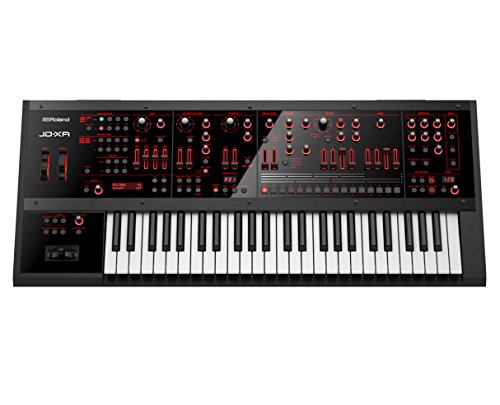
Roland JD-XA 49-Key
Synthesists who want genuine discrete analog voices and a digital engine in one 49-key crossover instrument with deep real time filter control.
Read the Roland JD-XA 49-Key review →
Pioneer DJ DDJ-FLX10 4-Channel
Mobile and open-format DJs who want a 4-channel club style controller with live stem separation and lighting control from one unit.
Read the Pioneer DJ DDJ-FLX10 4-Channel review →Head-to-Head Comparisons
- Akai Professional MPC XL vs M-Audio Oxygen 61 MKV MIDI Compare →
Questions Buyers Ask
Akai Professional MPC XL
See the current listing, price and included accessories.
About This Review
Mandrillis Team
The Mandrillis editorial team researches and compares audio and music gear using manufacturer documentation, verified specs and real buyer feedback, so you can make a confident purchase without wading through marketing claims.
Read our full research methodology.