Instruments Review
Behringer 1016 Review: Compact Eurorack Noise Source
The Behringer 1016 Dual Noise Random Generator is a budget Eurorack module that provides dual noise and random voltage. The listing lacks many specifications, but the 16HP width and classic 2500 series look are attractive for modular users.
Our Verdict
Research Score 58/100The Behringer 1016 Dual Noise Random Generator is a specialized Eurorack utility, not a MIDI keyboard controller. The listing provides only package dimensions, weight, 16HP width, and a budget price tier. That is enough to understand what the product generally does, but not enough to make a fully informed purchase. The missing specs are a real limitation. For an experienced modular user, this module could be a low cost way to add dual noise and random voltage to a rack. The 2500 series aesthetic is a bonus. For anyone expecting a plug and play controller with keys or DAW integration, this is the wrong product. On paper, the value depends entirely on your tolerance for incomplete information. The final score reflects the limited published data and the product category mismatch with the requested controller review. It earns points for concept and budget price, but loses points for the absence of key specifications. If you need a documented, ready to use Eurorack noise source, verify the details elsewhere before ordering.
Editorial research score based on published specifications and documented features, not a customer rating or lab test.

Behringer
Behringer 1016 Dual Noise Random Generator
Best for: Eurorack builders who want a budget dual noise and random voltage generator with a classic 2500 series look.
Skip it if: You need a MIDI keyboard controller with keys, pads, USB, and software integration.
Check Price on AmazonWe may earn a commission at no extra cost to you.
Listing verified: October 2026
Who Should Buy It
Buy it if
- Experienced Eurorack users needing random CV
- Budget minded modular synth hobbyists
- Behringer 2500 series collectors
- Anyone wanting dual noise sources without extra features
Skip it if
- You want a plug and play MIDI controller
- You need detailed published specs before buying
- You are new to Eurorack and need documentation
Key Specifications
| Keys | None, this is a Eurorack module |
| Key type | Not applicable |
| Pads | None, this is a Eurorack module |
| Knobs and faders | Not published in listing |
| DAW integration | None, this is a Eurorack CV module |
| Bundled software | Not published in listing |
| Connectivity | Eurorack power and patch points, specific count not published |
| Power | Eurorack power, current draw not published |
| Weight | 0.73 pounds package weight, module weight not published |
| Included accessories | Not published in listing |
Overview
The Behringer 1016 Dual Noise Random Generator is a Eurorack module first and a controller category product second. The listing title calls it a Dual Noise/Random Voltage Generator Module for Eurorack, which tells you it is meant to sit in a modular case and produce noise and random CV signals rather than send MIDI note data. That immediate distinction is useful for anyone who found this product while searching for a keyboard controller. It has no keybed, no drum pads, and no USB MIDI port. Instead, it offers a specialized tool for modular synthesis.
The listing gives a small set of concrete facts: the module is 16HP wide, the package dimensions are approximately 6.26 inches long, 3.43 inches wide, and 1.93 inches tall, and the package weight is 0.73 pounds. The price tier is listed as budget. However, nearly every other specification is missing. The number of jacks, the knob functions, the power draw, and the included accessories are not published. This creates a review that can describe the product category and the few known facts, but cannot verify many details on paper.
Keys, Pads and Feel
Because the Behringer 1016 is not a keyboard controller, it has no keys and no pads. The feel of a traditional MIDI controller is therefore absent. A buyer looking for velocity sensitive keys or trigger pads will be disappointed. The product is designed to be patched with cables, so the interaction is more about turning knobs and connecting patch points than playing notes.
The faceplate likely includes some combination of knobs, switches, and jacks, but the listing does not describe them. The 2500 series styling suggests a utilitarian, vintage influenced panel, but the exact control count and spacing are not published. Without that detail, we cannot comment on the tactile feel or ergonomics. The 16HP width does give a rough idea of the front panel area, but not the control density.
For a Eurorack user, the feel of a module is often secondary to its function. Still, a dual noise and random voltage generator can be heavily in-person during a patch, so the quality of its pots and jacks matters. The listing's silence on these points is a drawback. Buyers have to rely on Behringer's general reputation for budget modules rather than a published specification.
Knobs, Faders and DAW Integration
This module does not offer DAW integration in the traditional MIDI controller sense. There is no USB connection, no transport control, and no DAW control template listed. It generates analog signals, which means it cannot directly trigger software instruments without a separate interface. Anyone expecting to map knobs to a DAW will need another product entirely.
The number of knobs and faders is not published. A dual noise and random voltage generator would typically have knobs for noise level, random rate, and output scaling, but the listing does not confirm this. This missing detail makes it hard to know how much in-person control you actually get. The missing fader count is less of an issue since faders are rare on Eurorack utility modules, but knobs and switches remain important.
For modular users, the lack of DAW integration is normal. The module is meant to work within an analog or hybrid rack. It could be used to modulate a DAW connected audio interface if that interface can send CV, but that is an advanced setup. The listing does not discuss any such compatibility. The practical takeaway is that this is a hardware CV module, not a controller for software.
Software, Sounds and Features
There is no bundled software mentioned anywhere in the listing. Unlike many MIDI controllers that include a DAW, virtual instruments, or sample packs, this product is a hardware utility. Its sounds are not presets but analog noise colors and random voltage fluctuations. These are raw materials for synthesis, not polished patches.
The feature set is minimal on paper. It is a dual noise and random voltage generator in a 16HP module. That means you get two noise sources and some form of random voltage output, but the exact outputs are not specified. The listing does not say whether the noise is white, pink, or has adjustable filtering. That is an important piece of information for a module built around noise.
Without a detailed feature list, evaluating the module's value is difficult. The budget price tier suggests it is intended as an affordable entry point, but a missing manual or spec sheet means the buyer must do outside research. The included accessories are also not listed, so cables, screws, or a power ribbon may or may not be in the box.
- Dual noise and random voltage generation in one 16HP module
- Eurorack format with analog CV, no USB MIDI
- No bundled software or DAW integration
- Listing does not specify patch points, noise types, or voltage ranges
- Budget price tier for entry level modular use
Build, Design and Portability
The package weight is listed at 0.73 pounds, which suggests a lightweight module, but that weight includes packaging, not just the module. The dimensions given are also the package dimensions, not the faceplate or module depth. Build quality cannot be verified from these shipping details alone. Behringer's 2500 series typically uses a metal front panel and standard PCB construction, but the listing does not state materials.
The design follows the 2500 series aesthetic, which draws from the classic ARP 2500 synthesizer. That look includes a straightforward panel with clear labeling and a vintage industrial character. For users who want a cohesive rack of Behringer 2500 modules, this unit would fit visually. The 16HP width is not the smallest option, but it is compact enough for most performance cases.
Portability is not a primary concern for a Eurorack module because it lives in a case. The module itself is small and light, so it would not add much burden to a portable rack. However, since the module depth is not published, it is difficult to know if it will fit shallow skiff cases. This is another missing specification that affects build and design practicality.
Connectivity and Power
The only connectivity implied by the listing is Eurorack power and patch points on the front panel. The listing does not specify the number of patch points, their types, or their placement. It also does not state the current draw on the +12V, -12V, or +5V rails. For someone planning a power budget, this is a critical gap.
Power is supplied through a Eurorack bus board via a ribbon cable, but the orientation and connector type are not published. Most modern modules use a standard 16 pin to 10 pin cable, but you should verify before connecting. The listing's package dimensions and weight do not reveal anything about the power header or power consumption.
The module's analog nature means it likely only needs +12V and -12V, with no +5V requirement, but that is an assumption. Without the published current draw, users cannot accurately add this module to a case that is near its power limit. This is a significant omission for a product that is otherwise aimed at budget minded Eurorack builders.
Setup and Daily Use
Setting up a Eurorack module typically means screwing it into a case rail, connecting the power ribbon, and patching cables. The listing does not include a manual or mention polarity protection, but Behringer modules usually have shrouded headers to prevent reverse power connection. A beginner may find the lack of documentation frustrating, while an experienced user will likely treat this as a straightforward install.
In daily use, a dual noise and random voltage generator is a workhorse utility. It can provide noise for hi hat synthesis, snare drums, or wind sounds. The random voltage output can drive sample and hold modules, filter cutoff, or oscillator pitch for generative patches. The module's simple concept means it may not be the center of attention, but it can add life to many patches.
The 2500 series heritage suggests the module will pair well with other Behringer 2500 modules. The front panel likely uses the same design language, making it easy to use in a themed rack. However, the missing patch point details make daily use harder to plan. You may need to consult the official manual or community resources before buying.
Who Should Buy It
This module is best for a Eurorack user who already owns a case and power supply and wants an affordable dual noise and random voltage source. It suits someone building a classic style 2500 series system or anyone who needs more randomness in patches. The budget price tier makes it attractive for filling a utility gap without a large investment.
It is not a good fit for anyone expecting a MIDI keyboard controller or pad controller. The listing's placement in a controller category may confuse some shoppers, but the product itself is clearly a Eurorack module. If you need a portable keyboard for a DAW, choose an Akai MPK Mini MK3 or Arturia MiniLab 3 instead.
The missing specifications may deter even experienced users who need exact power draw and patch points. A buyer who is okay with some uncertainty and trusts Behringer's budget module build quality could get a useful tool. For those who need a fully documented random source, other brands with detailed manuals may be a safer choice.
Alternatives Worth Considering
If you want a traditional MIDI keyboard controller, the Akai MPK Mini MK3 and Arturia MiniLab 3 are both well known compact options. They offer keys, pads, and USB MIDI, which this Behringer module does not. For hybrid setups that need both a keyboard and Eurorack CV, consider a controller with CV outputs or a separate MIDI to CV module.
Within the Eurorack world, other dual noise and random voltage modules exist with more published specifications. Some brands offer detailed manuals online with exact voltage ranges and current draw. Comparing this Behringer 1016 to those options is difficult because the listing is so sparse. If documentation is important, look for a module with a full spec sheet.
The Behringer 2500 series itself includes other modules that may be more immediately useful, such as oscillators, filters, and envelope generators. For a complete system, you might prefer to start with those and add a random source later. The main reason to choose this specific module is the classic 2500 look and budget price, not a long feature list.
Verdict
The Behringer 1016 Dual Noise Random Generator is a specialized Eurorack utility, not a MIDI keyboard controller. The listing provides only package dimensions, weight, 16HP width, and a budget price tier. That is enough to understand what the product generally does, but not enough to make a fully informed purchase. The missing specs are a real limitation.
For an experienced modular user, this module could be a low cost way to add dual noise and random voltage to a rack. The 2500 series aesthetic is a bonus. For anyone expecting a plug and play controller with keys or DAW integration, this is the wrong product. On paper, the value depends entirely on your tolerance for incomplete information.
The final score reflects the limited published data and the product category mismatch with the requested controller review. It earns points for concept and budget price, but loses points for the absence of key specifications. If you need a documented, ready to use Eurorack noise source, verify the details elsewhere before ordering.
Strengths and Limitations
Strengths
- Budget friendly dual noise and random source
- 16HP width fits many Eurorack cases
- Classic 2500 series look
- Adds two noise sources in one module
- No DAW integration needed for modular use
Limitations
- Listing omits patch point count and voltage ranges
- No keys, pads, or USB MIDI
- Power draw and module depth not published
- Not a traditional MIDI controller despite category
How We Scored It
Scores reflect published specifications, documented features and value against the alternatives below. They are editorial research scores, not laboratory measurements.
Alternatives to Consider

Akai LPD8 Portable Production Pad Nearly
Portable beat making and sample triggering in a laptop based studio setup.
Read the Akai LPD8 Portable Production Pad Nearly review →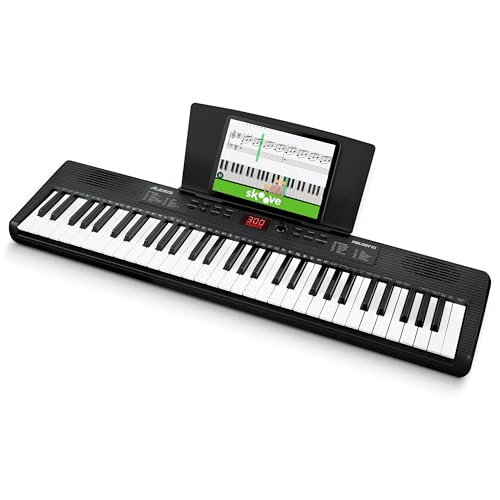
Alesis Harmony 61 MKII Portable Keyboard
Beginner piano students and casual players seeking a lightweight, affordable 61-key keyboard with onboard sounds, lessons, and basic USB-MIDI connectivity.
Read the Alesis Harmony 61 MKII Portable Keyboard review →
Behringer 1047 12dB State Variable Filter
Modular synth users seeking an affordable analog multi mode filter with built in modulation sources.
Read the Behringer 1047 12dB State Variable Filter review →Questions Buyers Ask
Behringer 1016 Dual Noise Random Generator
See the current listing, price and included accessories.
About This Review
Mandrillis Team
The Mandrillis editorial team researches and compares audio and music gear using manufacturer documentation, verified specs and real buyer feedback, so you can make a confident purchase without wading through marketing claims.
Read our full research methodology.