Instruments Review
Behringer DEEPMIND 12D Review: Analog Polyphony for the Rack
The Behringer DEEPMIND 12D is a desktop and rack mount analog polysynth with twelve voices, IR3109-style filters, stereo VCAs, an eight-channel modulation matrix, a 32-step control sequencer, four modeled effects engines and remote editing over USB, MIDI and WiFi. This research review examines that detailed specification and notes the outputs, power and weight the listing omits.
Our Verdict
Research Score 78/100The Behringer DEEPMIND 12D is a thoroughly documented desktop analog polysynth: twelve true analog voices with IR3109-style filters and stereo VCAs, two oscillators, two LFOs and three envelopes per voice, an eight-channel modulation matrix, a 32-step control sequencer, four simultaneous effects engines drawing on more than 33 TC Electronic, Midas and Klark Teknik algorithms, and remote editing over USB, MIDI and built-in WiFi. For the mid-range tier that is a complete, serious instrument on paper. The listing omits audio outputs, physical MIDI ports, power, dimensions and weight, and does not confirm a note sequencer or arpeggiator, so those should be checked. For a producer or performer who owns a controller and wants lush analog polyphony with effects in a rack, it is one of the clearest recommendations in its class.
Editorial research score based on published specifications and documented features, not a customer rating or lab test.

Behringer
Behringer DEEPMIND 12D
Best for: Producers and performers who own a controller and want lush twelve-voice analog polyphony with modeled effects and large-screen remote editing in a rack or on a desk.
Skip it if: You want keys in the same box, a note sequencer built in, or published audio outputs and weight before you buy.
Check Price on AmazonWe may earn a commission at no extra cost to you.
Listing verified: October 2026
Who Should Buy It
Buy it if
- Studio owners driving a polysynth from a DAW and master keyboard
- Live keyboardists adding analog pads and brass to a rack
- Programmers who prefer a tablet editor to a small panel
- Fans of the Juno and Jupiter filter character
Skip it if
- You need a self-contained keyboard synth
- You want a confirmed note sequencer or arpeggiator
- You require published outputs, power and weight
Key Specifications
| Type | 12-voice true analog polyphonic synthesizer, desktop or rack mount |
| Synthesis | Pure analog signal path, 2 analog oscillators per voice, IR3109-style VCFs, stereo VCAs, 2 LFOs and 3 ADSR generators per voice, 8-channel modulation matrix |
| Polyphony | 12 voices |
| Keys or pads | None, desktop or rack module (external controller required) |
| Sequencer | 32-step control sequencer (parameter modulation); note sequencer or arpeggiator not published in listing |
| Effects | 4 simultaneous engines, over 33 TC Electronic, Midas and Klark Teknik algorithms including TC Deep Reverb with 9 modes |
| Connectivity | Remote control over USB, MIDI and built-in WiFi; audio outputs and physical ports not published in listing |
| Power | Not published in listing |
| Weight | Not published in listing |
| Included accessories | Not published in listing |
Overview
The Behringer DEEPMIND 12D is the desktop and rack mount version of Behringer's twelve-voice analog polysynth, and its listing is one of the most detailed in the family. A pure analog signal path with IR3109-style filters and stereo VCAs, dual oscillators and LFOs per voice, three envelopes, an eight-channel modulation matrix, a 32-step control sequencer and four effects engines are all confirmed. It sits in the mid-range price tier.
The 12D exists for players who already own a keyboard and want the DeepMind voice engine in a box that fits a desk or a rack. The listing frames it as a way to recreate the progressive rock and pop synthesizer sounds of the 1970s and 1980s while also designing original tones, and it leans on remote editing from a tablet or computer as part of the workflow.
This research review uses only the published specification. The engine, modulation, effects and remote control are documented, but the listing does not publish audio outputs, physical MIDI ports, power supply, dimensions, weight or included accessories, and those gaps are noted in each relevant section.
Sound Engine and Tone
The IR3109-style VCF named in the listing is the filter design associated with Roland's Juno and Jupiter instruments, a four-pole low-pass circuit known for a smooth, rounded sweep and a resonance that stays musical rather than harsh. Putting that filter in a twelve-voice analog poly with stereo VCAs is the core of the DeepMind sound, and it points the 12D firmly toward lush pads, warm basses and classic polysynth brass.
Each voice carries two analog oscillators and two LFOs, with three ADSR generators driving the filter, amplifier and a modulation envelope. The oscillator waveforms and LFO shapes are not stated in this listing, but the structure itself supports detuned stacks, pulse-width movement and slow filter animation across all twelve voices.
Stereo VCAs matter more than they first appear. A per-voice stereo amplifier allows voices to be panned individually, so a chord can spread across the stereo field before the effects are applied. Combined with the chorus and reverb engines, that produces the wide, dimensional sound the DeepMind family is known for.
in-person Control and Workflow
The 12D has no keyboard, so it is played from a controller, a DAW or the control sequencer, and the listing emphasizes remote control as the primary deep-editing workflow. Apps for iPad, PC and Mac, plus selected Android devices, connect over USB, MIDI or built-in WiFi, giving a full graphic editor for the modulation matrix and effects.
The listing does not describe the physical panel of the 12D in detail, such as the number of faders or the display size. Desktop DeepMind units have retained a substantial fader panel, but that is family context rather than a published figure here, and buyers who want to work without a screen should confirm it from product images.
The eight-channel modulation matrix is where most sound design happens. Eight routings between sources such as LFOs, envelopes and controllers and destinations across the voice and effects parameters give the 12D the flexibility of a much larger instrument, and the editor makes those routings visible in a way a small panel cannot.
Sequencer, Effects and Features
The onboard 32-step control sequencer is a modulation tool rather than a note sequencer. It steps through up to 32 values that can be routed to any destination in the matrix, so a filter cutoff, pulse width or effect parameter can follow a rhythmic pattern while notes are played from a controller. A note sequencer or arpeggiator is not mentioned in the published data for the 12D.
Four simultaneous effects engines draw on more than 33 algorithms from TC Electronic, Midas and Klark Teknik, including reverb, chorus, flanger, phaser, delay and multiband distortion. The listing describes these as physically modeled on sought-after processors and running inside the instrument with low latency and flexible routing, so the order and arrangement of the four engines can be changed.
The TC Deep Reverb is singled out, with nine reverb modes and a small set of controls covering decay, tone and pre-delay. The published description says the range runs from bright and springy to warm and bouncy to large dark reflections, which suggests a reverb designed for broad strokes rather than microscopic editing.
- 12 true analog voices with IR3109-style VCFs and stereo VCAs
- 2 analog oscillators and 2 LFOs per voice, 3 ADSR generators
- 8-channel modulation matrix
- 32-step control sequencer
- 4 simultaneous effects engines, over 33 TC Electronic, Midas and Klark Teknik algorithms
- TC Deep Reverb with 9 modes
Build, Design and Portability
A convenient desktop or rack mount format is how the listing describes the chassis, which means the 12D can sit on a desk or be fitted into a standard rack, presumably with ears that may or may not be included. Dimensions and weight are not published, so the rack height and the mass to be carried remain unconfirmed.
Build materials are not stated. Buyers of the 12D and its keyboard sibling report a metal chassis and solid controls, and the long production life of the design suggests reliability is reasonable, but none of that appears in the published data for this listing.
As a module, the 12D is far more portable than a twelve-voice keyboard, and the built-in WiFi means a tablet can serve as the editing surface on stage or in a hotel room. The unpublished power supply type will determine how much of the travel kit is taken up by cables and adapters.
Connectivity, MIDI and Sync
Three control paths are confirmed in the listing: USB, MIDI and built-in WiFi, all usable for remote editing from a tablet or computer. Built-in wireless networking on a hardware synth is uncommon in this tier and removes the need for a cable to the editing device.
Audio outputs are not itemized. Given the stereo VCAs and stereo effects, stereo line outputs would be expected, and a headphone output would be useful on a desktop unit, but neither is confirmed. Physical MIDI jacks, USB connector type and any pedal or sync inputs are likewise unpublished.
The LFOs in the DeepMind design support MIDI sync according to the family's other listings, and the control sequencer would be expected to follow clock, but the 12D listing does not state sync behavior explicitly. Confirm from the manual how the control sequencer and LFOs lock to an external tempo.
Setup and Daily Use
Setup involves connecting power and audio, choosing a MIDI source, and optionally pairing the editor app over WiFi or USB. Because the voices are analog, a tuning routine at power-on is expected, and the listing does not say how long it takes or whether the synth re-tunes in the background during use.
Daily use for most owners will combine the physical panel for quick adjustments with the editor for matrix and effects work. Having the editor on a tablet beside the controller keyboard turns the 12D into something close to a keyboard synth in practice, with the advantage that the screen is large and the module stays in the rack.
The control sequencer rewards experimentation. Routing it to filter cutoff produces rhythmic patterns from held chords, and routing it to an effect parameter can animate a delay time or reverb mix in tempo. Program memory size is not published, so how many such setups can be stored should be checked.
Who Should Buy It
The 12D is for players and producers who want the DeepMind voice engine without a second keyboard, whether in a studio rack driven by a DAW or in a live rig driven by a master keyboard. The combination of analog voices, modeled effects and remote editing suits anyone who likes deep programming on a large screen.
Fans of the Juno and Jupiter filter character will find the IR3109-style VCF the main draw, and the twelve-voice count makes it practical for sustained chords. Those who use a tablet on stage will appreciate the WiFi editing path.
It is a less natural choice for performers who want every parameter under a dedicated control on a keyboard, and for buyers who need published audio outputs and weight. Anyone who wants a note sequencer rather than a control sequencer built in should also look elsewhere.
Alternatives Worth Considering
The Behringer DEEPMIND 12 keyboard offers the same voice engine with keys attached for those who prefer an all-in-one instrument, and the DEEPMIND 6 halves the voice count for a lower outlay. The UB-Xa D is Behringer's other desktop analog poly, with sixteen voices and a different vintage filter character.
The Korg Minilogue XD is a four-voice analog keyboard with a digital oscillator, effects and a note sequencer, more immediate but less polyphonic and less deep in modulation. The Elektron Digitakt is a desktop alternative built around sampling and step sequencing rather than analog polyphony.
Within Roland's range, the SH-4d is a desktop unit with multiple digital oscillator models, a multitimbral note sequencer and a loaded panel, suited to buyers who value sequencing and sound variety over true analog voices. It trades the analog voice path for a multitimbral sequencer and a built-in USB audio interface.
Verdict
The Behringer DEEPMIND 12D is a well documented desktop analog polysynth: twelve voices with IR3109-style filters and stereo VCAs, two oscillators, two LFOs and three envelopes per voice, an eight-channel modulation matrix, a 32-step control sequencer, four modeled effects engines and remote editing over USB, MIDI and WiFi. For the mid-range tier that is a complete and serious instrument on paper.
The published data omits audio outputs, physical MIDI ports, power, dimensions and weight, and does not confirm a note sequencer or arpeggiator. Those should be checked, but none of them weakens the documented strengths.
For a producer or performer who owns a controller and wants lush analog polyphony with effects in a rack, the 12D is one of the clearest recommendations in its class. Buyers who want keys in the same box should pick the DEEPMIND 12 instead.
Strengths and Limitations
Strengths
- 12 true analog voices with IR3109-style filters and stereo VCAs
- Two oscillators, two LFOs and three envelopes per voice
- 8-channel modulation matrix and 32-step control sequencer
- Four simultaneous modeled effects engines
- Remote editing over USB, MIDI and built-in WiFi
- Desktop or rack format
Limitations
- No keyboard, controller required
- Audio outputs and physical ports not published
- No note sequencer or arpeggiator confirmed
- Power, dimensions and weight unpublished
How We Scored It
Scores reflect published specifications, documented features and value against the alternatives below. They are editorial research scores, not laboratory measurements.
Alternatives to Consider
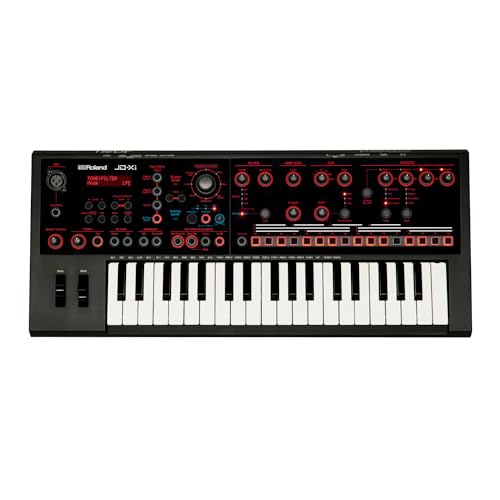
Roland JD-XI 37-Key
Electronic producers and performers who want analog bass and lead, digital pads, drums, a pattern sequencer and a vocoder in one compact mid-range keyboard.
Read the Roland JD-XI 37-Key review →
Roland GAIA 2
Learners and performers who want a hybrid synth with a transparent panel, expressive Motional Pad control and Roland chorus and reverb character in a mid-range keyboard.
Read the Roland GAIA 2 review →
Behringer DEEPMIND 6-Voice
Players who trust the DeepMind family, want the smaller six-voice format for basses, leads and modest chords, and will confirm the 6X details from the manual.
Read the Behringer DEEPMIND 6-Voice review →Questions Buyers Ask
Behringer DEEPMIND 12D
See the current listing, price and included accessories.
About This Review
Mandrillis Team
The Mandrillis editorial team researches and compares audio and music gear using manufacturer documentation, verified specs and real buyer feedback, so you can make a confident purchase without wading through marketing claims.
Read our full research methodology.