Instruments Review
Behringer DEEPMIND 12XD 12-Voice Review: Twelve Voices, Desktop by Name
The Behringer DEEPMIND 12XD 12-Voice is a twelve-voice synthesizer positioned for studio and live performances, with a name that suggests a desktop revision of the DeepMind design. The listing publishes nothing beyond that. This research review explains what twelve voices in a module means for studio and stage, and itemizes every unconfirmed specification.
Our Verdict
Research Score 69/100The Behringer DEEPMIND 12XD 12-Voice confirms twelve voices and a studio and live positioning, and its name points to a desktop revision in the DeepMind family, but the listing stops there. Twelve voices in a rackable unit with analog character, onboard effects and remote editing would be a strong mid-range product, and the documented DeepMind 12D shows the family can deliver exactly that. For the 12XD, the engine type, form factor, panel, sequencer, effects, connectivity, power and weight are all unpublished, so a buyer cannot verify any of it from the listing. Check the manual for those details, or buy the documented 12D instead. There is no penalty for waiting until the 12XD specification is published in full.
Editorial research score based on published specifications and documented features, not a customer rating or lab test.

Behringer
Behringer DEEPMIND 12XD 12-Voice
Best for: Producers and touring keyboardists who already own a controller, want twelve voices for sustained chords and prefer a rackable or desk-mounted unit.
Skip it if: You want a self-contained keyboard, or you need the engine, connections and effects confirmed in the listing before buying.
Check Price on AmazonWe may earn a commission at no extra cost to you.
Listing verified: October 2026
Who Should Buy It
Buy it if
- Studio owners who will drive the synth from a DAW and a master keyboard
- Touring players who want a polysynth in a rack without another keyboard
- Existing DeepMind users moving to the XD revision
- Mid-range buyers who will verify the specification in the manual
Skip it if
- You need a keyboard built in
- You require published ports, power and weight
- You want a confirmed note sequencer and effects section
Key Specifications
| Type | 12-voice synthesizer for studio and live performance (desktop format suggested by family naming; not published in listing) |
| Synthesis | Not published in listing |
| Polyphony | 12 voices |
| Keys or pads | Not published in listing (D suffix suggests no keyboard; unconfirmed) |
| Sequencer | Not published in listing |
| Effects | Not published in listing |
| Connectivity | Not published in listing |
| Power | Not published in listing |
| Weight | Not published in listing |
| Included accessories | Not published in listing |
Overview
The Behringer DEEPMIND 12XD 12-Voice is a twelve-voice synthesizer that the listing describes as intended for studio and live performances. The listing title and that single phrase are the full extent of the published specification, which leaves a great deal for a buyer to confirm. It is priced in the mid-range tier.
In Behringer's DeepMind naming, a D suffix has previously marked the desktop and rack versions of the keyboard models, and X appears to mark a newer revision. Taken together, 12XD would suggest a desktop revision of the twelve-voice design, but the listing does not say so, and this review does not treat the inference as fact.
The approach here is to describe what twelve voices in a desktop-style format would mean for studio and stage use, to draw on the DeepMind family only as context, and to list every missing specification clearly. Engine, controls, sequencer, effects, connectivity, power, weight and accessories are all absent from the published data.
Sound Engine and Tone
Twelve voices gives the 12XD the polyphony to handle full chords with sustained releases, which is the main reason to choose it over a six-voice unit. In a studio that means pads and string layers can be played in without note dropouts, and on stage it means a held chord will survive the next one being played on top of it.
Whether those voices are analog is not stated in the listing. The sibling DeepMind 12D listing describes a pure analog signal path with IR3109-style filters and stereo VCAs, and if the 12XD shares that architecture it would carry the same warm, Juno-adjacent character. That remains to be confirmed for this model.
Oscillator count per voice, filter type, envelopes and LFOs are unpublished. These are the specifications that separate a thick, movable analog pad from a static one, and without them the 12XD's tone can only be described in terms of its probable family lineage. A buyer who wants certainty on tone should listen to demonstrations of the documented 12D while waiting for the 12XD details.
in-person Control and Workflow
If the 12XD follows the desktop convention, it has no keyboard and is played from an external controller, a sequencer or a DAW. That suits a studio where a master keyboard already exists and a stage rig where the synth sits in a rack beside other modules. The form factor is not confirmed in the published data, so this remains the first thing to check.
Desktop DeepMind units have previously kept a full set of faders and knobs rather than reducing the panel, which made them unusually hands-friendly for modules. Whether the 12XD retains that or moves to a slimmer layout is not described, and a buyer who wants immediate control should verify it from product images.
For studio and live use, program storage and recall speed are as important as the panel. The number of programs, whether banks can be organized into set lists and how programs are selected over MIDI are not published and should be confirmed in the manual.
Sequencer, Effects and Features
The listing offers no detail on a sequencer or arpeggiator. The DeepMind 12D listing mentions a 32-step control sequencer for modulating parameters, which is a feature oriented toward sound movement rather than note sequencing. Whether the 12XD includes this or a note sequencer is unknown.
Effects are not described either. For a desktop module in a live rig, onboard effects mean the unit can be sent straight to the front-of-house mixer with its reverb and chorus intact, instead of relying on a shared effects send. If the 12XD matches its family it will have an effects section, but the listing does not say.
Beyond the voice count and the studio and live positioning, no other feature is claimed. A modulation matrix, wireless editing and remote control software have all appeared on earlier DeepMind desktop models, and each would be valuable here, but none is confirmed.
- 12 voices of polyphony
- Positioned for studio and live performances
- Desktop form factor suggested by the D suffix, not confirmed in listing
- Engine, effects and sequencer not published in listing
- Connectivity and power not published in listing
Build, Design and Portability
A desktop twelve-voice synth is normally easier to transport and rack than its keyboard sibling, which is part of its appeal for touring players. Weight and dimensions for the 12XD are not published, so the degree of that advantage cannot be stated. Rack mounting hardware, if any, is also unmentioned.
Chassis material and panel quality are not covered in the listing. Earlier desktop DeepMind units are reported by buyers as solidly built with metal cases, but a revision could change that, and the listing provides no assurance either way.
Power supply type is unstated. For a rack unit used on stage, an internal supply with a standard mains cable is preferable to an external adapter that can be lost or damaged, and that detail is worth confirming from the manual before touring with it.
Connectivity, MIDI and Sync
The listing publishes no connections. For a desktop synth that depends on external control, MIDI input is essential, and stereo outputs, USB and possibly a pedal input would be expected on a studio and live instrument. None of these is confirmed for the 12XD.
Earlier DeepMind desktop models offered remote control over USB, MIDI and built-in wireless networking, allowing a tablet or computer editor to program the synth. If the 12XD carries that forward it would be a major convenience for a module without a keyboard, but the published data does not say so.
Clock sync for any onboard arpeggiator or sequencer is unaddressed, as is whether the unit can pass MIDI through to further modules in a rack. Both matter for live rigs built around several hardware devices.
Setup and Daily Use
Setting up the 12XD means connecting power, MIDI from a controller or DAW, and stereo audio to an interface or mixer, then confirming the MIDI channel. If the voices are analog, an auto-tune routine at power-on is likely, and the unit should be allowed to warm up before a critical session. Tuning behavior is not described in the listing.
In a studio, a twelve-voice module is a natural source for pads, chords and polyphonic sequences driven from a DAW, with its programs recalled by program change messages. On stage, it sits in a rack and is played from the main keyboard, which keeps the performer's rig compact.
Program organization and the availability of an editor shape daily use for a module more than for a keyboard, since there is less panel to work from when the unit is racked. Both are unpublished for the 12XD and should be confirmed. Program change handling over MIDI is the other practical detail to check for set-list recall.
Who Should Buy It
The 12XD suits players and producers who already own a controller keyboard, want twelve voices for sustained chords and prefer a rackable or desk-mounted unit. If the family lineage holds, it offers analog polyphony with effects in a compact footprint at a mid-range price.
Touring keyboardists who want to add a polysynth to a rack without carrying another keyboard, and studio owners who want a module they can automate from a DAW, are the natural audience. Players already invested in DeepMind sounds and editors will find it the easiest transition.
It is not the right choice for someone who wants a self-contained keyboard, or for a beginner who would benefit from clearer documentation. Anyone who needs the specification confirmed in the listing before buying should also hold off until more is published.
Alternatives Worth Considering
The Behringer DEEPMIND 12D is the documented desktop sibling, with a listing that confirms analog voices, dual oscillators, four effects engines, a modulation matrix, a 32-step control sequencer and wireless remote control. Until the 12XD listing matches that detail, the 12D is the transparent purchase.
The Behringer UB-Xa D offers sixteen analog voices with two oscillators each in a desktop format, aimed at a different vintage character. It costs more but gives more voices and a different filter heritage.
The Elektron Digitakt is a desktop alternative for buyers whose priority is sequencing rather than polyphonic synthesis, with a sampler engine and a deep step sequencer. The Korg Minilogue XD remains the compact keyboard option with real analog voices and a sequencer.
Verdict
The Behringer DEEPMIND 12XD 12-Voice confirms twelve voices and a studio and live positioning, and the family naming suggests a desktop revision, but the listing stops there. For a mid-range module that is too little to evaluate properly.
Twelve voices in a rackable analog unit with effects and remote editing would be a strong product, and the DeepMind 12D shows that the family can deliver exactly that. The 12XD may do so as well, but a buyer cannot tell from the listing.
Verify the engine, form factor, connections and effects against the manual, or buy the documented 12D instead. Waiting until the 12XD specification is published in full costs nothing.
Strengths and Limitations
Strengths
- 12 voices of polyphony
- Positioned for studio and live use
- Desktop revision of a documented family design, by naming
- Mid-range tier for twelve voices
Limitations
- Engine type not published
- Form factor and panel unconfirmed
- No effects, sequencer or editor confirmed
- Connectivity, power and weight unpublished
How We Scored It
Scores reflect published specifications, documented features and value against the alternatives below. They are editorial research scores, not laboratory measurements.
Alternatives to Consider
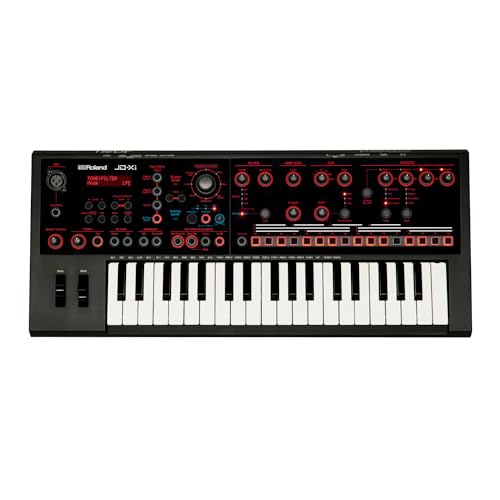
Roland JD-XI 37-Key
Electronic producers and performers who want analog bass and lead, digital pads, drums, a pattern sequencer and a vocoder in one compact mid-range keyboard.
Read the Roland JD-XI 37-Key review →
Roland GAIA 2
Learners and performers who want a hybrid synth with a transparent panel, expressive Motional Pad control and Roland chorus and reverb character in a mid-range keyboard.
Read the Roland GAIA 2 review →
Behringer DEEPMIND 6-Voice
Players who trust the DeepMind family, want the smaller six-voice format for basses, leads and modest chords, and will confirm the 6X details from the manual.
Read the Behringer DEEPMIND 6-Voice review →Questions Buyers Ask
Behringer DEEPMIND 12XD 12-Voice
See the current listing, price and included accessories.
About This Review
Mandrillis Team
The Mandrillis editorial team researches and compares audio and music gear using manufacturer documentation, verified specs and real buyer feedback, so you can make a confident purchase without wading through marketing claims.
Read our full research methodology.