Instruments Review
M-Audio Keystation 88 MK3 MIDI Review: Simple, Full Size and Bus Powered
The M-Audio Keystation 88 MK3 MIDI is a straightforward 88 key, semi weighted controller with plug and play USB connectivity, a single volume fader and a generous software bundle. This review covers its keybed, connectivity and bundled instruments strictly from the published listing, without assuming features the listing does not state.
Our Verdict
Research Score 65/100The M-Audio Keystation 88 MK3 MIDI keeps things simple, offering a full 88 key, semi weighted, velocity sensitive keybed with plug and play USB connectivity and no separate power supply required. A single volume fader, transport and directional buttons, and a sustain pedal input round out a modest control surface, while the bundled software, spanning MPC Beats, Ableton Live Lite, Mini Grand, Xpand2, TouchLoops and Velvet, adds genuine starting value. There are no pads, no aftertouch mentioned, and no DAW named specifically for its advanced control claims. For a player who wants a reliable, slim, full size keybed without extra control hardware, this is a sensible, no frills choice.
Editorial research score based on published specifications and documented features, not a customer rating or lab test.

M-Audio
M-Audio Keystation 88 MK3 MIDI
Best for: Best for a keyboard player who wants a straightforward, bus powered 88 key controller with broad software compatibility and a slim footprint.
Skip it if: Avoid it if you need pads, multiple knobs or faders, or confirmed aftertouch for expressive playing.
Check Price on AmazonWe may earn a commission at no extra cost to you.
Listing verified: November 2026
Who Should Buy It
Buy it if
- Players who want a genuine 88 key range in a slim, bus powered controller
- Buyers who want plug and play simplicity without installing drivers or finding a power outlet
- Pianists who want sustain pedal support without needing pads or extra control hardware
- New producers who want a generous starting software bundle across multiple virtual instruments
Skip it if
- You need pads for beat making
- You need multiple knobs or faders for mixing
- You need confirmed aftertouch for expressive key pressure control
Key Specifications
| Keys | 88 full size, velocity sensitive, semi weighted keys |
| Key type | Semi weighted, velocity sensitive; aftertouch is not mentioned in listing |
| Pads | Not applicable, no pads are mentioned anywhere in the listing |
| Knobs and faders | One volume fader; no knobs are mentioned in listing |
| DAW integration | Described only as advanced functionality that customizes controls for recording software; no specific DAW is named beyond this general claim |
| Bundled software | MPC Beats, Ableton Live Lite, Mini Grand, Xpand2, TouchLoops and Velvet |
| Connectivity | Plug and play USB connectivity to Mac or PC, with iOS compatibility through the Apple to USB Camera Adapter, sold separately; a sustain pedal input is also included |
| Power | Bus powered over USB, with the listing stating no separate power supply is required |
| Weight | Not published in listing |
| Included accessories | Not published in listing beyond access to the bundled software titles; the iOS adapter is explicitly sold separately |
Overview
The M-Audio Keystation 88 MK3 MIDI is an 88 key USB MIDI controller built for straightforward control of virtual instruments, software samplers and plug in synthesizers. The listing describes it as a music production essential rather than a feature heavy hybrid controller, and the specification list reflects that modest focus.
Physical controls stay minimal, with the listing naming a single volume fader, transport and directional buttons, pitch and modulation wheels, octave up and down buttons, and a sustain pedal input. There are no pads, no knobs, and no mention of aftertouch anywhere in the feature list.
What the Keystation 88 MK3 does offer is genuine plug and play simplicity, requiring no drivers or separate power supply according to the listing, plus a surprisingly generous software bundle for a controller this straightforward. This review treats each claim as stated, flagging anything the listing leaves unaddressed.
Keys, Pads and Feel
The keybed spans the full 88 keys, described in the listing as full size, velocity sensitive and semi weighted. That combination targets players who want a complete piano style range without the heavier resistance of a fully weighted hammer action keybed.
Aftertouch is not mentioned anywhere in the listing, which means continued pressure on a held key likely does not control an additional parameter the way it does on some competing controllers in this profile. Players who specifically rely on aftertouch for expressive synth playing should look elsewhere or verify this directly before purchase.
No pads are described at all, keeping this unit focused entirely on the keybed rather than splitting attention between melodic and rhythmic playing surfaces. For players who only need a keybed, that singular focus can simplify the overall layout considerably, with fewer buttons and modes to learn before getting to actual playing.
Knobs, Faders and DAW Integration
The listing names just one volume fader as the primary tactile control beyond the keybed itself, alongside transport and directional buttons for navigating a DAW session. No knobs are mentioned anywhere in the feature list.
DAW integration is described only in general terms, with the listing stating that advanced functionality customizes controls for recording software, without naming a specific DAW that benefits most from this customization. Players who need confirmed deep mapping with a particular DAW should verify that directly rather than assuming broad support.
Pitch and modulation wheels add some expressive control beyond the fader and buttons, and octave up and down buttons let a player extend their effective range without needing additional physical keys. Together, this is a notably lean control surface compared to hybrid controllers elsewhere in this profile.
Software, Sounds and Features
The bundled software list here is more generous than the modest hardware control surface might suggest. The listing states it includes MPC Beats and Ableton Live Lite as production environments, plus four additional virtual instruments, Mini Grand, Xpand2, TouchLoops and Velvet, covering a range of pianos, synths and loop based sounds.
That spread of included titles gives a new producer several different starting points without needing separate purchases, even though the keybed itself offers limited physical control over any of them. Exact preset counts or content size for each title are not detailed in the listing.
No onboard sound engine or standalone sampling capability is described. Sound generation depends entirely on these bundled titles or other software running on a connected Mac or PC, consistent with this being a controller in the traditional sense rather than a self contained instrument.
- MPC Beats
- Ableton Live Lite
- Mini Grand
- Xpand2
- TouchLoops
- Velvet
Build, Design and Portability
The listing describes a slimline design intended to fit any desk, studio or stage setup, suggesting a flatter profile than some bulkier 88 key controllers with added pads and faders. No exact dimensions or weight figure accompanies that description.
Because this unit skips pads, knobs and a large fader bank, its footprint is likely determined mostly by the 88 key span itself rather than additional control hardware, which can make it easier to fit into a tighter studio space or gig bag. That remains a reasonable inference rather than a stated specification.
Build material is not named in the listing, so buyers who want to know whether the chassis is plastic, metal or some combination should look beyond this particular listing. That gap is worth checking before finalizing a purchase, especially for anyone planning frequent travel with the unit.
Connectivity and Power
Connectivity centers on plug and play USB to a Mac or PC, with the listing specifically stating no drivers are required to get started. A sustain pedal input is also included for expressive performance.
iOS compatibility is mentioned as well, though it requires the Apple to USB Camera Adapter, which the listing states is sold separately rather than included in the box. Buyers planning to use this controller with an iPad or iPhone should budget for that adapter as an additional purchase.
Power is one of the clearer strengths here, since the listing states explicitly that no separate power supply is required, implying the unit draws power entirely over its USB connection. That simplicity is a genuine convenience for a quick studio setup or live rig, where hunting for an extra outlet can be a real hassle.
Setup and Daily Use
Daily use would center almost entirely on the keybed, with the single volume fader, transport and directional buttons supporting basic session navigation rather than deep mixing work. Pitch and modulation wheels would handle expressive playing alongside octave shifting for extended range.
Because setup requires no drivers and no separate power supply, getting started should be faster than with more complex hybrid controllers in this profile. A player can plug in over USB and begin working with the bundled software almost immediately.
For iOS based setups, the extra step of acquiring the Apple to USB Camera Adapter would need to happen before daily use could begin on a tablet or phone. That adapter is not included according to the listing, so it means an additional purchase and a short wait before an iOS session can start.
Who Should Buy It
The clearest buyer is a player who wants a genuine 88 key range without extra control hardware, valuing simplicity and quick setup over a large bank of knobs, faders or pads. Anyone who wants a bus powered controller for a minimal travel or desk setup will also appreciate the lack of a separate power supply requirement.
New producers drawn to the generous bundled software, spanning two production environments and four additional virtual instruments, get real starting value here despite the modest hardware control surface. Players who specifically want sustain pedal support for expressive playing are well served as well.
This is a weaker fit for anyone who wants pads, multiple knobs or faders, or confirmed aftertouch. None of those features appear in the listing, so expectations should be set accordingly before purchase.
Alternatives Worth Considering
Players who want a similar full size keybed but with added pads and a larger fader bank for mixing should compare this against hybrid 88 key controllers elsewhere in this profile. Those units trade some of this unit's simplicity for a broader control surface and a larger price tag.
Buyers who specifically need confirmed aftertouch for expressive playing should look at a controller that states that feature directly, since the Keystation 88 MK3 listing does not mention it at all. That distinction matters most for synth focused players rather than those working primarily with piano sounds.
Anyone who wants built in iOS compatibility without needing a separate adapter should check other controllers in this profile for stated direct iOS support. This unit explicitly requires the Apple to USB Camera Adapter as an extra purchase for that use case.
Verdict
The M-Audio Keystation 88 MK3 MIDI keeps things simple, offering a full 88 key, semi weighted, velocity sensitive keybed with plug and play USB connectivity and no separate power supply required. A single volume fader, transport and directional buttons, and a sustain pedal input round out a modest control surface, while the bundled software, spanning MPC Beats, Ableton Live Lite, Mini Grand, Xpand2, TouchLoops and Velvet, adds genuine starting value.
There are no pads, no aftertouch mentioned, and no DAW named specifically for its advanced control claims. For a player who wants a reliable, slim, full size keybed without extra control hardware, this is a sensible, no frills choice.
Strengths and Limitations
Strengths
- 88 full size, velocity sensitive, semi weighted keys for a genuine piano style playing range
- Plug and play USB connectivity with no drivers or separate power supply required
- Sustain pedal input included for expressive playing
- Slimline design described as fitting any desk, studio or stage setup
- A generous software bundle including MPC Beats, Ableton Live Lite and four additional virtual instruments
Limitations
- No pads, knobs, or multiple faders are included, limiting tactile control to a single volume fader
- Aftertouch is not mentioned, so expressive pressure control after a key is struck may not be present
- The listing does not name any specific DAW that benefits from its advanced control customization
- iOS compatibility requires a separate adapter that is not included
- Weight is not published in the listing
How We Scored It
Scores reflect published specifications, documented features and value against the alternatives below. They are editorial research scores, not laboratory measurements.
Alternatives to Consider

Yamaha Montage M6 61-Key
Professional synth players and producers who want a flagship 61-key instrument with massive polyphony, analog style synthesis and a matching software plugin.
Read the Yamaha Montage M6 61-Key review →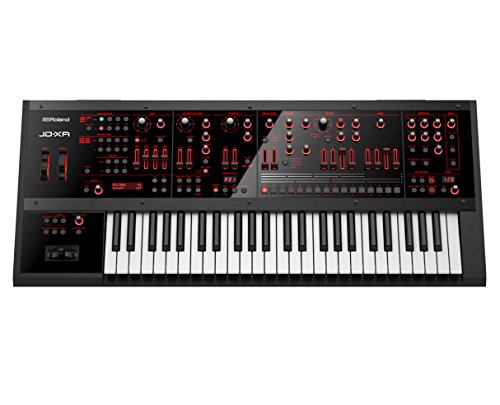
Roland JD-XA 49-Key
Synthesists who want genuine discrete analog voices and a digital engine in one 49-key crossover instrument with deep real time filter control.
Read the Roland JD-XA 49-Key review →
Pioneer DJ DDJ-FLX10 4-Channel
Mobile and open-format DJs who want a 4-channel club style controller with live stem separation and lighting control from one unit.
Read the Pioneer DJ DDJ-FLX10 4-Channel review →Questions Buyers Ask
M-Audio Keystation 88 MK3 MIDI
See the current listing, price and included accessories.
About This Review
Mandrillis Team
The Mandrillis editorial team researches and compares audio and music gear using manufacturer documentation, verified specs and real buyer feedback, so you can make a confident purchase without wading through marketing claims.
Read our full research methodology.