Instruments Review
M-Audio Oxygen Pro 49 MIDI Review: Same Controls, Smaller Footprint
The M-Audio Oxygen Pro 49 MIDI packs 16 pads, 8 knobs, 9 faders and Native Kontrol Standard integration into a more compact 49 key keybed. This review covers its control layout, bundled software and the tradeoffs of the shorter keybed, based strictly on the published listing.
Our Verdict
Research Score 74/100The M-Audio Oxygen Pro 49 MIDI takes the same control philosophy as its larger sibling, a semi weighted keybed with aftertouch, 16 velocity sensitive RGB pads, 8 knobs and 9 faders, and fits it into a shorter, more desk friendly footprint. Native Kontrol Standard integration and a free choice of Komplete 15 Select content carry over fully, along with Smart Chord, Smart Scale and an onboard arpeggiator. The obvious tradeoff is reach, since 49 keys covers noticeably less continuous range than a 61 or 88 key alternative. Weight and power figures stay unpublished. For a producer who wants the full feature set in a smaller space, this is a sensible, well equipped choice.
Editorial research score based on published specifications and documented features, not a customer rating or lab test.

M-Audio
M-Audio Oxygen Pro 49 MIDI
Best for: Best for a producer who wants the full Oxygen Pro control layout and NKS integration in a smaller, more desk friendly keybed.
Skip it if: Avoid it if your playing regularly needs more than 49 keys of continuous range, or if you specifically need CV or gate outputs.
Check Price on AmazonWe may earn a commission at no extra cost to you.
Listing verified: November 2026
Who Should Buy It
Buy it if
- Producers with limited desk space who still want the full Oxygen Pro knob, fader and pad layout
- Beat makers who want 16 velocity sensitive pads with Note Repeat in a more compact unit
- Native Instruments users who want NKS integration without committing to a full size 61 or 88 key controller
- Players who want Smart Chord and Smart Scale assistance alongside a smaller keybed
Skip it if
- You regularly need more than 49 keys of continuous playing range
- You need CV or gate connectivity for modular gear
- You need published weight or power specifications before purchase
Key Specifications
| Keys | 49 velocity sensitive, semi weighted keys with aftertouch and assignable zones |
| Key type | Semi weighted, velocity sensitive, with aftertouch and support for assignable playing zones |
| Pads | 16 RGB backlit, velocity sensitive, MIDI assignable drum pads with Note Repeat |
| Knobs and faders | 8 assignable knobs and buttons plus 9 assignable faders |
| DAW integration | Effortless auto mapping for DAW controls and plugin parameters, plus Native Kontrol Standard integration for working directly with Native Instruments software |
| Bundled software | MPC Beats, Ableton Live Lite, virtual instruments from AIR Music Tech and Akai Professional MPC Expansion packs, plus a choice of one of three curated Komplete 15 Select NKS bundles covering Beats, Band or Electronic sounds |
| Connectivity | 5 pin MIDI output and a sustain pedal input; USB connectivity is indicated by the listing title |
| Power | Not published in listing |
| Weight | Not published in listing |
| Included accessories | A download card directing buyers to the manufacturer's site for the bundled software and firmware updates |
Overview
The M-Audio Oxygen Pro 49 MIDI shrinks the keybed in this family down to 49 keys while keeping the same surrounding control layout found on the larger models. The listing describes a semi weighted, velocity sensitive keybed with aftertouch and assignable zones, paired with 16 RGB backlit pads, 8 knobs and 9 faders.
The central selling point remains Native Kontrol Standard integration, developed through a partnership between M-Audio and Native Instruments. The listing states this lets a player browse and control Native Instruments presets directly from the keyboard, and includes a free choice of one of three curated Komplete 15 Select bundles.
Because this is a shorter keybed variant rather than a stripped down one, nearly every control feature from the larger Oxygen Pro models carries over unchanged. The main difference a buyer should weigh is keybed length against desk space and portability, which this review addresses directly.
Keys, Pads and Feel
The keybed spans 49 keys, described in the listing as velocity sensitive and semi weighted with aftertouch, along with support for assignable playing zones. That range covers roughly four octaves, enough for most chord voicings and single hand melodic lines, though two handed piano style parts will feel noticeably more cramped than on a longer keybed.
The 16 pads carry over unchanged from the rest of the family, described in the listing as RGB backlit, velocity sensitive and MIDI assignable, with Note Repeat built in for rhythmic patterns. That pad section gives this smaller unit the same finger drumming and clip triggering capability as its larger siblings.
The listing does not specify whether the aftertouch is channel wide or fully polyphonic, matching the same gap found across the rest of the Oxygen Pro range. For players prioritizing a compact footprint over maximum key range, the tradeoff here is reasonably clear and worth weighing before purchase.
Knobs, Faders and DAW Integration
Eight assignable knobs and buttons sit alongside nine assignable faders, matching the control density of the larger Oxygen Pro models despite the shorter keybed. That gives this more compact unit a surprisingly large amount of tactile control relative to its overall size.
Effortless auto mapping for DAW controls and plugin parameters is described in the listing, suggesting the knobs and faders adjust automatically depending on the active software. Native Kontrol Standard integration adds the same direct Native Instruments control found on the rest of the family.
Smart Chord and Smart Scale modes, plus a built in arpeggiator, are also included according to the listing, giving this smaller keybed the same musical assistance tools as its larger counterparts. None of these features lose functionality simply because the keybed is shorter.
Software, Sounds and Features
The bundled software list matches the rest of the Oxygen Pro line. MPC Beats and Ableton Live Lite are both included, alongside virtual instruments from AIR Music Tech and Akai Professional MPC Expansion packs, giving a new producer multiple sound sources immediately.
The free choice of Komplete 15 Select content, covering Beats, Band or Electronic themes, carries over fully as well, according to the listing. That flexibility lets a buyer tailor the included sounds to their preferred genre regardless of which keybed length they choose within this family.
As with the larger models, software and firmware access runs through a download card pointing to the manufacturer's site rather than shipping preloaded or on physical media. An internet connection is needed to claim these titles after purchase.
- MPC Beats
- Ableton Live Lite
- AIR Music Tech virtual instruments
- Akai Professional MPC Expansion packs
- Choice of Komplete 15 Select Beats, Band or Electronic
- Smart Chord, Smart Scale and arpeggiator
Build, Design and Portability
Build details are not published for this unit any more than for its larger siblings, with no chassis material, exact dimensions or weight figure stated in the listing. What can be said is that a 49 key keybed naturally takes up noticeably less desk space than a 61 or 88 key version carrying the same knob, fader and pad section.
That shorter footprint is the clearest practical advantage of this model within its family, particularly for home studios or mobile setups where desk space is limited. The RGB pad lighting carries over unchanged, giving the same visual feedback in low light performance situations as the larger models.
Because weight and dimensions are not confirmed, buyers planning an exact case or bag should still verify those figures independently. Assuming proportional scaling from the larger Oxygen Pro models is a reasonable guess, but it is not a substitute for a published number.
Connectivity and Power
Connectivity matches the rest of the Oxygen Pro family, with a 5 pin MIDI output confirmed for hardware synth connections and a sustain pedal input included for expressive playing. USB connectivity is implied through the listing title, consistent with the larger models in this line.
No CV, gate, or multiple expression pedal inputs are mentioned, keeping this unit's connectivity focused on conventional computer and MIDI hardware use. That is consistent across the whole Oxygen Pro range rather than something specific to the smaller keybed.
Power requirements are not published, so whether the unit draws power entirely from USB or needs anything additional remains unconfirmed. This matches the same gap found on the 61 key version of this family, suggesting it is a consistent listing style rather than a model specific omission.
Setup and Daily Use
Daily use would follow the same pattern as the rest of the Oxygen Pro line, moving between the keybed for melodic work, the 16 pads for beats and clip triggering, and the knob and fader bank for mixing or sound design. NKS integration would add an extra workflow path for Native Instruments users specifically.
The main practical difference in daily use compared to the larger models is simply less keybed to work with during two handed playing, which may require more octave shifting during a session. Smart Chord and Smart Scale would help offset some of that by keeping chord voicings musically safe within a smaller range.
For producers who mostly work with one hand on the keys while the other manages pads, knobs or a mouse, the shorter keybed is unlikely to change daily workflow much at all. That style of working rarely uses the full width of even a 61 key controller anyway.
Who Should Buy It
The clearest buyer is a producer who wants the full Oxygen Pro control layout, including NKS integration, pads and a generous knob and fader section, but does not have the desk space or need for a full size 61 or 88 key keybed. Compact home studios and mobile setups are an especially strong fit.
Beat makers and Native Instruments users get the same benefits here as on the larger models, since the pad section, Komplete 15 Select choice and NKS integration are identical across the family. Players who mostly use one hand on the keys while managing pads or faders with the other will feel the shorter keybed least.
Pianists or players who regularly need a wide two handed range should look at the 61 or 88 key versions in this same family instead. For that specific kind of playing, 49 keys will feel limiting fairly quickly.
Alternatives Worth Considering
Buyers who want more continuous key range but the same control layout should look directly at the 61 key version in this same Oxygen Pro family. It keeps the identical pad, knob and fader section while extending the keybed considerably.
Players who do not need NKS integration and want deeper Ableton Live specific mapping instead should compare this against a Novation Launchkey series controller. That trades the Native Instruments focus found here for different software ties entirely.
Anyone who wants CV and gate connectivity for modular synth gear should look at a controller built specifically around that feature. No model in the Oxygen Pro family, including this one, includes CV or gate outputs.
Verdict
The M-Audio Oxygen Pro 49 MIDI takes the same control philosophy as its larger sibling, a semi weighted keybed with aftertouch, 16 velocity sensitive RGB pads, 8 knobs and 9 faders, and fits it into a shorter, more desk friendly footprint. Native Kontrol Standard integration and a free choice of Komplete 15 Select content carry over fully, along with Smart Chord, Smart Scale and an onboard arpeggiator.
The obvious tradeoff is reach, since 49 keys covers noticeably less continuous range than a 61 or 88 key alternative, and weight and power figures stay unpublished. For a producer who wants the full feature set in a smaller space, this is a sensible, well equipped choice.
Strengths and Limitations
Strengths
- 49 semi weighted keys with aftertouch and assignable zones in a more compact footprint than the larger model in this family
- 16 velocity sensitive RGB pads with Note Repeat for beat production and clip triggering
- 8 knobs and 9 faders pack a large control surface into a smaller keybed
- Native Kontrol Standard integration plus a free choice of Komplete 15 Select bundle
- Smart Chord, Smart Scale and an onboard arpeggiator for fast musical experimentation
Limitations
- A shorter 49 key span limits reach for players who regularly need a wider two handed range
- Weight and power requirements are not published in the listing
- Software and firmware access runs through a download card rather than shipping preloaded
- No CV, gate or multiple expression pedal inputs are mentioned
How We Scored It
Scores reflect published specifications, documented features and value against the alternatives below. They are editorial research scores, not laboratory measurements.
Alternatives to Consider

Yamaha Montage M6 61-Key
Professional synth players and producers who want a flagship 61-key instrument with massive polyphony, analog style synthesis and a matching software plugin.
Read the Yamaha Montage M6 61-Key review →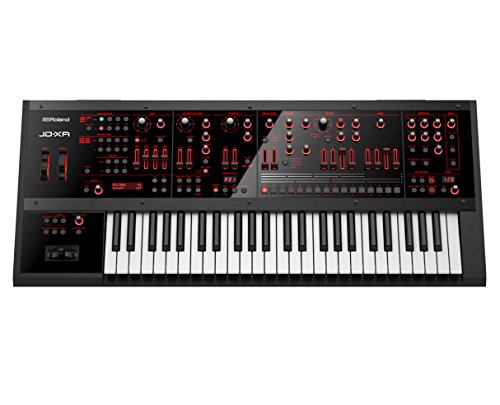
Roland JD-XA 49-Key
Synthesists who want genuine discrete analog voices and a digital engine in one 49-key crossover instrument with deep real time filter control.
Read the Roland JD-XA 49-Key review →
Pioneer DJ DDJ-FLX10 4-Channel
Mobile and open-format DJs who want a 4-channel club style controller with live stem separation and lighting control from one unit.
Read the Pioneer DJ DDJ-FLX10 4-Channel review →Questions Buyers Ask
M-Audio Oxygen Pro 49 MIDI
See the current listing, price and included accessories.
About This Review
Mandrillis Team
The Mandrillis editorial team researches and compares audio and music gear using manufacturer documentation, verified specs and real buyer feedback, so you can make a confident purchase without wading through marketing claims.
Read our full research methodology.