Instruments Review
Roland JUNO-D7 Review: 76 Synth-Action Keys With a Sequencer
The Roland JUNO-D7 offers 76 synth-action keys, Roland's ZEN-Core engine with more than 3,800 sounds, an eight-track sequencer, user WAV sample import and a USB-C port for audio, MIDI and mobile battery power. This research review weighs the documented features against the specifications the listing does not publish.
Our Verdict
Research Score 78/100The Roland JUNO-D7 is the JUNO-D for players who refuse to be pinned to one instrument role. Its 76-note synth action keeps organ, synth and clav parts fast while leaving room for two-handed piano, the ZEN-Core engine delivers more than 3,800 sounds with sample import and Roland Cloud expansion, and the listing confirms an eight-track sequencer plus USB-C audio, MIDI and mobile battery power. The unpublished polyphony, effects, weight, outputs and accessories are the reasons it does not score higher. For a gigging keyboardist at an upper mid-range tier who values range, light keys and modern connections over piano weight, it is the sensible pick in the range.
Editorial research score based on published specifications and documented features, not a customer rating or lab test.

Roland
Roland JUNO-D7
Best for: Gigging keyboardists who cover organ, synth, clav and piano in one set and want range without the weight of a hammer action.
Skip it if: You need weighted keys for piano-first playing or you want a workstation with deep sampling and sequencing.
Check Price on AmazonWe may earn a commission at no extra cost to you.
Listing verified: October 2026
Who Should Buy It
Buy it if
- Cover band and worship players who switch instrument roles within a set
- Mobile performers who need battery operation
- Songwriters who sketch with an onboard eight-track sequencer
- Players who record straight to a phone or laptop over USB-C
Skip it if
- Piano feel is your top priority
- You want the smallest possible keyboard
- You need documented polyphony and effects before buying
Key Specifications
| Type | 76-note stage synthesizer |
| Synthesis | ZEN-Core engine with more than 3,800 onboard sounds, Roland Cloud Sound Packs and Wave Expansions, user WAV sample import |
| Polyphony | Not published in listing |
| Keys or pads | 76-note keyboard with synth action |
| Sequencer | Built-in eight-track sequencer |
| Effects | Not published in listing |
| Connectivity | USB-C audio/MIDI interface for mobile devices and computers; other ports not published in listing |
| Power | USB-C mobile battery power supported; adapter details not published in listing |
| Weight | Not published in listing |
| Included accessories | Not published in listing |
Overview
Seventy-six keys is the compromise format, and the Roland JUNO-D7 is Roland's current argument for it. The listing describes a 76-note synth-action keyboard running the ZEN-Core engine with more than 3,800 sounds, an eight-track sequencer, user sample import, Roland Cloud expansion and a USB-C port that handles audio, MIDI and mobile battery power.
The pitch is a gig-ready keyboard with pro sounds and an intuitive workflow. In practice that means a player gets enough range for two-handed piano parts and splits without the weight of an 88-note hammer action, and the synth action keeps organ and lead playing fast. For many working keyboardists that balance is worth more than a piano-grade action they would use on two songs a night.
This research review relies on the published listing, which is detailed on features but says nothing about polyphony, effects, weight or accessories. Each of those gaps is noted where it affects the recommendation, and nothing here is based on time spent with the instrument.
Sound Engine and Tone
ZEN-Core is the engine behind Roland's FANTOM workstations, and the listing calls it flagship-class for that reason. The more than 3,800 ready-to-play sounds are organized around what a stage player needs first: acoustic and electric pianos, organs, synths and other band staples, rather than a library skewed toward sound design.
Roland Cloud supplies Sound Packs and Wave Expansions for the engine. The distinction matters, because Sound Packs are new patches built from existing waveforms while Wave Expansions bring new sample material, and a buyer who wants a different flavor of piano or vintage synth should look at the Wave Expansion catalog.
User WAV import rounds out the engine. Being able to play and edit a custom sample on the keyboard means the JUNO-D7 can cover a producer's signature sound or a one-off effect without a laptop on stage. Polyphony is not published, so the limits of layering remain unknown from the data.
in-person Control and Workflow
Synth-action keys on a 76-note bed are the defining control choice. The listing describes them as responsive for expressive performance, and for players who move between organ, synth lead, clav and piano in a single set, a light action is faster and less tiring than hammer keys.
Specific panel controls are not published. Roland's JUNO-D interface has traditionally used category buttons for instant sound access and a compact set of real-time controls, and the listing's phrase enhanced performance features points in that direction without detail. A small screen and a few assignable knobs are the norm for the class, and buyers who want a slider bank or a touchscreen should look at a workstation.
The workflow is built for the stage first. Selecting a sound, splitting the keyboard, layering a pad under a piano and recalling that setup later are the daily tasks, and the eight-track sequencer sits alongside those for sketching rather than replacing a DAW.
Sequencer, Effects and Features
The built-in eight-track sequencer is explicitly listed, which sets the JUNO-D7 apart from the JUNO-D8 listing, where no sequencer is mentioned. Eight tracks cover drums, bass, chords, lead and a few layers, enough to arrange a complete song idea on the keyboard.
Step entry, pattern length, resolution and song-chaining details are not published, so the sequencer should be considered a sketchpad until the full specification confirms otherwise. Effects are also unstated, which is a common omission in listings for keyboards whose engine is known to carry multi-effects, chorus and reverb.
Sample import, Roland Cloud expansion and USB-C audio and MIDI form the rest of the feature set. Together they turn a stage keyboard into a modest production tool and a direct recording source for a phone, tablet or computer. None of it replaces a DAW, but it reduces the number of boxes a songwriter needs on the desk.
- Eight-track sequencer for arranging on the keyboard
- ZEN-Core engine with more than 3,800 sounds
- User WAV sample import
- Sound Packs and Wave Expansions through Roland Cloud
- USB-C audio and MIDI with mobile battery power
Build, Design and Portability
A 76-note synth-action keyboard is the sweet spot for carrying. It is shorter and lighter than a weighted 88, and the listing describes the JUNO-D7 as gig-ready, but it does not publish a weight or dimensions, so the exact carrying burden is unknown from the data. Players moving from a 61-note synth should expect a longer bag and a slightly heavier load, nothing more.
USB-C mobile battery power is the most portable-minded feature. With a power bank in the gig bag the JUNO-D7 can run at a street performance, a beach wedding or a rehearsal in a room without outlets, and the power bank also serves as a backup if a venue's supply fails.
Chassis material, panel finish and the display are not described. The build score reflects the practical format and the battery capability rather than documented construction, and buyers who care about ruggedness should confirm details in the full specification.
Connectivity, MIDI and Sync
The USB-C audio and MIDI interface is the one documented port, and the listing specifies that it works with mobile devices as well as computers. One cable can carry stereo audio and MIDI into a DAW or a tablet app, which is a real advantage over keyboards that need a separate interface.
Line outputs, headphone jack, five-pin MIDI, pedal inputs and USB host are not published. A gigging keyboard will have line outputs at minimum, but the listing does not specify the count or connector type, so the connectivity score credits only the USB-C feature.
MIDI clock and sync for the eight-track sequencer are unstated. Players who want the sequencer to follow a drum machine or DAW tempo should confirm clock handling before relying on it in a hybrid rig. The same applies to the arpeggiator and tempo-synced effects, neither of which is described in the listing.
Setup and Daily Use
Getting started is simple: power from the adapter or a power bank, audio to a mixer or headphones, and optionally USB-C to a computer or phone. The listing describes an intuitive workflow, which for a stage keyboard means category buttons and quick recall rather than deep menus.
Daily use centers on building a set of splits and layers, adding imported samples where a song needs a specific sound, and using the eight-track sequencer to sketch arrangements between rehearsals. Expansion content from Roland Cloud can be added gradually as repertoire grows.
Accessories are not published, so a sustain pedal, stand and case should be budgeted separately. The adapter rating and the minimum power bank output are also not listed, and both are worth checking before planning a battery-powered show.
Who Should Buy It
The JUNO-D7 is for the keyboardist who plays more than piano. Cover bands, worship teams, theater pits and function gigs that call for organ, synth, clav and piano in one set favor a 76-note synth action, and the battery option adds mobile performers.
Pianists who want a weighted feel should choose the JUNO-D8, and players who need the smallest possible keyboard should look at the JUNO-D6. Synth programmers and producers who want deep sequencing and sampling belong with a FANTOM-06 instead.
Songwriters who sketch on the keyboard will appreciate the eight-track sequencer being confirmed in this listing, which gives the D7 a small documented edge over the D8 for composition. Teachers and students also benefit from the lighter action for general keyboard skills across styles.
Alternatives Worth Considering
The Roland JUNO-D6 is the same instrument in a 61-note frame for players who never need the extra octave, and the JUNO-D8 adds hammer action for pianists. All three share the ZEN-Core engine and USB-C features, so the choice is purely about key count and action.
The Yamaha CK61 is a lighter stage keyboard with built-in speakers and a focused piano and organ set, and the Yamaha MX88 pairs weighted keys with a Motif library and a 16-track sequencer. The Korg Minilogue XD and Arturia MicroFreak are sound design synths rather than stage keyboards and address a different need.
For a player who wants 76 keys with a workstation's depth, the Roland FANTOM series is the step up, at a higher tier and with far more to learn. Most JUNO-D7 buyers will not miss what they give up.
Verdict
On paper the Roland JUNO-D7 is the most balanced JUNO-D. The 76-note synth action suits players who cover several instrument roles, the ZEN-Core engine supplies more than 3,800 sounds with sample import and Roland Cloud expansion, and the eight-track sequencer and USB-C audio, MIDI and battery power are all documented.
Polyphony, effects, weight, outputs and accessories are not published, and those omissions keep the score at 78 rather than higher. For a gigging keyboardist at an upper mid-range tier who values range, light keys and modern connections over piano weight, it is an easy recommendation.
Buyers who want the same engine with less weight should look at the D6, and those who want more weight should look at the D8. The D7 is the one to pick when a set list refuses to stay in one instrument category.
Strengths and Limitations
Strengths
- 76-note synth action suits multi-instrument sets
- ZEN-Core engine with more than 3,800 sounds
- Eight-track sequencer confirmed in the listing
- User WAV sample import
- USB-C audio and MIDI with mobile battery power
Limitations
- Polyphony and effects not published
- Weight and physical outputs unstated
- No weighted option in this format
- Accessories not listed
How We Scored It
Scores reflect published specifications, documented features and value against the alternatives below. They are editorial research scores, not laboratory measurements.
Alternatives to Consider
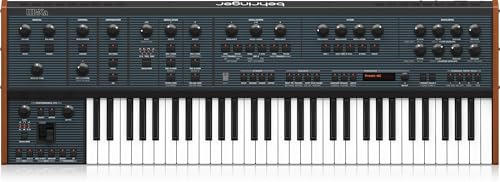
Behringer UB-Xa 16-voice
Synth players and producers who want a large analog voice count for pads, brass and stacked chords and already know how to work around a thin specification.
Read the Behringer UB-Xa 16-voice review →
Roland JUNO-DS 88-Key
Singer-keyboardists and solo performers who want piano feel, backing tracks, vocal effects and battery power in one lightweight 88-key instrument.
Read the Roland JUNO-DS 88-Key review →Questions Buyers Ask
Roland JUNO-D7
See the current listing, price and included accessories.
About This Review
Mandrillis Team
The Mandrillis editorial team researches and compares audio and music gear using manufacturer documentation, verified specs and real buyer feedback, so you can make a confident purchase without wading through marketing claims.
Read our full research methodology.