Instruments Review
Roland TR-1000 Review: Analog 808 and 909 Meets Deep Sampling
The Roland TR-1000 combines a newly developed analog engine for TR-808 and TR-909 sounds with ACB modeling, FM, VA and PCM engines and a sampler holding 46 GB of user material. A generative TR-REC sequencer, dual layer effects and a huge connection roster make it a premium tier studio anchor rather than a sketchpad.
Our Verdict
Research Score 91/100On paper the Roland TR-1000 earns its billing as the deepest drum machine Roland has built. A fresh analog engine delivers 808 and 909 voices with parameters the originals never had, while ACB modeling, FM, VA and PCM engines and a 46 GB sampler extend it into bass, synth and texture work. The TR-REC sequencer gains off-grid timing, probability, direction control and motion recording, and the effects run from an analog SVF and drive to Vinyl Sim and Dimension D. Individual outputs, trigger and DIN sync, Filter CV and a USB-C audio interface complete the picture. Weight, polyphony and power are not published, but for drum centered producers at the premium tier this looks like a long term anchor.
Editorial research score based on published specifications and documented features, not a customer rating or lab test.

Roland
Roland TR-1000
Best for: A producer or live performer who wants analog 808 and 909 character, modern sampling and deep sequencing in one studio centerpiece with individual outputs.
Skip it if: You make beats casually, work mostly in software or need a compact and inexpensive groovebox.
Check Price on AmazonWe may earn a commission at no extra cost to you.
Listing verified: October 2026
Who Should Buy It
Buy it if
- Electronic producers building a hardware centered studio
- Live performers who need pattern transformation tools and analog drive
- Sound designers who will use the FM, VA and PCM engines beyond drums
- Modular and vintage gear owners who need trigger, CV and DIN sync
Skip it if
- You want a simple drum machine with a handful of kits
- You already mix entirely in the box and do not need individual outputs
- Your budget tier is mid-range or below
Key Specifications
| Type | Drum machine and sampler (rhythm creator) |
| Synthesis | Analog engine with TR-808 and TR-909 sounds, ACB modeling with 21 circuit-bent 8X and 9X models and 808 and 909 Bass Line instruments, FM, VA and PCM engines, plus sampler |
| Polyphony | Not published in listing |
| Keys or pads | TR-REC step interface; button and pad count not published in listing |
| Sequencer | TR-REC step sequencer with off-grid control, cycle, rotate, track and step start timing, direction, motion recording, probability and four layer tracks |
| Effects | Stereo analog State-Variable Filter and analog drive with external routing; track and master effects including drives, delays, filters, compressors, SP-303 and SP-404 Vinyl Sim and SDD-320 Dimension D; Morph slider, snapshots and step loop |
| Connectivity | Stereo mix outputs, individual instrument outputs, analog FX and dual mono or stereo inputs, MIDI, trigger I/O, DIN sync, clock out, Filter CV, control input for expression pedal or footswitch, USB-C multi-channel audio and MIDI, USB device port |
| Power | Not published in listing |
| Weight | Not published in listing |
| Included accessories | Not published in listing |
Overview
The Roland TR-1000 is positioned by its own listing as the deepest and most powerful drum machine the company has built, and the specification list backs that claim with an unusual amount of detail. It combines a newly developed analog engine for TR-808 and TR-909 style sounds with digital ACB modeling, FM, virtual analog and PCM engines, and a sampler with 46 GB of user memory.
Around those engines sits a next generation TR-REC sequencer, a stereo analog effects section and a long list of digital track and master effects. The I/O is equally expansive, with individual instrument outputs, trigger and sync connections, Filter CV and a USB-C multi-channel audio and MIDI interface. On paper it is a studio centerpiece rather than a sketchpad.
This is a premium tier instrument and the listing is explicit about who it targets: producers and performers who want the classic Roland rhythm sounds in analog form plus the sound design depth of a modern sampler. The review below works from the published specification only and flags what it leaves out.
Sound Engine and Tone
The analog engine is the headline. The listing describes classic TR-808 and TR-909 sounds generated by new analog circuitry, with extended range and parameters that were not available on the originals. That means the familiar kick, snare, hat and clap voices can be pushed further than vintage units allowed, while keeping the weight that analog drum circuits are known for.
Beside the analog voices, the ACB modeling engine delivers 21 circuit-bent 8X and 9X drum machine models and 808 and 909 Bass Line instruments for melodic parts. FM, VA and PCM engines add bass, synth tones and digital textures, so the TR-1000 is not limited to drums. Compared with a sample only box like the Elektron Digitakt, the range of synthesis types is considerably broader.
The sampler brings over 2,000 onboard sounds, stereo sampling and resampling, BPM sync, time stretching and non-destructive slice editing. With 46 GB available for user samples, running out of space is unlikely for most users. Polyphony and the number of simultaneous tracks are not published in the listing.
in-person Control and Workflow
TR-REC is Roland's step button workflow, where you tap steps in time or on the grid to build patterns quickly. The listing adds off-grid control, which allows steps to be nudged away from strict quantization, plus cycle, rotate, track and step start timing, direction and probability. These tools push the classic workflow into generative territory.
Motion recording captures knob movements as part of a pattern, and four dedicated layer tracks are provided for detailed drum sound design and extended sequencing. A Morph slider, snapshots and step loop give performers tactile ways to transform a pattern live. The listing describes the controls as intuitive but does not state the number of knobs, pads or displays.
For producers used to menu heavy samplers, the combination of step buttons and dedicated performance controls should feel immediate. The depth of the engines does imply a learning curve for the sound design side, especially across FM and modeling parameters. How much of that is reachable without menu diving is not confirmed by the listing.
Sequencer, Effects and Features
The sequencer feature list reads like a wish list compiled from years of TR user feedback. Off-grid timing, per track direction, rotation and probability allow patterns to evolve rather than loop identically, and step start timing lets individual hits sit ahead of or behind the beat. Pattern and song capacity figures are not published.
Effects come in two layers. A stereo analog section provides a new State-Variable Filter, analog drive and external routing, so outside signals can pass through the analog path. Digital track and master effects range from drives, delays, filters and compressors to Roland classics such as the SP-303 and SP-404 Vinyl Sim and the SDD-320 Dimension D.
Performance effects include the Morph slider for sweeping between states, snapshots for instant recall and step loop for rhythmic stutters. Together with sampling and resampling, these features make the TR-1000 capable of finished tracks without a computer. The listing frames this as the most powerful drum machine the company has created.
- Analog TR-808 and TR-909 engine with extended parameters
- ACB, FM, VA and PCM engines plus a 46 GB sampler
- TR-REC sequencer with off-grid timing, probability and motion recording
- Analog SVF and drive plus Vinyl Sim and Dimension D effects
- Morph slider, snapshots and step loop for performance
Build, Design and Portability
The listing specifies a rugged metal chassis and durable components, which is reassuring for an instrument intended to travel between studio and stage. Metal construction typically adds weight, but the listing does not publish dimensions or a weight figure. Plan on a dedicated case rather than a backpack.
Given the number of connections on the rear panel and the inclusion of individual outputs, this is clearly a desktop unit designed to sit at the center of a rig. The size of the step buttons and the layout of the performance section are not described. Buyers who value a pocket sized footprint, as with the Teenage Engineering OP-1, are looking at a different category entirely.
Long term durability matters more on a premium drum machine than on a budget groovebox, and the explicit mention of durable components suggests Roland expects heavy use. Power supply type is not published in the listing, so confirm whether an external adapter is required when planning a live setup.
Connectivity, MIDI and Sync
Audio I/O is one of the strongest areas in the specification. Stereo mix outputs are joined by individual instrument outputs for multitrack recording or external processing, along with analog FX and dual mono or stereo inputs for routing other gear through the analog effects. The exact number of individual outputs is not stated.
Sync options cover the full range of studio standards: MIDI, trigger I/O, DIN sync, clock out and a Filter CV connection for modular integration. A control input accepts an expression pedal or footswitch. This breadth means the TR-1000 can act as the master clock for both vintage and modern gear.
The USB-C port functions as a multi-channel audio and MIDI interface, so each instrument can be streamed to a DAW separately. A second USB device port accepts an external Roland MIDI controller or a flash drive for updates, backup and restore, and sample import and export. On paper this is as complete as drum machine connectivity gets.
Setup and Daily Use
Initial setup involves choosing between the stereo mix and the individual outputs, connecting any sync cables for external gear and loading samples through the USB device port or the USB-C connection. Because the TR-1000 can serve as an audio interface, a laptop based studio could run almost entirely through it.
Daily work follows the TR-REC pattern: pick an instrument, enter steps, shape the sound with the engine parameters and add motion or probability where needed. The large onboard sound library means you can start producing before importing anything. Backup to a flash drive protects long projects.
Firmware updates arrive through the USB device port, and the listing notes support for backup and restore, which simplifies moving between studio and live setups. Documentation depth and the manual are not described, so expect a period of exploration to learn the deeper engines.
Who Should Buy It
The Roland TR-1000 is for producers who want the authentic analog 808 and 909 character without maintaining vintage hardware, and who also want modern sampling and synthesis in the same box. Electronic music producers, live hardware performers and studio owners who need individual outputs are the clearest matches.
It also suits sound designers who will use the FM, VA and PCM engines for more than drums, and modular users who can exploit the trigger, CV and DIN sync connections. The premium price tier reflects a unit intended to be central to a rig for years.
Beginners or casual beat makers will find the depth and cost excessive. A simpler groovebox provides most of the fun at a fraction of the commitment, and the TR-1000 rewards users who will actually explore its routing and sequencing depth.
Alternatives Worth Considering
The Elektron Digitakt is the obvious comparison for a sample based drum machine with a strong sequencer, though it does not offer analog drum voices. Buyers who prize sampling and parameter locks over analog character may find it the more economical choice.
For pure analog drum sounds at a budget tier, compact analog boxes and clones exist, but they lack the sampling, effects and I/O described here. Roland's own smaller TR units cover the classic sounds with fewer engines and simpler connections.
Producers who mainly need a melodic sketchpad rather than a drum centerpiece might look at the Teenage Engineering OP-1 or a desktop synth instead. The TR-1000 only makes sense when drums are the center of your workflow and you will use the depth it offers.
Verdict
On paper the Roland TR-1000 lives up to its billing as the most powerful drum machine the company has made. The combination of a new analog 808 and 909 engine, ACB modeling, FM, VA and PCM synthesis, a 46 GB sampler, a generative TR-REC sequencer and dual layer effects is unmatched in the published specification of any single rhythm instrument we have reviewed.
The unknowns are practical rather than fundamental: weight, polyphony, output count and power type are not published. For producers who center their work on drums and can justify the premium tier, the TR-1000 looks like a long term studio anchor. Everyone else should admire it from a distance.
Strengths and Limitations
Strengths
- New analog engine for TR-808 and TR-909 sounds with extended parameters
- ACB, FM, VA and PCM engines plus a sampler with 46 GB of user memory
- TR-REC sequencer with off-grid timing, probability and motion recording
- Analog SVF and drive plus Vinyl Sim and Dimension D style effects
- Individual outputs, trigger I/O, DIN sync, Filter CV and USB-C audio interface
- Rugged metal chassis
Limitations
- Premium tier commitment for a single rhythm instrument
- Polyphony, output count, weight and power type are not published
- Depth across five engines implies a real learning curve
- Overkill for casual beat making
How We Scored It
Scores reflect published specifications, documented features and value against the alternatives below. They are editorial research scores, not laboratory measurements.
Alternatives to Consider

Yamaha YC88 88-Key
Organ-first keyboardists who also need a full 88-key range for piano, and who want modeled rotary speaker behavior and panel-controlled effects on stage.
Read the Yamaha YC88 88-Key review →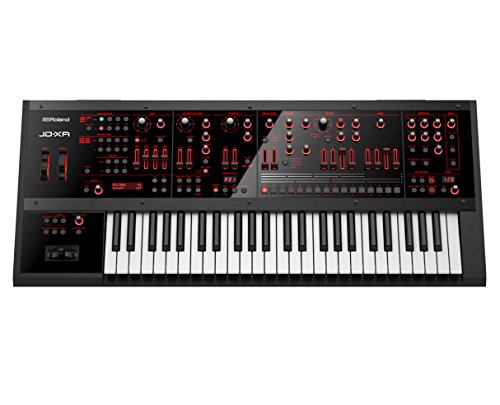
Roland JD-XA 49-Key
Synthesists who want genuine discrete analog voices and a digital engine in one 49-key crossover instrument with deep real time filter control.
Read the Roland JD-XA 49-Key review →Questions Buyers Ask
Roland TR-1000
See the current listing, price and included accessories.
About This Review
Mandrillis Team
The Mandrillis editorial team researches and compares audio and music gear using manufacturer documentation, verified specs and real buyer feedback, so you can make a confident purchase without wading through marketing claims.
Read our full research methodology.