Speakers Review
Basapubu Passive Floorstanding Pair Review: Budget Tower Sound
The Basapubu Passive Floorstanding Pair is a budget tower speaker option with dual 6.5 inch woofers, two 3 inch tweeters, and a ported MDF cabinet. It works only with an external amplifier. This review looks at what the listing claims and what remains unstated for buyers.
Our Verdict
Research Score 64/100The Basapubu Passive Floorstanding Pair looks like a budget floorstanding speaker aimed at buyers who already have an amplifier. The listing provides enough basic specs for a first look: dual 6.5 inch woofers, two 3 inch tweeters, 120W peak power, 40Hz to 20kHz response, and a 4 ohm load. However, missing sensitivity and continuous power figures make system matching harder. Build details stop at MDF and a removable grille, and there is no information about warranty, support, or real world reliability. If these are used in a modest stereo or home theater setup and driven with a compatible receiver, they may be an affordable way to get floorstanding presence. Without more data or buyer reviews, they remain a value-focused unknown rather than a proven performer.
Editorial research score based on published specifications and documented features, not a customer rating or lab test.

Basapubu
Basapubu Passive Floorstanding Pair
Best for: Listeners who want an affordable passive floorstanding pair for stereo music or home theater with an existing receiver or amp.
Skip it if: Avoid this pair if you want powered speakers, Bluetooth streaming, or detailed measured performance data.
Check Price on AmazonWe may earn a commission at no extra cost to you.
Listing verified: October 2026
Who Should Buy It
Buy it if
- Buyers building a budget two-channel or surround system around an existing AV receiver
- Shoppers who prefer floorstanding speakers but need a smaller footprint
- Listeners who like a visual break from typical black drivers with orange accents
- Those comfortable with passive speaker wiring and external amplification
Skip it if
- You do not own an amplifier or receiver and do not want to add one
- You need nearfield desktop or portable speakers
- You want published sensitivity, amplifier matching guidance, or detailed warranty coverage
Key Specifications
| Type | Passive floorstanding speaker pair |
| Drivers | Listing reports 2 x 6.5-inch woofers and 2 x 3-inch tweeters; configuration per cabinet not detailed separately |
| Power or sensitivity | 120W peak power; sensitivity not published in listing |
| Frequency response | 40Hz to 20kHz |
| Inputs and connectivity | Heavy-duty binding posts accept banana plugs, spade connectors, or bare wire; 4Ω impedance |
| Bluetooth and streaming | None; passive design requires an external amplifier or receiver |
| Dimensions | 7.48 x 7.87 x 34.09 inches per speaker |
| Weight | 34.17 lbs (15.5 kg) per speaker |
| Finish | Medium-density fiberboard (MDF) cabinet, black finish, removable grille, orange woofer cone |
| Included accessories | Removable grille; no other accessories listed |
Overview
The Basapubu Passive Floorstanding Pair enters as a budget floorstanding speaker for buyers who want tower style without a huge price. The listing describes a passive pair that relies on an external amplifier or AV receiver. The product is positioned for music, movies, and gaming with a 120W peak power rating and a stated 40Hz to 20kHz range. That is a wide set of claims for an affordable model.
This is not a plug and play speaker. There is no built in amplifier, Bluetooth, or wireless connectivity. Buyers need to bring their own power source and speaker cable. The listing does not state sensitivity, continuous wattage, or crossover details, which makes it harder to judge how much amplifier headroom the speaker really wants. The review is based purely on the published listing and general budget speaker context.
Sound Quality
On paper, the dual 6.5 inch woofers and two 3 inch tweeters suggest a speaker intended to produce a full range balance with stronger bass than a single small bookshelf. The frequency response claim of 40Hz to 20kHz is respectable for a budget floorstander, though without measurement data it is impossible to confirm real output at the low end. A ported bass reflex design typically helps extend low frequencies but can also be sensitive to room placement.
The inclusion of multiple tweeters may widen treble dispersion or add output, but the listing does not explain how the tweeters are crossed over or aimed. Buyers should expect a lively sound rather than an accurate studio monitor, based on the driver count and budget class. There are no published distortion, dispersion, or response curve details. If they perform as the marketing suggests, they could handle movie effects and bass heavy music, but real performance remains unverified.
Drivers, Power and Room Fit
The listing reports two 6.5 inch woofers and two 3 inch tweeters, but it does not specify whether that count is per cabinet or total for the pair. Given the dual wording in the title, a per cabinet interpretation is likely for each tower. The 120W peak power figure is not the same as continuous RMS power. Without sensitivity, there is no clear guidance on minimum amplifier wattage.
At 4 ohms, these speakers will draw more current than typical 8 ohm models. An older or entry level receiver may struggle if asked to play loud for long periods. The compact floorstanding dimensions, about 7.48 by 7.87 by 34.09 inches each, make them easier to place in smaller rooms than wide tower cabinets. A room of small to medium size is the most realistic fit, but low frequency reach will depend heavily on amplifier control and placement.
The ported design may help output near the tuning frequency, but buyers should not expect subwoofer level depth from two 6.5 inch drivers alone. Proper positioning away from walls can reduce boominess. Without continuous power and sensitivity specs, these are harder to compare directly to established budget towers from Polk or ELAC, though the format is similar.
Features and Connectivity
The main feature is passive flexibility. The binding posts accept banana plugs, spade connectors, or bare wire, which covers the three most common connection methods for home audio systems. There is no built in amplifier, no DSP, no EQ, and no wireless radio. This means the sound depends on the source, amplifier, and cables.
The lack of Bluetooth or streaming is not a flaw in a passive speaker, but it is important. Buyers who want a wireless or self powered speaker should look elsewhere. The listing also mentions a removable grille, which allows two visual looks: covered for a subtle black cabinet or exposed to show the orange woofer cones. That is a minor style benefit.
- Passive design works with AV receivers and stereo amps
- Binding posts accept banana plugs, spade connectors, and bare wire
- 4 ohm load requires an amplifier stable at 4 ohms
- Removable grille, no built in wireless or powered options
- 120W peak power and 40Hz to 20kHz frequency response
Build, Design and Finish
The listing specifies a medium-density fiberboard cabinet, which is common in budget speakers because MDF is dense and relatively inert compared to plastic or thin wood. The black finish is likely a vinyl wrap or painted MDF, but the listing does not state the exact exterior material. The removable grille is a practical touch for protecting drivers and adding style.
At 34.17 pounds per speaker, the cabinets are not flimsy but also not heavy enough to suggest thick internal bracing. The 7.48 by 7.87 inch footprint is narrow, which may make them top heavy on carpet if pushed. The orange woofer cones are visually distinctive, but the listing does not describe surround material, voice coil, or magnet structure. Buyers should treat this as an entry level cabinet with a cosmetic highlight rather than a high end furniture finish.
The packaging and warranty are not listed, so build quality claims are limited to the MDF statement and weight. Potential buyers may want to confirm return and support policies before purchase. The design is conventional floorstanding.
Setup and Placement
Setup begins with an amplifier or receiver. The binding posts require stripping wire or attaching banana plugs, and the 4 ohm load means the amplifier should be rated to handle that impedance. The compact base makes placement easier than very wide towers, but the ported design will benefit from some distance from rear walls and corners.
No speaker wire is included in the listing, so buyers must have or buy appropriate gauge cable. A stereo pair should be placed with a few feet of separation and toed in slightly if the tweeters are directional. Because the speakers are not self powered, there is no automatic room correction or wireless pairing. It is a straightforward two channel wired setup.
Daily Use
In daily use, these would function like any passive tower. Users will control volume and source on the receiver or integrated amp. The speaker's perceived dynamic range will depend on clean amplifier power, room size, and content. For TV and movie dialogue, the tweeter arrangement may help clarity, but without measurements that is an assumption.
The location of the port is not specified in the listing, so placement guidance is limited. Music with deep bass may excite room modes if placed close to walls. The speaker covers and exposed orange cones are easy to change, but grille pegs may be fragile on budget models. There are no onboard controls, no app, and no indicator lights.
Who Should Buy It
This pair suits buyers who already have a stereo receiver or AV receiver and want floorstanding speakers for a low price. It can work for a first apartment system, a garage setup, or a secondary room where big speakers are wanted but high end sound is not required.
It is also a candidate for home theater use as left and right channels if paired with a center and subwoofer later. The passive format is compatible with most traditional equipment. However, shoppers should be comfortable with unknown performance and limited spec transparency.
Alternatives Worth Considering
For comparable budget floorstanding or bookshelf options, well known models from Polk Audio, ELAC, or Klipsch could offer better documented specs and established support networks, though they may cost a bit more within the lower mid-range tier. Bookshelf speakers such as the Edifier R1280DB are powered and include Bluetooth, but they are a different form factor and not floorstanding.
If buyers specifically want passive towers, the Polk Audio T50 is a commonly cited budget reference in this class, though exact specs and price vary by market. For a more compact powered option, the JBL Flip 6 or Bose SoundLink Flex are portable Bluetooth speakers and not comparable for stereo separation or home theater duty. The main alternative paths are improving to a known passive tower brand or choosing powered speakers for simpler setup.
Verdict
The Basapubu Passive Floorstanding Pair is a budget floorstanding speaker with a bold driver count and compact footprint. The published marketing points to a fun and room filling sound, but the absence of sensitivity, continuous power handling, crossover, and warranty details leaves too much to assumption.
It may be fine for listeners with a 4 ohm capable amplifier and moderate expectations, especially in a small or medium room. If the price is very low and return terms are acceptable, it could be a low risk experiment. But if reliability and documented performance matter, a known budget model is safer. The final score reflects the unknown rather than confirmed quality.
Strengths and Limitations
Strengths
- Large driver count for a budget floorstanding speaker
- Compact footprint compared with wide tower cabinets
- Ported bass reflex design aims for extended low end
- Binding posts accept banana plugs, spade connectors, and bare wire
- Removable grille shows off orange woofer cones
- 4 ohm load is compatible with many A/V receivers
Limitations
- No published sensitivity or continuous RMS power rating
- Build quality details beyond MDF are limited
- No Bluetooth or powered option
- Requires a separate amplifier, which adds cost and setup
- Brand support and warranty information not provided
How We Scored It
Scores reflect published specifications, documented features and value against the alternatives below. They are editorial research scores, not laboratory measurements.
Alternatives to Consider

Klipsch R-15M
Buyers who want a compact passive bookshelf speaker with Klipsch horn tweeter character and already own an amplifier.
Read the Klipsch R-15M review →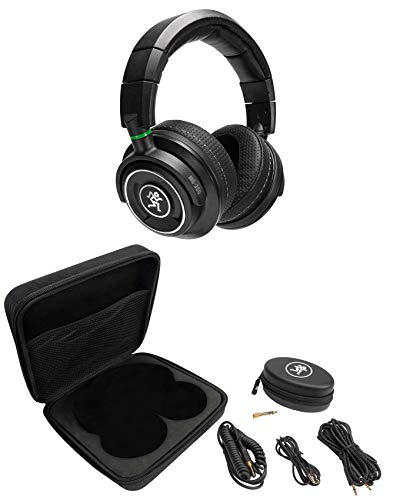
Mackie MC
Studio recording, mixing, and critical listening sessions that need a closed-back, wired headphone with premium cable accessories.
Read the Mackie MC review →Questions Buyers Ask
Basapubu Passive Floorstanding Pair
See the current listing, price and included accessories.
About This Review
Mandrillis Team
The Mandrillis editorial team researches and compares audio and music gear using manufacturer documentation, verified specs and real buyer feedback, so you can make a confident purchase without wading through marketing claims.
Read our full research methodology.