
Guides
Can You Lay Bookshelf Speakers on Their Side? (The Truth)
Laying bookshelf speakers on their side can help them fit under a TV or on a low shelf, but it changes how they spread sound. This guide explains why most bookshelf speakers are designed to stand upright, what happens when they lie down, and how to reduce the downsides if you have no other choice.
Quick Answer
You can lay bookshelf speakers on their side, and they will still work, but they usually sound best upright. Most are designed with the tweeter above the woofer. On their side, sound can change as you move your head, and the stereo image may blur. If you must, place the tweeters toward the outside and keep them at ear height.
How this guide was put together
This guide is based on manufacturer manuals, published specifications and widely used audio reference standards. Mandrillis does not run hands-on tests for these guides, so treat figures as typical values and check the manual for your own gear before changing settings.
Why Bookshelf Speakers Are Designed Upright
Most bookshelf speakers have two drivers stacked vertically: a small tweeter for high notes on top and a larger woofer for lower notes below.
Makers tune the speaker so sound from both drivers blends smoothly when you sit in front of it. That blending is designed for the drivers to be lined up vertically.
- Tweeter on top, woofer below.
- Sound blends evenly when you move side to side.
- Designed to sit with tweeters near ear height.
What Happens When You Lay Them Down
On its side, the tweeter and woofer sit next to each other horizontally. As you move left or right, your distance to each driver changes slightly.
That small difference can cause some frequencies to add together and others to cancel out. The effect is called lobing or comb filtering. It can make vocals and instruments sound slightly different from seat to seat.
Effects You May Notice
The changes are often subtle on budget speakers and more noticeable on careful listening. Everyone hears them a little differently.
- The sound changes as you move your head side to side.
- Vocals may lose some focus in the center.
- The stereo image can feel less precise.
- Upper mids may sound slightly uneven.
Upright vs On Their Side
How orientation usually affects bookshelf speakers.
| Factor | Upright | On their side |
|---|---|---|
| Driver alignment | As designed | Changed |
| Sound when you move | Consistent | Can vary more |
| Stereo image | Clear and focused | Often less precise |
| Fit under a TV | May not fit | Easier fit |
| Best use | Music and stereo listening | Tight spaces and casual use |
Is It Harmful to the Speaker?
No. Laying a speaker on its side does not damage the drivers or cabinet. The drivers work the same in any direction.
The concern is only about sound quality, not safety. Make sure the speaker sits securely and cannot roll or slide off the shelf.
Speakers Designed to Lie Horizontally
Center channel speakers for home theater are designed to sit horizontally under or above a TV. Many use two woofers with a tweeter between them, which keeps the sound balanced in that position.
If you need a speaker that lies flat under a TV, a center channel or a soundbar is the better choice than a bookshelf speaker on its side.
How to Get the Best Sound If You Must
Sometimes a side position is the only way to fit speakers in a room. These tips reduce the downsides.
Placement Tips
Small changes in how you lay them down make a real difference. Try these and listen after each one.
- Put the tweeters on the outside edges, farther apart, for a wider sound.
- Try tweeters on the inside if the center sounds weak.
- Keep the tweeters at about ear height when seated.
- Angle the speakers toward your listening seat.
- Keep the same orientation for both speakers.
Reduce Shelf Vibration
Speakers on their side often sit on TV stands or shelves that vibrate. Place isolation pads or rubber feet underneath.
Keep rear ports clear by leaving space behind the speaker.
How to Test Both Positions in Your Room
The best way to decide is to listen to both options in your own room. It takes about 15 minutes and costs nothing.
Use the same songs, the same volume and the same seat for both tests, so the comparison is fair.
A Simple Comparison
Follow these steps and trust what you hear. If you cannot hear a difference, convenience can win.
- Set the speakers upright first and play three songs you know well.
- Listen for where the singer's voice seems to sit between the speakers.
- Slowly move your head left and right and note any change in tone.
- Lay the speakers down the same way and repeat with the same songs.
- Pick the position that keeps voices clear and steady.
Better Alternatives for Tight Spaces
Before laying speakers down, consider whether another setup fits your space and keeps the sound right.
- Use small speaker stands beside the TV or desk.
- Wall mount the speakers upright with brackets rated for their weight.
- Choose a slimmer speaker that fits upright.
- Use a soundbar or center channel under the TV.
- Move the speakers to a different shelf at ear height.
Wall Mounting Safely
Wall mounting is often the best way to keep speakers upright in a small room. Use brackets rated well above each speaker's weight, which is often 5 to 15 pounds for bookshelf models.
Fix brackets into wall studs or anchors made for your wall type. Check that the speaker's rear port is not pressed against the wall, and leave a few inches of space behind it.
- Use a stud finder before drilling.
- Mount tweeters at about seated ear height.
- Tilt brackets slightly toward your seat if they allow it.
- Route speaker wire neatly and away from power cables.
Does It Matter for Casual Listening?
For background music, TV dialogue and casual listening, many people never notice the difference. If convenience matters more than precision, laying them down is a reasonable choice.
For focused music listening, where stereo imaging matters, upright placement is worth the effort.
The Bottom Line
You can lay bookshelf speakers on their side without harming them, but they usually sound best upright, as designed.
If you must lay them down, keep the tweeters at ear height, match both speakers and test tweeters on the outside first. For under-TV use, a center channel or soundbar is often a better fit.
Bookshelf Speakers From Our Reviews
Popular passive and powered bookshelf speakers that sound their best standing upright.
ELAC Debut B5.2
Mentioned
Who Should Buy It
- Listeners building a traditional two-channel system with an existing amplifier
- Home theater users who want compact front or surround speakers
- Buyers who prioritize a neutral midrange and extended treble over heavy bass
- Those who want a lower mid-range passive speaker from a known brand
Skip It If
- You need Bluetooth, Wi-Fi, or a built-in phono stage
- You want a speaker that plays loud from a low power amplifier without a subwoofer
- You require detailed dimensions and weight before purchase
We may earn a commission at no extra cost to you.
Last verified: October 2026

Kanto YU4MB
Mentioned
Who Should Buy It
- Listeners building a compact stereo or desktop system with a turntable
- Those who want a powered speaker with a remote and auto standby
- Buyers who prefer a simple matte black aesthetic
- Users who value lower mid-range pricing with brand recognition
Skip It If
- You require detailed driver and frequency response data for critical listening decisions
- You need multiple analog and digital inputs beyond Bluetooth and phono
- You want floorstanding or high-output speakers for a large room
We may earn a commission at no extra cost to you.
Last verified: October 2026
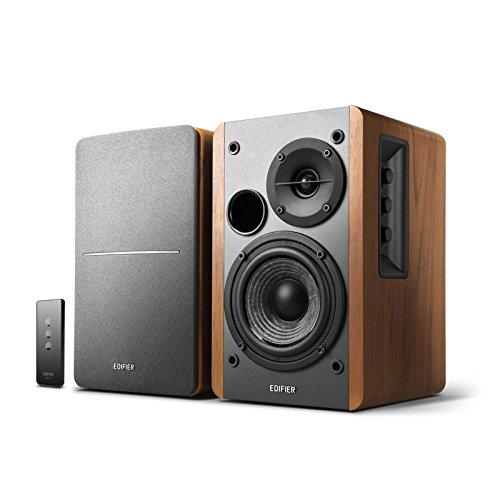
Edifier R1280T
Mentioned
Who Should Buy It
- Desktop listeners who want powered speakers for a computer or laptop
- Users with analog sources like a TV headphone jack, turntable with built-in preamp, or game console
- Small room listeners who prefer physical tone controls over apps
- Budget conscious buyers who do not need wireless or digital audio
Skip It If
- You need Bluetooth or Wi-Fi streaming from a phone or tablet
- You want strong sub bass or high volume output without adding a subwoofer
- You require optical, coaxial, or USB digital inputs for a TV or computer
We may earn a commission at no extra cost to you.
Last verified: October 2026
Keep Reading
Related guides and picks on Mandrillis:
- Best Bookshelf Speakers Under 500 : compact pairs that fit upright
- How Far Should Bookshelf Speakers Be From the Wall? : placement that improves bass
- Active vs Passive Speakers for Beginners : choose the right speaker type
FAQs
About This Guide
Mandrillis Team
The Mandrillis editorial team researches and compares audio and music gear using manufacturer documentation, verified specs and real buyer feedback, so you can make a confident purchase without wading through marketing claims.
Read our full research methodology.