Speakers Review
KEF LS50 II Active Review: High-End Wireless Bookshelf Sound
The KEF LS50 II Active is a premium powered bookshelf speaker built around a 12th generation Uni-Q driver array and Metamaterial Absorption Technology. It combines HDMI eARC, analog, optical, and coaxial inputs with Apple AirPlay 2, Chromecast, Spotify Connect, and Tidal Connect for a self-contained high fidelity system.
Our Verdict
Research Score 89/100The KEF LS50 II Active is a compelling all-in-one powered bookshelf speaker on paper. The listing describes a 12th-generation Uni-Q driver array and MAT technology, both aimed at wide dispersion and low distortion. HDMI eARC, multiple wired inputs, and support for AirPlay 2, Chromecast, Spotify Connect, and Tidal Connect make it a strong hub for music and TV. The biggest gaps are unpublished specifications, including frequency response, sensitivity, power, dimensions, and weight, plus no mention of Bluetooth. At a premium price tier, this speaker targets buyers who value KEF's engineering and want a simplified high-fidelity system without separate components. If you need detailed measurements or a passive design, look elsewhere.
Editorial research score based on published specifications and documented features, not a customer rating or lab test.
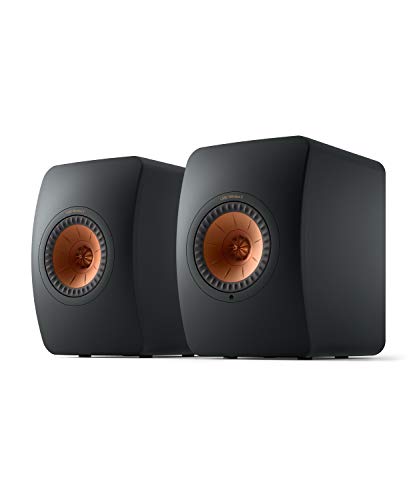
KEF
KEF LS50 II Active
Best for: Listeners who want a complete high-fidelity powered bookshelf system with TV and streaming integration.
Skip it if: You need published acoustic specifications or a Bluetooth connection before buying.
Check Price on AmazonWe may earn a commission at no extra cost to you.
Listing verified: October 2026
Who Should Buy It
Buy it if
- Listeners who want a self-contained powered hi-fi system without separate components
- Users planning a TV or home theater setup with HDMI eARC
- Streaming-focused listeners who use AirPlay 2, Chromecast, Spotify Connect, or Tidal Connect
- Those who value KEF's Uni-Q and MAT technologies
Skip it if
- You need a passive speaker for an existing amplifier
- You require published frequency response and sensitivity specifications before purchase
- You are shopping in a budget or lower mid-range price tier
Key Specifications
| Type | Active powered bookshelf speaker system |
| Drivers | 12th-generation Uni-Q driver array with Metamaterial Absorption Technology (MAT) |
| Power or sensitivity | Not published in listing |
| Frequency response | Not published in listing |
| Inputs and connectivity | HDMI eARC, analog, optical, coaxial, subwoofer output |
| Bluetooth and streaming | Apple AirPlay 2, Google Chromecast, Spotify Connect, Tidal Connect, high-resolution audio support |
| Dimensions | Not published in listing |
| Weight | Not published in listing |
| Finish | Carbon Black |
| Included accessories | Not published in listing |
Overview
The KEF LS50 II Active is a premium powered bookshelf speaker system that packages amplification, drivers, and wireless streaming into one cabinet per channel. The listing focuses on the all-in-one high-fidelity design, meaning a buyer does not need to add a separate integrated amplifier or receiver. This approach suits living rooms, offices, and home theater use where a clean setup is a priority.
KEF positions this model around its 12th-generation Uni-Q driver array and Metamaterial Absorption Technology, often shortened to MAT. Those two technologies are the core of the published marketing claims, with MAT said to absorb 99 percent of unwanted sound from the rear of the driver. The listing also highlights HDMI eARC, analog, optical, and coaxial inputs, plus several wireless streaming platforms.
The product is listed at a premium price tier, which places it well above entry-level powered bookshelf speakers like the Edifier R1280DB. However, the listing does not publish key acoustic specifications such as frequency response, sensitivity, or amplifier power output. As a result, this review can only evaluate the feature set and the claims made by KEF, not measured performance.
Sound Quality
On paper, the KEF LS50 II Active is built for a wide and even soundstage. The 12th-generation Uni-Q driver array is designed to disperse sound more uniformly across a room than a conventional separate tweeter and woofer layout. KEF states that the array lets everyone get the best seat, which suggests that the speaker aims to reduce the narrow sweet spot often associated with traditional two-way bookshelf designs.
The Metamaterial Absorption Technology is another significant claim. According to the listing, MAT absorbs 99 percent of unwanted sound from the rear of the driver, which KEF says eliminates distortion and produces a purer, more natural acoustic performance. This is an engineering approach that targets internal resonances and rear-wave artifacts, and it is not a feature found on budget powered speakers such as the Edifier R1280DB or many mid-range passive models.
Because the listing does not publish a frequency response curve or sensitivity rating, a buyer cannot verify how deep the bass reaches or how loud the speakers play from the specifications alone. The promise of high-resolution audio support suggests that the internal digital processing and streaming path is capable of more than basic compressed formats. For critical listening, the claimed reduction in distortion from MAT is the main reason to expect sound quality above typical active bookshelf speakers.
Drivers, Power and Room Fit
The driver complement is described as a 12th-generation Uni-Q driver array, but the listing does not specify the exact driver sizes, number of drivers per cabinet, or the amplifier topology. In KEF's Uni-Q concept, the tweeter is typically placed at the acoustic center of the midrange or woofer, but that detail is not repeated in this listing. The claim of room-filling sound is tied to that array and its dispersion characteristics.
Power output is not published in the listing, which is notable for a powered speaker. Many active speakers list wattage per channel or total system power, but the KEF LS50 II Active listing omits that figure. Without a stated power rating or sensitivity, it is hard to estimate maximum volume or headroom on paper. The dedicated subwoofer output does allow the system to be expanded with an external powered subwoofer, which can relieve the main speakers of low-frequency duties if needed.
For room fit, the bookshelf form factor suggests placement on stands, shelves, or a media console, but the listing does not provide dimensions or weight. The wide dispersion goal of the Uni-Q array implies that the speakers may be more forgiving of off-axis listening positions than conventional designs. Buyers with larger rooms or a desire for deeper bass may want to plan for a subwoofer from the start.
Features and Connectivity
The KEF LS50 II Active offers a broad set of wired and wireless inputs. On the wired side, the listing confirms HDMI eARC, analog, optical, and coaxial inputs, plus a dedicated subwoofer output. HDMI eARC is particularly useful for TV and home theater use because it allows a single cable to carry audio from a compatible television, often with volume control handled by the TV remote.
Wireless streaming support includes Apple AirPlay 2, Google Chromecast, Spotify Connect, and Tidal Connect. These platforms cover a large portion of the streaming market and allow direct playback from a phone, tablet, or computer without needing a physical cable. The listing also mentions high-resolution audio support, though it does not specify the maximum sample rate or bit depth. Bluetooth is not mentioned anywhere in the published feature set, which may matter to buyers who prefer simple Bluetooth pairing.
- HDMI eARC for TV audio
- Analog, optical, and coaxial inputs for turntables, CD players, and game consoles
- Apple AirPlay 2, Google Chromecast, Spotify Connect, and Tidal Connect
- High-resolution audio support
- Dedicated subwoofer output
Build, Design and Finish
The listing describes a Carbon Black finish, which is the only color option mentioned. KEF typically uses dense cabinets for its LS50 series, but this listing does not state the cabinet material, internal bracing, or weight. The absence of dimensions and weight makes it difficult to assess how the speakers will fit on a shelf or stand without checking the manufacturer's separate documentation.
The design is clearly bookshelf-oriented, and the front panel is likely dominated by the Uni-Q driver array, though no photos are available in this listing. The active design means each speaker contains amplification and digital processing, so the cabinets may be heavier than passive bookshelf speakers of similar size. The Carbon Black finish should blend into modern AV furniture, but buyers looking for wood veneer or white options will not find them in this listing.
Because no in-person evaluation is possible from the listing alone, the build quality can only be inferred from KEF's reputation and the premium price tier. The listing does not mention included accessories such as grilles, remote controls, or cables, so buyers should confirm what comes in the box before purchase.
Setup and Placement
Setup for the KEF LS50 II Active should be simpler than a passive speaker system because there is no separate amplifier or receiver to connect. Each speaker needs power and an audio source, either wired or wireless. The listing does not describe a setup app or room correction, but many active speakers in this class include some form of control app. That is not confirmed here.
Placement flexibility is supported by the Uni-Q driver array, which is designed to spread sound evenly. The bookshelf form factor allows placement on stands, shelves, or a media unit, but the listing does not provide minimum distances from walls or other placement guidance. The subwoofer output means a user can add a powered subwoofer if the main speakers are placed where deep bass is lacking.
For TV use, HDMI eARC simplifies connection to a compatible television, often reducing the need for an optical cable. The wireless streaming options mean that the speakers can be set up without a wired source for music, which is convenient for a living room or office. Buyers should still check that their TV supports eARC, because older ARC or optical-only TVs may require the optical input.
Daily Use
In daily use, the KEF LS50 II Active should serve as a central audio hub for music and TV. The listing emphasizes seamless switching between streaming platforms, and the presence of multiple wired inputs means a turntable, CD player, and game console can remain connected. The subwoofer output allows bass expansion without changing the main speakers.
The lack of a published remote control or app in the listing leaves some questions about how users will switch inputs and adjust volume. Most active speakers with HDMI eARC and streaming support include a remote or an app, but that is not stated here. The high-resolution audio support suggests that listeners with a local library of lossless files or a high-res streaming subscription can take advantage of the internal processing.
For buyers coming from a passive bookshelf speaker like the Klipsch R-51M or ELAC Debut 2.0 B5.2, the KEF LS50 II Active removes the need for a separate integrated amp and speaker cables. That can reduce clutter and simplify the system. However, the premium price tier and missing specifications mean buyers should research the full manual before committing.
Who Should Buy It
The KEF LS50 II Active is best for listeners who want a complete high-fidelity system without the complexity of separates. It suits users who plan to connect a TV through HDMI eARC, because that single cable can handle high-quality audio and simplify volume control. Buyers who already use AirPlay 2, Chromecast, Spotify Connect, or Tidal Connect will find native support.
Those who value KEF's specific engineering approaches, such as the 12th-generation Uni-Q driver array and MAT, are the most likely to appreciate this product. The wide dispersion claim is especially relevant for households where listeners sit in different positions, not just a central sweet spot. The subwoofer output also makes it a viable starting point for a 2.1 system.
This is not a speaker for someone who already owns a high-quality integrated amplifier and wants passive speakers. It is also not for buyers who need published frequency response, sensitivity, or power output before making a decision. The premium price tier means it competes with other high-end active bookshelf systems, not budget powered speakers.
Alternatives Worth Considering
For a lower-priced powered bookshelf speaker, the Edifier R1280DB is a common budget alternative, but it does not include HDMI eARC or the Uni-Q and MAT technologies. Buyers who prefer passive speakers and already have an amplifier might look at the Klipsch R-51M or ELAC Debut 2.0 B5.2, which are well-known references in the bookshelf category but require a separate amp.
If portability is a priority, the JBL Flip 6 and Bose SoundLink Flex are compact portable speakers with a different use case, much smaller drivers, and no HDMI eARC. For a floorstanding option, the Polk Audio T50 is a passive tower that offers more cabinet volume for bass but again needs an amplifier. And if the KEF's bass is not enough, the SVS SB-1000 Pro is a sealed powered subwoofer that could pair via the subwoofer output, though the listing does not specify crossover settings.
The KEF LS50 II Active sits in a relatively small group of premium powered bookshelf speakers that combine streaming and TV connectivity in one package. Buyers comparing it to passive alternatives should factor in the cost of amplification, cables, and possibly a streamer, which can close the price gap. None of these comparisons should be taken as a in-person test, because they are based only on published feature sets and common market positioning.
Verdict
The KEF LS50 II Active is a compelling all-in-one powered bookshelf speaker on paper. The listing describes a 12th-generation Uni-Q driver array and MAT technology, both aimed at wide dispersion and low distortion. HDMI eARC, multiple wired inputs, and support for AirPlay 2, Chromecast, Spotify Connect, and Tidal Connect make it a strong hub for music and TV.
The biggest gaps are unpublished specifications, including frequency response, sensitivity, power, dimensions, and weight, plus no mention of Bluetooth. At a premium price tier, this speaker targets buyers who value KEF's engineering and want a simplified high-fidelity system without separate components. If you need detailed measurements or a passive design, look elsewhere.
Strengths and Limitations
Strengths
- All-in-one active design removes need for separate amplifier
- 12th-generation Uni-Q driver array for wide soundstage
- Metamaterial Absorption Technology reduces unwanted distortion
- HDMI eARC plus analog, optical, and coaxial inputs
- Streaming via AirPlay 2, Chromecast, Spotify Connect, and Tidal Connect
- Dedicated subwoofer output for bass expansion
Limitations
- Premium price tier
- Listing does not publish frequency response, sensitivity, or power output
- No Bluetooth mentioned in listing
- No published dimensions or weight
- No included accessories listed
How We Scored It
Scores reflect published specifications, documented features and value against the alternatives below. They are editorial research scores, not laboratory measurements.
Alternatives to Consider

SVS PB17-Ultra R
Home theater enthusiasts seeking very deep, high output bass with advanced calibration features.
Read the SVS PB17-Ultra R review →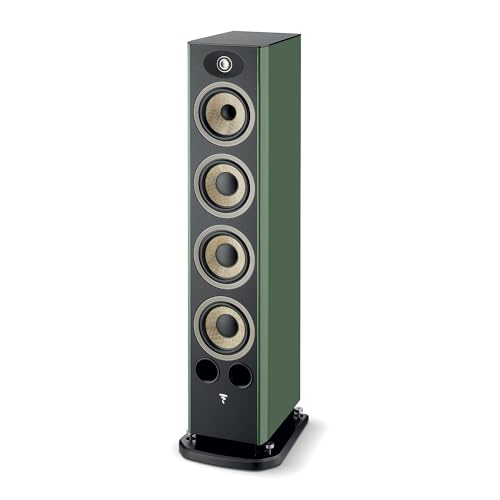
Focal Aria Evo X
Audiophiles wanting a premium French-made floorstanding speaker with Focal's flax fibre and TAM tweeter technologies.
Read the Focal Aria Evo X review →
KEF R3
Audiophiles and home theater enthusiasts building a passive high fidelity system around a quality amplifier or receiver.
Read the KEF R3 review →Questions Buyers Ask
KEF LS50 II Active
See the current listing, price and included accessories.
About This Review
Mandrillis Team
The Mandrillis editorial team researches and compares audio and music gear using manufacturer documentation, verified specs and real buyer feedback, so you can make a confident purchase without wading through marketing claims.
Read our full research methodology.