Speakers Review
KEF R3 Review: Premium Passive Bookshelf Speakers
The KEF R3 Meta is a premium passive bookshelf speaker featuring KEF's Metamaterial Absorption Technology and 12th generation Uni-Q driver array. It promises low distortion and a wide sweet spot for music and home theater. The black gloss finish adds modern style, but it requires a separate amplifier and lacks wireless connectivity.
Our Verdict
Research Score 81/100The KEF R3 Meta presents a compelling option on paper for premium passive bookshelf speakers. The combination of Metamaterial Absorption Technology and the Uni-Q driver array addresses two common issues: high frequency distortion and uneven off axis response. The 3 way design suggests good midrange clarity and bass capability, though the listing omits many technical specifications that would help confirm those expectations. The passive nature means you need a separate amplifier, which is a benefit for flexibility but a drawback for simplicity. The premium price tier places it above many competitors, so buyers should weigh the advanced technology against the cost and the incomplete published specifications. Overall, this speaker is best for dedicated hi-fi and home theater enthusiasts who already have quality electronics and want a modern, low distortion bookshelf speaker. We score the KEF R3 Meta 81 out of 100 based on the listing information.
Editorial research score based on published specifications and documented features, not a customer rating or lab test.

KEF
KEF R3
Best for: Audiophiles and home theater enthusiasts building a passive high fidelity system around a quality amplifier or receiver.
Skip it if: You need a self powered speaker with wireless connectivity or you are shopping in a budget to mid range price tier.
Check Price on AmazonWe may earn a commission at no extra cost to you.
Listing verified: October 2026
Who Should Buy It
Buy it if
- Listeners who already own a quality amplifier or AV receiver
- Buyers who prioritize soundstage and low distortion
- Those who want a premium bookshelf speaker with modern design
- Home theater users who can add a subwoofer for deep bass
Skip it if
- You want a plug and play powered speaker
- You rely on Bluetooth streaming as the primary source
- You are on a strict budget
Key Specifications
| Type | Passive bookshelf speaker |
| Drivers | Not published in listing |
| Power or sensitivity | Not published in listing |
| Frequency response | Not published in listing |
| Inputs and connectivity | Passive speaker terminals (specific type not listed) |
| Bluetooth and streaming | None, passive speaker |
| Dimensions | Not published in listing |
| Weight | Not published in listing |
| Finish | Black Gloss |
| Included accessories | Not published in listing |
Overview
The KEF R3 Meta is a premium passive bookshelf speaker positioned for high fidelity music and home theater use. It uses a 3 way design with KEF's 12th generation Uni-Q driver array and Metamaterial Absorption Technology. The listing highlights clarity, deep bass, and dynamic range for both music and movies. The black gloss finish adds a modern aesthetic.
This is a passive speaker, meaning it needs an external amplifier or AV receiver to operate. That requirement gives buyers flexibility to choose their own electronics and upgrade later. However, the listing does not publish many specifications such as driver sizes, frequency response, sensitivity, impedance, power handling, dimensions, or weight. Buyers must rely on KEF's reputation and the described technologies when evaluating this speaker.
Sound Quality
The standout feature in the listing is KEF's Metamaterial Absorption Technology, or MAT. The company states that MAT eliminates 99 percent of high frequency distortion. That should translate to a purer, more natural sound with finer detail. Since we have not tested the speaker, we take that claim at face value and note that KEF has a strong track record in acoustic engineering.
Another key element is the Uni-Q driver array. Instead of a conventional separate tweeter and midrange, Uni-Q places the tweeter in the acoustic center of the midrange cone. That design is intended to disperse sound evenly across a wide area, creating a large sweet spot. For listeners who move around the room or sit off axis, this should improve consistency of tonality and imaging. The 3 way configuration suggests the speaker also has a dedicated bass driver, though its size is not listed.
Drivers, Power and Room Fit
The Uni-Q driver is the 12th generation of KEF's technology. The listing does not specify the exact driver sizes, which is a notable omission for buyers who want to understand bass extension and output capability. A 3 way passive design usually includes a separate woofer for low frequencies, but the listing does not confirm the woofer diameter or the crossover points. Without those details, assessing the speaker's power handling and room filling ability is difficult.
Since this is a passive speaker, its performance depends heavily on the amplifier or receiver used. The listing does not state sensitivity, impedance, or recommended amplifier power. That means buyers must consult KEF's official documentation or an authorized dealer before purchasing to ensure proper matching. A speaker with low sensitivity might require a more powerful amplifier to reach high volumes. In a premium tier product, one expects more complete published specifications.
For room fit, bookshelf speakers are generally suitable for small to medium rooms. However, without dimensions and weight, planning placement is harder. The wide dispersion from the Uni-Q driver should help in rooms where the listening position is not directly in front of the speakers. Buyers should consider that a separate subwoofer may be needed for deep bass if using these for home theater.
Features and Connectivity
The R3 Meta is a traditional passive speaker. It has no built in amplifier, no Bluetooth, no Wi Fi, no digital inputs, and no DSP or room correction. The only connection is a pair of speaker wire terminals on the back. That means you must have an external amplifier, stereo receiver, or AV receiver to use them. This is not a speaker for someone looking for a simple all in one wireless solution.
The advantage of this approach is flexibility. You can choose the amplification that matches your budget and power needs. You can also upgrade the amplifier later without replacing the speakers. The listing specifically promotes this flexibility for system building. For home theater, you can pair these with a center channel and surrounds from KEF to create a cohesive system.
- Passive speaker requires separate amplification
- 3 way design with Uni-Q driver array
- Metamaterial Absorption Technology reduces distortion
- Black gloss premium finish
- Suitable for stereo and home theater use
- No wireless or digital inputs
Build, Design and Finish
The listing highlights a sleek, minimalist design with a black gloss finish. Black gloss cabinets tend to look elegant and blend well with modern interiors, but they also show dust and fingerprints easily. The exact material of the cabinet is not disclosed, though KEF typically uses dense MDF with internal bracing. Without in-person inspection, we cannot verify build quality beyond the brand reputation.
The premium price tier suggests that the build should be solid, but the listing does not state the weight or dimensions, which can indicate cabinet density. The front baffle design is not described in detail, but the Uni-Q driver is centered. The black gloss finish is the only finish option mentioned in this listing, so buyers who prefer wood veneers may need to look elsewhere.
Setup and Placement
Setting up the KEF R3 Meta is straightforward from a connectivity standpoint. You connect speaker wire from your amplifier's speaker outputs to the binding posts on the back of each speaker. No network setup or app is required. However, you must already own or purchase an appropriate amplifier, which adds to the overall system cost and setup complexity.
Placement is an important part of getting good sound. Bookshelf speakers generally perform best on sturdy stands that place the tweeter at ear height. They should be positioned away from walls to reduce bass boom, and toed in toward the listening area to maximize the wide sweet spot from the Uni-Q driver. Since dimensions are not published, you may need to plan space based on photos or contact KEF for exact measurements.
Daily Use
In everyday use, the R3 Meta should deliver detailed, low distortion sound for both music and movies. The wide dispersion means that even listeners sitting off to the side should hear a balanced soundstage. The speaker itself has no controls, so volume and source selection are handled entirely by your amplifier or receiver. This is typical for hi-fi passive speakers.
The black gloss finish will require occasional cleaning to maintain its appearance. The lack of built-in streaming means you will need a separate source component such as a CD player, turntable, or network streamer. For home theater use, you will likely want to add a subwoofer to handle low frequency effects, as bookshelf speakers of this type often benefit from reinforcement below 60 Hz or so, though the exact low frequency extension is not listed.
Who Should Buy It
This speaker is ideal for audiophiles who already own a high quality integrated amplifier or separates and want to upgrade to premium bookshelf speakers. It also suits home theater enthusiasts building a passive system around an AV receiver. If you value low distortion and a wide listening area, the MAT and Uni-Q technologies are appealing.
Buyers who prefer to choose their own amplification and plan to keep speakers for many years will appreciate the passive design. The premium aesthetic may also appeal to those who want speakers that look as good as they sound. However, you should be comfortable with the extra components and cabling required.
Alternatives Worth Considering
If you want a more budget friendly powered speaker with built in amplification and Bluetooth, the Edifier R1280DB is a common alternative. It is much less expensive and simpler to set up, though it does not offer the same level of refinement or the 3 way design. For a passive speaker with a different sound character, the Klipsch R-51M uses horn loaded tweeters and is also lower priced.
The ELAC Debut 2.0 B5.2 is another passive bookshelf speaker that is well regarded and often compared in the mid range. It may not have the same high tech driver materials but offers strong performance for the money. If you are building a home theater with the KEF R3 Meta, consider adding an SVS SB-1000 Pro subwoofer to cover deep bass frequencies, since no bookshelf speaker can match a dedicated subwoofer for low end impact.
Verdict
The KEF R3 Meta presents a compelling option on paper for premium passive bookshelf speakers. The combination of Metamaterial Absorption Technology and the Uni-Q driver array addresses two common issues: high frequency distortion and uneven off axis response. The 3 way design suggests good midrange clarity and bass capability, though the listing omits many technical specifications that would help confirm those expectations.
The passive nature means you need a separate amplifier, which is a benefit for flexibility but a drawback for simplicity. The premium price tier places it above many competitors, so buyers should weigh the advanced technology against the cost and the incomplete published specifications. Overall, this speaker is best for dedicated hi-fi and home theater enthusiasts who already have quality electronics and want a modern, low distortion bookshelf speaker.
We score the KEF R3 Meta 81 out of 100 based on the listing information. The sound quality potential is high thanks to the MAT and Uni-Q technologies, but the lack of published power handling, sensitivity, and dimensions prevents a higher score. Build quality is assumed to be high given the brand and price, but without in-person verification, we remain cautious.
Strengths and Limitations
Strengths
- Metamaterial Absorption Technology reduces high frequency distortion
- 12th generation Uni-Q driver array for wide sweet spot
- 3 way design for clarity and dynamics
- Premium black gloss aesthetic
- Flexible passive design pairs with existing amplification
- Respected KEF brand
Limitations
- No built in amplification, requires separate amp
- No wireless or streaming features
- Specific performance specs not published in listing
- Premium price tier may be costly
- Black gloss finish may show fingerprints
How We Scored It
Scores reflect published specifications, documented features and value against the alternatives below. They are editorial research scores, not laboratory measurements.
Alternatives to Consider

Q Acoustics 5050
Listeners who want a premium passive floorstanding speaker from a known brand and can supply their own amplification.
Read the Q Acoustics 5050 review →
SVS SB17 Ultra R
Home theater and music listeners who want deep sub-bass extension and app-based room correction in a premium powered subwoofer.
Read the SVS SB17 Ultra R review →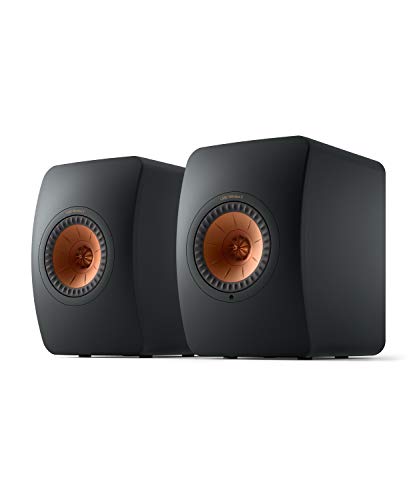
KEF LS50 II Active
Listeners who want a complete high-fidelity powered bookshelf system with TV and streaming integration.
Read the KEF LS50 II Active review →Questions Buyers Ask
KEF R3
See the current listing, price and included accessories.
About This Review
Mandrillis Team
The Mandrillis editorial team researches and compares audio and music gear using manufacturer documentation, verified specs and real buyer feedback, so you can make a confident purchase without wading through marketing claims.
Read our full research methodology.