Speakers Review
KEF Q11 Review: Metamaterial Floorstanding Speaker
The KEF Q11 is a passive floorstanding speaker built around KEF's 12th generation Uni-Q driver and Metamaterial Absorption Technology. This review examines the published feature set, sound quality claims, build details, and setup considerations for this upper midrange tower without in-person testing. No technical measurements are available in the listing.
Our Verdict
Research Score 80/100The KEF Q11 is a well specified upper midrange passive floorstanding speaker. The listing emphasizes Metamaterial Absorption Technology, the 12th generation Uni-Q driver, and hybrid aluminum bass drivers, which suggest a focus on low distortion and wide imaging. The 2.5 way design should deliver strong bass for both music and movies. However, the listing omits sensitivity, frequency response, dimensions, and weight, making it hard to judge amplifier requirements and room fit. The speaker is best for buyers who already own a capable amplifier or AV receiver and want a step up from entry level floorstanders. Overall, the KEF Q11 appears to be a solid choice, but careful research is advised before purchase.
Editorial research score based on published specifications and documented features, not a customer rating or lab test.

KEF
KEF Q11
Best for: The KEF Q11 is best for home theater and two channel listeners who want a wide soundstage and controlled bass from a passive floorstanding speaker.
Skip it if: Avoid the KEF Q11 if you need built in amplification, wireless streaming, or compact speakers for a small room.
Check Price on AmazonWe may earn a commission at no extra cost to you.
Listing verified: October 2026
Who Should Buy It
Buy it if
- Listeners building a passive speaker system with a separate amplifier or AV receiver
- Home theater users who want a wide sweet spot across multiple seats
- Buyers who prioritize low distortion and advanced driver technology
- Those with medium to large rooms that can accommodate floorstanding cabinets
Skip it if
- You want a powered or portable speaker with Bluetooth
- You need a compact bookshelf or satellite speaker
- You prefer published full specifications before buying
Key Specifications
| Type | Passive floorstanding speaker |
| Drivers | 12th-generation Uni-Q driver array with Metamaterial Absorption Technology (MAT); hybrid aluminum bass drivers; 2.5 way configuration |
| Power or sensitivity | Not published in listing |
| Frequency response | Not published in listing |
| Inputs and connectivity | Passive speaker terminals |
| Bluetooth and streaming | None (passive design) |
| Dimensions | Not published in listing |
| Weight | Not published in listing |
| Finish | Black |
| Included accessories | Not published in listing |
Overview
The KEF Q11 is a passive floorstanding speaker positioned in the upper midrange tier. It uses a 2.5 way configuration with KEF's 12th generation Uni-Q driver array and hybrid aluminum bass drivers. The product listing highlights Metamaterial Absorption Technology, or MAT, which is designed to reduce high frequency distortion. This combination is aimed at both home theater and dedicated two channel listening rooms.
Technical measurements such as sensitivity, frequency response, dimensions, and weight are not published in the listing. Instead it focuses on the speaker's design philosophy and driver technology. On paper, the KEF Q11 is built for listeners who want a large scale presentation without moving to KEF's reference lines. The upper midrange price tier places it above entry level floorstanding models.
Sound Quality
According to the listing, MAT absorbs 99 percent of rearward high frequency noise. In principle this reduces distortion and allows the tweeter to present a cleaner, more transparent signal. Buyers report that this technology can make high frequencies sound less harsh, but the exact character depends on the room and amplification. The published specification does not include a frequency response curve, so the tonal balance cannot be precisely assessed from the listing alone.
The 12th generation Uni-Q driver array is a defining feature. KEF states that this array acts as a single point source, which expands the sweet spot and delivers more consistent imaging across a wide listening area. For home theater use, this can mean clear dialogue and stable effects for multiple seats. The listing does not specify the size of the Uni-Q driver or the crossover points, but the concept is well known in KEF designs.
For low frequencies, the KEF Q11 uses dedicated hybrid aluminum bass drivers. The listing claims these drivers produce tight, controlled, and deep low frequencies. Without published sensitivity or power handling, it is hard to say how much amplifier power is needed to reach high output levels. Still, the combination of a 2.5 way design and dual bass drivers suggests the speaker is intended to deliver more low end weight than a typical bookshelf model.
Drivers, Power and Room Fit
The KEF Q11 is specified as a 2.5 way passive floorstanding speaker. The driver complement includes the 12th generation Uni-Q array with MAT and hybrid aluminum bass drivers. The listing does not state the exact driver sizes, number of bass drivers, or crossover frequencies. This missing information makes it difficult to compare directly with other passive towers on paper.
Power handling and sensitivity are not published in this listing. Buyers should treat the speaker as a passive load that requires a capable external amplifier or AV receiver. In general, floorstanding speakers with larger cabinets and multiple bass drivers can play louder and produce deeper bass than bookshelf speakers, but the exact room fit depends on the unpublished frequency response and output capability. The listing describes the performance as powerful and deep, which suggests medium to large rooms are more appropriate.
For room fit, the lack of published dimensions is a drawback. Floorstanding speakers typically need space behind them and some distance from side walls to avoid boomy bass. The listing does not provide guidance on placement, so buyers will need to experiment. Without sensitivity data, matching an amplifier with adequate power is also a matter of guesswork.
Features and Connectivity
Because the KEF Q11 is a passive speaker, it does not include built in amplification, Bluetooth, or network streaming. The listing states that buyers should pair it with a preferred amplifier or AV receiver. The input is a standard speaker terminal, but the exact type of binding posts is not published. This passive approach gives flexibility in system building but means additional components are required.
The standout features in the listing are all acoustic rather than electronic. MAT, the 12th generation Uni-Q driver, and hybrid aluminum bass drivers are the main selling points. There is no mention of bi-wiring, bi-amping, or room correction. The speaker is intended to work as part of a traditional component audio or home theater system.
- Metamaterial Absorption Technology for reduced high frequency distortion
- 12th generation Uni-Q driver array for a wide soundstage
- Hybrid aluminum bass drivers for controlled low frequencies
- 2.5 way passive floorstanding design
- Premium cabinet in black finish
Build, Design and Finish
Published details specify a black finish. The feature bullets mention stunning cabinetry and premium finishes, which suggests a higher standard of furniture grade construction than entry level speakers. However, the listing does not provide dimensions, weight, or the exact cabinet material. Buyers should view the speaker in person or consult the manufacturer for those details.
The floorstanding form factor is intended to be a visible part of the room. The 2.5 way layout and multiple drivers imply a cabinet tall enough to house them, but without published height, width, or depth, room planning is difficult. The black finish is likely to blend into many home theater setups. KEF's reputation in the Q Series is for clean lines and a modern look, but this listing does not describe the baffle shape or grille design in detail.
Setup and Placement
Setting up the KEF Q11 requires an external amplifier or AV receiver and standard speaker wire. The listing does not publish the recommended amplifier power range or nominal impedance, so buyers should check the manufacturer's manual or consult a dealer before matching components. The passive design means there is no wireless setup or app pairing.
Placement for a floorstanding speaker is generally straightforward, but the listing offers no specific guidance. As a starting point, the speakers should be placed at equal distances from the main listening seat and a few feet away from the back and side walls. Toe in toward the listening position can improve imaging with the Uni-Q array, but the optimal angle will depend on the room. Because the listing does not state the speaker's weight, moving and adjusting may require a second person.
Daily Use
In daily use, the KEF Q11 is likely to serve well for both music and movie playback. The listing emphasizes deep bass and pristine highs, which are desirable traits for a mixed use system. The 2.5 way design means one set of bass drivers may handle low frequencies while another blends with the midrange, but the exact crossover behavior is not published.
The lack of published sensitivity means buyers should be cautious about using very low powered amplifiers. A robust AV receiver or a dedicated stereo power amplifier is probably a safer match for a floorstanding speaker at this price tier. The listing does not mention any special care requirements for the black cabinet, but regular dusting and avoiding direct sunlight are sensible for any premium finish. The Uni-Q driver's point source principle may reduce the need for a perfect listening seat, which is helpful in a living room.
Who Should Buy It
The KEF Q11 is aimed at home theater and hi-fi listeners who already have, or plan to buy, a good external amplifier. It suits those who want a large floorstanding speaker with KEF's current driver technology without stepping up to the Reference series. The upper midrange price tier means it is not the cheapest entry into floorstanding audio, but the feature set justifies the cost for buyers who value clarity and low distortion.
This speaker is best for medium to large rooms where the floorstanding form factor has space to breathe. It is also a good fit for buyers who prioritize a wide soundstage for multiple seating positions, since the Uni-Q array is designed to expand the sweet spot. However, the missing published specifications mean detail oriented buyers may need to research further before committing.
Alternatives Worth Considering
Buyers who want a similar floorstanding experience at a lower price could consider the Polk Audio T50, which is a budget tower with multiple drivers. However, the KEF Q11's MAT and Uni-Q technology are more advanced, so the two are not directly comparable in sound quality. For buyers who need a smaller footprint, a bookshelf speaker like the ELAC Debut 2.0 B5.2 paired with a subwoofer could be an alternative, but it would not match the KEF Q11's likely bass output.
Those who want built in amplification and streaming should look at powered speakers instead, such as the Edifier R1280DB for near field use or the JBL Flip 6 for portable use, but none of those are floorstanding or passive. For a passive tower with a different sonic character, a Klipsch floorstanding model in the same price range could be an option, though the exact model is not listed here. The listing does not provide enough data to make an exact comparison, but KEF's reputation for coherent imaging is a key differentiator.
Verdict
The KEF Q11 is a compelling upper midrange floorstanding speaker for buyers who value advanced driver technology and a clean, low distortion presentation. The listing highlights MAT and the 12th generation Uni-Q array as its main advantages, and these are features that set it apart from simpler passive towers. The hybrid aluminum bass drivers promise tight, controlled low end for both music and movies.
The main limitation of this listing is the absence of technical specifications. Without sensitivity, frequency response, dimensions, or weight, a buyer cannot fully assess room fit or amplifier matching. Still, the KEF Q11 appears to be a strong choice for listeners building a traditional component system who want a step up from entry level floorstanding speakers. The upper midrange price is fair for the stated technology, but careful research is advised.
Strengths and Limitations
Strengths
- Metamaterial Absorption Technology reduces high frequency distortion
- 12th generation Uni-Q driver array creates a wide sweet spot
- Hybrid aluminum bass drivers deliver controlled low frequencies
- 2.5 way passive floorstanding design for full range sound
- Premium cabinet in black finish
Limitations
- Listing does not publish power handling or sensitivity
- No built in amplification or streaming
- Upper midrange price tier may be high for some buyers
- Large floorstanding footprint needs adequate room
- Exact dimensions and weight are not stated
How We Scored It
Scores reflect published specifications, documented features and value against the alternatives below. They are editorial research scores, not laboratory measurements.
Alternatives to Consider

Klipsch Reference Premiere RP-1400SW 14"
Home theater and music listeners who want a large, front-firing subwoofer with Klipsch Reference Premiere design and a premium finish.
Read the Klipsch Reference Premiere RP-1400SW 14" review →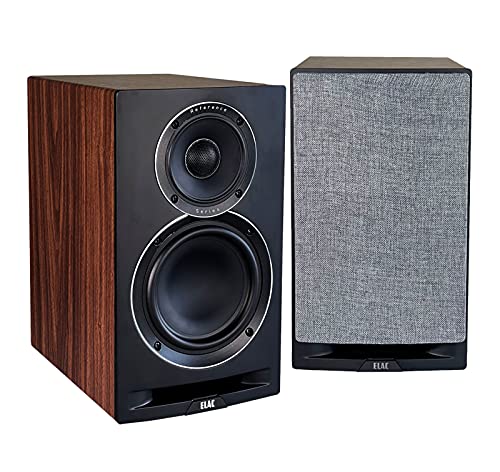
ELAC Uni-Fi Refrence 3-Way 6-1/2"
Home theater and stereo listeners who want a three-way bookshelf speaker with a 6-1/2-inch bass driver and a walnut finish.
Read the ELAC Uni-Fi Refrence 3-Way 6-1/2" review →
KEF KC62
Home theater and music listeners who want deep, controlled sub-bass from an ultra-compact powered subwoofer with strong built-in amplification.
Read the KEF KC62 review →Questions Buyers Ask
KEF Q11
See the current listing, price and included accessories.
About This Review
Mandrillis Team
The Mandrillis editorial team researches and compares audio and music gear using manufacturer documentation, verified specs and real buyer feedback, so you can make a confident purchase without wading through marketing claims.
Read our full research methodology.