Speakers Review
Klipsch R-52C Review: High Sensitivity Center Channel
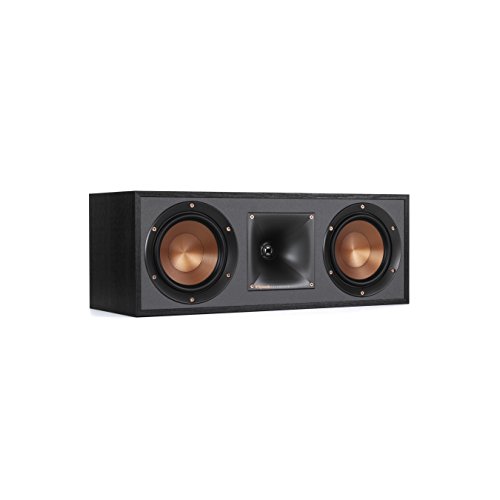
The Klipsch R-52C is a budget center channel speaker with dual 5.25 inch spun copper IMG woofers and a 1 inch aluminum LTS tweeter in a 90 by 90 degree Tractrix horn. It offers 95 dB sensitivity and 400 watts power handling, making it an efficient choice for dialogue in a home theater.
Our Verdict
Research Score 68/100The Klipsch R-52C is a budget center channel speaker that emphasizes high sensitivity and horn loaded clarity for home theater dialogue. The dual 5.25 inch spun copper woofers and 1 inch aluminum LTS tweeter in a 90 by 90 degree Tractrix horn give it a lively, dynamic character. The listed 95 dB sensitivity and 400 watt power handling make it easy to drive, but the 89 Hz low frequency limit means a subwoofer is necessary for full range sound. The listing omits impedance, dimensions, and weight, so buyers should confirm those details. Overall, it is a strong value for Klipsch Reference systems.
Editorial research score based on published specifications and documented features, not a customer rating or lab test.
Klipsch
Klipsch R-52C
Best for: Home theater users who want a high sensitivity passive center channel for clear dialogue in small to medium rooms.
Skip it if: Buyers who need built in streaming, deep bass without a subwoofer, or fully published specifications including impedance and size.
Check Price on AmazonWe may earn a commission at no extra cost to you.
Listing verified: October 2026
Who Should Buy It
Buy it if
- Klipsch Reference series owners needing a matching center
- Home theater users with an AV receiver and subwoofer
- Listeners who prefer dynamic, forward dialogue clarity
- Budget conscious buyers wanting easy to drive speakers
Skip it if
- You need wireless or powered speakers
- You do not plan to use a subwoofer for low frequencies
- You require documented dimensions and weight before purchase
Key Specifications
| Type | Center channel home theater speaker (passive) |
| Drivers | Dual 5.25 inch spun copper IMG woofers and a 1 inch aluminum LTS tweeter with a 90 by 90 degree square Tractrix horn |
| Power or sensitivity | Sensitivity 95 dB at 2.83 V/1 m, power handling 400 watts |
| Frequency response | 89 Hz to 21 kHz plus or minus 3 dB |
| Inputs and connectivity | Not published in listing |
| Bluetooth and streaming | Not published in listing |
| Dimensions | Not published in listing |
| Weight | Not published in listing |
| Finish | Black (from listing title and images) |
| Included accessories | Not published in listing |
Overview
The Klipsch R-52C is a passive center channel speaker built for home theater dialogue and front soundstage clarity. The product listing identifies it as a budget priced center speaker from Klipsch, a brand known for horn loaded designs. The published specification highlights a dual woofer layout and a compression driver tweeter mounted in a Tractrix horn.
On paper, the R-52C is designed to anchor the critical center channel role in a surround system. The listing does not state direct performance details, but the combination of high sensitivity and a horn loaded tweeter suggests a speaker intended to produce clear speech at moderate amplifier power. This review examines the listed specifications and what they imply for real world use.
Sound Quality
Klipsch describes the R-52C around a 1 inch aluminum LTS tweeter paired with a 90 by 90 degree square Tractrix horn. This horn geometry is common in Klipsch designs and is intended to control directivity while increasing output for a given input. The published sensitivity of 95 dB at 2.83 V/1 m is unusually high for a home speaker, which means the speaker should play loud with modest receiver power.
The frequency response is listed as 89 Hz to 21 kHz plus or minus 3 dB. That lower limit suggests the R-52C will not produce deep bass on its own and will rely on a subwoofer or main speakers for the lowest octaves. Dialogue, midrange presence, and the upper harmonics of voices should be a strength given the horn tweeter and dual midbass drivers.
Buyers familiar with Klipsch tend to describe the house sound as lively and forward. The R-52C appears to follow that approach, with a presentation that emphasizes intelligibility and dynamics rather than a flat or laid back character. Without direct testing, this assessment is based on the published specifications and the brand's general design philosophy.
Drivers, Power and Room Fit
The R-52C uses two 5.25 inch spun copper IMG woofers. The term IMG refers to injection molded graphite, a material Klipsch has used in several speaker lines for a rigid cone that resists flex. The copper colored cones are a visual signature of the Klipsch Reference series, and the listing describes them as spun copper.
A 1 inch aluminum LTS tweeter sits in a 90 by 90 degree square Tractrix horn. LTS stands for Linear Travel Suspension, which Klipsch uses to describe a tweeter suspension designed to reduce distortion at high output. The horn is intended to focus high frequencies toward the listening area while reducing reflections from side walls.
The power handling is listed at 400 watts, which indicates the speaker can tolerate high amplifier output without immediate damage. With 95 dB sensitivity, only a few watts are needed for normal listening levels in a small or medium room. Larger rooms may require more power, but the high sensitivity helps offset amplifier limitations.
Features and Connectivity
The R-52C is a passive speaker, meaning it does not include a built in amplifier, Bluetooth, or streaming electronics. The product listing does not specify the type of speaker terminals on the rear enclosure, but typical passive center channel models of this design use a pair of binding posts that accept bare wire, banana plugs, or spade connectors. Buyers will need an AV receiver or integrated amplifier to drive the speaker.
Because the R-52C is not powered, setup relies on speaker wire from the amplifier's center channel output. The listing does not mention any wireless or voice assistant features. This is expected for a passive speaker at a budget price point, and it keeps the unit focused on sound rather than digital connectivity.
- Passive design, no built in amplification or streaming
- Requires a home theater receiver or power amplifier
- Single center channel speaker for dialogue and effects
- High sensitivity reduces the need for high power output
- Listing does not specify terminal type or wire gauge compatibility
- Designed to pair with other Klipsch Reference series speakers
Build, Design and Finish
The published finish in the listing title is black, and the product images show a black cabinet with copper colored woofers. Klipsch typically uses a textured wood grain vinyl wrap on its budget Reference speakers, but the listing does not state the exact cabinet material or finish texture. The dimensions and weight are not published in the listing, so buyers should confirm physical size before purchasing.
The front baffle likely includes the horn assembly and the two woofers arranged symmetrically around the tweeter. The overall footprint appears compact enough for placement under a television or behind an acoustically transparent screen, but without listed measurements the exact fit is uncertain. The black finish helps the speaker blend into dark home theater setups.
Klipsch has a reputation for sturdy construction at entry level price points, but the absence of published weight and cabinet bracing details makes it difficult to assess long term build quality from the listing alone. The use of spun copper IMG woofers and an aluminum tweeter suggests attention to driver materials rather than purely cosmetic design.
Setup and Placement
Setting up the R-52C is similar to most passive center channel speakers. Connect speaker wire from the AV receiver's center channel output to the input terminals, then place the speaker on a media console, shelf, or dedicated stand below or above the display. The listing does not include setup instructions, but the process is straightforward for anyone familiar with home theater wiring.
Placement height and angle can affect dialogue clarity. Buyers often aim the speaker toward the main listening position, either by angling it upward on a console or placing it at ear level. The 90 by 90 degree horn should provide a reasonably wide listening window, but the listing does not state off axis response beyond the horn geometry.
The R-52C should be used with a receiver that has bass management crossed over around 80 Hz, which is a common guideline for small speakers. The listed frequency response of 89 Hz to 21 kHz supports that approach, as the speaker is not intended to reproduce sub bass. A subwoofer will complete the low end.
Daily Use
In daily use, the R-52C is likely to handle dialogue, on screen effects, and front soundstage cues with good clarity. The high sensitivity means the center channel can keep up with larger main speakers without needing a separate high power amplifier. Users who watch movies and television at moderate volumes should have ample headroom.
The horn loaded tweeter may produce a more focused treble presentation than a dome tweeter, which some listeners prefer for dialogue intelligibility and others find slightly forward. The dual 5.25 inch woofers should provide enough midbass to anchor male voices and give body to effects, but deeper bass will be limited.
Because the listing does not state impedance, users should verify compatibility with their receiver. Klipsch speakers are commonly rated at 8 ohms compatible, but the absence of a published impedance spec means buyers should check the owner's manual or contact the manufacturer for confirmation.
Who Should Buy It
The R-52C is best for someone building a Klipsch Reference series home theater system who needs a matching center channel. It suits small to medium rooms where high sensitivity is an advantage and where a subwoofer is already part of the plan. Home theater enthusiasts who prioritize dialogue clarity should find the listed design appealing.
Buyers who want a passive center speaker that is easy to drive with a modest AV receiver will appreciate the 95 dB sensitivity. Those who like the copper colored Klipsch aesthetic will also find the R-52C a visual match for other Reference series speakers.
The budget price tier makes this an accessible entry point for a dedicated center channel without spending on high end models. However, the lack of published dimensions, weight, and impedance means diligent buyers should confirm those details before purchase.
Alternatives Worth Considering
A few other well known center channel speakers occupy a similar space. The Polk Audio T30 is a budget center channel that often competes with entry level Klipsch models, though its driver design and voicing differ. The ELAC Debut 2.0 C5.2 offers a different approach with a dome tweeter and a more neutral tuning for those who do not want a horn presentation.
For buyers already invested in Klipsch, the R-34C is a slimmer center channel that may fit tighter spaces, while the larger R-52C makes sense where cabinet height is less constrained. SVS Prime Center and other internet direct models provide alternatives with different driver materials and design priorities, but the Klipsch R-52C stands out for its high sensitivity.
The choice ultimately depends on voicing preference and room size. Horn loaded speakers like the R-52C tend to sound lively and dynamic, while dome tweeter models may sound smoother and more laid back. Without direct comparisons, buyers should read multiple reviews and, if possible, audition speakers in their own room.
Verdict
The Klipsch R-52C is a focused center channel speaker that uses a horn loaded tweeter and dual midbass drivers to deliver high sensitivity and clear dialogue. The published specifications point to a speaker that is easy to drive and capable of filling a small or medium home theater with intelligible speech. The lack of published impedance, dimensions, and weight keeps this review from being fully complete.
At a budget price tier, the R-52C offers a strong value for buyers who want a matching Klipsch Reference series center channel. The trade offs are a limited low frequency response below 89 Hz and the need for a subwoofer. Buyers who dislike a forward treble may prefer a soft dome design from another brand.
Overall, the R-52C earns a score of 68, reflecting solid sound quality and power handling with some missing information and basic connectivity. It is a sensible choice for a Klipsch based home theater but not a standalone full range speaker.
Strengths and Limitations
Strengths
- High 95 dB sensitivity allows easy driving with modest receivers
- Dual 5.25 inch spun copper IMG woofers for solid midbass
- Horn loaded 1 inch aluminum LTS tweeter aids dialogue clarity
- 400 watt power handling for dynamic peaks
- Budget priced entry into Klipsch Reference series
- Compact center channel design for home theater
Limitations
- Listing does not publish impedance, dimensions, or weight
- Limited low frequency response below 89 Hz requires a subwoofer
- No built in Bluetooth, streaming, or amplification
- Horn loaded treble may sound forward to some listeners
- Binding post or terminal type not specified
How We Scored It
Scores reflect published specifications, documented features and value against the alternatives below. They are editorial research scores, not laboratory measurements.
Alternatives to Consider

KRK KNS 8402
Home or project studio monitoring, tracking, and critical listening where isolation and high SPL handling matter.
Read the KRK KNS 8402 review →
Rockville Rock Shaker 10"
Home theater and music listeners who want an affordable powered subwoofer with basic tuning controls and flexible wired connections.
Read the Rockville Rock Shaker 10" review →
Klipsch R-25C
Budget home theater setups that need a basic center channel speaker with a clean black finish and trust the Klipsch name.
Read the Klipsch R-25C review →Questions Buyers Ask
Klipsch R-52C
See the current listing, price and included accessories.
About This Review
Mandrillis Team
The Mandrillis editorial team researches and compares audio and music gear using manufacturer documentation, verified specs and real buyer feedback, so you can make a confident purchase without wading through marketing claims.
Read our full research methodology.