Speakers Review
Marshall Woburn III Review: Retro Home Speaker with HDMI
The Marshall Woburn III is a mid-range powered home speaker with Bluetooth 5.2, HDMI, RCA and 3.5 mm aux inputs. The listing highlights a wide soundstage, bass and treble controls, and a sustainable cream finish, but it leaves out driver and power specifications.
Our Verdict
Research Score 79/100The Marshall Woburn III is a distinctive mid-range powered speaker for buyers who want a large, room-filling sound and a bold retro design without a complicated setup. The published feature set is practical: Bluetooth 5.2, HDMI, RCA and 3.5 mm aux inputs cover phones, TVs, turntables and older sources, while bass and treble controls allow basic tonal shaping. However, the listing does not publish driver size, wattage, frequency response, dimensions or weight, so objective performance cannot be verified from the data alone. If you accept those unknowns and prioritize Marshall style, analog connectivity and simple operation, this speaker looks like a reasonable choice in its tier. Buyers who need full technical transparency should look elsewhere.
Editorial research score based on published specifications and documented features, not a customer rating or lab test.

Marshall
Marshall Woburn III
Best for: Buyers who want a loud, room-filling powered home speaker with Bluetooth, HDMI and analog inputs in a retro Marshall design.
Skip it if: Buyers who need published technical specifications before choosing a powered speaker.
Check Price on AmazonWe may earn a commission at no extra cost to you.
Listing verified: October 2026
Who Should Buy It
Buy it if
- Listeners who value a wide soundstage and strong bass presence from a single powered cabinet
- TV owners who want an HDMI-connected speaker without a full home theater system
- Fans of Marshall's design language and sustainable build materials
- Anyone who prefers simple pair and play Bluetooth operation over complex setup
Skip it if
- Shoppers who require detailed driver, wattage and frequency response figures
- Users who need a battery powered portable speaker
- Buyers who want a neutral, studio-monitor style sound signature
Key Specifications
| Type | Powered Bluetooth home speaker |
| Drivers | Not published in listing |
| Power or sensitivity | Not published in listing |
| Frequency response | Not published in listing |
| Inputs and connectivity | HDMI, RCA, 3.5 mm aux |
| Bluetooth and streaming | Bluetooth 5.2 |
| Dimensions | Not published in listing |
| Weight | Not published in listing |
| Finish | Cream, PVC-free build with 70% recycled plastic and vegan materials |
| Included accessories | Not published in listing |
Overview
Marshall positions the Woburn III as a large, room-filling powered home speaker with a straightforward pair and play approach. The listing places it in the mid-range tier and emphasizes a wide soundstage, Bluetooth 5.2, HDMI, RCA and 3.5 mm aux inputs, and bass and treble controls. It is a plug-in design, not a battery powered portable model.
The published information is heavy on marketing claims such as home-shaking sound and next-generation Bluetooth features, but light on hard numbers. Driver size, amplifier power, frequency response, dimensions and weight are not published in the listing. That absence makes objective evaluation difficult, so this review works from the listed feature set and general knowledge of similar powered home speakers.
Buyers who prioritize Marshall design and simple connectivity will likely see this as a lifestyle-oriented option rather than a spec-driven purchase. The cream finish and recycled materials also give it a distinct visual identity. Overall, the Woburn III reads as a mid-range powered speaker aimed at living rooms, media spaces and small gatherings.
Sound Quality
The listing describes a wider soundstage than the previous Woburn generation, which suggests a focus on dispersion and room-filling output. Bass and treble controls let users tilt the tonal balance to taste, a useful feature when placement or content changes. Without published frequency response or driver data, the exact low-end extension and high-frequency detail cannot be confirmed from the listing.
Marshall's home speaker line is generally known for a lively, energetic sound with a strong low end and a slightly warm midrange, but this review cannot state measured performance for the Woburn III. Buyers report that it can play loud in medium rooms, which aligns with the home-shaking marketing claim, though individual results depend on placement.
The analog and HDMI inputs suggest the speaker is intended for music, TV and vinyl playback rather than critical studio monitoring. The sound character will likely favor punch and excitement over ruler-flat accuracy. If neutral, transparent sound is a priority, the listing does not provide enough data to position the Woburn III as a reference-style speaker.
Drivers, Power and Room Fit
The listing does not publish driver size, number of drivers, amplifier wattage, sensitivity or frequency response. This makes it impossible to verify the claimed home-shaking output on paper. Potential buyers who want to calculate room coverage or compare against similarly priced powered speakers will have to rely on manufacturer reputation and user impressions.
What is known is that the Woburn III is a plug-in powered speaker, so it needs AC power and is not designed for portable use. The presence of HDMI, RCA and 3.5 mm inputs suggests it can serve as a TV speaker or as the centerpiece of a small stereo-capable setup, though no output for a passive speaker or subwoofer is mentioned.
For room fit, the absence of dimensions is a notable gap. Marshall's Woburn line is typically large and heavy compared to small bookshelf or portable speakers, but without published numbers, buyers cannot check clearance or shelf capacity. In practical terms, the speaker is best viewed as a floor or large console unit in a small to medium room.
Features and Connectivity
The feature set is the strongest part of the published listing. Bluetooth 5.2 is present, and the listing says the speaker is built to deliver next-generation Bluetooth features as they become available. Wired options include HDMI, RCA and 3.5 mm aux, covering modern TVs, older analog sources and turntables with a built-in phono preamp or external stage.
Bass and treble controls are on the speaker itself, which allows quick tonal adjustments without an app. The listing does not mention app support, EQ presets, remote control or voice assistant integration, so buyers should expect a relatively direct, hardware-focused control experience. The simple pair and play language reinforces that positioning.
The lack of published information on codec support, Bluetooth range or HDMI version leaves some uncertainty. However, the combination of HDMI, RCA and 3.5 mm is still more versatile than many powered speakers in this tier, especially for buyers who want a single speaker for TV and music.
- Bluetooth 5.2 for wireless streaming
- HDMI input for TV connection
- RCA input for analog sources and turntables
- 3.5 mm aux input for portable devices
- Bass and treble controls on the cabinet
- Plug-in AC power, no battery
Build, Design and Finish
The Woburn III carries the retro Marshall look with a cream finish, black grille cloth and classic script details. The listing highlights a stripped-back design that makes a loud statement, which will appeal to buyers who want audio gear with visual character. This is not a discreet, blend-into-the-room speaker.
Sustainability is a notable part of the build story. The cabinet is described as PVC-free and made with 70 percent recycled plastic and vegan materials. This is a meaningful point for eco-conscious buyers, though the listing does not specify what the remaining 30 percent of materials includes or how the drivers are housed.
Durability, weight and exact cabinet construction are not published. Without in-person assessment, the long-term build quality cannot be judged, but the use of recycled plastics and vegan materials suggests a modern manufacturing approach. The cream finish may require occasional cleaning, especially in bright living spaces.
Setup and Placement
Setup appears simple based on the listing. Pairing is described as straightforward, with no complex app or multi-step configuration required. For Bluetooth, the process should be the familiar hold-to-pair routine, while wired sources connect directly to the HDMI, RCA or 3.5 mm inputs.
Placement flexibility is harder to assess because dimensions and weight are not listed. The speaker is plug-in, so it needs to be near an outlet. Since it is described as a home speaker with room-filling sound, placing it on a sturdy console, media unit or floor stand is likely more appropriate than squeezing it onto a narrow shelf.
For TV use, the HDMI connection simplifies a single-cable link to the television, and the bass and treble controls can help compensate for boundary placement. No microphone, auto-calibration or room correction is mentioned, so users will need to adjust by ear. Keeping the front clear of obstructions should help preserve the wide soundstage.
Daily Use
In everyday use, the Woburn III should serve as a no-fuss powered speaker for music and TV. Bluetooth 5.2 provides wireless convenience, while the physical inputs make it easy to leave a turntable, computer or television connected. The bass and treble knobs are likely quick to adjust without digging into menus.
Because the speaker is always plugged in, there is no battery anxiety, but there is also no portability. It stays in one spot, which is fine for a home speaker. The lack of published power data means users cannot easily set volume expectations, though buyer feedback suggests it can fill a typical living room.
A potential daily limitation is the absence of a published remote control or app. If the speaker includes a remote, the listing does not mention it, and the included accessories field is not published. Users who want to change volume from across the room may need to rely on the paired device volume or walk to the speaker.
Who Should Buy It
This speaker is best for buyers who want a bold, retro-styled powered speaker with Bluetooth, HDMI and analog inputs in one cabinet. It fits listeners who prioritize room-filling energy and simple controls over detailed technical specifications. The sustainable materials also make it appealing to eco-conscious shoppers.
TV owners who do not want a full surround system or soundbar can use the HDMI input for a clean connection. Vinyl listeners who have a turntable with a phono preamp can connect through RCA and use the bass and treble controls to shape playback. Casual music streamers will appreciate Bluetooth 5.2.
The Woburn III is not a fit for buyers who need battery power or portable use. It is also not for spec-focused shoppers who want to see driver size, wattage and frequency response before buying. Within its published feature set, it reads as a lifestyle speaker with practical connectivity.
Alternatives Worth Considering
For buyers who want more published technical detail, powered bookshelf speakers from brands like Edifier or ELAC often include driver size, amplifier power and frequency response in their listings. The Edifier R1280DB is a common budget-friendly alternative with compact dimensions and multiple inputs, though it lacks HDMI and the large-scale Marshall visual.
If TV integration is the priority, soundbars with HDMI ARC may be simpler, but they usually do not match the standalone music presence of a larger powered speaker. The Klipsch R-51M is a passive bookshelf speaker that requires an amplifier, so it is not a direct alternative unless a separate amp or receiver is already available.
The ELAC Debut 2.0 B5.2 is a passive bookshelf speaker with a different use case, requiring an amplifier, so buyers who want an all-in-one powered option may still prefer the Woburn III. The JBL Flip 6 and Bose SoundLink Flex are portable Bluetooth speakers for a different scenario.
Verdict
The Marshall Woburn III offers a distinctive blend of retro style, sustainable materials and practical connectivity. Bluetooth 5.2, HDMI, RCA and 3.5 mm aux inputs cover the main home audio sources, and the bass and treble controls provide useful tonal flexibility without an app. The listing's emphasis on wide soundstage and home-shaking sound sets clear expectations for a lively, room-filling presentation.
The biggest caveat is the lack of published specifications. Driver size, amplifier power, frequency response, dimensions, weight and included accessories are not listed. That makes it difficult to compare objectively or verify the marketing claims. Buyers who insist on full technical transparency will need to look at more completely documented powered speakers.
Overall, the Woburn III is a reasonable mid-range choice for buyers who trust the Marshall brand and want a single powered speaker for music and TV. It is not a portable device and it is not a spec-driven studio monitor, but it succeeds on style, convenience and input flexibility as described.
Strengths and Limitations
Strengths
- Listing describes a wide soundstage and home-shaking signature sound
- Bluetooth 5.2 with future-ready feature support
- HDMI, RCA and 3.5 mm aux inputs for TV and wired sources
- Bass and treble controls on the speaker
- Retro cream finish with recycled and vegan materials
- Simple pair and play setup described in listing
Limitations
- Driver size, power output and frequency response are not published
- Dimensions and weight are not listed
- Plug-in only, no battery or portable use
- Included accessories are not specified
- No app-based EQ or room correction mentioned
How We Scored It
Scores reflect published specifications, documented features and value against the alternatives below. They are editorial research scores, not laboratory measurements.
Alternatives to Consider
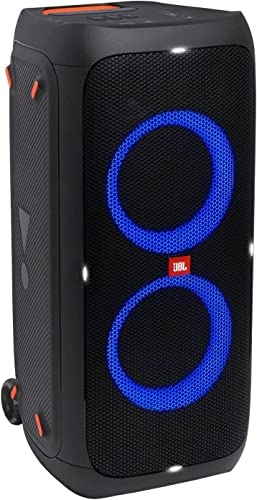
JBL Partybox 310
Buyers who want a portable, high output party speaker with a light show, battery operation, and karaoke features for indoor or outdoor gatherings.
Read the JBL Partybox 310 review →
Klipsch Reference Premiere RP-8000F II
Buyers seeking a mid range floorstanding speaker with horn loaded treble and dual 8 inch woofers who already own a suitable amplifier.
Read the Klipsch Reference Premiere RP-8000F II review →
Marshall Tufton Speaker
Listeners who want a portable, roadworthy Bluetooth speaker with a classic Marshall look and multi-directional sound.
Read the Marshall Tufton Speaker review →Questions Buyers Ask
Marshall Woburn III
See the current listing, price and included accessories.
About This Review
Mandrillis Team
The Mandrillis editorial team researches and compares audio and music gear using manufacturer documentation, verified specs and real buyer feedback, so you can make a confident purchase without wading through marketing claims.
Read our full research methodology.