Speakers Review
Monoprice 60-Watt Review: Compact Budget Subwoofer
The Monoprice 60-Watt is a compact powered subwoofer with an 8 inch front-firing driver, ported cabinet, and both high-level and RCA inputs. The listing emphasizes flexible connection for stereo and home theater systems, with adjustable crossover and gain controls, but no wireless streaming is listed.
Our Verdict
Research Score 68/100The Monoprice 60-Watt is a sensible budget subwoofer for small rooms and amplifier-limited setups. Its high-level inputs with pass-through solve a real problem for stereo amps without sub outputs, and the front port makes placement easier. The published 50 Hz low end and 60 watt RMS rating tell buyers not to expect deep or loud bass. Those who need a compact, simple bass filler for music or moderate home theater will find it useful. Those seeking sub-bass for movies or very large spaces should consider a larger driver and more power. The lack of wireless, phase control, and published weight are expected trade-offs at this tier.
Editorial research score based on published specifications and documented features, not a customer rating or lab test.

Monoprice
Monoprice 60-Watt
Best for: Small to medium rooms where a compact powered subwoofer can add low-end support to music or home theater systems.
Skip it if: You need deep sub-bass below 50 Hz, wireless streaming, or high output for a large open room.
Check Price on AmazonWe may earn a commission at no extra cost to you.
Listing verified: October 2026
Who Should Buy It
Buy it if
- Buyers with a stereo amp or AVR lacking a dedicated sub output but having speaker terminals
- Desktop or small room listeners wanting modest bass reinforcement
- Home theater users building a budget 5.1 system
- Anyone needing a basic subwoofer with simple controls and auto-on
Skip it if
- You require Bluetooth or network streaming
- Your room is larger than about 200 square feet and you want high output
- You need deep extension below 50 Hz for action movies or electronic music
Key Specifications
| Type | Powered subwoofer |
| Drivers | 8 inch driver, front-firing with 2 3/4 inch sound port |
| Power or sensitivity | 60 watts RMS |
| Frequency response | 50 to 250 Hz, adjustable lowpass crossover 50 to 150 Hz |
| Inputs and connectivity | High-level speaker inputs with corresponding outputs, left and right line level RCA inputs |
| Bluetooth and streaming | None listed |
| Dimensions | 13.75 x 11.75 x 11.75 inches (H x W x D) |
| Weight | Not published in listing |
| Finish | Black wood cabinet with black cloth grill |
| Included accessories | Not published in listing |
Overview
The Monoprice 60-Watt is a compact powered subwoofer built around an 8 inch front-firing driver and a ported cabinet. The listing describes it as suitable for stereo and home theater use, with both high-level and line-level inputs. It includes a lowpass crossover adjustable from 50 to 150 Hz and a gain control to blend with main speakers.
The cabinet measures 13.75 inches tall, 11.75 inches wide, and 11.75 inches deep, making it one of the easier subwoofers to place in a small room or near a desk. Monoprice positions this model in the budget tier, so the focus is on practical connectivity and basic low-frequency support rather than high-output or wireless features. The auto-on function is listed but not detailed in the product bullets, which is common for powered subwoofers.
Sound Quality
On paper, the Monoprice 60-Watt is best understood as a mid-bass and upper-bass helper rather than a deep subwoofer. The published frequency response covers 50 to 250 Hz, which means it does not reach the sub-30 Hz range that larger models often target. The 8 inch driver and 60 watt RMS rating suggest polite output for music and dialog-heavy content, though buyers should not expect room-shaking impact.
The adjustable lowpass crossover from 50 to 150 Hz lets users match the subwoofer to the natural roll-off of their main speakers. In a small room with bookshelf speakers that already produce some bass down to 60 or 70 Hz, setting the crossover near 70 or 80 Hz can fill in the lower registers without excessive overlap. Because the listing does not provide a maximum SPL or distortion figure, the actual headroom is not stated. The ported cabinet likely adds some efficiency around the tuning frequency, but that frequency is not published.
Drivers, Power and Room Fit
The driver is an 8 inch front-firing cone, paired with a 2 3/4 inch front sound port. The front placement of both driver and port is convenient for placement near walls or inside cabinets because the low-frequency energy exits forward rather than into a rear wall. The listing does not state the driver material or the port tuning frequency.
With 60 watts RMS and an 8 inch cone, the subwoofer is suited to small and medium rooms, roughly up to 150 or 200 square feet depending on listening volume. In larger open spaces it may sound thin or run out of headroom quickly. The built-in amplifier is not described as having digital signal processing or room correction, so the adjustable crossover and gain are the main room-fit tools. The high-level inputs with impedance matching circuitry are a practical feature for amplifiers without a subwoofer line output.
Features and Connectivity
The Monoprice 60-Watt includes both high-level speaker-level inputs and line-level RCA inputs. The listing states that each input has a corresponding output, which allows signal pass-through for daisy chaining or connecting to other equipment. The high-level inputs accept a full-range signal from the amplifier's stereo speaker outputs, and the subwoofer provides its own power with impedance matching so it does not reduce power to the front speakers.
For line-level use, the subwoofer has left and right RCA inputs. With a stereo amp that lacks a dedicated sub output, users can connect the left and right line outputs from the amp, and the subwoofer combines the signal into a mono bass channel. If the amplifier has a single mono subwoofer line output, an RCA Y cable can split that signal to feed both inputs. The auto-on function, mentioned in the listing title, is not described in the bullet points but typically works by sensing an audio signal and waking the amplifier from standby.
- High-level speaker inputs with matching outputs for pass-through
- Left and right line-level RCA inputs
- Adjustable lowpass crossover from 50 to 150 Hz
- Gain knob for matching output to main speakers
- Auto-on signal sensing listed in the title
Build, Design and Finish
The cabinet is described as black wood, with dimensions of 13.75 x 11.75 x 11.75 inches. A black cloth grill covers the front driver and port. The listing does not specify the exact wood type or whether the finish is vinyl, matte, or something else. The simple black aesthetic is typical for budget home theater gear and should blend with most AV furniture.
The front-firing driver and port are a practical design choice for a small subwoofer because they allow the cabinet to be placed closer to a wall or inside a media console without blocking the sound output. The unit is compact enough to sit under a desk or beside a couch, though the exact weight is not published in the listing, so buyers should check the manufacturer sheet if weight matters for shelves or wall mounting. The cloth grill is present but the listing does not state whether it is removable.
Setup and Placement
Setting up the Monoprice 60-Watt depends on the available connections. For a home theater receiver with a mono subwoofer line output, a Y cable splits the signal to the left and right RCA inputs. For a stereo amplifier without a sub output, the high-level inputs connect to the speaker terminals on the amp, and the subwoofer's speaker outputs can pass signal to the main speakers. The listing states that impedance matching circuitry prevents additional load on the amplifier.
Placement is flexible due to the front port and front driver. The subwoofer can be placed near a wall or in a corner to increase perceived bass, though corner loading may cause boomy response. The adjustable crossover and gain controls help tame room interactions. No phase switch is listed, which is a minor limitation when integrating with main speakers that have different phase responses, but many budget subwoofers omit this.
Daily Use
In everyday use, the auto-on function should allow the subwoofer to go to standby when no signal is present and wake when audio begins. The gain and crossover controls are on the control panel, likely on the rear, though the listing does not state their location. Users can set the crossover to blend with small bookshelf speakers around 80 Hz or with floorstanding speakers slightly lower. The 50 Hz low end means deep movie effects like the lowest organ notes or sub-bass sweeps will not be reproduced with authority.
For music, the subwoofer is likely adequate for adding warmth and punch to rock, pop, or jazz at moderate volumes. In a nearfield desktop setup, it can fill in the bottom of small speakers without overwhelming the room. The lack of a remote or app control means adjustments require reaching the subwoofer, which is typical at this price tier. Buyers should not expect a subwoofer output, so using multiple subwoofers requires splitting the source signal before the inputs.
Who Should Buy It
This subwoofer fits buyers who need a compact and affordable way to add low-frequency support to a stereo or home theater system. It works well with amplifiers that only have speaker-level outputs because the high-level inputs with pass-through keep the main speakers connected. Small room users, desktop listeners, and apartment dwellers who cannot use large subwoofers may appreciate the front port and modest footprint.
It is also a reasonable choice for anyone building a budget 5.1 system with a receiver that has a mono subwoofer line out, since the Y cable setup is simple. The adjustable crossover and gain knobs provide basic integration without complex room correction. However, buyers who expect deep sub-bass or high output should look elsewhere. This subwoofer is best for those whose main goal is filling in the lower midbass and upper bass rather than making the floor shake.
Alternatives Worth Considering
For buyers who need deeper extension or more output, a larger 10 or 12 inch subwoofer from brands like Dayton Audio or Polk Audio may be a better fit, though those often cost more and take up more space. A ported design with a larger driver typically reaches lower frequencies and plays louder, but the cabinet becomes bulkier and heavier.
If wireless streaming is a priority, this Monoprice model will not satisfy because it has no Bluetooth or network input. A separate Bluetooth receiver can be added to the RCA inputs, but that adds cost and complexity. Powered bookshelf speakers with a subwoofer output, such as some Edifier models, can also pair with a powered subwoofer, but the Monoprice 60-Watt is primarily for users who already have an amplifier or receiver and need simple low-end support.
Verdict
The Monoprice 60-Watt offers a practical set of features for a budget subwoofer, especially the high-level inputs with pass-through and the compact front-ported cabinet. The adjustable crossover and gain provide enough control for basic integration in small rooms. The published 50 Hz low end and 60 watt RMS rating clearly define its limits.
Buyers who need an easy way to add some bass to a stereo or small home theater without spending much will find this subwoofer useful. Those who want deep extension, wireless streaming, or high output for large spaces should consider spending more on a bigger model. The missing weight and lack of phase control are minor drawbacks at this price tier.
Strengths and Limitations
Strengths
- Compact front-firing design with ported enclosure
- Multiple input options for stereo and surround systems
- Adjustable crossover and gain controls
- Auto-on function listed in the title
- Budget friendly for small rooms or desktop use
Limitations
- No wireless or Bluetooth connectivity listed
- No phase switch or subwoofer output listed
- Modest 60 watt RMS output limits very large rooms
- Weight not published in the listing
How We Scored It
Scores reflect published specifications, documented features and value against the alternatives below. They are editorial research scores, not laboratory measurements.
Alternatives to Consider
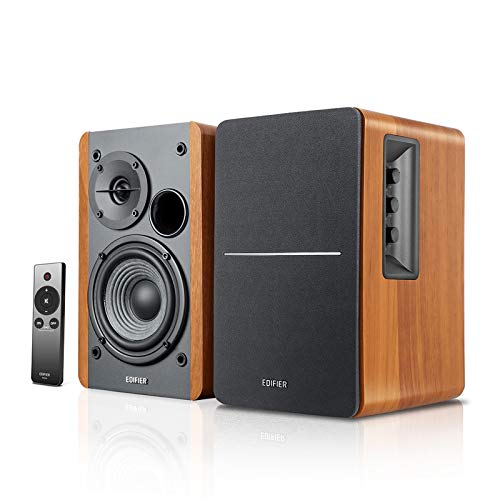
Edifier R1280Ts
A wired desktop or small room stereo setup that may later add an active subwoofer.
Read the Edifier R1280Ts review →
Jamo S 803
Buyers who want an affordable passive bookshelf speaker pair with a warm wood finish and Dolby Atmos ready home theater potential.
Read the Jamo S 803 review →
Monoprice WS-7B-82-B 8in
Fixed indoor or outdoor distributed audio installations for patios, restaurants, retail zones and whole home systems where wiring and an amplifier are already planned.
Read the Monoprice WS-7B-82-B 8in review →Questions Buyers Ask
Monoprice 60-Watt
See the current listing, price and included accessories.
About This Review
Mandrillis Team
The Mandrillis editorial team researches and compares audio and music gear using manufacturer documentation, verified specs and real buyer feedback, so you can make a confident purchase without wading through marketing claims.
Read our full research methodology.