
Guides
Can You Put a Turntable on Top of a Speaker? (The Real Answer)
Putting a turntable on top of a speaker seems like a neat space saver, but it causes feedback, skipping and extra stylus wear. This guide explains why, how to spot the problem, and four practical ways to fit a record player into a small room.
Quick Answer
No, you should not put a turntable on top of a speaker. The speaker cabinet vibrates when it plays, and the stylus picks up those vibrations. That causes muddy, booming bass, skipping and extra wear on your records. Place the turntable on a separate, solid surface at least a few feet from the speakers.
How this guide was put together
This guide is based on manufacturer manuals, published specifications and widely used audio reference standards. Mandrillis does not run hands-on tests for these guides, so treat figures as typical values and check the manual for your own gear before changing settings.
Why a Speaker Is the Worst Shelf for a Record Player
A turntable works by reading tiny wiggles in the record groove. The stylus is so sensitive that it can feel a footstep across the room. A speaker, by design, shakes the air and its own cabinet to make sound.
When you stack the two, the speaker's vibration travels straight into the turntable. The stylus cannot tell the difference between the groove and the shaking box underneath it. It reads both, and you hear the result.
- Speakers vibrate most in the bass range, roughly below 200 Hz.
- Most turntable plinths sit on thin feet that pass vibration right through.
- The problem gets worse as you turn the volume up.
3 Reasons Never to Put a Turntable on a Speaker
Each of these problems can happen on its own. Most people stacking a turntable on a speaker get all three.
1. Acoustic Feedback and Muddy Bass
Feedback is a loop. The speaker plays a bass note, the cabinet shakes, the stylus picks up the shake, and the amplifier plays it again louder. At low volume this makes bass sound thick and boomy.
At higher volume the loop can build into a low howl or rumble that does not stop until you lift the needle or turn the volume down. That howl can also strain the speaker's woofer.
2. Needle Skipping and Record Scratches
Strong bass can bounce the tonearm hard enough to jump grooves. You hear a skip, a repeated loop or a sudden jump forward in the song.
Each jump drags the diamond tip across the vinyl. Over time that leaves small scratches and clicks that stay on the record forever, even after you move the turntable.
3. Long-Term Stylus Wear
A stylus is designed to ride smoothly in the groove at a set tracking force, often around 2 grams for a typical cartridge. Constant shaking makes it press harder at some moments and lighter at others.
That uneven pressure wears the tip and the groove walls faster than normal play. A worn stylus then damages records further, so the cost adds up.
How to Tell If Vibration Is Already a Problem
Not sure your setup has this issue? A simple tap test answers it in under a minute.
- Set the volume to a normal listening level with no record playing.
- Lower the stylus onto a stopped record, or onto the platter mat.
- Tap the top of the speaker or the shelf gently with one finger.
- If you hear a thump through the speakers, vibration is reaching the stylus.
- Tap the turntable's own base too. A loud boom there means the plinth or feet need isolation.
4 Smart Alternatives for Small Spaces
You do not need a big room to keep the two apart. Pick the option that fits your space and budget.
1. Isolation Pads and Sorbothane Feet
Soft isolation feet absorb vibration before it reaches the turntable. Sorbothane, a dense rubber-like material, is a common choice. Place three or four feet under the turntable, not under the speaker.
This helps on any shelf, but it is not a cure if the turntable still sits on the speaker. Treat pads as an extra layer, not the main fix.
2. Wall-Mounted Turntable Shelf
A shelf fixed to the wall is the classic fix for small rooms and bouncy floors. The wall does not move when you walk, and it is separate from the speakers.
Mount it into wall studs or with anchors rated well above the weight of your turntable. Many decks weigh between 8 and 20 pounds, so check yours before you buy hardware.
3. Separate Speaker Stands
Move the speakers onto their own stands or onto a different piece of furniture. Even a gap of a few feet between turntable and speaker makes a clear difference.
Stands also lift the tweeters closer to ear height, which often improves the sound. Point the speakers toward where you sit, not toward the turntable.
4. Use a Heavy, Solid Cabinet
If the turntable and speakers must share one piece of furniture, choose the heaviest, most solid unit you can. Mass resists vibration. A hollow, lightweight cabinet acts like a drum.
Place the turntable at one end and the speakers at the far ends, each on its own isolation feet. Keep the turntable away from any subwoofer, which shakes the most.
Quick Placement Checklist
Use this list when you set up or move your record player. Each point lowers the chance of feedback, skips and hum.
If you can only change one thing, move the turntable off the speaker first. Every other step on this list works better once that is done.
- The turntable sits on its own solid, level surface, never on a speaker.
- There are at least a few feet between the turntable and each speaker.
- No subwoofer shares the same shelf or cabinet as the turntable.
- The shelf does not wobble when you press one corner.
- The turntable is level side to side and front to back. A cheap bubble level is enough.
- Speakers point toward your listening seat, not toward the turntable.
- The tap test produces no thump through the speakers at your normal volume.
- Cables run behind the furniture, not draped across the platter or tonearm.
Placement Options Compared
How common placements affect vibration and feedback.
| Placement | Feedback risk | Notes |
|---|---|---|
| On top of a speaker | High | Avoid in all setups |
| Same shelf as a subwoofer | High | Move the sub elsewhere |
| Separate solid cabinet | Low | Good everyday choice |
| Wall shelf | Very low | Best for bouncy floors |
| Isolation feet on any shelf | Lower | Works best with distance |
What About All-in-One Record Players With Built-In Speakers?
Suitcase-style players put the speakers in the same box as the turntable. Manufacturers keep the speakers small and quiet partly for this reason, so they rarely feed back at low volume.
If you want more volume, connect the player to external speakers and place those speakers away from it. That gives fuller sound and removes the vibration problem at the same time. Our guide to setting up a turntable at home walks through the full placement and leveling steps.
A Turntable and Speaker Pair That Fits a Small Room
Compact powered speakers on their own stands and a solid turntable on its own shelf is the simplest fix.
Kanto YU4MB
Mentioned
Who Should Buy It
- Listeners building a compact stereo or desktop system with a turntable
- Those who want a powered speaker with a remote and auto standby
- Buyers who prefer a simple matte black aesthetic
- Users who value lower mid-range pricing with brand recognition
Skip It If
- You require detailed driver and frequency response data for critical listening decisions
- You need multiple analog and digital inputs beyond Bluetooth and phono
- You want floorstanding or high-output speakers for a large room
We may earn a commission at no extra cost to you.
Last verified: October 2026

Pro-Ject Debut PRO B
Mentioned
Who Should Buy It
- Pro-Ject fans who want a deck with a balanced design path and do not mind adding their own cartridge
- Listeners who prioritize a stable plinth and aluminum platter over convenience features
- Buyers who prefer manual speed control without automation
- Users building a component system around a turntable with separate phono stage
Skip It If
- You need an all-in-one turntable with built-in phono preamp and Bluetooth
- You want a complete cartridge included and clearly listed in the product data
- You require precise dimensions and weight before purchasing
We may earn a commission at no extra cost to you.
Last verified: October 2026
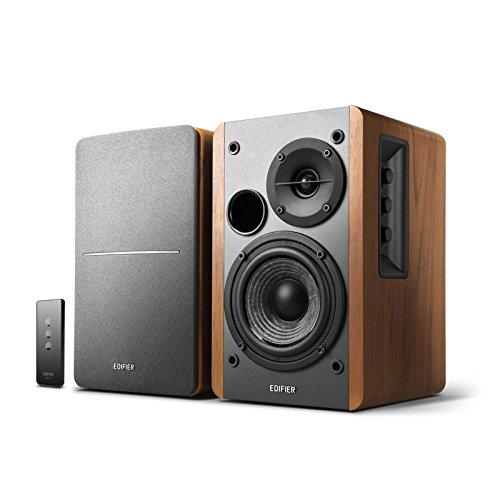
Edifier R1280T
Mentioned
Who Should Buy It
- Desktop listeners who want powered speakers for a computer or laptop
- Users with analog sources like a TV headphone jack, turntable with built-in preamp, or game console
- Small room listeners who prefer physical tone controls over apps
- Budget conscious buyers who do not need wireless or digital audio
Skip It If
- You need Bluetooth or Wi-Fi streaming from a phone or tablet
- You want strong sub bass or high volume output without adding a subwoofer
- You require optical, coaxial, or USB digital inputs for a TV or computer
We may earn a commission at no extra cost to you.
Last verified: October 2026
Keep Reading
Related guides and picks on Mandrillis:
- Best Turntables Under 500 : decks with solid plinths and good isolation feet
- Best Bookshelf Speakers Under 500 : compact pairs that fit on stands
- How to Ground a Turntable Without a Ground Wire : fix hum after you move your setup
FAQs
About This Guide
Mandrillis Team
The Mandrillis editorial team researches and compares audio and music gear using manufacturer documentation, verified specs and real buyer feedback, so you can make a confident purchase without wading through marketing claims.
Read our full research methodology.