Instruments Review
Akai Professional EWI Solo Review: A Wind Controller, Not a Keyboard
The Akai Professional EWI Solo is a standalone electronic wind instrument with 200 built-in sounds, a built-in speaker, 12+ hours of battery life and USB MIDI output. It has no keys or pads, so readers looking for a keyboard or pad controller should look elsewhere in this lineup.
Our Verdict
Research Score 47/100The Akai Professional EWI Solo is a well-equipped, genuinely self-contained electronic wind instrument, with 200 built-in sounds, a built-in speaker, more than 12 hours of battery life, and flexible fingering modes covering flute, oboe, sax and EVI technique. It is not a MIDI keyboard or a pad controller, and readers in this review series looking for either should look elsewhere. For a wind player who wants one self-contained instrument that also outputs USB MIDI to a computer, the EWI Solo is a strong, honest choice within its own distinct category. Buyers specifically shopping for keys or pads will find nothing of that kind here, and that mismatch is worth knowing before ordering.
Editorial research score based on published specifications and documented features, not a customer rating or lab test.

Akai Professional
Akai Professional EWI Solo
Best for: Wind instrument players who want a self-contained electronic practice and performance instrument with onboard sounds and USB MIDI output.
Skip it if: You are shopping for a MIDI keyboard or a finger-drum pad controller rather than a breath-controlled wind instrument.
Check Price on AmazonWe may earn a commission at no extra cost to you.
Listing verified: November 2026
Who Should Buy It
Buy it if
- Wind players who want flute, oboe, sax or EVI fingering modes in one instrument
- Players who want a self-contained unit with a built-in speaker and long battery life
- Anyone who wants USB MIDI output to control software instruments by breath and fingering rather than keys
Skip it if
- You want a MIDI keyboard or a finger-drum pad controller
- You need named DAW integration out of the box
- You need confirmed weight before buying
Key Specifications
| Keys | Not applicable, this is a breath-controlled wind instrument with no piano keys |
| Key type | Not applicable |
| Pads | Not applicable, no drum or finger pads are described; fingering is handled through rollers and plates instead |
| Knobs and faders | Dedicated FX and edit controls; exact knob or button count not published in listing |
| DAW integration | Not published in listing beyond general USB MIDI controller function |
| Bundled software | Not published in listing; sounds are generated onboard rather than through a computer plugin |
| Connectivity | USB MIDI output; 1/4 inch audio output, 1/8 inch headphone output, 1/8 inch auxiliary input |
| Power | Rechargeable lithium-ion battery rated for 12+ hours of play time, with a charging adapter included |
| Weight | Not published in listing |
| Included accessories | Charging adapter for the rechargeable battery |
Overview
The Akai Professional EWI Solo is a standalone electronic wind instrument, not a MIDI keyboard or a pad controller, and that is worth stating clearly before anything else in this review. It is played by breath and fingering rather than by pressing keys or hitting pads, which puts it in a fundamentally different control category from most of the products covered in this review series.
According to the listing, the EWI Solo packs 200 built-in acoustic and synth sounds, a rechargeable lithium-ion battery rated for more than 12 hours of play time, a built-in speaker, and a USB MIDI connection for controlling software instruments. An OLED display shows presets and parameters directly on the instrument.
Because this is a wind controller rather than a keyboard or pad controller, several of the scoring categories used elsewhere in this lineup, particularly the ones built around piano keys and finger pads, do not apply in the usual way. The scoring below reflects that honestly while still crediting the EWI Solo for what it does well as a self-contained wind instrument.
Keys, Pads and Feel
There are no piano keys and no pads on the EWI Solo. Instead, the listing describes a responsive mouthpiece with air-pressure and bite sensors that precisely control volume and pitch dynamics, which is the core playing mechanism for this entire category of instrument.
Fingering is handled through octave rollers, and glide and pitch bend plates, along with support for flute, oboe, sax and EVI fingering modes according to the listing. That lets a player use whichever fingering system they already know from an acoustic wind instrument rather than learning one fixed layout.
Because the playing technique here is breath and finger position rather than key or pad velocity, comparing it directly to a keyboard's weighted action or a pad's pressure sensitivity does not really apply. The EWI Solo's expressive range comes from breath control and bite pressure instead.
Knobs, Faders and DAW Integration
The listing names dedicated FX and edit controls for shaping the instrument's own sound. It does not state an exact count of buttons or knobs, nor does it describe faders of any kind.
DAW integration is not specifically described beyond the general USB MIDI connection. That connection lets the EWI Solo send note and breath-controller data to software instruments in a DAW, similar in principle to how a keyboard controller would send note data, but driven by breath rather than key velocity.
There is no mention of control surface functions such as transport buttons or mixer control, so the EWI Solo should be understood purely as a MIDI note and expression source rather than a hub for broader DAW session control. Players coming from a keyboard background should expect to rethink their usual MIDI mapping habits, since breath pressure and bite sensing behave differently than key velocity and aftertouch.
Software, Sounds and Features
Sound is a genuine strength here. The listing counts 200 built-in premium acoustic and synth sounds, a substantial onboard library for a self-contained wind instrument that does not depend on a connected computer to make music.
The OLED display is named directly for viewing presets and parameters, letting a player browse and adjust sounds without a phone or computer screen. That self-contained workflow matters for a performer who wants to practice or play live without extra gear.
No DAW software, virtual instrument plugins, or lesson app is mentioned in the listing beyond the instrument's own onboard sound engine. Any computer-based software use would instead rely on the player's own existing DAW and plugins through the USB MIDI connection.
- 200 built-in premium acoustic and synth sounds
- OLED display for presets and parameters
- Flute, oboe, sax and EVI fingering modes
- Dedicated FX and edit controls for onboard sound shaping
Build, Design and Portability
The EWI Solo is described as self-contained, with a built-in speaker providing what the listing calls the most natural sound reproduction experience. That built-in speaker removes the need for an external amp for casual practice or demonstration.
A rechargeable lithium-ion battery rated for more than 12 hours of play time comes with a charging adapter included. Together they make this a genuinely portable instrument that does not need to stay tethered to a power outlet during a practice session or performance.
Weight is not published in the listing, a gap for an instrument meant to be held and played by breath rather than placed on a desk or stand, since hand and arm fatigue over a long session depends partly on that figure. A buyer who plans to practice or perform standing for extended periods should factor that unknown into their expectations rather than assuming it matches a particular acoustic instrument's weight.
Connectivity and Power
Connectivity includes a USB MIDI output for controlling software instruments and a 1/4 inch audio output for connecting to an amp or mixer. It also includes a 1/8 inch headphone output for private practice and a 1/8 inch auxiliary input, likely for playing along with a backing track.
Power comes from the rechargeable lithium-ion battery, rated at more than 12 hours of play time, with a charging adapter included in the box. That removes the need to source a separate charger or rely on disposable batteries.
Having both a dedicated headphone output and a built-in speaker gives a player a genuine choice between private and open practice without needing any additional equipment. That is a meaningful convenience for this kind of self-contained instrument.
Setup and Daily Use
For standalone play, setup is minimal, charge the instrument, power it on, and select one of the 200 built-in sounds through the OLED display. No computer connection is required for basic practice or performance.
For computer-based use, connecting the USB MIDI output lets the EWI Solo control software instruments in a DAW, with breath and bite sensors driving expression instead of key velocity. The player still needs to map that data inside their own software.
Daily use benefits from the long battery life and built-in speaker, letting a player practice in different rooms or locations without carrying an amp, while the headphone output covers quieter or late-night sessions. The 1/8 inch auxiliary input also lets a player plug in a backing track or practice recording directly, which supports a daily routine of playing along rather than practicing scales in isolation.
Who Should Buy It
The EWI Solo suits a wind instrument player who wants a self-contained electronic practice and performance tool, with built-in sounds, a speaker and long battery life. That profile fits someone building on wind-instrument skills rather than a keyboard or pad background.
It also suits someone who wants to control software instruments through breath and fingering via USB MIDI. That is a genuinely different expressive input than a keyboard's velocity-sensitive keys or a pad's finger pressure.
It is not the right choice for someone shopping this review series specifically for a MIDI keyboard or a finger-drum pad controller. The EWI Solo has neither keys nor pads and plays nothing like either category.
Alternatives Worth Considering
Within electronic wind instruments, the Akai EWI5000 is a commonly compared sibling model, generally positioned with a similar fingering and breath-control approach. Its exact sound count, battery life and connectivity should be checked against its own current listing rather than assumed from this EWI Solo review.
Roland's Aerophone series, including the AE-10 and the compact Aerophone mini, occupies a similar wind-controller category with its own onboard sound engine. Yamaha's digital saxophone line is a different but related approach for players who want a closer physical resemblance to an acoustic saxophone.
None of these alternatives is a keyboard or a pad controller either. A buyer who ends up here while actually wanting to play notes with their fingers on a keybed, or trigger samples on a grid of pads, should treat all of these wind controllers, this EWI Solo included, as the wrong category and look at a dedicated keyboard or pad controller instead.
Verdict
The Akai Professional EWI Solo is a well-equipped, genuinely self-contained electronic wind instrument, with 200 built-in sounds, a built-in speaker, more than 12 hours of battery life, and flexible fingering modes covering flute, oboe, sax and EVI technique. That is a strong, confirmed feature set for its specific category.
It is not a MIDI keyboard or a pad controller, and readers in this review series looking for either should look elsewhere. For a wind player who wants one self-contained instrument that also outputs USB MIDI to a computer, the EWI Solo is a strong, honest choice within its own distinct category.
Strengths and Limitations
Strengths
- Standalone electric wind instrument with 200 built-in acoustic and synth sounds
- 12+ hours of play time from a rechargeable lithium-ion battery
- Built-in speaker for self-contained practice without an amp
- Flute, oboe, sax and EVI fingering modes in one instrument
- Air-pressure and bite sensors for expressive volume and pitch control
Limitations
- Not a keyboard or pad controller, which may surprise buyers browsing this category
- Weight is not published in the listing
- No bundled DAW software or named DAW integration is described
- Exact knob or edit control count beyond dedicated FX and edit controls is not stated
How We Scored It
Scores reflect published specifications, documented features and value against the alternatives below. They are editorial research scores, not laboratory measurements.
Alternatives to Consider

Yamaha Montage M6 61-Key
Professional synth players and producers who want a flagship 61-key instrument with massive polyphony, analog style synthesis and a matching software plugin.
Read the Yamaha Montage M6 61-Key review →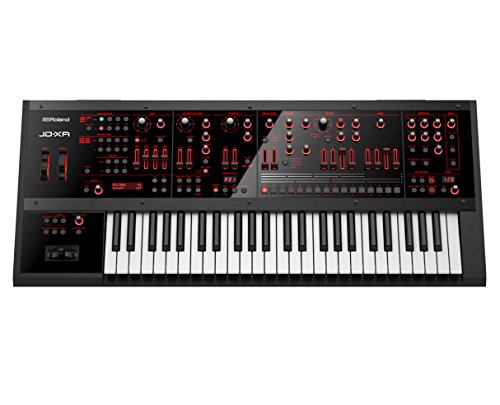
Roland JD-XA 49-Key
Synthesists who want genuine discrete analog voices and a digital engine in one 49-key crossover instrument with deep real time filter control.
Read the Roland JD-XA 49-Key review →
Pioneer DJ DDJ-FLX10 4-Channel
Mobile and open-format DJs who want a 4-channel club style controller with live stem separation and lighting control from one unit.
Read the Pioneer DJ DDJ-FLX10 4-Channel review →Questions Buyers Ask
Akai Professional EWI Solo
See the current listing, price and included accessories.
About This Review
Mandrillis Team
The Mandrillis editorial team researches and compares audio and music gear using manufacturer documentation, verified specs and real buyer feedback, so you can make a confident purchase without wading through marketing claims.
Read our full research methodology.