Instruments Review
Arturia KeyLab 61 MkII Review: Faders, Aftertouch and CV Outputs
The Arturia KeyLab 61 MkII pairs a semi weighted, aftertouch enabled keybed with 9 flippable faders, performance pads and genuine CV and gate connectivity for modular synths. This review covers its build, software bundle and connectivity based on the published listing, and explains the few specifications the listing leaves unstated.
Our Verdict
Research Score 80/100The Arturia KeyLab 61 MkII is a well rounded 61 key controller built around a semi weighted, aftertouch enabled keybed, 9 faders that flip between instrument and DAW control, and genuine CV and gate outputs for modular gear. The aluminum chassis, wood panels and machined wheels described in the listing point to a premium build, and the software bundle, with over 6000 presets plus Piano V and Ableton Live Lite, adds real value on top of the hardware. The listing does leave weight, power requirements and exact pad or knob counts unpublished, which is worth noting before purchase. For players who want expressive keys plus deep connectivity in one controller, this is a strong, well featured option within its price tier.
Editorial research score based on published specifications and documented features, not a customer rating or lab test.

Arturia
Arturia KeyLab 61 MkII
Best for: Best for a keyboard player who wants a semi weighted, aftertouch enabled controller with genuine modular synth connectivity and a large bundled instrument library.
Skip it if: Avoid it if you specifically need a fully weighted, hammer action keybed for piano focused practice rather than a semi weighted performance feel.
Check Price on AmazonWe may earn a commission at no extra cost to you.
Listing verified: November 2026
Who Should Buy It
Buy it if
- Keyboard players who want aftertouch and a semi weighted feel for both chords and expressive synth lines
- Producers who want faders that can double as organ drawbars one moment and DAW level control the next
- Modular synth owners who want direct CV and gate access from a conventional keyboard controller
- Anyone who wants a large bundled software library covering synths, keys and pianos without buying instruments separately
Skip it if
- You need a fully weighted hammer action keybed for serious piano practice
- You need exact published weight or power specifications before buying
- You do not use CV or gate equipment and do not want to pay for that connectivity
Key Specifications
| Keys | 61 full size, semi weighted keys with aftertouch |
| Key type | Semi weighted keybed with aftertouch, described in the listing as sensitive enough for delicate playing yet robust for high impact performance |
| Pads | Performance pads are included for storing and triggering custom chords live; exact pad count is not published in listing |
| Knobs and faders | 9 faders that can control virtual drawbars or flip to DAW channel levels at the switch of a control, plus machined pitch bend and modulation wheels; exact knob count is not published in listing |
| DAW integration | Faders can switch between instrument control, such as organ drawbars, and direct DAW level control; the listing does not name specific supported DAWs beyond this general flip behavior |
| Bundled software | Analog Lab 3 with over 6000 synth and keyboard presets from the V Collection, Arturia Piano V physically modeled pianos, and Ableton Live Lite |
| Connectivity | Full size MIDI in and out, 4 CV outputs and 1 CV input for modular and vintage synth gear, and 5 expression pedal inputs; USB connectivity is indicated by the listing title |
| Power | Not published in listing |
| Weight | Not published in listing, though the listing describes the build as reassuringly heavy |
| Included accessories | Not published in listing beyond access to the bundled software titles |
Overview
The Arturia KeyLab 61 MkII is a 61 key USB MIDI controller built around a semi weighted, aftertouch enabled keybed. The listing frames it as adaptable to different playing styles, describing it as sensitive enough to capture delicate nuance while remaining robust enough for high impact performance.
Beyond the keys, the controller carries 9 faders that can flip between controlling virtual drawbars on an organ and controlling channel levels in a DAW, along with performance pads for storing and triggering custom chords. A 2 year warranty is mentioned directly in the listing, which is a reasonable signal of brand confidence for a controller at this tier.
What sets this unit apart from many keyboard controllers in this profile is its genuine CV and gate connectivity, aimed squarely at modular synth owners. That single detail, combined with the software bundle and build description below, positions the KeyLab 61 MkII as a controller built for players who want both conventional DAW work and hardware synth integration from one keybed.
Keys, Pads and Feel
The keybed is semi weighted and aftertouch enabled across all 61 keys, according to the listing. That combination typically gives a player more expressive control over sustained notes and synth parameters than a simple velocity only keybed, since aftertouch responds to continued pressure after a key is already held down.
The listing frames the feel as flexible rather than specialized, describing it as capable of accurately capturing delicate playing while still handling the energy of a high impact performance. No exact key weighting figure or hammer action detail is given, so players coming from a fully weighted piano should understand this is a semi weighted feel rather than a piano substitute.
Performance pads are included for storing custom chords that can be triggered live while playing leads or melodies on the keys, based on the listing's description. The listing does not state how many pads are present or whether they are velocity sensitive, so that detail should be confirmed separately if pad count matters to a specific workflow.
Knobs, Faders and DAW Integration
Nine faders sit at the center of the control surface, and the listing describes them as flexible enough to control the virtual drawbars of an organ one moment, then switch to DAW channel levels at the flick of a switch. That flip behavior is a genuinely useful detail for players who move between instrument performance and mixing within the same session.
Machined pitch bend and modulation wheels are also called out specifically in the listing, which suggests more deliberate build attention than a standard molded plastic wheel assembly. The listing does not provide an exact knob count separate from the 9 faders, so any additional rotary controls beyond what is stated should not be assumed.
DAW integration is described mainly through that fader flip behavior rather than a list of specific supported software titles. Players who need confirmed deep mapping with a particular DAW should verify that directly, since the listing keeps its integration claims general rather than naming individual DAW compatibility in detail.
Software, Sounds and Features
The software bundle here is one of the stronger points in the listing. Analog Lab 3 is included with access to over 6000 synth and keyboard presets drawn from Arturia's V Collection, giving a player an enormous range of sounds to explore without purchasing instruments separately.
Arturia Piano V is also bundled, described in the listing as a masterful collection of physically modeled pianos, which adds dedicated acoustic piano sounds alongside the synth focused Analog Lab 3 library. Ableton Live Lite rounds out the package, giving a complete, if limited, DAW for anyone starting from scratch.
Together, these three pieces of software cover a wide range of a typical workflow, from a full DAW to thousands of synth presets to dedicated piano modeling, all included at the stated price tier. The listing does not mention any further sample packs or expansion content beyond these three titles.
- Analog Lab 3 with over 6000 presets
- Arturia Piano V physically modeled pianos
- Ableton Live Lite
- 9 faders with drawbar and DAW flip control
- 4 CV outputs and 1 CV input
- 5 expression pedal inputs
Build, Design and Portability
Build quality is described in clearly premium terms in the listing. An aluminum chassis paired with wood panels, machined pitch bend and modulation wheels, and what the listing calls a luxury keybed all point toward a controller built with more attention to materials than a typical entry level unit.
The listing specifically calls the unit reassuringly heavy, which is often associated with sturdier internal construction, though no exact weight figure accompanies that description. Buyers who need a precise weight for travel planning or desk space calculations will need to look beyond this listing for that number.
Dimensions are also left unpublished, so the physical footprint of a 61 key controller with 9 faders and performance pads cannot be stated exactly here. Based on general knowledge of similar 61 key controllers, a unit of this layout typically needs a reasonably large, stable surface to sit on.
Connectivity and Power
Connectivity is one of the clear strengths of the Arturia KeyLab 61 MkII. Full size MIDI in and out connectors are included alongside USB, based on the listing title, giving flexibility for both computer based and standalone hardware MIDI setups.
The standout feature is genuine CV and gate connectivity, with 4 CV outputs and 1 CV input described in the listing for sending pitch, gate and two modulation sources to Eurorack modules or vintage outboard synths. That kind of direct modular access is uncommon on a conventional keyboard controller and sets this unit apart from most others in this profile.
5 expression pedal inputs are also listed, supporting performance setups that go well beyond a single sustain pedal. Power requirements are not published in the listing, so whether the unit is bus powered over USB or needs a separate supply for the CV section specifically is not confirmed here.
Setup and Daily Use
Daily use would likely center on the keybed for melodic and chordal playing, with the 9 faders handling either organ drawbar control or DAW mixing depending on the current task. Performance pads would come into play for triggering stored chords during a live set or a quick studio idea.
For players with modular gear, the CV and gate outputs open up a second daily use case entirely separate from the DAW, letting the keybed send pitch and gate signals directly to Eurorack or vintage synth modules. That dual role, computer connected controller and modular keyboard source, is a meaningful part of the daily workflow this unit supports.
Switching between these roles relies on the fader flip behavior and whatever mapping a player sets up in Analog Lab 3 or their chosen DAW. The listing does not describe exact menu navigation or how quickly a player can move between modes, so that part of daily use is left to general inference.
Who Should Buy It
The clearest buyer is a keyboard player who wants an expressive, aftertouch enabled feel for both chords and synth lines, combined with faders flexible enough to double as mixing controls. Someone who already owns Eurorack or vintage synth gear and wants a conventional keybed that can also speak directly to that hardware is an especially strong fit.
Producers drawn to a large bundled preset library will also find real value here, since Analog Lab 3 alone covers a huge range of synth and keyboard sounds without further purchases. Piano V adds a dedicated acoustic option for anyone who wants modeled piano sounds alongside synth work.
Players who specifically need a fully weighted, hammer action keybed for serious piano practice should look elsewhere. This unit is semi weighted rather than built to simulate acoustic piano resistance, so the feel under the fingers is noticeably lighter.
Alternatives Worth Considering
Players who want a similar hybrid of keys, faders and bundled software but without the CV and gate section should look at other mid range keyboard controllers in this profile. Those typically trade modular connectivity for a lower price or a different software bundle.
Anyone who wants an even larger bundled software library tied to Native Instruments content specifically should compare this against NKS ready controllers elsewhere in this profile, since that ecosystem differs from the Analog Lab 3 and V Collection approach used here. The right choice often comes down to which software ecosystem a producer already prefers.
For players who care primarily about aftertouch and semi weighted feel without needing CV outputs, a simpler controller in a similar key range may offer comparable playing feel at a lower cost. Exact comparisons still depend on specifications that are not detailed in this particular listing.
Verdict
The Arturia KeyLab 61 MkII is a well rounded 61 key controller built around a semi weighted, aftertouch enabled keybed, 9 faders that flip between instrument and DAW control, and genuine CV and gate outputs for modular gear. The aluminum chassis, wood panels and machined wheels described in the listing point to a premium build, and the software bundle, with over 6000 presets plus Piano V and Ableton Live Lite, adds real value on top of the hardware.
Weight, power requirements and exact pad or knob counts stay unpublished, which is worth noting before purchase. For players who want expressive keys plus deep connectivity in one controller, this is a strong, well featured option within its price tier.
Strengths and Limitations
Strengths
- Semi weighted, aftertouch enabled keybed described as sensitive to delicate playing and robust under heavy performance
- 9 faders flip between virtual instrument control and direct DAW level control for fast workflow changes
- Aluminum chassis with wood panels and machined pitch bend and modulation wheels for a premium build feel
- Large software bundle with over 6000 presets through Analog Lab 3, plus Piano V and Ableton Live Lite
- Genuine CV and gate outputs plus an input, giving direct access to modular and vintage synth gear
- 5 expression pedal inputs support advanced performance setups beyond a single sustain pedal
Limitations
- Weight and dimensions are not published in the listing, despite the build being described as heavy
- Exact pad count and knob count are not stated
- Power requirements, including whether it is bus powered or needs an external supply, are not published
- The listing does not name specific DAWs that benefit from deeper mapping beyond the general fader flip behavior
How We Scored It
Scores reflect published specifications, documented features and value against the alternatives below. They are editorial research scores, not laboratory measurements.
Alternatives to Consider

Yamaha Montage M6 61-Key
Professional synth players and producers who want a flagship 61-key instrument with massive polyphony, analog style synthesis and a matching software plugin.
Read the Yamaha Montage M6 61-Key review →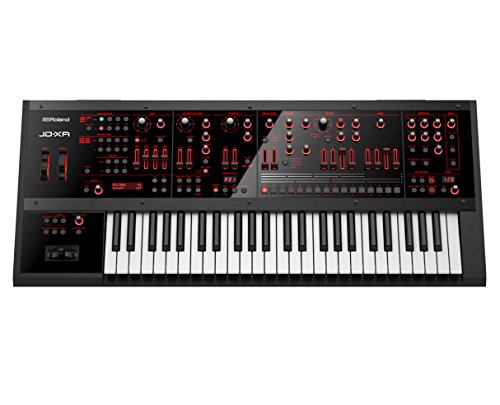
Roland JD-XA 49-Key
Synthesists who want genuine discrete analog voices and a digital engine in one 49-key crossover instrument with deep real time filter control.
Read the Roland JD-XA 49-Key review →
Pioneer DJ DDJ-FLX10 4-Channel
Mobile and open-format DJs who want a 4-channel club style controller with live stem separation and lighting control from one unit.
Read the Pioneer DJ DDJ-FLX10 4-Channel review →Questions Buyers Ask
Arturia KeyLab 61 MkII
See the current listing, price and included accessories.
About This Review
Mandrillis Team
The Mandrillis editorial team researches and compares audio and music gear using manufacturer documentation, verified specs and real buyer feedback, so you can make a confident purchase without wading through marketing claims.
Read our full research methodology.