Instruments Review
Nektar Panorama CS12 Review: A Channel Strip, Not a Keyboard
The Nektar Panorama CS12 is a channel strip plug in controller built around a motorized fader, rotary encoders and a small display, not a MIDI keyboard or pad controller. This review scores it honestly against keyboard and pad criteria that mostly do not apply, and is upfront about how little technical detail the listing actually publishes.
Our Verdict
Research Score 17/100The Nektar Panorama CS12 is built as a channel strip plug in controller, centered on a motorized fader, rotary encoders, a 3.5 inch display and transport buttons for DAW mixing work. It is not a MIDI keyboard or pad controller, so most of the criteria this profile measures, including keys, pads and bundled software, simply do not apply here. What can be said with confidence is limited, since the listing gives almost no detail on connectivity, power, weight or exactly how many encoders are included. Buyers interested in a dedicated mixing surface should treat this as a starting point for further research rather than a complete specification, and buyers looking for a keyboard or pad controller should look elsewhere entirely.
Editorial research score based on published specifications and documented features, not a customer rating or lab test.

Nektar
Nektar Panorama CS12
Best for: Best for a producer who specifically wants a motorized fader and encoder based channel strip controller for mixing, not a keyboard or pad controller.
Skip it if: Avoid it if you are looking for anything resembling a MIDI keyboard, a pad grid, or bundled production software.
Check Price on AmazonWe may earn a commission at no extra cost to you.
Listing verified: November 2026
Who Should Buy It
Buy it if
- Mixing focused producers who want a dedicated motorized fader for channel strip automation
- Users who prefer rotary encoders over on screen mouse control for plugin parameters
- Buyers who already own a separate MIDI keyboard or pad controller and want a complementary mixing surface
Skip it if
- You are shopping for a MIDI keyboard or pad controller
- You need published connectivity, power or weight specifications before purchase
- You expect bundled software or virtual instruments with the unit
Key Specifications
| Keys | Not applicable, this is a channel strip plug in controller with no keybed |
| Key type | Not applicable |
| Pads | Not applicable, no pads are mentioned anywhere in the listing |
| Knobs and faders | One motorized fader and rotary encoders are described in the listing; the exact number of encoders and whether any separate knobs exist are not published |
| DAW integration | Described only as a channel strip plug in controller with DAW integration; the listing does not name which DAWs are supported or how the integration behaves |
| Bundled software | Not published in listing |
| Connectivity | Not published in listing |
| Power | Not published in listing |
| Weight | Not published in listing |
| Included accessories | Not published in listing |
Overview
The Nektar Panorama CS12 shows up in a search for MIDI keyboards and pad controllers, but the listing describes something quite different, a channel strip plug in controller built for DAW mixing work. Its five listed features are a motorized fader, rotary encoders, transport buttons, a 3.5 inch TFT display, and a general claim of DAW integration.
Nothing in that short list resembles a piano style keybed or a pad grid, and the listing gives no hint that either exists on this unit. A channel strip controller like this typically exists to put plugin level and parameter control under a player's hands instead of a mouse, which is a mixing task, not a note triggering one.
Because the listing is unusually brief compared to most entries in this profile, this review is upfront about how much is simply not published. The sections below cover what is known, mark everything else honestly, and score the product against criteria that largely do not fit its actual purpose.
Keys, Pads and Feel
There are no keys described anywhere in the listing for the Nektar Panorama CS12, and there is no mention of a keybed, aftertouch, or any note triggering surface. Based on its five stated features, a keybed would be an unusual inclusion on a product positioned around channel strip mixing rather than performance.
Pads are likewise absent from the listing. Nothing in the feature list references a strike pad, a velocity sensitive trigger, or any grid style control surface of the kind found on pad controllers covered elsewhere in this profile.
Because neither keys nor pads appear anywhere in the available information, this section simply cannot be scored the way a keyboard or pad controller would be. The honest position is that this product was never built around either feature in the first place.
Knobs, Faders and DAW Integration
This is the one area where the Nektar Panorama CS12 actually has something to offer against the usual criteria. The listing names a motorized fader, which physically moves to track plugin or channel levels rather than sitting static like a basic potentiometer fader, giving a visual and tactile cue that a level has changed.
Rotary encoders are also listed, giving a player direct physical access to plugin parameters beyond the single fader. The listing does not state how many encoders are included, whether any double as push button controls, or whether additional knobs exist alongside them, so the exact control layout stays unclear.
DAW integration is named directly in the first feature line, but the listing stops there. It does not say which DAWs are supported, whether mapping is automatic or manual, or how deeply the motorized fader and encoders tie into a specific plugin's parameters, leaving this as a claim rather than a documented feature.
Software, Sounds and Features
No bundled software of any kind is mentioned in the listing for the Nektar Panorama CS12. There is no DAW Lite version, no virtual instrument, and no sample library referenced anywhere in the five stated features, which is a notable gap next to most keyboard and pad controllers in this profile.
The 3.5 inch TFT display is the closest thing to a software adjacent feature here, since a screen of that kind is typically used to show plugin names, parameter values or channel information as a player works. The listing does not describe what exactly appears on the display or how it updates.
Transport buttons round out the feature list, offering basic playback control such as play, stop or record without reaching for a mouse. Beyond that single mention, the listing gives no further detail on button count, labeling or customization.
Build, Design and Portability
Build information is essentially absent from the listing for the Nektar Panorama CS12. No chassis material, dimensions or weight figure is published, which makes it impossible to say anything concrete about how sturdy or heavy the unit is.
The presence of a motorized fader does suggest a more mechanically complex build than a simple static fader controller, since motorized faders generally require more internal engineering to move accurately and quietly. That is a reasonable inference from general knowledge of the feature, not a confirmed specification from the listing itself.
Portability is not addressed at all. Buyers who need to know whether this fits in a bag, sits permanently on a desk, or requires rack mounting will need to look well beyond this particular listing for that information.
Connectivity and Power
The listing publishes no connectivity information whatsoever for the Nektar Panorama CS12. There is no mention of USB, MIDI ports, or any other physical connection standard anywhere in the five stated features.
Power requirements are equally unpublished. Nothing in the listing states whether the unit is bus powered, requires an external power supply, or runs on batteries, so no claim can honestly be made here one way or another.
This is one of the thinnest listings covered in this profile for connectivity and power specifically. Buyers who need those details confirmed before purchase should treat the absence of information as a reason to seek documentation elsewhere rather than assume a standard setup.
Setup and Daily Use
Daily use of a channel strip controller like the Nektar Panorama CS12 would typically center on mixing sessions. A player would ride the motorized fader to manage levels, use the rotary encoders to adjust plugin parameters, and read the display for feedback on what is currently selected.
Transport buttons would most likely get used constantly in that same session, letting a player start, stop or punch in recordings without breaking focus to reach for a mouse. None of this is confirmed in granular detail by the listing, but it follows naturally from the stated feature set and general knowledge of how channel strip controllers function.
What daily use clearly does not involve, based on the available information, is playing notes or chords, since there is no keybed or pad grid to do so with. This product would sit alongside a separate keyboard or pad controller in a studio rather than replacing one.
Who Should Buy It
The right buyer for the Nektar Panorama CS12 is someone who specifically wants a dedicated mixing surface, built around a motorized fader and rotary encoders, to sit next to their existing MIDI keyboard or pad controller. Producers who spend significant time riding levels and tweaking plugin parameters are the clearest fit.
Buyers who value physical, motorized feedback over a mouse driven mixer view will appreciate the core concept here, even with the listing's thin documentation. This is a complementary studio tool rather than a first purchase for someone building a production setup from scratch.
Anyone shopping this profile for a keyboard or pad controller should not consider this product at all. Neither a keybed nor a pad grid exists on it based on the available listing, and nothing in the feature list suggests otherwise.
Alternatives Worth Considering
Buyers who actually need a MIDI keyboard or pad controller, rather than a channel strip mixing surface, should look at any of the dedicated keyboard controllers covered elsewhere in this profile instead. Those products are built specifically around keys or pads, which this unit does not have.
Producers who want a channel strip style controller but with more documented specifications should compare this unit against other DAW control surfaces on the market. Checking carefully for published connectivity, power and encoder counts is worthwhile, since those details are often where listings vary the most.
For a single device that covers both mixing control and note input, a larger keyboard controller with an integrated fader bank may suit a one unit studio setup better. Pairing a dedicated fader controller like this one with a separate keyboard is the alternative path for a two piece setup.
Verdict
The Nektar Panorama CS12 is built as a channel strip plug in controller, centered on a motorized fader, rotary encoders, a 3.5 inch display and transport buttons for DAW mixing work. It is not a MIDI keyboard or pad controller, so most of the criteria this profile measures, including keys, pads and bundled software, simply do not apply here.
What can be said with confidence is limited, since the listing gives almost no detail on connectivity, power, weight or exactly how many encoders are included. Buyers interested in a dedicated mixing surface should treat this as a starting point for further research rather than a complete specification, and buyers looking for a keyboard or pad controller should look elsewhere entirely.
Strengths and Limitations
Strengths
- A motorized fader offers physical feedback that matches on screen plugin levels, which static faders cannot do
- Rotary encoders give direct physical access to plugin parameters beyond a single fader
- A 3.5 inch TFT display is included for showing plugin or channel information at a glance
- Transport buttons are built in for basic playback control without touching a mouse
Limitations
- This is not a MIDI keyboard or pad controller, and almost none of this profile's usual criteria apply to it
- The listing publishes no connectivity, power or weight information at all
- No bundled software, virtual instruments or sample content is mentioned anywhere
- The exact number of rotary encoders and knobs is never stated
- DAW integration is named as a feature but never explained in any detail
How We Scored It
Scores reflect published specifications, documented features and value against the alternatives below. They are editorial research scores, not laboratory measurements.
Alternatives to Consider

Yamaha Montage M6 61-Key
Professional synth players and producers who want a flagship 61-key instrument with massive polyphony, analog style synthesis and a matching software plugin.
Read the Yamaha Montage M6 61-Key review →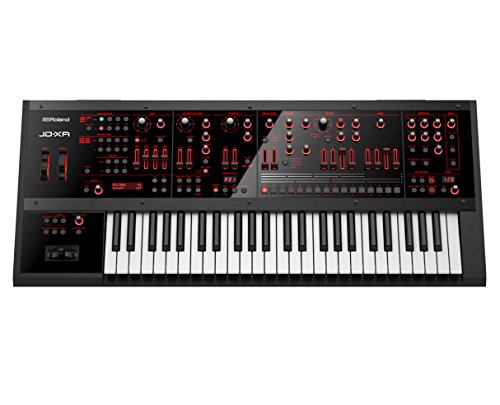
Roland JD-XA 49-Key
Synthesists who want genuine discrete analog voices and a digital engine in one 49-key crossover instrument with deep real time filter control.
Read the Roland JD-XA 49-Key review →
Pioneer DJ DDJ-FLX10 4-Channel
Mobile and open-format DJs who want a 4-channel club style controller with live stem separation and lighting control from one unit.
Read the Pioneer DJ DDJ-FLX10 4-Channel review →Questions Buyers Ask
Nektar Panorama CS12
See the current listing, price and included accessories.
About This Review
Mandrillis Team
The Mandrillis editorial team researches and compares audio and music gear using manufacturer documentation, verified specs and real buyer feedback, so you can make a confident purchase without wading through marketing claims.
Read our full research methodology.