Speakers Review
Yamaha 8" Review: Compact Power for Small Rooms
The Yamaha 8" powered subwoofer targets budget buyers with a 100W amp, an 8-inch cone woofer, and Yamaha Active Servo Technology II. The twisted flare port promises tight bass, but the listing omits key specs like frequency response and inputs. This review explores what the published details suggest for real world use.
Our Verdict
Research Score 71/100The Yamaha 8" powered subwoofer is a sensible budget choice for small to medium rooms. Its 8-inch cone driver and 100W dynamic power should provide a noticeable improvement over TV speakers or small bookshelf speakers. Advanced YST II and the twisted flare port are genuine Yamaha technologies aimed at reducing distortion and port noise. However, the listing leaves out critical information such as frequency response, input types, and dimensions. That makes it difficult to judge how low it plays or how easily it integrates with existing equipment. If you trust Yamaha's reputation and need a simple, affordable subwoofer for music or casual movies, this model is worth considering. For larger rooms or deep bass fans, a bigger driver or a model with published specs may be a safer bet.
Editorial research score based on published specifications and documented features, not a customer rating or lab test.

Yamaha
Yamaha 8"
Best for: Buyers who want an affordable powered subwoofer from a trusted brand for a small room or desktop audio system.
Skip it if: You need deep, room-shaking bass for a large home theater or want detailed connectivity options like speaker-level inputs or wireless features.
Check Price on AmazonWe may earn a commission at no extra cost to you.
Listing verified: October 2026
Who Should Buy It
Buy it if
- Budget-conscious shoppers wanting a compact subwoofer
- Listeners pairing with bookshelf speakers or a small AV receiver
- Apartment dwellers who need moderate low-end without excessive volume
- Anyone who trusts Yamaha's audio engineering but wants a simple upgrade
Skip it if
- You require precise frequency response and extension data before buying
- You need a subwoofer with phase, crossover, or auto-on controls
- You have a large room or expect home theater reference levels
Key Specifications
| Type | Powered subwoofer |
| Drivers | 8-inch cone woofer |
| Power or sensitivity | Dynamic Power: 100W (5 ohms) |
| Frequency response | Not published in listing |
| Inputs and connectivity | Not published in listing |
| Bluetooth and streaming | Not published in listing |
| Dimensions | Not published in listing |
| Weight | Not published in listing |
| Finish | Black |
| Included accessories | Not published in listing |
Overview
The Yamaha 8" powered subwoofer is an entry-level bass module built around a single 8-inch cone woofer and a 100W dynamic power amplifier rated at 5 ohms. Yamaha pairs the driver with two notable technologies: Advanced YST II, which stands for Yamaha Active Servo Technology II, and a new twisted flare port. These features are designed to deliver clear, tight bass rather than boomy low end. The subwoofer is finished in black and is positioned as a stylish addition to any room.
The product listing focuses on the core components but leaves out several specifications that buyers often need. Frequency response, input types, dimensions, and weight are not published. That means this review can only assess the subwoofer based on the published features and Yamaha's general reputation in the audio industry. On paper, the Yamaha 8" appears to be a straightforward powered sub for smaller spaces.
Sound Quality
Advanced YST II is Yamaha's active servo technology that aims to control the woofer's motion more precisely than a conventional amplifier. By sensing and correcting the driver's movement, it reduces distortion and keeps bass tight, especially at higher output levels. For an 8-inch driver, that kind of control is important because smaller cones can become sloppy when pushed hard. The twisted flare port further helps by smoothing air flow at the port opening, which minimizes turbulence and port noise.
An 8-inch cone woofer cannot move as much air as a 10-inch or 12-inch driver, so the deepest sub-bass octaves will likely be softer. In a small room, an 8-inch sub can still produce satisfying low end for music and many movies. The tightness from YST II and the port design may make it a good match for acoustic music, jazz, or dialogue-heavy content where clarity matters more than sheer impact.
The listing does not provide a frequency response range, so it is impossible to know exactly how low this subwoofer reaches. Buyers often report that it adds noticeable fullness to small stereo systems. Placement near a wall or corner will reinforce lower frequencies and improve perceived output. It is probably not a dedicated home theater sub for large rooms.
Drivers, Power and Room Fit
The single 8-inch cone woofer is the heart of this subwoofer. It is a common size for budget powered subwoofers because it balances cabinet size and bass extension. Yamaha does not publish the cone material or surround type, so durability and excursion characteristics are unknown. The dynamic power rating is 100W at 5 ohms, which suggests moderate output capability.
In a small to medium room, 100W and an 8-inch driver can produce enough bass to fill in the low end for music and casual movie watching. For larger open floor plans or high volume home theater use, this subwoofer may struggle. The Advanced YST II helps maximize efficiency by driving the woofer actively, but physics still limits an 8-inch cone's ability to pressurize a large space.
Because the frequency response is not published, buyers cannot confirm the low frequency extension. If the subwoofer rolls off around 35 to 40 Hz, it will handle most music but miss the lowest effects. If it rolls off higher, it may sound more like a mid-bass module. Without data, room fit is a matter of trial and error, but the design suggests it is best used in smaller listening environments.
Features and Connectivity
The listing mentions only two standout features: the twisted flare port and Advanced YST II. Both are aimed at improving bass quality rather than adding connectivity options. There is no mention of Bluetooth, Wi-Fi, or wireless subwoofer kits, so this is very likely a traditional wired subwoofer. The listing also does not state whether the subwoofer has line-level RCA inputs, speaker-level inputs, or a direct LFE input.
Controls such as volume, crossover frequency, and phase are not described. A budget subwoofer may omit some of these, but volume and crossover are almost essential for proper integration. The absence of published control information is a notable gap. The subwoofer is simply presented as a black box with an 8-inch driver and 100W amplifier.
The bullets below summarize the known feature set from the listing.
- Twisted flare port for clear and tight bass
- Advanced YST II (Yamaha Active Servo Technology II)
- 8-inch cone woofer
- Dynamic power: 100W at 5 ohms
- Black finish
Build, Design and Finish
The Yamaha 8" subwoofer is described as a stylish addition to any room, and the black finish is the only color mentioned. The cabinet dimensions and weight are not published, so the exact footprint is unknown. Based on the 8-inch driver, it is likely to be more compact than subwoofers with 10- or 12-inch drivers. The enclosure type is not stated, but the twisted flare port indicates a bass reflex design.
Yamaha has a long history of building reliable audio components, and even budget products tend to have decent fit and finish. Without details on the cabinet material, bracing, or amplifier components, build quality cannot be fully assessed. Buyers who value a clean, unobtrusive look should find the black, low-key design appealing. The lack of visible controls on the front may also contribute to a minimalist appearance.
The design appears simple and functional. The use of a ported enclosure with a flared port suggests attention to reducing port noise, a common issue in cheap subwoofers. The 100W amplifier and 8-inch driver in a modest cabinet should be manageable for most users. Those wanting a more substantial build may need to step up to a higher model.
Setup and Placement
Setting up the Yamaha 8" subwoofer should be straightforward, assuming it has a standard line-level input. The listing does not describe the connection panel, so users may need to consult the manual or retailer photos. In a typical setup, a single RCA cable from an AV receiver's subwoofer output connects to the sub's line input. The receiver then handles crossover and phase.
Placement has a large effect on bass response. Corner placement increases output and can help the 8-inch driver sound larger, but it may also cause boomy or uneven bass. Near a wall is a good compromise. Since the subwoofer has a rear port, it should not be placed too close to the wall, or port noise may become audible.
Without phase or polarity controls, integration with main speakers relies entirely on the receiver or a simple crossover. If the subwoofer sounds thin or disconnected, moving it slightly or adjusting the level on the receiver can help. The absence of published dimensions makes planning placement harder, but an 8-inch subwoofer is generally easy to accommodate.
Daily Use
For daily music listening, the Yamaha 8" subwoofer should add warmth and body to small bookshelf speakers. The advanced YST II and flared port are intended to keep bass notes articulate, which benefits acoustic instruments and male vocals. For movies, the subwoofer will provide a sense of impact during explosions and low-frequency effects. It may not deliver the visceral rumble that larger subwoofers produce.
Because the amplifier is rated at 100W dynamic power, sustained high-output passages may cause the subwoofer to compress or distort. Buyers who listen at moderate levels in a small room will likely be satisfied. The subwoofer probably stays relatively cool thanks to the efficient amp design, but power consumption and standby behavior are not published. Without an auto-on feature mentioned, users may need to switch it off manually.
The black finish should hide dust and blend into a media console. The front likely has no grille, but that is not specified. If there is a grille, it may protect the driver. The listing does not mention a grille, so buyers should assume the driver is exposed. For daily use, the subwoofer is a set-and-forget component once levels are matched.
Who Should Buy It
The Yamaha 8" powered subwoofer is best for budget-conscious buyers who want to improve the low end of a small stereo or home theater system without spending a lot. It is a good match for apartment dwellers or anyone with a small to medium room where a large subwoofer would be overkill. The Yamaha brand carries a reputation for reliability, which gives some peace of mind even when specs are missing.
Listeners who primarily enjoy music at moderate volumes will probably get the most value. The 8-inch driver and 100W amplifier are adequate for reinforcing bass guitar, kick drum, and lower piano notes. Home theater fans with compact systems can also benefit, as long as they do not expect reference-level output. The unit's compact likely footprint and black finish make it easy to integrate into existing decor.
Buyers who already use a Yamaha AV receiver may find this subwoofer a natural match. Yamaha's own receiver bass management will handle crossover and delay. The subwoofer is brand agnostic and should work with any receiver that has a subwoofer output, assuming the input is a standard line-level connection. That assumption remains unconfirmed in the listing, so verification before purchase is wise.
Alternatives Worth Considering
Several other budget powered subwoofers compete in the same class. Models from Polk Audio, Klipsch, and ELAC often offer larger 10-inch drivers and more published specifications for a slightly higher price. A 10-inch subwoofer generally plays deeper and fills a room more easily than an 8-inch model. Buyers who want a more substantial upgrade might consider those alternatives.
Within Yamaha's own lineup, the NS-SW100 and NS-SW200 are larger subwoofers with bigger drivers and more power. The listing for this 8-inch model does not mention those siblings, but a quick comparison on any retailer's site would show the step-up options. For users who need wireless connectivity, some powered subwoofers include built-in Bluetooth or a wireless transmitter kit. Those features usually cost more.
If the missing specifications are a major concern, looking at a subwoofer with a published frequency response and input configuration is wise. Many online reviews and measurements exist for popular budget subwoofers. Those can provide confidence that this Yamaha 8" model currently lacks. Buyers who prioritize transparency may choose a different brand or a higher-tier Yamaha model.
Verdict
The Yamaha 8" powered subwoofer offers a compelling combination of Yamaha's bass technologies and an affordable price. The Advanced YST II and twisted flare port suggest that Yamaha paid attention to controlling distortion and port noise. These are common problems in cheap subwoofers. The 100W dynamic power rating and 8-inch cone woofer are appropriate for small rooms and moderate listening levels.
The lack of published specifications makes it difficult to give an unqualified recommendation. Frequency response, input types, dimensions, and weight are all missing from the listing, so buyers are taking a small risk. If the subwoofer's real-world performance matches its design goals, it should be a solid budget option. For those who need certainty or deeper bass, a model with more detailed specs or a larger driver is worth the extra investment.
Strengths and Limitations
Strengths
- Twisted flare port designed for clear and tight bass
- Advanced Yamaha Active Servo Technology II for controlled woofer motion
- 8-inch cone woofer suits small to medium rooms
- 100W dynamic power output at 5 ohms
- Black finish blends with most decor
- Budget friendly entry point from a well-known audio brand
Limitations
- Frequency response range is not published
- Inputs, outputs, and controls are not listed
- Dimensions and weight are not provided
- No Bluetooth or wireless streaming mentioned
- May lack deep sub-bass compared to larger drivers
How We Scored It
Scores reflect published specifications, documented features and value against the alternatives below. They are editorial research scores, not laboratory measurements.
Alternatives to Consider
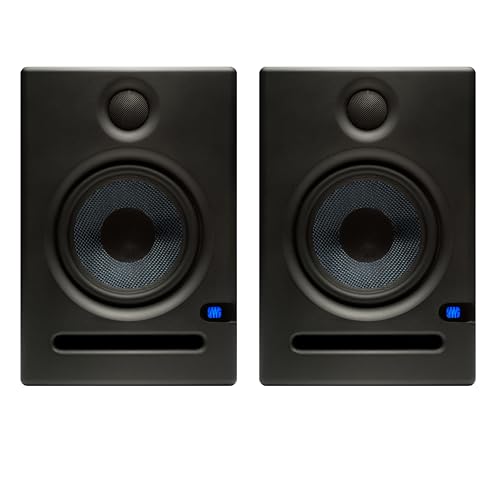
PreSonus Eris E5
The PreSonus Eris E5 is best for home studio owners and content creators who want an affordable pair of powered nearfield monitors with balanced analog inputs and simple room tuning.
Read the PreSonus Eris E5 review →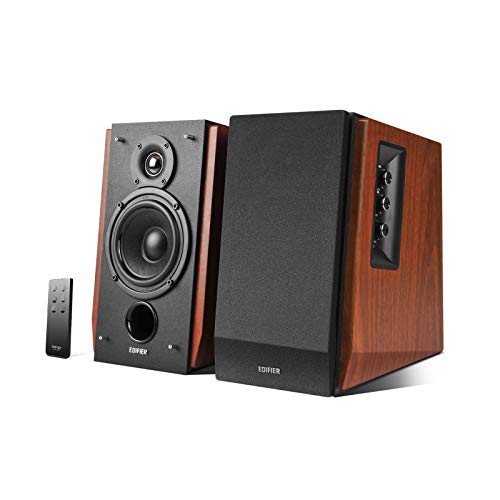
Edifier R1700BT
A budget conscious buyer who wants a simple powered bookshelf speaker for Bluetooth and analog sources in a small to medium room without a separate amplifier.
Read the Edifier R1700BT review →
Yamaha NS-AW294BL
A homeowner who wants a simple weather-resistant pair of passive speakers for background music on a patio or covered outdoor area.
Read the Yamaha NS-AW294BL review →Questions Buyers Ask
Yamaha 8"
See the current listing, price and included accessories.
About This Review
Mandrillis Team
The Mandrillis editorial team researches and compares audio and music gear using manufacturer documentation, verified specs and real buyer feedback, so you can make a confident purchase without wading through marketing claims.
Read our full research methodology.