Studio Gear Review
PreSonus Eris E5 Review: Compact Powered Studio Monitor Pair
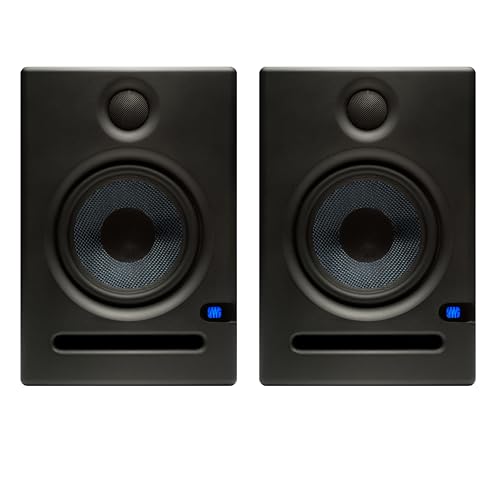
The PreSonus Eris E5 is a budget powered nearfield monitor pair with a 5.25-inch woven composite woofer, one-inch silk-dome tweeter, 80 watts of Class AB bi-amplification, balanced XLR, TRS, and RCA inputs, plus acoustic tuning controls. The listing omits frequency response, dimensions, weight, and finish, so buyers should treat this as a partial spec sheet.
Our Verdict
Research Score 82/100The PreSonus Eris E5 is a budget powered nearfield monitor pair with a practical feature set for home studios. The published specification includes a 5.25-inch woven composite woofer, a 1-inch silk-dome tweeter, 80 watts of Class AB bi-amplification, balanced and unbalanced inputs, and acoustic tuning controls. The listing omits frequency response, dimensions, weight, and finish, which limits a full assessment. For users who need an affordable, analog-only monitor with balanced connectivity and front port flexibility, the Eris E5 looks like a sensible entry point. Buyers who require verified acoustic measurements, digital inputs, or deeper bass should consider alternatives or plan for a subwoofer.
Editorial research score based on published specifications and documented features, not a customer rating or lab test.
PreSonus
PreSonus Eris E5
Best for: The PreSonus Eris E5 is best for home studio owners and content creators who want an affordable pair of powered nearfield monitors with balanced analog inputs and simple room tuning.
Skip it if: Avoid the Eris E5 if you require published frequency response, deep bass extension, Bluetooth streaming, or a complete physical specification before buying.
Check Price on AmazonWe may earn a commission at no extra cost to you.
Listing verified: October 2026
Who Should Buy It
Buy it if
- Home studio musicians needing balanced analog monitor inputs
- Content creators and podcasters working at a desk
- First-time monitor buyers on a budget
- Users with an audio interface or mixer already in place
Skip it if
- You need wireless audio or digital inputs
- You want verified low-frequency extension below 50 Hz
- You cannot buy without knowing exact dimensions and weight
Key Specifications
| Type | Powered 2-way nearfield studio monitor pair |
| Woofer | 5.25 inch |
| Inputs | XLR, TRS, RCA |
| Drivers | 5.25-inch woven composite woofer and 1-inch ultra-low-mass silk-dome tweeter |
| Power or sensitivity | 80 watts Class AB bi-amplification, 102 dB maximum continuous SPL |
| Frequency response | Not published in listing |
| Inputs and connectivity | Balanced XLR, balanced 1/4-inch TRS, unbalanced RCA |
| Bluetooth and streaming | Not published in listing |
| Dimensions | Not published in listing |
| Weight | Not published in listing |
| Finish | Not published in listing |
| Included accessories | Not published in listing |
Overview
The PreSonus Eris E5 is a pair of powered two-way nearfield studio monitors positioned in the budget tier. The product listing describes them as an outstanding way to upgrade monitoring so that mixes translate. Each cabinet pairs a 5.25-inch woven composite woofer with a 1-inch ultra-low-mass silk-dome tweeter. A total of 80 watts of Class AB bi-amplification drives the two drivers. These specifications place the Eris E5 among compact active monitors for small studios, desktops, and home recording setups.
The listing highlights balanced XLR and 1/4-inch inputs along with unbalanced RCA inputs. Acoustic tuning controls let you contour the sound to the room, and a front-firing acoustic port is designed to improve bass reproduction. The published material also lists protection against RF interference, output current limiting, over-temperature, transient, and subsonic issues. At the same time, the listing does not publish frequency response, cabinet dimensions, weight, finish, or included accessories. That missing information means buyers should evaluate the Eris E5 as a partial specification sheet rather than a complete acoustic document.
Sound Quality
On paper, the Eris E5 uses a 5.25-inch woven composite woofer, a material choice that tends to reduce flex and distortion compared with basic paper cones in budget monitors. The 1-inch ultra-low-mass silk-dome tweeter is a familiar approach for smoother high-frequency response and less harshness during long mixing sessions. The listing claims a maximum continuous SPL of 102 dB, which is sufficient for nearfield listening at close range. Without a published frequency response graph, however, buyers cannot verify the low-frequency extension or the overall flatness that studio work demands.
The front-firing acoustic port may help the monitor behave more predictably when placed closer to a wall than a rear-ported design. In typical desktop use, this can reduce some boundary muddiness, but it does not remove the need for careful placement. Buyers generally report that the Eris E5 sounds balanced and revealing for its price, with enough midrange detail to judge vocal and instrument levels. The silk-dome tweeter, on paper, should avoid the brittle top end that can make budget monitors fatiguing.
The 5.25-inch woofer will not reproduce the lowest octaves of bass-heavy music with authority. The listing does not publish a low-frequency spec, so buyers who need deep bass should plan for a subwoofer rather than relying on the monitor alone.
Drivers, Power and Room Fit
The Eris E5 uses a two-way driver arrangement with a 5.25-inch woven composite woofer and a 1-inch ultra-low-mass silk-dome tweeter. The 80 watts of Class AB bi-amplification is likely split between the woofer and tweeter, but the listing does not specify the exact per-driver wattage. Class AB amplification is a common choice in studio monitors because it offers a reasonable balance of efficiency and low distortion at moderate levels. The published 102 dB maximum continuous SPL suggests the monitors can play loud enough for nearfield monitoring without a separate amplifier.
In a small room, a five-inch woofer typically provides useful output down to roughly 50 to 60 Hz, but this listing does not confirm a specific low-frequency limit. The front-firing port is designed to improve bass response and may allow placement slightly closer to the wall behind the desk. For most nearfield setups, the pair should fill a desktop or small studio space without excessive strain. The acoustic tuning controls add a degree of room compensation, although they are not a substitute for proper acoustic treatment.
Features and Connectivity
The PreSonus Eris E5 offers a practical set of analog inputs. Balanced XLR and 1/4-inch TRS connectors allow connection to audio interfaces and mixers with low noise. Unbalanced RCA inputs provide a simple path from consumer devices such as computers, phones, or older playback gear. The listing does not mention digital inputs, Bluetooth, or wireless streaming, so the Eris E5 is strictly an analog monitor.
The acoustic tuning controls are a useful feature for tailoring the sound to a desk or room. The front-firing acoustic port is another functional choice that can reduce rear-wall interaction. Protection circuitry is specified for RF interference, output current limiting, over-temperature, transient, and subsonic conditions. These protections are common in powered monitors and help prevent damage from unexpected signal peaks or thermal buildup.
- Balanced XLR inputs for audio interfaces and mixers
- Balanced 1/4-inch TRS inputs for pro audio gear
- Unbalanced RCA inputs for consumer sources
- Acoustic tuning controls to adjust bass and treble response
- Front-firing acoustic port for low-frequency output
- 102 dB maximum continuous SPL
Build, Design and Finish
The listing does not publish the cabinet dimensions, weight, or finish for the PreSonus Eris E5. Without those details, it is difficult to assess the desk footprint, the build density, or the visual options. The product is described as a pair of nearfield studio monitors, which implies two cabinets are included. The use of a front-firing port and front-mounted acoustic controls suggests a design oriented toward desktop use and easy access.
The published driver and amplifier specifications indicate a functional monitor rather than a decorative bookshelf speaker. The 5.25-inch woofer and 1-inch tweeter are standard sizes for compact powered monitors, and the 80 watt amplification suggests a self-contained design that does not require an external power amp. Buyers should request detailed photos or a manual if they need finish options, exact weight, or cabinet material before purchase.
The listing's mention of protection circuitry and Class AB amplification is a sign of a product built for continuous studio use, but without physical specs the actual cabinet quality remains unknown.
Setup and Placement
Setup is straightforward in principle. Connect a line-level source to the XLR, TRS, or RCA inputs, set the input level if a control is present, and power on the monitors. The listing does not describe a front or rear input sensitivity control in detail, but acoustic tuning controls are mentioned. Users typically place a pair of nearfield monitors in an equilateral triangle with the tweeters at ear height. The front-firing port gives more placement flexibility than a rear-ported monitor, especially on a desk close to a wall.
The acoustic tuning controls can help compensate for desk reflections, corner loading, or a hard wall behind the monitors. The listing does not mention automatic room correction, so manual adjustment and physical placement are the main tools for tailoring the sound. For the best stereo image, users should keep the monitors symmetrical and avoid placing one monitor in a corner while the other is in open space. A set of isolation pads can reduce desk resonance, but the listing does not state whether such accessories are included.
Daily Use
For daily music production, video editing, or general listening at a desk, the Eris E5 should behave like a typical compact active monitor. The 102 dB maximum SPL rating is more than enough for close listening, and the silk-dome tweeter should remain comfortable over hours of use. The analog inputs mean you can leave a mixer or interface connected and switch sources at the source device, but the monitor itself does not appear to offer input switching. The listing does not mention a remote control, standby mode, or front-panel volume knob.
Because the Eris E5 is powered, it needs a power outlet for each cabinet. The listing does not specify power consumption or whether the monitors have an auto-standby function. The Class AB amplifier may generate some heat during long sessions, but the over-temperature protection listed suggests the design accounts for thermal limits. For most users, daily operation will involve turning the monitors on and off at the main power switch or a connected power strip.
Without published dimensions and weight, it is hard to predict whether the Eris E5 will dominate a small desk. Buyers who need a compact footprint should confirm the cabinet size before ordering. The front-firing port is a practical advantage for desktop use because it minimizes some low-frequency buildup that can occur when a rear port is too close to a wall.
Who Should Buy It
The PreSonus Eris E5 is a good match for home studio owners, content creators, and musicians who want an affordable pair of powered nearfield monitors with balanced inputs. The balanced XLR and TRS connections make it easier to integrate into an audio interface setup without hum. The acoustic tuning controls help adapt the sound to an untreated room, which is common in bedroom and garage studios.
Buyers who listen at a desk and do not require deep sub-bass will find the five-inch woofer sufficient for most vocal, guitar, and electronic production. The pair format means you get proper stereo imaging for mixing and video work. The lack of Bluetooth and digital inputs is not a drawback for users who already have an audio interface or mixer as the central hub.
This monitor is also suitable for video editors and podcasters who need a clear reference for speech and background music without a large footprint. The budget price tier makes it accessible for first-time monitor buyers, but the missing specifications may push detail-oriented users to research further before committing.
Alternatives Worth Considering
If you want a more consumer-oriented powered bookshelf speaker with built-in Bluetooth and a remote, an option like the Edifier R1280DB may be simpler for casual listening, though it is not usually marketed as a studio monitor. For passive speaker setups with a separate amplifier, the Klipsch R-51M or ELAC Debut 2.0 B5.2 are popular bookshelf choices, but they will not include amplification. These comparisons are based on general product categories rather than published specifications from the Eris E5 listing.
Within the active studio monitor class, other five-inch models may include similar driver sizes and input options, and some offer digital inputs or room correction. The Eris E5 does not publish a frequency response, so users who need verified low-frequency extension might prefer a monitor that provides a full spec sheet. For buyers who need more low end, adding a subwoofer such as the SVS SB-1000 Pro would address the bass limitations of any five-inch woofer, but that is a separate purchase and a different budget tier.
Verdict
The PreSonus Eris E5 is a budget powered nearfield monitor pair with a practical feature set for home studios. The published specification includes a 5.25-inch woven composite woofer, a 1-inch silk-dome tweeter, 80 watts of Class AB bi-amplification, balanced and unbalanced inputs, and acoustic tuning controls. The listing omits frequency response, dimensions, weight, and finish, which limits a full assessment. For users who need an affordable, analog-only monitor with balanced connectivity and front port flexibility, the Eris E5 looks like a sensible entry point. Buyers who require verified acoustic measurements, digital inputs, or deeper bass should consider alternatives or plan for a subwoofer.
Strengths and Limitations
Strengths
- 5.25-inch woven composite woofer and 1-inch silk-dome tweeter
- 80 watts of Class AB bi-amplification
- Balanced XLR and 1/4-inch TRS inputs plus unbalanced RCA
- Acoustic tuning controls for room compensation
- Front-firing acoustic port for flexible placement
- 102 dB maximum continuous SPL with protection circuitry
Limitations
- Frequency response not published in listing
- Cabinet dimensions, weight, and finish not published
- No Bluetooth, USB, or digital inputs
- Included accessories not specified
- Five-inch woofer may not satisfy deep bass needs
How We Scored It
Scores reflect published specifications, documented features and value against the alternatives below. They are editorial research scores, not laboratory measurements.
Alternatives to Consider
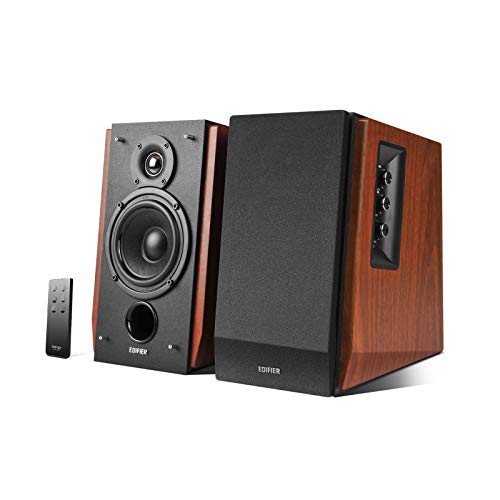
Edifier R1700BT
A budget conscious buyer who wants a simple powered bookshelf speaker for Bluetooth and analog sources in a small to medium room without a separate amplifier.
Read the Edifier R1700BT review →
Yamaha NS-AW294BL
A homeowner who wants a simple weather-resistant pair of passive speakers for background music on a patio or covered outdoor area.
Read the Yamaha NS-AW294BL review →
PreSonus Eris HD10BT
Buyers who want an affordable Bluetooth ANC headphone for casual listening, mobile use, and basic studio monitoring tasks.
Read the PreSonus Eris HD10BT review →Questions Buyers Ask
PreSonus Eris E5
See the current listing, price and included accessories.
About This Review
Mandrillis Team
The Mandrillis editorial team researches and compares audio and music gear using manufacturer documentation, verified specs and real buyer feedback, so you can make a confident purchase without wading through marketing claims.
Read our full research methodology.