Studio Gear Review
Behringer MONITOR1 Review: Simple Passive Monitor Control
The Behringer MONITOR1 is a passive stereo volume controller that sits between an interface and powered monitors. It offers XLR combo and 3.5mm inputs with XLR and 3.5mm outputs, a large level knob, and no active circuitry. The listing omits dimensions and weight, but the design is simple and budget friendly.
Our Verdict
Research Score 72/100The Behringer MONITOR1 is a budget passive monitor controller that provides a simple volume knob between a DAW and powered monitors. It uses no active circuitry, which keeps the signal path clean and requires no power. The XLR combo inputs and outputs cover typical balanced studio connections, while 3.5mm jacks add consumer device flexibility. However, it lacks a mute switch, headphone output, and monitor switching. The listing omits dimensions, weight, and potentiometer details, so long term build quality is uncertain. Buyers with a simple stereo setup will find it adequate, but those needing more control should look for a feature rich alternative.
Editorial research score based on published specifications and documented features, not a customer rating or lab test.
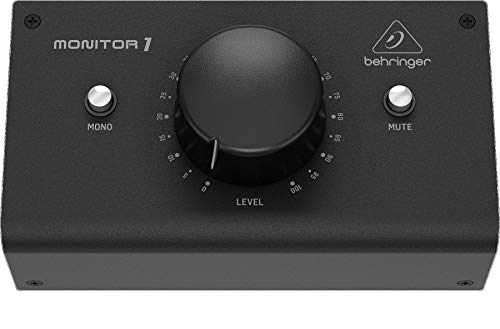
Behringer
Behringer MONITOR1 Passive Monitor Controller
Best for: A simple passive volume control between an audio interface and powered studio monitors in a budget minded setup.
Skip it if: You need multiple source switching, talkback, headphone monitoring or a powered speaker.
Check Price on AmazonWe may earn a commission at no extra cost to you.
Listing verified: October 2026
Who Should Buy It
Buy it if
- Home studio owners with powered monitors
- Producers who want a central volume knob
- Anyone seeking a no power transparent signal path
- DAW users with a single stereo output
Skip it if
- You need to switch between multiple monitor pairs
- You require a headphone output or talkback
- You expect a powered monitor speaker
Key Specifications
| Type | Passive stereo monitor controller (not a speaker) |
| Woofer | Not published in listing |
| Tweeter | Not published in listing |
| Power | Passive, no power required (active-free circuitry) |
| Frequency response | Not published in listing |
| Inputs | 2 XLR combo inputs and 3.5 mm stereo input |
| Room controls | None listed, volume knob only |
| Dimensions | Not published in listing |
| Weight | Not published in listing |
| Included accessories | Not published in listing |
Overview
The Behringer MONITOR1 is a passive stereo monitor controller, not a studio monitor speaker. It sits between an audio interface and a pair of powered monitors. The listing describes it as a premium passive device with active free circuitry. On paper it simply passes audio through a large volume knob without amplification or coloration.
The product listing does not publish dimensions, weight, or enclosure material. This limits a full desktop footprint assessment. The feature set suggests a small inline box that can be placed near a keyboard or monitor stand. The budget price tier points to an affordable entry point for simple monitor management.
This device will not work as a standalone speaker. It has no woofer, tweeter, amplifier, or acoustic output. It routes line level audio from a source to powered monitors. The passive design eliminates the need for a power cord or internal electronics.
Accuracy and Sound Signature
A passive monitor controller should be transparent on paper. The Behringer MONITOR1 uses no active circuitry, which the listing says guarantees the purest signal path. The audio signal is not boosted, equalized, or converted. Any coloration would come from the quality of the potentiometer and connectors.
The listing does not specify the volume potentiometer type or tolerance. Basic passive attenuators can sometimes exhibit channel imbalance at very low volume settings. The MONITOR1 does not include a balance control, so any mismatch cannot be corrected on the unit. Buyers in this budget tier often accept that trade off.
Because there is no active gain stage, the noise floor should be negligible. The controller should not add hiss or hum, assuming quality connectors and shielding. The XLR combo jacks are typically balanced, which helps reject noise in professional setups.
Drivers, Amplification and Power
The Behringer MONITOR1 has no speaker drivers, no amplifier, and no power requirement. In this review the driver section is not applicable. The only user facing control element is the large volume knob. The listing does not state the potentiometer brand or taper.
The absence of active circuitry is a key feature. The product listing emphasizes active free circuitry and a pure signal path. This design removes the need for a power supply and reduces electronic failure risk. There is no digital conversion, DSP, or headphone amplifier.
Power handling is not applicable here. The controller passes line level signals without issue. The listing does not publish maximum input or output levels. The XLR combo jacks suggest compatibility with balanced +4 dBu or unbalanced -10 dBV connections.
Room Fit, Placement and Controls
Placement is simple because the MONITOR1 is a desktop device. The listing does not provide dimensions, so users should verify workspace fit. Most passive monitor controllers in this class are small enough to sit near a keyboard. The large volume knob suggests easy reach.
The only control described is the large volume knob. There are no room correction controls, EQ, dim, mute, or mono sum. The product is strictly a stereo attenuator. This minimalism keeps operation straightforward but limits flexibility for complex monitoring setups.
Room fit here means signal routing, not acoustic treatment. The MONITOR1 sits between a DAW interface and powered monitors. Users can adjust listening level without reaching for software or rear panel knobs. The listing does not mention mounting options or rubber feet.
- Passive inline volume control
- Large knob for level adjustment
- No room EQ or monitor switching
- Desktop placement, dimensions not published
- No power supply required
Build, Design and Finish
Behringer calls the MONITOR1 a premium passive controller, but the listing does not specify enclosure material, finish, or weight. Budget tier construction may include a metal or plastic chassis. The large volume knob appears to be the primary design focus.
The overall aesthetic is likely functional rather than flashy. The listing does not describe the layout or whether connections are front or rear mounted. Users should expect a no frills appearance consistent with Behringer entry level studio accessories.
With no amplifier, there is no heat generation or ventilation concern. The lack of a power supply reduces weight and complexity. However, the listing does not publish weight, so buyers cannot confirm portability or sturdiness.
Connectivity and Inputs
The Behringer MONITOR1 offers two XLR combo inputs and a 3.5mm stereo input. The XLR combo jacks likely accept both XLR and quarter inch TRS connectors. The 3.5mm input allows connection from a phone, tablet, or computer headphone output.
On the output side, the listing mentions two XLR outputs and a 3.5mm stereo output. The XLR outputs connect to powered studio monitors with balanced cables. The 3.5mm output can feed a secondary device, but it is not a dedicated headphone output.
There is no USB, Bluetooth, optical, or digital connectivity. The MONITOR1 is an analog only device. This is appropriate for a passive controller but means digital control requires a separate interface. The listing does not state whether the 3.5mm input sums to mono or remains stereo.
Setup and Daily Use
Setup is straightforward. Connect the outputs of an audio interface to the MONITOR1 inputs, then connect the controller outputs to powered monitors. The passive design requires no driver installation, software, or power connection. No additional software is required.
Daily use revolves around the large volume knob. Turning the knob adjusts listening level without changing software output level. This can help preserve bit depth by keeping the DAW fader at unity. The absence of a mute switch means users must turn the knob down to silence monitors.
Cable management is a practical consideration. The listing does not include cables, so users need to purchase XLR and 3.5mm cables separately. The XLR combo jacks require balanced cables for noise rejection. The 3.5mm connections are unbalanced and may pick up interference over long runs.
Who Should Buy It
The Behringer MONITOR1 is best suited to home studio owners with one pair of powered monitors who need a physical volume knob. It works well for producers and mix engineers who monitor through a DAW and audio interface. The passive design appeals to those wanting no added coloration.
This controller is a good option for anyone adjusting monitor volume on the back of each speaker or through software only. It centralizes level control into one large knob. Users with a simple stereo setup and limited budget will find the feature set adequate. It fills a simple niche well.
The MONITOR1 is not for users who need to switch between multiple monitor pairs, sum to mono, or use talkback. It also lacks a headphone output. The listing does not mention a mute or dim function. Those needs require a more advanced monitor controller.
Alternatives Worth Considering
For users who want a similar passive controller with a mute switch or headphone output, the JBL Nano Patch+ and Mackie Big Knob Passive are common alternatives. They offer basic passive attenuation with some added controls. The Behringer MONITOR1 lacks those extras based on its listing.
The PreSonus Monitor Station V2 is a more advanced active option with multiple inputs and talkback, but it costs more. The Palmer Monicon is another passive controller known for robust build quality. Users who prioritize published specifications may prefer those alternatives.
For powered studio monitor alternatives in the same budget tier, the KRK Rokit 5 G5 and PreSonus Eris 3.5 have built in volume controls but do not offer central monitor management. The Behringer MONITOR1 is a complementary accessory, not a substitute. Each serves a different role in a studio.
Verdict
The Behringer MONITOR1 is a simple, budget friendly passive monitor controller. It provides a large volume knob between a DAW and powered monitors. The passive circuit means no power, no active coloration, and minimal complexity. XLR combo and 3.5mm connections cover typical home studio setups. It does not add convenience features, but it does the core job.
The main limitations are the absence of a mute switch, no headphone output, and no monitor switching. The listing also omits dimensions, weight, and potentiometer specifications. Buyers who need only volume control and have balanced connections will likely be satisfied.
Overall, the MONITOR1 earns a score of 72 out of 100. It is a capable budget controller for basic setups, but it does not compete with feature rich active controllers. The value is strong for the price tier if build quality holds up, but unknown specs and missing convenience features prevent a higher score.
Strengths and Limitations
Strengths
- Passive design requires no power
- Transparent signal path
- Two XLR combo inputs
- Dual XLR and 3.5mm outputs
- Large volume knob
- Budget priced
Limitations
- No mute or mono switch
- No headphone output
- No talkback or source switching
- Listing omits dimensions and weight
- Channel balance at very low volume not specified
How We Scored It
Scores reflect published specifications, documented features and value against the alternatives below. They are editorial research scores, not laboratory measurements.
Alternatives to Consider
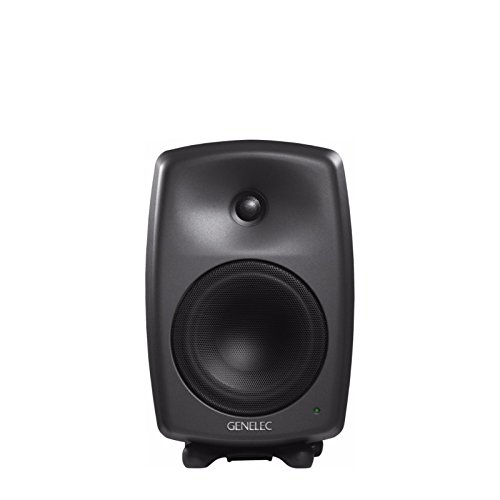
Genelec 8040B Professional Studio Monitors
Project and professional studios that want a proven bi amplified nearfield monitor with flexible mounting and automatic power management.
Read the Genelec 8040B Professional Studio Monitors review →
Yamaha HS7 Active Studio Monitor Nearly
Home studio owners who want a pair of bi-amplified Yamaha HS7 monitors with XLR and TRS connectivity and a 43Hz to 30kHz range.
Read the Yamaha HS7 Active Studio Monitor Nearly review →
Behringer NEKKST K5 Active Studio Monitor
Budget conscious home studio owners and content creators who want a compact, bi-amplified active monitor with a wide sweet spot and cannot yet verify detailed specs.
Read the Behringer NEKKST K5 Active Studio Monitor review →Questions Buyers Ask
Behringer MONITOR1 Passive Monitor Controller
See the current listing, price and included accessories.
About This Review
Mandrillis Team
The Mandrillis editorial team researches and compares audio and music gear using manufacturer documentation, verified specs and real buyer feedback, so you can make a confident purchase without wading through marketing claims.
Read our full research methodology.