Studio Gear Review
Bose Sub 2 Review: Compact PA Bass Module Down to 37 Hz
The Bose Sub 2 is a powered bass module built around a 10 inch by 18 inch high excursion RaceTrack driver with published extension down to 37 Hz. It connects to Bose L1 Pro32 systems through SubMatch or to any powered PA through line input and output, and stacks with Cardioid Mode for directional bass.
Our Verdict
Research Score 77/100The Bose Sub 2 is an upper mid-range powered bass module designed for portable PA work rather than studio monitoring. The product listing publishes extension down to 37 Hz, a 10 inch by 18 inch high excursion RaceTrack driver that Bose compares to a conventional 15 inch woofer, a SubMatch connection for the L1 Pro32, line input and output with selectable crossover modes, an independent level knob and a Cardioid Mode for stacked units. Amplifier power, dimensions and weight are not stated. For L1 Pro32 owners it is the natural match, and the line connections make it usable with other powered speakers. Studio buyers should look at dedicated monitoring subwoofers instead.
Editorial research score based on published specifications and documented features, not a customer rating or lab test.

Bose
Bose Sub 2
Best for: Owners of a Bose L1 Pro32 or other portable powered PA who need deeper, directional bass from a compact module that scales by stacking.
Skip it if: You need a studio subwoofer with published power, precise room alignment and neutral tuning for mixing work.
Check Price on AmazonWe may earn a commission at no extra cost to you.
Listing verified: October 2026
Who Should Buy It
Buy it if
- Bose L1 Pro32 users who want the matched bass module with the SubMatch cable
- DJs and bands with any powered PA who want a line level subwoofer with crossover modes
- Event companies that stack subwoofers and want Cardioid Mode to control stage bleed
- Performers who need a small footprint low frequency unit for vans and small stages
Skip it if
- You are shopping for a studio monitoring subwoofer
- You need confirmed amplifier wattage and weight before buying
- You do not own a powered PA to pair it with
Key Specifications
| Type | Powered bass module and portable PA subwoofer |
| Woofer | 10 inch by 18 inch high excursion RaceTrack driver |
| Tweeter | None, subwoofer design |
| Power | Not published in listing |
| Frequency response | Low end range down to 37 Hz, upper limit not published in listing |
| Inputs | SubMatch connection for Bose L1 Pro32, line input and line output with selectable crossover modes |
| Room controls | Independent sub level control knob, selectable crossover modes, Cardioid Mode with stacked units |
| Dimensions | Not published in listing |
| Weight | Not published in listing |
| Included accessories | Not published in listing |
Overview
The Bose Sub 2 is a powered bass module, sold primarily as the low frequency partner for Bose L1 Pro portable line array systems and secondarily as a powered subwoofer for any loudspeaker with a line level feed. It appears in a studio monitor category because it is a powered low frequency loudspeaker, but its design brief is live sound. The product listing places it in the upper mid-range price tier.
The listing is reasonably informative for a PA product. It publishes the low frequency extension, describes the driver shape and size, explains the connection options and names the stacking and directional features. It does not publish amplifier power, dimensions, weight or an upper frequency limit.
This is an editorial research review based on the published specification and general knowledge of how portable subwoofers are used. Where the listing does not state a figure, the specification table says so, and no numbers are borrowed from other Bose products.
Accuracy and Sound Signature
The listing publishes a low end range down to 37 Hz, which is deep enough to reproduce the fundamental of a four string bass guitar and most kick drum energy. For portable PA use, that extension is the main reason to add a subwoofer at all, since compact column arrays and small powered tops typically roll off well above that point.
Bose describes the 10 inch by 18 inch RaceTrack driver as delivering performance that rivals a conventional 15 inch woofer. The oval shape allows a large cone area to fit in a narrower cabinet than a round 15 inch driver would need, which is how the Bose Sub 2 achieves its compact footprint. The listing does not publish distortion or maximum output figures to support the comparison.
Cardioid Mode is the most interesting acoustic feature. When two or more units are stacked and the mode is enabled, the listing says bass is directed out front while rear energy is reduced, which cuts feedback into stage microphones and lowers the muddy bass build up behind the system. For a live product, that directional control matters more than the flat response a studio subwoofer would chase.
Drivers, Amplification and Power
The driver is the standout published specification: a 10 inch by 18 inch high excursion RaceTrack unit. High excursion means the cone is designed to travel further than a conventional driver, which increases air displacement and therefore low frequency output from a given cone area. Combined with the oval geometry, it is the engineering reason the unit can be both compact and deep reaching.
Amplifier power is not published in the listing. The unit is described as powered, so an internal amplifier is confirmed, but wattage, amplifier class and peak versus continuous ratings are absent. Buyers who want to compare the Bose Sub 2 with other powered subwoofers on power alone will need the manufacturer datasheet.
Scaling is addressed by stacking rather than by a bigger single box. The listing states that multiple Sub 2 units can be stacked for more bass, which lets an event company grow the system for larger rooms while keeping each unit portable. Each stacked module brings its own amplifier, so power scales with the number of units.
Room Fit, Placement and Controls
Placement for a portable PA subwoofer is usually at the front of the stage, on the floor, near the main speakers. The listing describes a compact design with a small footprint but does not publish dimensions or weight, so stage space and lifting requirements cannot be stated here. The RaceTrack driver shape suggests a tall, narrow cabinet rather than a cube, but that is inferred rather than published.
Controls are practical rather than technical. An independent sub level control knob lets the operator add or reduce bass quickly during a show, and selectable crossover modes set the hand off point between the subwoofer and the main speakers when using the line connections. The listing does not publish the specific crossover frequencies on offer.
Cardioid Mode changes how the system interacts with the venue. By directing bass forward and reducing rear output, a stacked pair of units places less low frequency energy on stage, which helps vocal microphones stay clean and reduces the boom in small rooms. The listing does not say whether Cardioid Mode works with a single unit, and the description implies it requires multiple units.
- Floor placement at the front of the stage near the main speakers
- Independent sub level control knob for fast adjustment
- Selectable crossover modes on the line input and output
- Cardioid Mode for directional bass when stacking multiple units
- Dimensions and weight are not published in the listing
Build, Design and Finish
A compact design with a small footprint is the only build claim in the listing, which does not describe cabinet material, finish, grille, handles or weight. Bose portable PA products have a long record in the gigging market, and the build score reflects that record and the design intent rather than published construction specifications.
A high excursion driver places significant mechanical stress on the enclosure, so the cabinet needs to be rigid and well braced. The listing does not confirm how that is achieved. Buyers should also expect the unit to be heavier than its footprint suggests, since a powered subwoofer carries an amplifier, a large magnet structure and a braced box.
No included accessories are listed. The SubMatch cable that links the Bose Sub 2 to an L1 Pro32 is described as proprietary, but the listing does not state whether it ships with the subwoofer or must be bought separately, so buyers should confirm before ordering.
Connectivity and Inputs
Two connection paths are published. The first is the proprietary SubMatch cable, which the listing says combines the subwoofer seamlessly with the Bose L1 Pro32 portable line array. In general terms, a single cable carrying both signal and configuration simplifies setup and reduces the chance of a mismatched crossover between the array and the subwoofer.
The second path is a standard line input and line output with selectable crossover modes. This allows the Bose Sub 2 to sit between a mixer and any powered loudspeaker, passing a high passed signal to the tops while handling the bass itself. The listing does not specify the connector type for the line connections, so XLR versus quarter inch cannot be confirmed.
The combination of proprietary and universal connections is a sensible design. L1 Pro32 owners get the simplest possible integration, and everyone else still has a conventional line level route. The connectivity score reflects that flexibility, held back slightly by the unpublished connector details.
Setup and Daily Use
For an L1 Pro32 owner, setup is a single SubMatch cable and a level check. For other systems, the operator connects the mixer to the subwoofer line input, runs the line output to the main speakers, selects a crossover mode and sets the level knob. The listing presents the process as easy to use, which matches the simplicity of the controls described.
During a show, the independent level knob is the control most likely to be touched. Rooms differ in how much bass they reinforce, and a quick adjustment at the subwoofer avoids reworking the mix. Cardioid Mode would normally be set once during setup when two or more units are stacked.
Transport is the unknown. Without published weight or dimensions, this review cannot say how the unit fits into a vehicle or how many people are needed to lift it. The compact footprint claim is encouraging, but buyers should verify the figures before planning a load out.
Who Should Buy It
The clearest buyer is anyone who already owns a Bose L1 Pro32 and wants more low end. The SubMatch connection and the shared design family make the Bose Sub 2 the intended partner, and the 37 Hz extension fills in what a column array cannot deliver on its own.
Beyond the Bose ecosystem, the line input and output with selectable crossover modes open the unit to DJs, bands and event companies using other powered speakers. Those who regularly stack subwoofers will value Cardioid Mode for managing stage bleed and small room boom.
Studio owners should not buy it for monitoring. The design goals of a portable PA bass module, including high output, quick level adjustment and directional control, are different from the neutral, precisely aligned response a mixing subwoofer requires.
Alternatives Worth Considering
Within the Bose range, the Bose Sub 1 is the smaller sibling with a 7 inch by 13 inch RaceTrack driver and extension to 40 Hz, aimed at performers who need less bass and lighter transport. Buyers who play small rooms may find it sufficient and easier to carry.
Conventional round driver subwoofers from the major live sound brands offer published power ratings and often lower prices, at the cost of a larger footprint. Anyone outside the Bose L1 ecosystem should compare those options directly since the SubMatch advantage does not apply to them.
Studio buyers looking for a monitoring subwoofer should consider dedicated studio units from manufacturers such as Adam Audio or Neumann, or simply pair larger nearfields like the Kali Audio LP-6 with a matching studio subwoofer from the same brand.
Verdict
The Bose Sub 2 is a well specified portable bass module on paper. Extension to 37 Hz, a 10 inch by 18 inch high excursion RaceTrack driver, SubMatch and line connections, selectable crossover modes, a level knob and Cardioid Mode cover the needs of most gigging performers.
Missing amplifier power, dimensions and weight prevent a complete comparison and hold the score below the professional range. The proprietary SubMatch benefit also only applies to Bose L1 Pro32 owners.
For L1 Pro32 users it is the obvious choice, and for other powered PA owners it is a credible compact option. For studio monitoring it is the wrong tool.
Strengths and Limitations
Strengths
- Published low end extension down to 37 Hz
- 10 inch by 18 inch RaceTrack driver in a compact footprint
- Line input and output with selectable crossover modes for third party speakers
- Cardioid Mode when stacking multiple units
- SubMatch cable connection for Bose L1 Pro32 systems
- Independent sub level control knob
Limitations
- Amplifier power is not published in the listing
- Dimensions and weight are not stated
- SubMatch integration is proprietary to Bose L1 Pro systems
- A live PA bass module, not a studio reference subwoofer
- No accessories or cables are listed
How We Scored It
Scores reflect published specifications, documented features and value against the alternatives below. They are editorial research scores, not laboratory measurements.
Alternatives to Consider

ADAM Audio A77H 7-inch
Studio engineers and producers who need a high output three way nearfield monitor with adjustable DSP and dual woofers.
Read the ADAM Audio A77H 7-inch review →
JBL EON ONE MK2
Buskers, mobile performers, event hosts and DJs who need a full range PA that runs without mains power and sets up in minutes.
Read the JBL EON ONE MK2 review →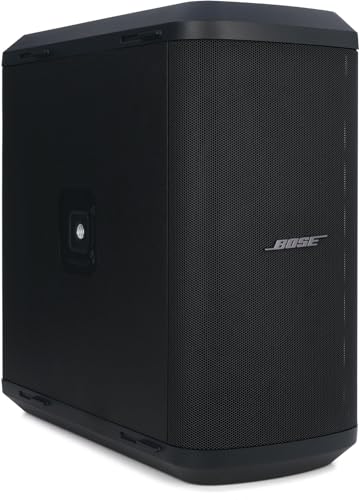
Bose Sub 1
Performers with a Bose L1 Pro32 or another compact powered PA who want a small, easy to carry bass module that still reaches 40 Hz.
Read the Bose Sub 1 review →Questions Buyers Ask
Bose Sub 2
See the current listing, price and included accessories.
About This Review
Mandrillis Team
The Mandrillis editorial team researches and compares audio and music gear using manufacturer documentation, verified specs and real buyer feedback, so you can make a confident purchase without wading through marketing claims.
Read our full research methodology.