Studio Gear Review
Focal Alpha 65 Review: Slatefiber 6.5 Inch Nearfield With Three Inputs
The Focal Alpha 65 is a 6.5 inch active two-way nearfield with a Slatefiber woofer, a 1 inch aluminum tweeter, 85 W RMS of bi-amped Class D power, a 40 Hz to 22 kHz range, three inputs and LF and HF shelving. This review covers its published strengths and the few specifications the listing leaves out.
Our Verdict
Research Score 84/100The Focal Alpha 65 is a strong recommendation in the lower mid-range tier for anyone who wants a serious 6.5 inch two-way nearfield with its specification in the open. The Slatefiber woofer and aluminum tweeter, 85 W RMS bi-amped with a published 55 W and 30 W split, 40 Hz to 22 kHz range and 104 dB SPL peak describe a full-range monitor for most nearfield work. Three inputs, LF and HF shelving, a sensitivity control, an MDF cabinet with a laminar port, wall-mount inserts and included grills complete a mature package. Only dimensions, weight, port direction and crossover frequency are missing. Sold individually, it builds into a pair or a surround set as needed.
Editorial research score based on published specifications and documented features, not a customer rating or lab test.
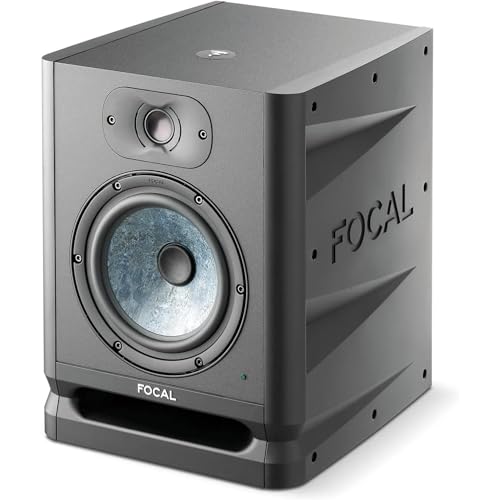
Focal
Focal Alpha 65
Best for: Project studios that want a full-range 6.5 inch nearfield with complete published specs, three inputs and real room controls.
Skip it if: You need a compact monitor, a three-way or coaxial design, or exact dimensions from the listing.
Check Price on AmazonWe may earn a commission at no extra cost to you.
Listing verified: October 2026
Who Should Buy It
Buy it if
- Mixers who want 40 Hz reach without a subwoofer
- Producers juggling an interface and consumer sources
- Post-production and installation users who need wall-mount inserts
- Buyers who prefer a stiff composite woofer and metal tweeter
Skip it if
- Your desk cannot hold a 6.5 inch cabinet
- You want coaxial point-source imaging
- You mix sub-heavy music at high volume without a sub
Key Specifications
| Type | Active two-way nearfield studio monitor (Alpha 65 Evo generation), sold individually |
| Woofer | 6.5 inch Slatefiber |
| Tweeter | 1 inch aluminum |
| Power | 85 W RMS bi-amplified Class D (55 W LF, 30 W HF), 104 dB SPL peak at 1 meter |
| Frequency response | 40 Hz to 22 kHz |
| Inputs | TRS, XLR and RCA, up to three sources |
| Room controls | Adjustable LF and HF shelving, sensitivity control |
| Dimensions | Not published in listing |
| Weight | Not published in listing |
| Included accessories | Protective grills included; wall-mount inserts built into cabinet |
Overview
The Focal Alpha 65 is a 6.5 inch active two-way nearfield monitor, listed in its Evo generation and sold individually, with a Slatefiber woofer, a 1 inch aluminum tweeter and 85 W RMS of bi-amplified Class D power. The listing publishes a 40 Hz to 22 kHz range and positions it as a neutral reference speaker. It sits in the lower mid-range price tier per unit.
Focal is a French loudspeaker maker whose professional monitors sit well above this tier, and the Alpha line is where its driver technology reaches project studios. Slatefiber is the brand's own composite cone material, introduced to replace the woofers of the earlier Alpha generation, and the listing leads with it for good reason.
This is one of the more thoroughly documented monitors in its class. Drivers, power split, SPL, response, inputs, controls, cabinet material, port type and included accessories are all stated. What the listing does not give are dimensions, weight and the crossover frequency, and those gaps are noted where they matter.
Accuracy and Sound Signature
The published 40 Hz to 22 kHz range is wide for a 6.5 inch two-way and, if the tolerance is reasonable, means the Focal Alpha 65 can reproduce most bass fundamentals without a subwoofer in a nearfield setup. The listing does not state the tolerance, so the figure should be read as the useful extent rather than a flat window.
The listing's specific claim is consistent tonal balance at any volume, which it attributes to the Slatefiber woofer and aluminum tweeter. That is a meaningful target for mixing, because a monitor that changes character between quiet late-night work and loud playback forces the engineer to second-guess decisions. On paper the bi-amplified design and a stiff cone support that aim.
An aluminum dome tweeter typically delivers extended, detailed highs, and the trade is that it can sound forward in a bright room. The adjustable HF shelving control published for this monitor exists to manage exactly that, and buyers report that Focal's recent Alpha generation is more neutral in the treble than the brand's older designs.
Drivers, Amplification and Power
The woofer is a 6.5 inch Slatefiber cone and the tweeter is a 1 inch aluminum dome, a pairing that puts a stiff, well-damped low-frequency driver under a fast, light high-frequency one. Surround material, motor details and the crossover frequency between them are not published.
Amplification is bi-amped Class D at 85 W RMS in total, split as 55 W for the woofer and 30 W for the tweeter. Publishing the split is useful, since it shows the low end gets the majority of the power where it is needed, and the RMS designation means the figure is continuous rather than a peak marketing number.
The listing rates peak output at 104 dB SPL at 1 meter. For a nearfield monitor used at arm's length that is comfortable headroom, and it is in line with what a buyer should expect from a 6.5 inch two-way at this tier. It is not a main monitor figure, and anyone mixing loud in a larger room should factor that in.
Room Fit, Placement and Controls
The Focal Alpha 65 provides adjustable LF and HF shelving controls plus a sensitivity control, which the listing frames as room-tuned performance for any studio space. LF shelving tames the bass build-up from desk and wall placement, HF shelving adjusts the treble for bright or dead rooms, and sensitivity matches the input level to the source.
The cabinet uses a laminar port, which is Focal's term for a port designed to minimize turbulence noise at high output. The listing does not say whether the port fires front or rear, which affects how close to a wall the monitor can sit, so buyers should check that before planning a tight placement.
Wall-mount inserts are built into the cabinet, a feature more often found on installation speakers than on nearfields. Combined with the shelving controls, that makes the monitor a candidate for post-production suites and surround setups where speakers must be fixed to walls and then tuned for their positions. Dimensions and weight, which an installer would need, are not published.
- Adjustable LF and HF shelving for placement and room brightness
- Sensitivity control for level matching
- Laminar port designed for low noise at volume
- Wall-mount inserts included in the cabinet
- Port direction, dimensions and weight not published
Build, Design and Finish
The cabinet is MDF, the standard material for studio monitors because of its density and damping, and the listing describes the overall package as professional build quality. Protective grills are included, which is uncommon at this tier and valuable in a shared or teaching space where a stray hand can damage an exposed dome.
Finish color and exact dimensions are not stated in the listing, and weight is also absent. Focal's Alpha cabinets are known for a distinctive front baffle design, but the specific look of this generation should be confirmed from images, and the mass should be confirmed from the manufacturer for stand and bracket planning.
Connectivity and Inputs
Three inputs are published: TRS, XLR and RCA, and the listing states that up to three audio sources can be connected. That phrasing suggests the inputs are simultaneously active rather than switched, allowing an interface on XLR, a second device on TRS and a consumer source on RCA to share one monitor without re-plugging.
The sensitivity control gives the means to balance those sources, and the inclusion of RCA means a laptop or phone can be checked through the same monitors used for mixing. No digital input, no network connection and no volume knob location are mentioned, so the monitor should be treated as a straightforward analog nearfield.
Setup and Daily Use
Setup is direct: place the monitors, connect the main source to XLR or TRS, and adjust the LF shelf for the distance to the wall and the HF shelf for the room's brightness. The sensitivity control then sets the working level, and the RCA input can be left connected to a secondary source for reference checks.
In daily use the 40 Hz reach and the 104 dB SPL ceiling mean the Focal Alpha 65 can carry a nearfield session without a sub for most genres, while the shelving keeps the balance stable if the room changes. Buyers report that the protective grills are worth leaving on in busy rooms and removing for critical listening.
The unknown port direction is the only setup detail likely to surprise. If the port is rear-firing, the monitor will need more breathing room than a front-ported design, and the LF shelf will be doing more work. Confirming that before ordering avoids a desk rearrangement later.
Who Should Buy It
The Focal Alpha 65 suits producers and mixers who want a full-range 6.5 inch nearfield with published figures for everything that matters acoustically, three simultaneous inputs and real room controls, in the lower mid-range tier. It is also a sound choice for post-production and installation work thanks to the wall-mount inserts and included grills.
It is less compelling for buyers who need a very compact monitor, who want a three-way or coaxial design, or who require exact dimensions and weight from the listing. Those mixing sub-heavy genres at volume may still want a dedicated subwoofer.
Alternatives Worth Considering
The Kali Audio LP-6 is the closest 6.5 inch rival in this tier, with boundary EQ in place of shelving and a strong reputation for neutrality. It lacks the Alpha's wall-mount inserts and included grills, and the two differ in woofer material philosophy, so the choice tends to come down to the brand's voicing preference.
The Yamaha HS5 and JBL 305P MkII are smaller 5 inch options that sit a tier below and give up bass reach and headroom in exchange. For a desk that can hold a 6.5 inch cabinet, the Focal Alpha 65 is the more complete monitor on paper.
The Adam Audio T5V and T7V compete with a ribbon-style tweeter and DSP shelf filters, with a different high-frequency presentation from the Alpha's aluminum dome. Buyers who find metal domes forward may prefer the Adam approach; those who want extended, detailed treble with the ability to shelve it down will be at home with the Focal.
Verdict
The Focal Alpha 65 is one of the best-documented nearfields in the lower mid-range tier. Its listing states a 6.5 inch Slatefiber woofer, a 1 inch aluminum tweeter, 85 W RMS split 55 W and 30 W, a 40 Hz to 22 kHz range and 104 dB SPL, and it rounds those out with three inputs, LF and HF shelving, an MDF cabinet with a laminar port, wall-mount inserts and included grills.
The missing pieces are dimensions, weight, port direction and crossover frequency, none of which changes the acoustic case. For a project studio that wants a serious two-way from a major loudspeaker brand, sold individually so pairs and arrays can be built as needed, it is an easy recommendation.
Strengths and Limitations
Strengths
- 6.5 inch Slatefiber woofer and 1 inch aluminum tweeter
- 85 W RMS bi-amped, published 55 W and 30 W split
- 40 Hz to 22 kHz range with 104 dB SPL peak
- TRS, XLR and RCA inputs for up to three sources
- LF and HF shelving plus sensitivity control
- MDF cabinet, wall-mount inserts and grills included
Limitations
- Dimensions and weight not published
- Port direction not stated
- Crossover frequency not published
- Sold individually, so a pair is two purchases
How We Scored It
Scores reflect published specifications, documented features and value against the alternatives below. They are editorial research scores, not laboratory measurements.
Alternatives to Consider
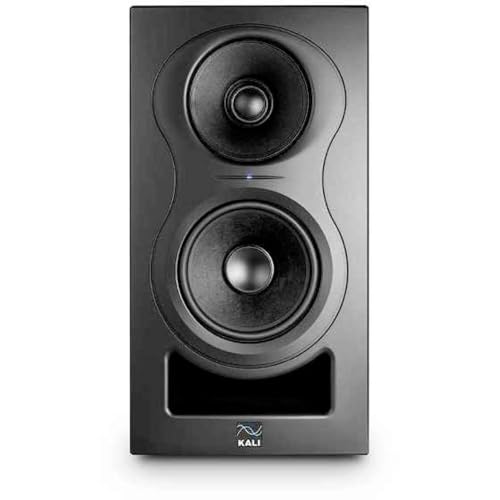
Kali Audio IN-5 5-Inch
Small-room producers who want tri-amped three-way imaging, boundary EQ and balanced plus consumer inputs in a 5 inch monitor.
Read the Kali Audio IN-5 5-Inch review →
PreSonus Eris Pro Sub 10 10-inch Active
Nearfield studios that want a 10 inch sub with every integration control and connection documented and a footswitch in the box.
Read the PreSonus Eris Pro Sub 10 10-inch Active review →
Focal Alpha 80
Producers and engineers in a medium room who want a high output 8 inch monitor with a deep floor, three inputs and room shelving, bought one cabinet at a time.
Read the Focal Alpha 80 review →Questions Buyers Ask
Focal Alpha 65
See the current listing, price and included accessories.
About This Review
Mandrillis Team
The Mandrillis editorial team researches and compares audio and music gear using manufacturer documentation, verified specs and real buyer feedback, so you can make a confident purchase without wading through marketing claims.
Read our full research methodology.