Studio Gear Review
Mackie MobileMix 8-channel Review: USB-Powered Mixer With Bluetooth
The Mackie MobileMix 8-channel is a budget USB-powerable mixer with two mic and instrument combo inputs, stereo 3.5 mm line inputs, Bluetooth connectivity and a built-in reverb, built for buskers, instructors and mobile creators. This research review sets out what the listing documents and the technical details, including phantom power and USB audio, that it leaves unanswered.
Our Verdict
Research Score 68/100The Mackie MobileMix 8-channel is a compact budget mixer built around portability. The listing documents eight channels, two mic and instrument combo inputs, stereo 3.5 mm line inputs, Bluetooth connectivity for wireless playback, a built-in reverb and USB powering from a laptop, charger or power bank. It does not publish preamp type, phantom power, whether the USB port carries audio, outputs, resolution, controls, dimensions or weight, and phantom power and USB audio are the two questions buyers must settle from the manual. For buskers, instructors, small meeting rooms and mobile creators who need two microphones and Bluetooth in a backpack-sized box, it is a sensible budget buy. Recordists should choose a dedicated interface.
Editorial research score based on published specifications and documented features, not a customer rating or lab test.

Mackie
Mackie MobileMix 8-channel
Best for: Buskers, instructors, small meeting rooms and mobile creators who need two microphone inputs, Bluetooth playback and USB power in a compact budget mixer.
Skip it if: You need confirmed phantom power for a condenser microphone, direct USB recording or more than two microphone inputs.
Check Price on AmazonWe may earn a commission at no extra cost to you.
Listing verified: October 2026
Who Should Buy It
Buy it if
- Buskers and mobile performers running from a power bank
- Fitness and yoga instructors mixing a headset mic with music
- Small meeting rooms blending a laptop with a microphone
- Budget streamers who already have a way into the computer
Skip it if
- You need to record each source to a separate track
- You use a condenser microphone and cannot confirm phantom power
- You need four or more microphone inputs
Key Specifications
| Type | 8-channel compact USB-powerable analog mixer with Bluetooth and reverb |
| Inputs | 2 mic/instrument combo inputs plus stereo 3.5 mm line inputs (full channel breakdown not published in listing) |
| Outputs | Not published in listing |
| Preamps | Not published in listing (two mic/instrument combo inputs stated, preamp type and gain range not described) |
| Resolution | Not published in listing |
| Phantom power | Not published in listing |
| Connection | USB power stated; USB audio capability and Bluetooth version not published in listing |
| Monitoring | Not published in listing |
| Bundled software | Not published in listing |
| Included accessories | Not published in listing |
Overview
The Mackie MobileMix 8-channel is a small, budget-tier mixer designed to run from USB power, which makes it a candidate for mobile content creation, busking with a battery pack, small meetings and desktop streaming. The listing describes eight channels, two mic and instrument combo inputs, stereo 3.5 mm line inputs, Bluetooth connectivity and a built-in reverb.
The concept is a mixer that lives in a backpack rather than on a stage. USB powering means it can draw from a laptop, a phone charger or a power bank, and Bluetooth means a phone's music arrives without a cable. Those two features define the product more than the channel count does.
This is a research review based on the published listing, which is brief. The channel count, combo input count, 3.5 mm inputs, Bluetooth, reverb and USB powering are documented. Preamp type, phantom power, outputs, whether USB carries audio as well as power, resolution, monitoring, dimensions and weight are not, and each gap is flagged where a buyer needs it.
Preamps and Sound Quality
Two mic and instrument combo inputs are the heart of the audio side, accepting an XLR microphone or a quarter-inch instrument cable each. The listing does not describe the preamps behind them, so there is no preamp name, gain range or noise figure to assess. Mackie's budget mixers are generally reported by buyers as clean enough for voice and acoustic instruments at modest levels.
Phantom power is not mentioned. On a USB-powered device, phantom power is a real design constraint because the +48 V supply has to be generated from a 5 V source, and some compact mixers omit it or limit it. Buyers who intend to use a condenser microphone must confirm phantom support in the manual before purchase; dynamic microphones need no such check.
Compared with a dedicated two-channel interface such as a Focusrite Scarlett 2i2 or a Behringer UMC202HD, the MobileMix trades documented preamp specifications and direct multitrack recording for portability, Bluetooth and a hardware mix. For critical vocal recording an interface is the better tool; for a mobile mix the MobileMix's design priorities make sense.
Inputs, Outputs and Routing
Eight channels sounds generous, but on a compact mixer that count typically includes each side of a stereo input as a channel. The listing confirms two combo inputs and stereo 3.5 mm line inputs, and Bluetooth presumably occupies a stereo pair as well, which would account for most of the eight. The exact breakdown is not published.
Outputs are not described at all. A main stereo output and a headphone output would be the minimum for the use cases implied, and buyers report both on this unit, but the connector types, whether balanced or unbalanced, and any auxiliary send are not confirmed in the published text.
Routing is simple by design: microphones and instruments on the combo channels, a laptop or phone on the 3.5 mm inputs, wireless music over Bluetooth, and everything mixed to a stereo output. Whether that mix can also be sent to a computer over the same USB cable that powers the unit is the key routing question the listing does not answer.
Features, Monitoring and Software
Bluetooth connectivity is the standout convenience. Backing tracks, intro music or a remote caller's audio can arrive from a phone without a cable, which is exactly what a busker, a yoga instructor or a small meeting host wants. The Bluetooth version, range and whether it supports two-way audio are not published.
The built-in reverb gives a singer or a speaker some ambience without an external processor. The listing says only that reverb is included, so the number of programs, the presence of adjustable parameters and a tap function are unknown. On a budget mixer, a single reverb with a level control is the typical arrangement.
Monitoring, metering, a headphone output and bundled software are not described. If the USB connection carries audio, the mixer could serve as a basic streaming interface, but the listing says only that it is USB-powerable, so no software or driver should be expected until the manual confirms otherwise.
- USB-powerable from a laptop, charger or power bank
- Bluetooth connectivity for wireless playback
- Two mic and instrument combo inputs
- Stereo 3.5 mm line inputs
- Built-in reverb
Build, Design and Controls
Chassis material, dimensions and weight are not published. The MobileMix name and USB powering point to a compact, light unit intended to travel, and buyers describe it as small enough for a laptop bag, but nothing in the listing confirms whether the enclosure is metal or plastic.
Control layout on a mixer this size is normally a column of rotary knobs per channel, covering gain, perhaps a two-band EQ, reverb send and level, with a main level and a headphone level in the master section. The listing does not describe the controls, EQ bands or any pad switches, so the front panel should be checked from product images or the manual.
For a mobile mixer, the durability of the 3.5 mm jacks and the combo connectors matters most, since those take the most insertions in a travel kit. The listing gives no detail on connector quality, so buyers should treat that as unknown rather than assume road-grade parts at this price.
Connectivity, Drivers and Latency
USB powering is confirmed, but whether the USB port also carries audio to and from a computer is not stated in the listing. That distinction is the most important unanswered question for streamers, because a power-only USB port makes the MobileMix a standalone mixer that needs a separate interface for the computer.
Bluetooth provides the wireless input, with no published version or codec. Bluetooth audio introduces a small delay, which does not matter for backing music but does matter if the Bluetooth source must stay in sync with a live performer; a cabled 3.5 mm connection avoids that issue.
No driver information is given. If USB audio is supported, a compact mixer in this class would normally be class compliant on Mac, Windows and mobile devices, but that should be confirmed. Monitoring through the mixer's own headphone output, if present, avoids any computer latency.
Setup and Daily Use
Setup is as simple as the concept: plug the USB cable into a laptop, charger or power bank, connect a microphone or instrument to a combo input, pair a phone over Bluetooth, and send the main output to powered speakers or headphones. There is nothing to install unless USB audio is in play.
In daily use the mixer suits a busker running a vocal microphone and a guitar over backing tracks, a fitness instructor mixing a headset microphone with music, or a small meeting room blending a laptop with a microphone. The reverb adds polish to a voice in those settings.
The daily limits are two microphone inputs, unpublished phantom power and the uncertainty about USB audio. Anyone with more than two microphones, a condenser microphone or a need to record directly should confirm the manual or consider a different product.
Who Should Buy It
Buskers, mobile performers and instructors who need a battery-friendly mixer with Bluetooth playback and a couple of microphone inputs are the ideal buyers. Small meeting rooms and pop-up events that want a tidy way to blend a microphone with laptop or phone audio also fit.
Desktop streamers on a tight budget who want hardware control of a microphone and background music are a third group. They need an existing way to get audio into the computer, and they should confirm whether the USB port carries audio before counting on it.
It is not for studio recording, for anyone who needs four or more microphones, for condenser microphone users until phantom power is confirmed, or for buyers who want a fully documented specification. A dedicated interface or a larger mixer serves those needs better.
Alternatives Worth Considering
The Behringer UMC202HD and Focusrite Scarlett 2i2 are the budget and lower mid-range two-channel interfaces that document their preamps, phantom power and resolution and record each input to its own track. They lack Bluetooth and a hardware mix, which is the MobileMix's whole reason to exist.
Compact analog mixers with USB and more channels, such as the Yamaha MG10XU, Mackie ProFX10v3 or Behringer Xenyx QX1204USB, add more preamps, compressors and effects at a higher price and with mains power. They suit a fixed setup rather than a backpack.
For a purely mobile need, a small battery-powered mixer or a phone-focused interface with Bluetooth may compete directly, and the choice comes down to the number of microphone inputs and whether USB audio is confirmed. The MobileMix's two combo inputs and reverb are its differentiators.
Verdict
The Mackie MobileMix 8-channel is a focused budget mixer for people who need to mix on the move. The listing documents eight channels, two mic and instrument combo inputs, stereo 3.5 mm line inputs, Bluetooth connectivity, a built-in reverb and USB powering, and that combination covers buskers, instructors and small meeting rooms well.
The published description leaves the important technical questions open: preamp type, phantom power, whether USB carries audio, outputs, resolution, controls, dimensions and weight. Buyers should resolve those from the manual rather than assume them, especially phantom power and USB audio.
Scored at 68, it sits at the top of the budget band, earning marks for a well-chosen mobile feature set from a known brand and losing them to a thin specification. For a mobile performer or instructor who needs Bluetooth, two microphone inputs and USB power in one small box, it is a sensible budget buy.
Strengths and Limitations
Strengths
- Runs from USB power for mobile use
- Bluetooth connectivity for wireless playback
- Two mic and instrument combo inputs
- Stereo 3.5 mm line inputs for laptops and phones
- Built-in reverb
Limitations
- Phantom power is not published
- USB audio capability is not confirmed, only USB power
- Preamp, output and resolution details are unstated
- Only two microphone inputs
How We Scored It
Scores reflect published specifications, documented features and value against the alternatives below. They are editorial research scores, not laboratory measurements.
Alternatives to Consider

Yamaha MG10X CV
Solo performers, duos, rehearsal rooms and small halls with powered speakers that want documented D-PRE preamps, simple compression and SPX effects in a lower mid-range analog mixer.
Read the Yamaha MG10X CV review →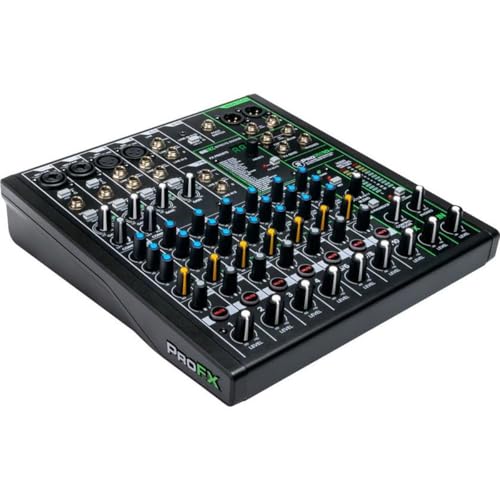
Mackie ProFX10v3 10-Channel
Singer-songwriters, duos, podcasters and streamers who want Onyx preamps, onboard effects and USB capture in one compact lower mid-range mixer for small gigs and home streams.
Read the Mackie ProFX10v3 10-Channel review →Questions Buyers Ask
Mackie MobileMix 8-channel
See the current listing, price and included accessories.
About This Review
Mandrillis Team
The Mandrillis editorial team researches and compares audio and music gear using manufacturer documentation, verified specs and real buyer feedback, so you can make a confident purchase without wading through marketing claims.
Read our full research methodology.