Studio Gear Review
Royer Labs R10 Review: High SPL Ribbon Microphone
The Royer Labs R10 is a figure-8 ribbon microphone with a custom transformer rated for a high overload threshold and an offset ribbon design offering two distinct tonal characters. This research review covers what the listing confirms and the numeric specs it leaves unstated.
Our Verdict
Research Score 74/100The Royer Labs R10 stands out among ribbon microphones for a specific, genuinely useful engineering claim: a David Royer custom designed transformer with a high overload threshold, meaning this microphone resists saturation even at extremely high sound pressure levels that would challenge many other ribbon designs. The offset ribbon design adds further versatility, offering a brighter response on the back side for lower SPL acoustic sources while handling high SPL sources confidently on the front. A humbucking ribbon transducer keeps noise low, and the open grill design is described as delivering a smooth, phase linear frequency response. No numeric frequency response or maximum SPL figures are published. At a mid-range price tier, this is a strong, versatile ribbon microphone for engineers comfortable with its figure-8 pattern.
Editorial research score based on published specifications and documented features, not a customer rating or lab test.
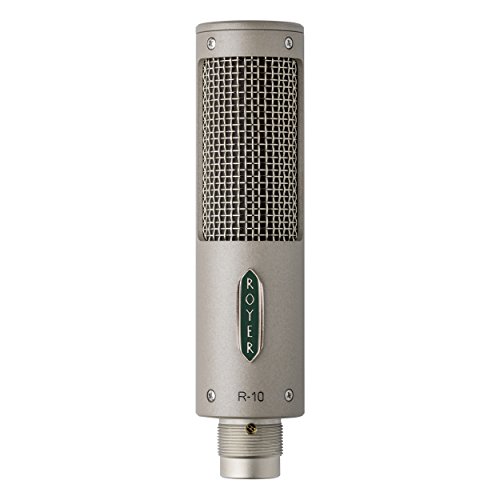
Royer Labs
Royer Labs R10
Best for: Engineers who want a versatile ribbon microphone with a high overload threshold, an offset ribbon design offering two distinct tonal options.
Skip it if: You need a unidirectional pattern such as cardioid, since this microphone's figure-8 pattern picks up sound equally from the front and back.
Check Price on AmazonWe may earn a commission at no extra cost to you.
Listing verified: November 2026
Who Should Buy It
Buy it if
- Engineers who want a ribbon microphone capable of handling extremely high sound pressure levels without overloading
- Producers who want two distinct tonal options from a single microphone depending on which side faces the source
- Buyers who specifically need a figure-8 pattern for techniques like mid-side or Blumlein stereo recording
- Engineers recording loud sources such as guitar amps or brass who want ribbon character without typical ribbon fragility concerns
Skip it if
- You need a cardioid or other unidirectional pattern rather than figure-8
- You need a confirmed numeric frequency response or maximum SPL figure before purchase
- You want an active microphone that works safely with standard phantom power without precaution
Key Specifications
| Type | Ribbon microphone built around a David Royer custom designed transformer |
| Polar pattern | Figure-8, also called bidirectional |
| Frequency response | Not published in listing as a specific numeric range; the listing describes a smooth frequency response as a result of the open grill design |
| Connection | Not published in listing as a specific connector type |
| Phantom power | Not published in listing; as a passive ribbon microphone, this type of design is generally not meant to be run with standard phantom power |
| Max SPL or sensitivity | Not published in listing as a specific numeric figure; the listing describes a high overload threshold from the custom transformer, minimizing saturation at extreme sound pressure levels |
| Controls | None described in the listing; this is a passive ribbon design without onboard switches |
| Mount and stand | Not published in listing |
| Weight | Not published in listing |
| Included accessories | Not published in listing |
Overview
The Royer Labs R10 is a ribbon microphone positioned in its listing as versatile enough to capture nearly any acoustic or electric sound source, built around a David Royer custom designed transformer that the listing credits with a high overload threshold for minimizing saturation even at extremely high sound pressure levels.
That high SPL handling claim is a significant differentiator for a ribbon microphone specifically, since ribbon designs have historically carried a reputation for fragility and susceptibility to overload when placed in front of loud sources like guitar amplifiers or drum kits, a reputation this listing directly addresses through its transformer design claim.
Royer Labs has built a strong reputation specifically in ribbon microphone design, and the R-series in particular is well regarded among engineers for combining ribbon character with greater durability and SPL handling than many vintage-style ribbon designs, context that supports the specific claims made in this listing.
The offset ribbon design adds a further layer of versatility beyond the high SPL handling, giving engineers a choice between two different tonal characters from the same microphone depending on which side faces the sound source, which this review covers in more detail in the sound quality section below.
Sound Quality
No numeric frequency response range is published in this listing, though the open grill design is specifically credited with minimizing standing waves and associated comb-filtering effects, which the listing states results in a smooth frequency response and strong phase linearity.
The offset ribbon design is a key sound quality feature here, with the ribbon element positioned toward the front of the transducer, allowing high SPL handling on the front, logo-facing side, while the back side offers a brighter response better suited to lower SPL sources such as acoustic guitar, ukulele and vocals.
This dual character design effectively gives engineers two microphones in one, letting a single R10 serve both as a front-of-amp workhorse for loud electric sources and as a brighter capture tool for quieter acoustic sources, simply by choosing which side faces the source.
A humbucking ribbon transducer wiring configuration is also confirmed, which is specifically designed to reject electromagnetic noise and hum that ribbon microphones can otherwise be susceptible to, contributing to a cleaner overall signal regardless of which side of the microphone is in use.
Pickup Pattern and Noise Handling
The listing confirms a figure-8, or bidirectional, polar pattern, which is standard for ribbon microphones of this design and picks up sound equally from the front and back while rejecting sound arriving from the sides.
This pattern makes source and room placement especially important, since any sound arriving from behind the microphone will be captured at a similar level to sound from the front, which can be either a creative advantage for capturing two sources at once or a challenge in a noisy room with unwanted sound sources behind the mic position.
The humbucking ribbon transducer wiring addresses electromagnetic noise specifically rather than acoustic noise, meaning engineers still need to manage room acoustics and source placement carefully given the wide, bidirectional pickup pattern this microphone offers.
Build Quality
The open grill design is both a sound quality and build feature, specifically engineered to minimize standing waves and comb-filtering effects that a more enclosed grill design might otherwise introduce into the captured sound.
The custom designed transformer, credited to David Royer directly in the listing, represents a meaningful engineering investment in this microphone's core signal path, suggesting the transformer is a central design priority rather than an off-the-shelf component.
Beyond these specific confirmed design elements, the listing does not state chassis dimensions, weight or overall body material, so buyers who want those physical details confirmed should check Royer Labs' own product documentation.
- Ribbon microphone with custom designed transformer
- High overload threshold, minimized saturation at extreme SPL
- Offset ribbon design, two tonal characters
- Humbucking ribbon transducer for low noise
- Figure-8 polar pattern
- Open grill design for smooth frequency response
Connectivity and Setup
The listing does not state a specific connector type for this microphone, though ribbon microphones in this general category commonly use a standard balanced connector, a detail buyers should still confirm rather than assume.
As a passive ribbon microphone, this design should generally not be connected to a phantom powered input without caution, since phantom power can damage some ribbon microphone designs, though the listing itself does not provide specific guidance on this point for the R10 specifically.
Because ribbon microphones typically have lower output level than condenser designs, buyers should also plan for a preamp with sufficient clean gain, since the listing's figures around overload threshold address input handling rather than output sensitivity.
Features, Controls and Extras
This is a passive ribbon microphone with no onboard switches or controls described in the listing, which is typical for ribbon designs that rely on their physical transducer characteristics rather than electronic switching for tonal variation.
The offset ribbon design itself functions as a built-in feature, effectively giving an engineer two tonal options without needing a pad switch or filter, simply by choosing which side of the microphone faces the sound source.
No included accessories, such as a shock mount or carrying case, are itemized in the listing, so buyers should budget for potentially needing to source mounting or storage accessories separately.
Use Cases: Vocals, Streaming, Podcasting and Instruments
The high SPL handling and offset ribbon design make this microphone well suited to guitar amplifier and brass instrument recording on the front side, where other ribbon microphones might risk overload, while the back side's brighter response suits acoustic guitar, ukulele and vocal recording according to the listing.
The listing specifically frames this microphone as suited to just about any acoustic or electric source, reflecting Royer Labs' positioning of the R10 as a general-purpose ribbon microphone rather than one voiced narrowly for a single application.
Podcasters and streamers are a less obvious fit for this microphone, given the figure-8 pattern's wide pickup area and the general handling care ribbon microphones require, which is more relevant to studio and live sound engineers than to a simple desktop streaming setup.
Who Should Buy It
This microphone suits engineers who specifically want a ribbon design capable of handling very loud sources without overloading, along with the flexibility of two distinct tonal characters from a single unit.
It is a weaker fit for buyers who need a unidirectional pattern such as cardioid, or for buyers who need a confirmed numeric frequency response and maximum SPL figure in writing before purchase.
Engineers recording both loud electric sources and quieter acoustic instruments in the same session will find particular value in the offset ribbon design's dual character, avoiding the need for two separate microphones.
Buyers newer to ribbon microphones specifically should also weigh the general handling care this microphone category requires, even with the added SPL headroom this model's transformer is designed to provide.
Alternatives Worth Considering
Buyers who need a unidirectional cardioid pattern rather than figure-8 should look at a cardioid ribbon microphone or a large-diaphragm condenser instead of this bidirectional design.
Buyers who need a confirmed numeric frequency response and maximum SPL figure published directly in the listing should compare this model against a competing ribbon microphone with fuller published data.
Buyers who do not need the offset ribbon design's dual tonal character might find a simpler, single-character ribbon microphone sufficient for their specific recording needs.
Buyers newer to ribbon microphones who want a more forgiving, phantom power tolerant design should consider an active ribbon microphone rather than this passive design.
Verdict
The Royer Labs R10 backs up its versatility claims with specific, genuinely meaningful engineering details, a custom transformer built for high overload threshold, an offset ribbon design offering two tonal characters, and a humbucking transducer for low noise.
The lack of published numeric frequency response and maximum SPL figures is a real gap, though Royer Labs' reputation in ribbon microphone design lends credibility to the qualitative claims made in this listing.
For engineers who specifically want a durable, versatile ribbon microphone suited to both loud and quiet sources, this is a strong recommendation at its mid-range price tier.
Buyers who need a unidirectional pattern or a fully documented numeric spec sheet should weigh those priorities carefully against this microphone's genuine strengths before deciding.
Strengths and Limitations
Strengths
- Custom designed transformer with a high overload threshold, minimizing saturation at extreme sound pressure levels
- Open grill design reduces standing waves and comb-filtering for a smooth frequency response and phase linearity
- Offset ribbon design offers two distinct tonal options from the front versus the back of the microphone
- Ribbon transducer wired in humbucking configuration for low noise
- Figure-8 polar pattern suited to a wide range of acoustic and electric sources
Limitations
- No stated numeric frequency response range or maximum SPL figure in decibels
- Figure-8 pattern picks up sound from both front and back, requiring careful room and source placement
- As a ribbon microphone, it requires careful handling and should not be run with standard phantom power
- No stated included accessories, mount or weight
How We Scored It
Scores reflect published specifications, documented features and value against the alternatives below. They are editorial research scores, not laboratory measurements.
Alternatives to Consider

Beyerdynamic M 160
Recording guitar amplifiers, drum overheads, strings and brass with a smooth, directional ribbon character.
Read the Beyerdynamic M 160 review →
Shure BLX288/SM58 Dual Vocal
Bands, worship teams and event companies that need two dependable wireless SM58 vocal channels in one simple package.
Read the Shure BLX288/SM58 Dual Vocal review →
Sennheiser XSW 1-835
Worship teams, schools and gigging duos who want two wireless e835 vocal channels with the simplest possible setup.
Read the Sennheiser XSW 1-835 review →Questions Buyers Ask
Royer Labs R10
See the current listing, price and included accessories.
About This Review
Mandrillis Team
The Mandrillis editorial team researches and compares audio and music gear using manufacturer documentation, verified specs and real buyer feedback, so you can make a confident purchase without wading through marketing claims.
Read our full research methodology.