
Guides
Cardioid vs Supercardioid Microphone Pattern (Explained)
Cardioid and supercardioid are the two most common microphone pickup patterns, and they look almost the same on spec sheets. The difference changes where noise and feedback come from. This guide explains both patterns in plain words, where each rejects sound, and which suits vocals, stage, podcasting and recording.
Quick Answer
A cardioid mic hears best from the front and rejects sound from directly behind. A supercardioid has a narrower front pickup and rejects the sides better, but it hears a little sound from directly behind. Choose cardioid for most home recording and podcasting. Choose supercardioid for loud stages or rooms where noise comes from the sides.
How this guide was put together
This guide is based on manufacturer manuals, published specifications and widely used audio reference standards. Mandrillis does not run hands-on tests for these guides, so treat figures as typical values and check the manual for your own gear before changing settings.
What a Pickup Pattern Is
A pickup pattern, also called a polar pattern, shows how well a microphone hears sound from each direction. It is drawn as a shape around the mic, seen from above.
The front of the mic is where it hears best. Other directions are quieter. Knowing the shape tells you where to aim the mic and where to put speakers, keyboards or other noise sources.
- Front, called 0 degrees: the loudest direction.
- Sides, 90 degrees: quieter.
- Rear, 180 degrees: quietest on a cardioid.
- The quietest direction is called the null.
The Cardioid Pattern
Cardioid means heart shaped. The mic hears most from the front, a bit less from the sides, and very little from directly behind.
Its null, the quietest point, sits right at the back, at 180 degrees. That makes it easy to use: point the front at the source and the back at the noise.
- Wide, forgiving front pickup.
- Strongest rejection directly behind.
- Easy to aim, even if you move a little.
- Most common pattern for vocals and podcasting.
The Supercardioid Pattern
A supercardioid has a narrower, more focused front. It rejects sound from the sides more strongly than a cardioid.
The trade-off is a small pickup area directly behind the mic. Its two nulls sit at the rear sides, at roughly 125 degrees, rather than straight back.
- Tighter front pickup.
- Better side rejection.
- A small rear lobe that hears a little from directly behind.
- Quietest points at the rear sides.
Cardioid vs Supercardioid at a Glance
How the two patterns usually compare.
| Factor | Cardioid | Supercardioid |
|---|---|---|
| Front pickup | Wider | Narrower |
| Side rejection | Good | Better |
| Rear pickup | Lowest | A small amount |
| Quietest direction | Directly behind, 180 degrees | Rear sides, about 125 degrees |
| Ease of aiming | More forgiving | Needs more care |
| Common use | Home recording, podcasting | Loud stages, noisy sides |
Why the Difference Matters on Stage
On stage, the biggest threat is feedback, the loud howl when a mic picks up its own sound from speakers. Placing speakers in the mic's quietest direction prevents it.
With a cardioid, place a floor monitor directly behind the mic. With a supercardioid, angle the monitors to the rear sides instead.
The Common Monitor Mistake
Many singers switch to a supercardioid but keep the floor monitor directly behind it. Because supercardioids hear a little from the rear, that can cause more feedback, not less.
Move monitors to the sides at an angle when you use a supercardioid.
Proximity Effect and Off-Axis Sound
Both patterns boost bass when you get very close to the mic. This is called the proximity effect. It can make a voice sound warm, or boomy if you get too close.
Directional mics also change tone when sound arrives from the side. This is called off-axis coloration. A voice or instrument heard from the side sounds duller and thinner.
What This Means for Each Pattern
Supercardioids are more focused, so off-axis sounds drop faster and change tone more. That helps reject noise but punishes singers who move around.
Cardioids are gentler, so small movements do not change your tone as much. That is one reason they are more forgiving for beginners.
- Stay at a steady distance to keep bass consistent.
- Keep the mic pointed at the center of your mouth.
- Use a pop filter when working close to either pattern.
- Check the sound after any change in your position.
How to Hear the Difference
Record yourself speaking while slowly turning your head away from the mic. Listen back for where your voice starts to sound dull.
Try the same test with a second mic of the other pattern to compare how quickly each one drops off.
Which Is Better for Home Recording?
For most home recording, a cardioid is the easier choice. Its wider front forgives small head movements, so your voice stays steady in the recording.
In an echoey room, a supercardioid can reduce reflections from the side walls. It needs you to stay more on axis, directly in front of the mic.
Which Is Better for Podcasting and Streaming?
Cardioid usually wins here. Place the keyboard and computer behind the mic, where a cardioid is quietest.
A supercardioid can help when noise comes from the sides, such as a second host's mic. Aim each mic carefully so each host stays in front of their own mic.
- Solo streamer with keyboard behind the mic: cardioid.
- Two hosts side by side: supercardioid can reduce bleed.
- Host who moves around a lot: cardioid.
How to Aim Each Pattern
Aiming matters as much as choosing. A few simple rules get the most from either pattern.
Aiming a Cardioid
Point the front at your mouth. Turn the back toward the loudest noise source, such as a keyboard, speaker or fan.
Stay within the front area and you can move a little without losing tone.
Aiming a Supercardioid
Keep your mouth directly in front of the mic. Even a small turn of the head changes the tone more than with a cardioid.
Place noise sources at the rear sides, not straight behind.
Other Patterns You May See
Some mics offer other patterns, often through a switch on multi-pattern condensers.
- Hypercardioid: even narrower than supercardioid, with a larger rear lobe.
- Omnidirectional: hears all around equally, natural but picks up the room.
- Figure 8: hears front and back equally, rejects the sides.
- Shotgun: very narrow, used for film and video at a distance.
The Bottom Line
Choose cardioid for most home recording, podcasting and streaming. It is easier to aim and quietest directly behind.
Choose supercardioid for loud stages or rooms where noise comes from the sides, and remember to place monitors at the rear sides, not straight behind.
Cardioid and Supercardioid Mics From Our Reviews
One supercardioid vocal mic and two well known cardioid vocal mics for comparison.
Sennheiser e845 Supercardioid Vocal Microphone
Mentioned
Who Should Buy It
- Gigging vocalists who move around while performing and need consistent proximity response
- Buyers who want a documented frequency response rather than an unpublished spec sheet
- Performers who prioritize a smooth, warm tonal character over an aggressive presence boost
- Venues standardizing around a full metal, shock mounted dynamic vocal microphone
Skip It If
- You need a confirmed polar pattern figure directly in the feature bullets
- You want an onboard mute switch without buying the S variant
- You need documented SPL, sensitivity, or weight specifications
We may earn a commission at no extra cost to you.
Last verified: November 2026
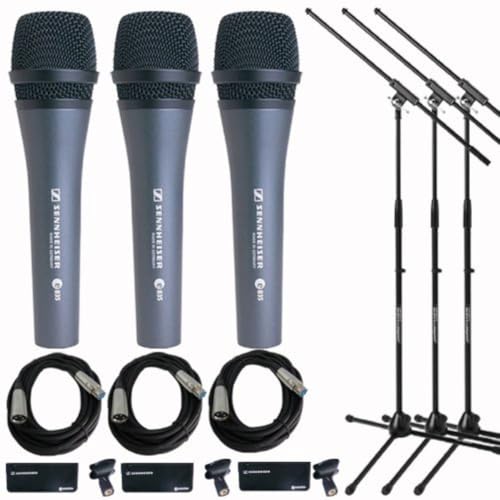
Sennheiser 835
Mentioned
Who Should Buy It
- Bands with two or three vocalists who want matched stage microphones
- Churches and schools outfitting a stage from scratch
- Rehearsal spaces and small venues building a house microphone locker
- Karaoke and event hosts who need spares on hand
Skip It If
- You only need one microphone
- You record in a studio and want a condenser
- You want exact specifications for stands and cables before ordering
We may earn a commission at no extra cost to you.
Last verified: October 2026

Shure SM58
Mentioned
Who Should Buy It
- Duos and small bands who need matched vocal microphones
- Venues, schools and churches building a reliable microphone locker
- Solo performers who want a spare that sounds identical
- Podcasters recording two hosts in an untreated room through an interface
Skip It If
- You need a USB microphone for a computer
- Your main use is quiet acoustic instrument recording
- You only need one microphone and want to spend less
We may earn a commission at no extra cost to you.
Last verified: October 2026
Keep Reading
Related guides and picks on Mandrillis:
- Best Microphones for Vocals : cardioid and supercardioid vocal mics
- Why Is My Mic Picking Up Keyboard Noise? : use the pattern to block noise
- Best Dynamic Microphones : stage and studio dynamics
FAQs
About This Guide
Mandrillis Team
The Mandrillis editorial team researches and compares audio and music gear using manufacturer documentation, verified specs and real buyer feedback, so you can make a confident purchase without wading through marketing claims.
Read our full research methodology.