Instruments Review
Akai Professional MPC Sample Review: Standalone Sampler, Not a Controller
The Akai Professional MPC Sample is a battery powered, standalone pad sampler and sequencer, not a MIDI keyboard or pad controller for driving a DAW. This review explains the mismatch plainly, covers its 16 pads, onboard effects and chop workflow, and scores it fairly against criteria built for computer connected controllers.
Our Verdict
Research Score 40/100The Akai Professional MPC Sample is a capable little standalone sampler, not the MIDI keyboard or pad controller this profile is built to measure. Judged on its own terms, 16 pads, four effects processors, over 100 factory kits and a battery powered, computer free design add up to a genuinely useful beatmaking tool. Judged against the criteria here, it falls short, since there is no keybed, minimal fader control, and DAW integration is intentionally not the point. USB-C audio and MIDI connectivity means it can still join a computer setup if needed, but that is a secondary feature, not the design goal. Buyers should know exactly what they are getting before purchase.
Editorial research score based on published specifications and documented features, not a customer rating or lab test.

Akai Professional
Akai Professional MPC Sample
Best for: Best for a beatmaker who wants a self contained, battery powered sampler and sequencer for sampling and finger drumming away from a computer.
Skip it if: Avoid it if what you actually want is a MIDI keyboard or a pad controller for triggering sounds and controlling software inside a DAW.
Check Price on AmazonWe may earn a commission at no extra cost to you.
Listing verified: November 2026
Who Should Buy It
Buy it if
- Beatmakers who want a pocketable, battery powered sampler for working away from a computer
- DAWless producers who prefer an onboard sequencer and chop workflow over a software plugin
- Finger drummers who want 16 real pads plus structured lessons through the bundled Melodics content
- Existing MPC users who want MPC Sample integration alongside their other MPC gear
Skip it if
- You are shopping for a MIDI keyboard or pad controller to drive a DAW
- You need a keybed for melodic playing
- You need built in 5 pin MIDI without buying an adapter separately
Key Specifications
| Keys | Not applicable, this is a standalone pad based sampler with no keybed of any kind |
| Key type | Not applicable |
| Pads | 16 responsive MPC pads used for sampling, chopping and sequencing |
| Knobs and faders | A record gain knob and dedicated knob control for four internal effects processors; no fader is described in the listing |
| DAW integration | Minimal by design, since the listing markets this as a complete standalone instrument that records, edits and plays back without a computer or DAW required; USB-C audio and MIDI connectivity is offered for anyone who wants to bring it into a computer based setup anyway |
| Bundled software | Over 100 factory kits, Instant Sample Chop Mode, real time timestretch and repitch, internal resampling with effects, and 60 finger drumming lessons through Melodics |
| Connectivity | Stereo quarter inch TRS line in and out, an eighth inch headphone output, MIDI in and out through an eighth inch to MIDI DIN adapter that is not included, a sync output, USB-C audio and MIDI, and microSD card storage |
| Power | Rechargeable lithium ion battery for fully standalone, battery powered operation |
| Weight | Not published in listing |
| Included accessories | Not published in listing beyond the unit itself; the listing specifically notes the MIDI DIN adapter is sold separately |
Overview
The Akai Professional MPC Sample lands in this roundup of MIDI keyboards and pad controllers, but the listing describes something else entirely: a compact, battery powered, standalone sampler and sequencer. It comes with a built in speaker, an internal microphone, and a rechargeable battery, and the listing is explicit that no computer or DAW is required to record, edit or play back with it.
That standalone focus is the whole point of the product, and it is worth stating plainly before anything else. A buyer looking for a controller to trigger clips or play virtual instruments inside a DAW is shopping for a different kind of device, even though this one does happen to include 16 pads and some MIDI connectivity.
This review treats the mismatch honestly. It covers what the Akai Professional MPC Sample actually does well as a standalone sampler, and it scores the controller specific criteria in this profile low where they genuinely do not apply.
Keys, Pads and Feel
There is no keybed anywhere on this unit, and the listing never describes one. All physical interaction for sampling, sequencing and effects happens through 16 responsive pads, which the listing calls suitable for fast sampling, chopping and beatmaking for all skill levels.
A 2.4 inch full color display supports the pad workflow by showing sample and kit information as a user works, though the listing gives no further detail on resolution or touch capability. Over 100 factory kits are included, giving a pad based starting point without needing to load outside sounds right away.
For anyone shopping this profile specifically for a keybed, there is nothing here to evaluate on that front. The pads themselves are clearly central to the product, but they serve a sampler and sequencer rather than a note driven MIDI controller role.
Knobs, Faders and DAW Integration
The listing describes a record gain knob plus dedicated knob control across four internal effects processors, offering 60 effect types including compressor and vinyl or tape emulations. No fader is mentioned anywhere in the feature list, which is a clear gap next to the nine fader mixer sections common on dedicated keyboard controllers.
DAW integration in the traditional sense is essentially not the goal here. The listing frames the entire product around standalone operation, with USB-C audio and MIDI connectivity offered mainly for smart device sampling, SD card file transfer, and optional computer use rather than deep plugin control.
MIDI in and out is available, but only through an eighth inch to MIDI DIN adapter that the listing states is not included. Buyers who want to connect traditional 5 pin MIDI gear should budget for that adapter separately before assuming it ships in the box.
Software, Sounds and Features
On the software and sound side, this is actually one of the stronger entries in this batch, even though it is the wrong category for the profile. The listing describes over 100 factory kits, an Instant Sample Chop Mode, real time timestretch and repitch, and internal resampling with effects, all running on the unit itself without a computer.
MPC OS 3.8 is named as the operating system powering the device, and the listing states it expands MPC Sample integration across both standalone and desktop MPC systems, letting projects move between environments. Finger drumming lessons through Melodics, 60 of them according to the listing, add a structured way to build pad skills over time.
None of this software runs as a DAW plugin or counts toward the controller software criteria this profile normally measures, since it is onboard firmware rather than a computer based production suite. It is genuinely useful content, just not the kind of software bundle a MIDI controller buyer is usually comparing.
- Over 100 factory kits
- Instant Sample Chop Mode
- Real time timestretch and repitch
- Four internal effects processors with 60 effect types
- 60 Melodics finger drumming lessons
- MPC OS 3.8 standalone and desktop integration
Build, Design and Portability
Build quality leans toward genuine portability here, with a battery powered chassis, a built in speaker and an internal microphone all packed into a compact form. The listing calls this an easy entry into MPC sampling, suggesting a smaller and simpler footprint than larger desktop MPC hardware.
A rechargeable lithium ion battery is the headline build feature, letting the unit operate fully away from any outlet, computer or DAW. MicroSD card storage handles file management without needing a constant computer connection for every session.
Weight is not published in the listing, which is a notable gap for something marketed on portability. Buyers planning to carry it regularly should look for that figure elsewhere before assuming it is as light as its compact description implies.
Connectivity and Power
Connectivity is reasonably broad for a standalone device. The listing lists stereo quarter inch TRS line in and out, an eighth inch headphone output, a sync output, and USB-C for audio, MIDI and smart device sampling, alongside microSD card storage for file transfer.
MIDI in and out exists only through an eighth inch to MIDI DIN adapter, and the listing is specific that this adapter is not included in the box. That detail matters for anyone planning to integrate the unit into a rig built around traditional 5 pin MIDI gear.
Power comes entirely from the internal rechargeable battery, removing the need for a separate power supply during normal use. The listing does not state battery life or charging time, so buyers who need those figures for planning longer sessions away from an outlet will not find them here.
Setup and Daily Use
Daily use is built around working entirely without a computer. A player loads or samples sounds onto the 16 pads, chops and resamples using the onboard engine, and sequences patterns with the built in step sequencer, all while monitoring through the internal speaker or headphones.
For anyone who does want to bring it into a computer setup, USB-C audio and MIDI connectivity lets the unit function more like a traditional interface or controller when connected. The listing does not describe exactly how deep that integration runs with any specific DAW, so it is worth confirming before buying for that purpose.
Existing MPC users get an additional workflow benefit, since the listing states MPC Sample effects and content can be accessed inside other MPC hardware without interrupting a creative session. That cross device continuity is clearly aimed at an existing MPC ecosystem rather than a first time MIDI controller buyer.
Who Should Buy It
The right buyer here is a beatmaker who actually wants a standalone, battery powered sampler and sequencer, not a controller to sit next to a laptop. DAWless producers who enjoy working with hardware pads and an onboard chop workflow will find real value in what the listing describes.
Existing MPC owners looking to add a smaller, portable unit that still shares effects and workflow with their other gear through MPC OS 3.8 are also a strong fit. Beginners drawn to the bundled Melodics lessons for structured finger drumming practice should find that content genuinely useful as well.
Anyone shopping specifically for a MIDI keyboard or a pad controller meant to trigger instruments inside a DAW should look elsewhere. This product can technically connect to a computer over USB-C, but that is not the role it was designed to play.
Alternatives Worth Considering
Buyers who actually want a computer connected pad controller rather than a standalone sampler should look at a dedicated MIDI pad controller from Akai's own lineup. Those units trade the onboard speaker, microphone and battery for a simpler, lighter design built specifically to sit next to a DAW.
Those who want the standalone MPC experience but with more built in storage, a bigger screen or more onboard processing power should compare this entry level model against larger MPC hardware in the same family. The listing itself references both standalone and desktop MPC systems as part of one shared ecosystem.
Producers who want finger drumming pads attached to a full keybed instead of a separate standalone box should consider a keyboard controller with an integrated pad section instead. That keeps keys and pads on one unit for a single DAW connected workflow.
Verdict
The Akai Professional MPC Sample is a capable little standalone sampler, not the MIDI keyboard or pad controller this profile is built to measure. Judged on its own terms, 16 pads, four effects processors, over 100 factory kits and a battery powered, computer free design add up to a genuinely useful beatmaking tool.
Judged against the criteria here, it falls short, since there is no keybed, minimal fader control, and DAW integration is intentionally not the point of the design. USB-C audio and MIDI connectivity means it can still join a computer setup if needed, but that stays a secondary feature rather than the design goal, so buyers should know exactly what they are getting before purchase.
Strengths and Limitations
Strengths
- Genuinely standalone, with a built in speaker, microphone and rechargeable battery so no computer is required to record or play back
- 16 pads plus a real onboard sampling and sequencing engine, not just a MIDI trigger surface
- Four effects processors with 60 effect types and dedicated knob control for fast sound shaping
- Over 100 factory kits and an Instant Sample Chop Mode give a fast path from raw sound to a finished groove
- USB-C audio and MIDI connectivity still allows it to plug into a computer when that is wanted
Limitations
- This is not a MIDI keyboard or a pad controller designed to drive a DAW, and buyers shopping this profile for that purpose will be disappointed
- No keys and no fader, so several of the criteria this profile measures simply do not apply
- The MIDI DIN adapter needed for traditional 5 pin MIDI gear is not included
- Weight is not published, which matters for a device marketed as portable
- DAW integration in the controller sense is essentially absent by design, since the product is built to avoid needing one
How We Scored It
Scores reflect published specifications, documented features and value against the alternatives below. They are editorial research scores, not laboratory measurements.
Alternatives to Consider

Yamaha Montage M6 61-Key
Professional synth players and producers who want a flagship 61-key instrument with massive polyphony, analog style synthesis and a matching software plugin.
Read the Yamaha Montage M6 61-Key review →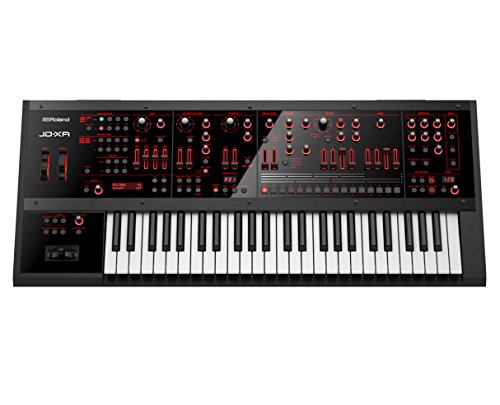
Roland JD-XA 49-Key
Synthesists who want genuine discrete analog voices and a digital engine in one 49-key crossover instrument with deep real time filter control.
Read the Roland JD-XA 49-Key review →
Pioneer DJ DDJ-FLX10 4-Channel
Mobile and open-format DJs who want a 4-channel club style controller with live stem separation and lighting control from one unit.
Read the Pioneer DJ DDJ-FLX10 4-Channel review →Questions Buyers Ask
Akai Professional MPC Sample
See the current listing, price and included accessories.
About This Review
Mandrillis Team
The Mandrillis editorial team researches and compares audio and music gear using manufacturer documentation, verified specs and real buyer feedback, so you can make a confident purchase without wading through marketing claims.
Read our full research methodology.