Instruments Review
Solid State Logic SSL UF1 Review: One Fader, Deep Control
The Solid State Logic SSL UF1 is a single-fader DAW control surface built around a 100 mm motorized SSL fader, two displays including a 4.3 inch screen, 46 customizable user keys and a bundled perpetual license for the SSL Meter plug-in. It has no keys or pads, and connectivity, power and weight are not published.
Our Verdict
Research Score 63/100The Solid State Logic SSL UF1 is not a keyboard or a pad controller, it is a compact single-fader surface built for engineers who already work inside the SSL 360 Plug-in Mixer. The 100 mm motorized fader, the large 4.3 inch display and the 46 customizable user keys give it genuine console character in a small footprint, and the bundled SSL Meter plug-in adds real mixing value on top of the hardware. Fader Mode, which lets four V-Pots control four track volumes at once, is a clever way to extend a single physical fader into a four-channel workflow. The listing leaves connectivity, power and weight unconfirmed, so buyers should check directly. For SSL plug-in users this is a strong desk companion, not a general-purpose controller.
Editorial research score based on published specifications and documented features, not a customer rating or lab test.

Solid State Logic
Solid State Logic SSL UF1
Best for: Mixing engineers already in the SSL 360 ecosystem who want a motorized fader and a metering plug-in on their desk.
Skip it if: You need a keyboard, pads, or a multi-fader surface for mixing several channels at once.
Check Price on AmazonWe may earn a commission at no extra cost to you.
Listing verified: November 2026
Who Should Buy It
Buy it if
- Engineers who use the SSL 360 Plug-in Mixer and want hardware control over it
- Producers who want a free-to-use SSL Meter perpetual license bundled in
- Editors who want a dedicated jog and scrub wheel plus a transport row
Skip it if
- You need a keyboard or performance pads rather than a control surface
- You are mixing more than a handful of channels and need multiple faders
- You need confirmed connectivity and power details before ordering
Key Specifications
| Keys | Not applicable, this is a single-fader DAW control surface with no piano keys |
| Key type | Not applicable |
| Pads | Not applicable, no drum or finger pads are described in the listing |
| Knobs and faders | One 100 mm motorized SSL fader, 4 V-Pots used in Fader Mode to control four track volumes at once, 46 customizable user keys, and a weighted jog and scrub wheel |
| DAW integration | Dedicated transport controls and proprietary control of the SSL 360 Plug-in Mixer; specific third-party DAW protocol names are not published in listing |
| Bundled software | Perpetual license for the SSL Meter plug-in, visualized on the onboard display and controllable from the surface |
| Connectivity | Not published in listing |
| Power | Not published in listing |
| Weight | Not published in listing |
| Included accessories | Not published in listing beyond the control surface itself |
Overview
The Solid State Logic SSL UF1 is a single-fader DAW control surface, not a MIDI keyboard or a pad controller, and it is built around SSL's own plug-in ecosystem rather than a generic controller protocol. It occupies a compact footprint on a desk, built for an engineer who wants hardware control over software mixing rather than a performance instrument. Readers looking for keys or pads in this review should expect a very different kind of product.
At the center of the unit sits one 100 mm motorized SSL fader, paired with two displays, the larger of which is a 4.3 inch screen used for DAW track names, parameters, time display and the SSL Meter plug-in. Dedicated transport controls and a weighted jog and scrub wheel round out session navigation. The listing frames the UF1 as a compact way to bring proprietary SSL 360 Plug-in Mixer control to a desk.
Because this is a control surface rather than an instrument, several of the scoring categories used elsewhere in this review series, particularly the ones built around keys and pads, simply do not apply here. The scoring reflects that honestly, while still crediting the UF1 for what it is genuinely strong at, which is deep, focused control over one channel at a time plus a bundled metering plug-in.
Keys, Pads and Feel
There are no keys and no pads on the SSL UF1. The nearest thing to a playing surface is the single 100 mm motorized SSL fader, which the listing describes as high quality, suggesting smooth motorized movement rather than the lighter-feeling faders found on budget surfaces.
Fader Mode is the feature that compensates for having only one physical fader. The listing describes using the 4 V-Pots beneath the large screen to control four track volumes at the same time, which effectively turns the UF1 into a mini four-channel mixer when that mode is active.
Because there is no keybed or pad grid, this product has nothing in common with a performance controller beyond sharing a USB-style connection to a computer. Anyone who needs to play notes or trigger samples by hand should look at a dedicated keyboard or pad controller instead of the UF1.
Knobs, Faders and DAW Integration
DAW integration on the UF1 is built around SSL's own software. The listing describes proprietary control of the SSL 360 Plug-in Mixer and seamless integration with the SSL Meter plug-in, with metering visualized on the 4.3 inch display and controlled from the surface itself.
The 46 customizable user keys are the main way to reach DAW commands and keyboard shortcuts beyond the fader and V-Pots. A secondary row of transport keys can be set to shortcuts such as loop on and off or click track on and off, and holding Shift is described as giving fast access to DAW automation modes.
The weighted jog and scrub wheel, paired with dedicated transport controls, gives total session control for moving through a timeline without touching a mouse. The listing does not name a specific universal third-party DAW protocol, so compatibility outside the SSL ecosystem is not confirmed here.
Software, Sounds and Features
The standout software element is the SSL Meter plug-in, which the listing says ships with a perpetual license included in the purchase. That plug-in covers peak and RMS levels, K-System metering, stereo balance, a phase correlation bar, a Lissajous phase scope, a 31-band RTA, and VU and PPM metering.
Having that plug-in visualized directly on the UF1's own 4.3 inch display, rather than only on a computer monitor, is the practical benefit of buying the hardware and software as a pair. Engineers can keep an eye on levels and correlation without dedicating screen space in their DAW.
The listing also describes the SSL 360 Plug-in Mixer with 360 degree enabled channel strips, controllable from the UF1 surface. There is no mention of any other bundled instrument or effect plug-ins beyond the SSL Meter license.
- Perpetual license for the SSL Meter plug-in included
- Peak, RMS, K-System, phase correlation and 31-band RTA metering
- Control of the SSL 360 Plug-in Mixer from the surface
- 4.3 inch IPS display for metering and DAW parameters
Build, Design and Portability
The listing calls the UF1 a fully featured DAW controller in a compact footprint, which fits its single-fader design. Compared with an 8-fader surface, a one-fader unit is inherently easier to fit on a crowded desk or to travel with.
Weight and exact dimensions are not published in the listing, so buyers planning to move the UF1 between studios or carry it to sessions should confirm its footprint before ordering. The motorized fader and dual displays suggest a unit with some heft rather than an ultra-light accessory.
Build material is not explicitly stated. The presence of a 100 mm motorized fader and a 4.3 inch display does imply a reasonably solid internal structure to support those moving and illuminated parts reliably over time.
Connectivity and Power
Connectivity type is not published in the listing. Most control surfaces in this class connect over USB, but the UF1 listing does not confirm that, nor does it list any MIDI or additional jacks.
Power is likewise not published. Buyers should assume bus power is likely given the compact single-fader design, but should confirm directly rather than assume, since a motorized fader and two displays can draw meaningful current.
Because neither connectivity nor power is confirmed, anyone planning their studio cabling or power strip layout around the UF1 should treat those two specifications as open questions. Verifying them against the manufacturer's own current documentation before ordering is the safest approach.
Setup and Daily Use
Setup is likely limited to connecting the surface to a computer and selecting it inside the SSL 360 ecosystem or relevant DAW. The listing does not spell out the exact installation steps beyond that general outline.
In daily use the UF1 is meant for focused, single-channel riding of levels through the motorized fader, quick checks of SSL Meter data on the 4.3 inch display, and fast navigation with the jog and scrub wheel. The 46 user keys replace a chunk of keyboard shortcut memorization.
Switching into Fader Mode to control four tracks through the V-Pots is the main way to extend the single-fader hardware into broader mixing tasks during a session, rather than constantly re-assigning the one motorized fader by hand. That trade-off, four lighter V-Pot controls instead of one deep motorized fader, is worth understanding before relying on the UF1 for busy multi-track sessions.
Who Should Buy It
The UF1 is for an engineer already invested in the SSL 360 Plug-in Mixer who wants a physical fader, display and transport controls to match that software rather than working entirely with a mouse. That hardware-software pairing is the main reason to choose the UF1 over a generic single-fader surface.
It also suits someone who wants the SSL Meter plug-in and is happy to get it bundled with hardware rather than buying a license separately. The listing frames the perpetual license as included in this purchase rather than as a future upsell.
It is not for a performer who needs keys or pads. It is also not the right single-fader surface for a studio that mixes many channels at once, which would be better served by an eight-fader unit.
Alternatives Worth Considering
The PreSonus FaderPort is the most common comparison in the single-fader category, generally known for broad DAW compatibility through a universal control protocol rather than a tie to one plug-in ecosystem. The tradeoff against the UF1 is giving up the bundled SSL Meter plug-in and SSL 360 integration, which some buyers will value more than broad protocol coverage and some will not.
The iCON Pro Audio P1-M, covered elsewhere in this lineup, goes the opposite direction with eight motorized faders and a touchscreen rather than one fader and 46 keys, suiting a buyer who wants to mix more channels at once rather than go deep on one SSL-specific workflow. The Behringer X-Touch One is another single-fader surface worth cross-shopping, generally positioned at a lower price tier with a comparable transport and jog wheel layout but without the SSL-branded software bundle.
None of these alternatives ships with a perpetual metering plug-in license the way the UF1 does, so the comparison is not purely about fader count or price tier. Buyers who already pay for SSL plug-ins elsewhere in their session have a reason to lean toward the UF1 that owners of other ecosystems will not share.
Verdict
The Solid State Logic SSL UF1 is a specialist tool rather than a general controller. A single 100 mm motorized fader, a 4.3 inch display, 46 user keys and a bundled perpetual SSL Meter license give it real depth for anyone working inside the SSL 360 ecosystem, and the Fader Mode trick of controlling four track volumes through the V-Pots stretches that single fader further than its physical count suggests.
It has no keys or pads, and connectivity, power and weight are left unconfirmed in the listing, which keeps some uncertainty around day-to-day practicalities. For an SSL plug-in user who wants hardware control and a free metering license, it is a focused, worthwhile desk addition rather than a do-everything surface, and it should be evaluated on that narrower promise rather than against a full mixing console.
Strengths and Limitations
Strengths
- 100 mm motorized SSL fader with genuine console-grade feel
- Two displays, including a large 4.3 inch screen, for DAW names, parameters and metering
- SSL Meter plug-in with a perpetual license included at no extra cost
- 46 customizable user keys plus a secondary transport row for shortcuts
- Fader Mode lets 4 V-Pots control four track volumes simultaneously
Limitations
- No piano keys or performance pads of any kind
- Connectivity type, power supply and weight are not published in the listing
- DAW integration leans on SSL's own plug-in mixer rather than a named universal protocol
- Single fader means less simultaneous channel control than an 8-fader surface
How We Scored It
Scores reflect published specifications, documented features and value against the alternatives below. They are editorial research scores, not laboratory measurements.
Alternatives to Consider

Yamaha Montage M6 61-Key
Professional synth players and producers who want a flagship 61-key instrument with massive polyphony, analog style synthesis and a matching software plugin.
Read the Yamaha Montage M6 61-Key review →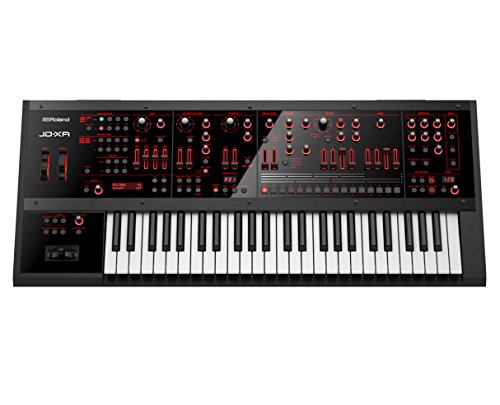
Roland JD-XA 49-Key
Synthesists who want genuine discrete analog voices and a digital engine in one 49-key crossover instrument with deep real time filter control.
Read the Roland JD-XA 49-Key review →
Pioneer DJ DDJ-FLX10 4-Channel
Mobile and open-format DJs who want a 4-channel club style controller with live stem separation and lighting control from one unit.
Read the Pioneer DJ DDJ-FLX10 4-Channel review →Questions Buyers Ask
Solid State Logic SSL UF1
See the current listing, price and included accessories.
About This Review
Mandrillis Team
The Mandrillis editorial team researches and compares audio and music gear using manufacturer documentation, verified specs and real buyer feedback, so you can make a confident purchase without wading through marketing claims.
Read our full research methodology.