Instruments Review
Yamaha MX88 Review: 88-Key Weighted Synth
The Yamaha MX88 pairs an 88 note GHS weighted action with the Motif sound engine and class compliant USB audio and MIDI. The listing highlights 128 note polyphony, VCM effects, and a backlit LCD without claiming any pads, faders, or bundled software.
Our Verdict
Research Score 76/100The Yamaha MX88 Music Production Synthesizer earns a 76 out of 100 in this review. The standout features are the 88 note GHS weighted action, Motif sound engine, 128 note polyphony, and class compliant USB audio and MIDI. These make it a strong choice for pianists and keyboard players who want to record ideas directly to a computer. The main drawbacks are the listing's omissions, including no pads, faders, bundled software, power, or weight specs. That limits its appeal for beatmakers, live performers needing inline control, or mobile users. Still, for an upper mid-range weighted synth with internal sounds and USB integration, the MX88 is a capable option if buyers confirm the missing details before purchase.
Editorial research score based on published specifications and documented features, not a customer rating or lab test.

Yamaha
Yamaha MX88 Music Production Synthesizer
Best for: Keyboard players and producers who want an 88 note weighted synthesizer with direct USB audio and MIDI recording without a pile of separate gear.
Skip it if: You need pad and fader control, a large software bundle, or detailed connectivity options such as 5 pin MIDI and pedal inputs.
Check Price on AmazonWe may earn a commission at no extra cost to you.
Listing verified: October 2026
Who Should Buy It
Buy it if
- Piano players moving to synth sounds who want weighted keys
- Home studio owners needing a compact 88 note MIDI controller with audio
- Live performers who need Motif sounds without deep menu dive
- Musicians on a budget who still want 88 weighted keys
Skip it if
- You rely heavily on drum pads and assignable faders
- You want a published software bundle with virtual instruments
- You need 5 pin DIN MIDI, expression pedal, or multiple outputs
Key Specifications
| Keys | 88 |
| Key type | GHS weighted action, heavier in low keys and lighter in high keys |
| Pads | Not published in listing |
| Knobs and faders | Not published in listing |
| DAW integration | Class compliant USB MIDI, no dedicated DAW control surface listed |
| Bundled software | Not published in listing |
| Connectivity | Class compliant USB audio and MIDI |
| Power | Not published in listing |
| Weight | Not published in listing |
| Included accessories | Not published in listing |
Overview
The Yamaha MX88 Music Production Synthesizer sits in the upper mid-range price tier and centers on an 88 note GHS weighted keyboard paired with Yamaha's Motif sound engine. The product listing positions it as both a synthesizer and a USB audio MIDI interface, with class compliant operation that needs no driver installation. This combination appeals to players who want acoustic piano style weighting without giving up synth and recording flexibility. This combination makes it a candidate for practice, performance, and recording in one unit.
Yamaha highlights the graded feel, 128 note polyphony, VCM effects, and a backlit character LCD. However, the listing does not specify pads, faders, bundled software, or detailed connectivity such as pedal inputs or power requirements. As a result, this review treats the MX88 as a weighted keyboard synthesizer with USB integration rather than a full pad based production controller. Buyers should approach it as a piano weighted synth with direct computer connectivity, not as a do everything surface.
Keys, Pads and Feel
The published specification centers on an 88 note GHS weighted action. GHS is Yamaha's graded hammer standard, and the listing states the keys are heavier in the low register and lighter in the high register, similar to an acoustic piano. This type of action is generally valued by pianists who want more resistance under the left hand and a lighter touch for melodies on the right. On paper, this makes the MX88 a candidate for practice and performance rather than a synth action keybed.
What the listing does not state matters here. There is no mention of aftertouch, and no pad specification appears anywhere in the feature bullets. Buyers who need velocity sensitive drum pads or clip launching surfaces will need to add a separate pad controller. The lack of published aftertouch information suggests the keybed may not offer channel or polyphonic aftertouch, but readers should confirm with the manufacturer if that is important. Without aftertouch, the keybed still provides standard velocity sensitivity for dynamic playing.
Knobs, Faders and DAW Integration
The MX88 listing does not specify any knobs, faders, or assignable encoders. For a synthesizer in this price tier, this is a notable omission in the published material. Many similarly priced workstation style boards include at least a handful of assignable controls for filter cutoff, resonance, or DAW parameters. Without that information, the review cannot confirm what physical continuous controls are present beyond the keybed and any standard pitch or modulation wheels, which are also not listed.
DAW integration on paper is limited to class compliant USB MIDI. That means the MX88 should be recognized by a computer as a MIDI device without additional drivers. The listing does not advertise deep control surface support for Ableton Live, Logic Pro, or other major DAWs. Users who want automatic mapping of faders and buttons for transport and mixer control may need to set up mappings manually or use a separate control surface.
Software, Sounds and Features
The sound engine is the centerpiece of the published feature set. The listing describes a Motif sound engine capable of layering, zoning, switching, cycling, and randomizing up to 8 elements within a single voice. This is a powerful architecture for synth and sample based sounds, and 128 notes of polyphony allows dense performances and full 16 track sequences without dropouts. The inclusion of VCM modeling for vintage effects is another highlight, as it recreates the behavior of classic processors.
However, the listing does not publish any bundled software package. No virtual instruments, DAW licenses, or download codes are mentioned. Users who expect a full software suite in the box may need to budget for those separately. The synthesizer's built in engine and effects provide core sound generation, but the setup as a controller for software instruments depends only on class compliant USB MIDI and audio. The tempo range is published as 5 to 300 BPM, which suggests an internal arpeggiator or sequencer function, though the listing does not explain access.
- Motif sound engine with up to 8 elements per voice
- 128 note polyphony for layered sequences
- VCM effects modeled after vintage processors
- Class compliant USB audio and MIDI
- Backlit 20 by 2 character LCD plus 3 digit LED
- Tempo range 5 to 300 BPM
Build, Design and Portability
The listing does not publish the weight or physical dimensions of the MX88. That makes it hard to assess portability from the specification alone. Generally, an 88 note weighted action keyboard is heavier than a 49 or 61 note synth action controller, but without a published weight, this review cannot give a specific figure. Buyers who plan to move the instrument frequently should check the manufacturer's full specifications before purchasing.
What the listing does mention is a backlit 20 character by 2 line LCD and a 3 digit LED display. This suggests a straightforward front panel even if the physical controls are not enumerated. The upper mid-range price point implies a build quality suited to regular use, but no material or chassis details are provided. Users who prioritize roadworthiness will need to look for third party reports or inspect the unit in person.
Connectivity and Power
Connectivity in the listing is defined by class compliant USB audio and MIDI. This is a strong point for computer based musicians, because the MX88 can send MIDI and audio over a single USB cable without driver installation. The phrase plug and play appears in the listing, which reduces setup friction for Mac, Windows, and potentially iOS devices, though the listing does not specify mobile compatibility.
Beyond USB, the listing does not publish any additional ports. There is no mention of 5 pin DIN MIDI, expression or sustain pedal inputs, auxiliary outputs, or a power supply type. Power is also not specified, leaving open the question of whether the unit runs on USB bus power, an external adapter, or both. Buyers who need standalone hardware connectivity outside a computer should verify the full rear panel before buying.
Setup and Daily Use
Setup should be straightforward on paper because the MX88 uses class compliant USB audio and MIDI. Connecting to a computer should require no driver downloads, and the backlit LCD can display parameter information during operation. The listing gives no indication of complicated registration or software unlocking steps, which simplifies the initial experience compared to products that require account creation or multiple downloads.
Daily use will likely center on the weighted keybed and Motif sounds rather than extensive in-person control. Without published knobs or faders, users may find themselves reaching for a mouse when editing software parameters. The 88 note weighted action encourages longer playing sessions, but the absence of pad and control surface details means producers who build beats may want a supplementary controller. Buyers report that the appeal is playing keys and capturing MIDI and audio in one pass.
Who Should Buy It
The MX88 is best suited for keyboard players who want an 88 note weighted action and a hardware synth engine in one device. Piano students and gigging musicians can use the graded feel for practice and performance, then record MIDI and audio over USB to a DAW. The Motif engine provides a broad palette without requiring a computer for basic sound generation. The weighted keys also support proper piano technique during practice sessions.
Home studio owners on a budget may also find it useful as a compact weighted controller with audio interface functionality, provided they do not need pads or faders. Those who already own a separate pad controller or prefer to edit in software will value the straightforward integration. The upper mid-range price tier is a reasonable tradeoff for an 88 note weighted synthesizer with USB connectivity, though the full feature set remains underdocumented.
Alternatives Worth Considering
Buyers who need pads, faders, and a bundled software suite may be better served by compact MIDI controllers such as the Arturia MiniLab 3, Novation Launchkey Mini, or Akai MPK Mini MK3. Those models generally include drum pads and assignable knobs, and they often ship with DAW or instrument software. The tradeoff is a smaller keybed and synth action keys rather than 88 weighted keys.
For musicians who want more DAW control with a larger keybed, the M-Audio Oxygen Pro line and Native Instruments Komplete Kontrol M32 are common reference points, though the M32 has smaller keys. The Nektar Impact LX series is another budget option with deeper DAW integration. None of these alternatives match the MX88's 88 note weighted action and Motif engine if the goal is piano weighted playability with internal sounds, but they offer more published control and software content.
Verdict
The Yamaha MX88 Music Production Synthesizer earns a score of 76 out of 100 in this review. The high points are the 88 note graded weighted action, Motif sound engine, 128 note polyphony, and class compliant USB audio and MIDI. Those features make it a strong candidate for pianists and keyboard players who want to record ideas without a pile of separate boxes.
The main weaknesses come from the listing's omissions. No pads, faders, bundled software, power details, or weight are published, which hampers evaluation for beatmakers, live performers who need inline control, or mobile users. Without those specs, the MX88 is harder to recommend for controller centric workflows. Still, on paper it occupies a useful niche as a weighted synth with direct USB connectivity. The final advice is to confirm the full rear panel and included accessories with the seller, because the listing leaves several practical questions unanswered.
Strengths and Limitations
Strengths
- 88 note weighted action with graded feel
- Motif sound engine with 128 note polyphony
- Class compliant USB audio and MIDI no drivers
- VCM effects modeling
- Backlit LCD plus LED display
- Upper mid-range price for weighted workstation synth
Limitations
- No pads or faders listed
- No bundled software or DAW control details
- Limited published specs on connectivity beyond USB
- No aftertouch mentioned
- No included accessories listed
How We Scored It
Scores reflect published specifications, documented features and value against the alternatives below. They are editorial research scores, not laboratory measurements.
Alternatives to Consider

Korg Pa300 Professional Arranger Keyboard
Performers wanting an arranger keyboard with on board sounds, styles, and a songbook database in a compact form factor, as described by the listing.
Read the Korg Pa300 Professional Arranger Keyboard review →
Korg phase8 Acoustic Synthesizer Limited Edition
Experimental musicians and sound designers who want acoustic resonator textures with sequencer and CV integration.
Read the Korg phase8 Acoustic Synthesizer Limited Edition review →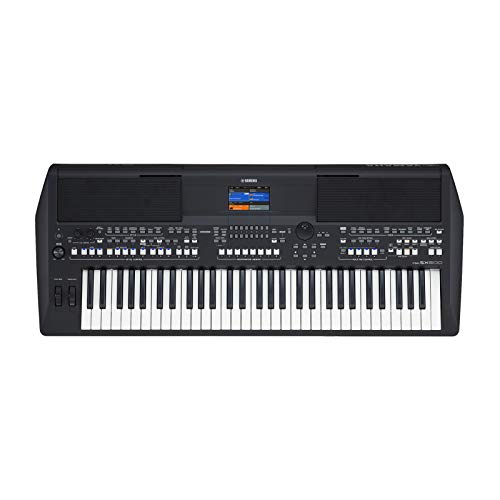
Yamaha PSR SX600 Digital Arranger Keyboard
Home musicians and live performers who want an arranger keyboard with a large sound library and automatic accompaniment.
Read the Yamaha PSR SX600 Digital Arranger Keyboard review →Questions Buyers Ask
Yamaha MX88 Music Production Synthesizer
See the current listing, price and included accessories.
About This Review
Mandrillis Team
The Mandrillis editorial team researches and compares audio and music gear using manufacturer documentation, verified specs and real buyer feedback, so you can make a confident purchase without wading through marketing claims.
Read our full research methodology.