Instruments Review
Yamaha PSR SX600 Review: Arranger Depth, Sparse Specs
The Yamaha PSR SX600 Digital Arranger Keyboard offers a huge sound set and auto accompaniment in an upper mid-range portable instrument. The listing details 850 voices, 415 styles, a color display and microphone input, but leaves out key count, DAW integration and many physical control specs. This review works from published facts only.
Our Verdict
Research Score 75/100The Yamaha PSR SX600 is positioned as an upper mid-range arranger workstation for home and live use. The published feature list is impressive: 850 instrument sounds, 43 drum and SFX kits, 480 XG voices, 415 accompaniment styles, a color display, arpeggio, multi pads, Unison and Accent, and a microphone input. That suggests strong value for players who want built in backing and a large palette. However the listing omits essential hardware details such as the number of keys, key action type, physical pad and knob layout, DAW integration and full connectivity. This review cannot confirm in-person performance or build quality. Buyers who prioritize arranger features over controller mapping will likely be satisfied. Buyers who need verified MIDI controller specs should seek more complete documentation before purchase.
Editorial research score based on published specifications and documented features, not a customer rating or lab test.
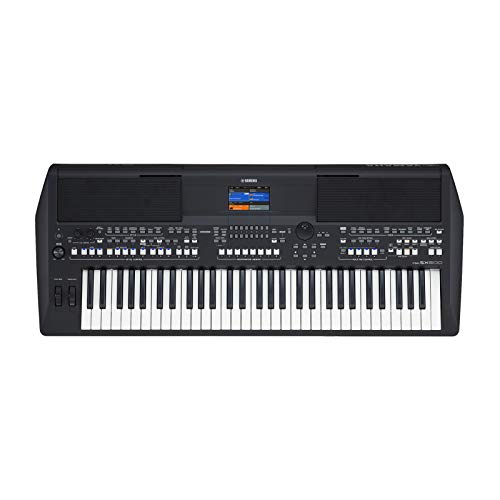
Yamaha
Yamaha PSR SX600 Digital Arranger Keyboard
Best for: Home musicians and live performers who want an arranger keyboard with a large sound library and automatic accompaniment.
Skip it if: You need a compact MIDI controller with clearly documented DAW integration and assignable controls.
Check Price on AmazonWe may earn a commission at no extra cost to you.
Listing verified: October 2026
Who Should Buy It
Buy it if
- Players who want a wide variety of acoustic and electronic sounds in one instrument
- Musicians who use auto accompaniment styles for practice or performance
- Singers or songwriters who need a microphone input for live use
- Home users who prefer a color display for notation and lyrics
Skip it if
- You need a portable controller with a known key count and MIDI mapping software
- You rely on deep DAW integration with transport controls and plugin mapping
- You require detailed physical control specs such as pad count and fader count before buying
Key Specifications
| Keys | Touch-sensitive keys (exact key count not published in listing) |
| Key type | Touch-sensitive action, exact type not published in listing |
| Pads | Multi pads feature mentioned; physical pad count not published in listing |
| Knobs and faders | Live control controls and filters mentioned; exact knob and fader counts not published in listing |
| DAW integration | Not published in listing |
| Bundled software | Not published in listing |
| Connectivity | Microphone input listed; other connections not published in listing |
| Power | Power supply included |
| Weight | Not published in listing |
| Included accessories | Power supply and manual |
Overview
The Yamaha PSR SX600 Digital Arranger Keyboard sits in the upper mid-range price tier and is described by the listing as a portable keyboard for piano and arranger use. The published feature list emphasizes a large sound library, automatic accompaniment, a color display and a microphone input. This is not a minimal MIDI controller but a self contained arranger workstation that can also serve as a performance instrument. The listing does not state all hardware specifications, so this review focuses on what is published.
The bullet points highlight 850 instrument sounds, 43 drum and SFX kits, 480 XG voices and 415 accompaniment styles. The inclusion of Unison and Accent suggests the arranger can respond to playing dynamics. A graphic color display shows notation and lyrics, which is helpful for learning songs or performing. Overall, the SX600 appears aimed at home players and live performers who want backing tracks and a broad sonic palette without a computer.
Keys, Pads and Feel
The listing describes the keys as touch sensitive, but it does not publish the exact number of keys. Many arranger keyboards in this class use a 61 note layout, but that cannot be confirmed from the provided data. The key action type is also not specified, so it is unclear whether the keys are synth style, semi weighted or something else. Buyers looking for a specific key count or action should verify before purchase.
Multi pads are mentioned as a feature, but the listing does not detail a physical pad grid or pad count. The term multi pads likely refers to assignable performance pads that trigger one shot samples or loops, a common arranger feature. Without a published pad count, it is hard to judge how much in-person control is available. The touch sensitive keys are the main tactile interface described, and no aftertouch or velocity curve details are provided.
On paper, the touch response is the only confirmed key characteristic. The listing does not mention key size, material or any grading. This missing information is common in compact arranger listings, but it limits a full evaluation of playability. The SX600 may feel fine for casual players, but advanced pianists will likely want more specific key bed information.
Knobs, Faders and DAW Integration
The listing mentions live control controls and filters, but it does not publish the number of knobs, faders or buttons. The phrase live control controls suggests some assignable real time controls are present, possibly for filter cutoff, resonance or effect parameters. Track mute function is listed, implying dedicated buttons for muting accompaniment tracks. However exact layout cannot be confirmed.
DAW integration is not published in the listing. There is no mention of USB MIDI, class compliant operation, control surface modes or software templates for popular DAWs. This is a significant gap for buyers who want to use the SX600 as a controller in a computer based studio. The arranger features may work standalone, but integration with recording software is unclear.
The included color display and mention of intuitive operation suggest that menu navigation may be straightforward. However without confirmed transport controls or assignment software, this instrument may not replace a dedicated MIDI controller. The SX600 appears to prioritize onboard arranger performance over deep computer control.
Software, Sounds and Features
The published sound engine is extensive, with 850 high quality instrument sounds including drum kits, plus 43 drum and SFX kits and 480 XG voices. That totals more than 1300 available sounds when combining categories. The 415 accompaniment styles cover multiple genres and include DJ styles, which should appeal to modern performers. This is a strong onboard sound library for the price tier.
Features such as arpeggio and multi pads add creative options. The Unison and Accent function allows the automatic accompaniment to respond to playing strength, which can make backing tracks feel more organic. The color display shows musical notation and song lyrics, useful for practice and live performance. A microphone input allows vocalists to sing along with the accompaniment.
The included XG voice set is worth noting for users who play older MIDI files, as it helps maintain compatibility. The DJ styles suggest the SX600 can handle contemporary dance and pop music. The arpeggio and multi pads provide additional layers for live improvisation. Overall, the feature set is strong for an arranger in this price tier.
- 850 instrument sounds plus 43 drum and SFX kits
- 480 XG voices for compatibility with older MIDI files
- 415 accompaniment styles including DJ styles
- Arpeggio and multi pads for performance variation
- Unison and Accent for dynamic accompaniment response
- Color display with notation and lyrics
Build, Design and Portability
Weight and dimensions are not published in the listing. It is described as a portable keyboard, and the included power supply suggests it is meant to be moved between locations. The microphone input is noted as allowing live sessions at home or on the go, which reinforces portability. Without weight data, buyers cannot assess ease of transport.
Build materials and chassis design are not described. The listing does not mention whether the keys are box style or the construction uses metal or high quality plastic. The color display is a notable design feature, as it should improve menu visibility and lyric reading. The overall appearance is not detailed, but Yamaha arranger keyboards typically have a clean control panel.
The inclusion of a power supply and manual in the box is confirmed. No stand, sustain pedal, microphone or carrying case is listed as included. Buyers who plan to perform live may need to purchase additional accessories. The SX600's portability claim is reasonable based on its arranger category, but exact size and weight remain unknown from the listing.
Connectivity and Power
The only connection explicitly listed is a microphone input. This allows a vocalist to plug in a microphone and use the keyboard's effects or mix it with the accompaniment. The listing does not mention USB, MIDI, audio outputs, headphone jack or sustain pedal input. Those are common on arranger keyboards, but cannot be assumed from the data.
Power is supplied by an included power supply. The listing does not state whether battery operation is possible, so mains power is the only confirmed option. The absence of published USB or MIDI connectivity is a concern for buyers who want to connect to a computer or other MIDI gear. The arranger likely has some form of USB, but the listing does not say.
The microphone input is a meaningful feature for live performers and content creators. Without further connectivity details, the SX600 may be best used as a standalone instrument rather than the center of a larger studio. Buyers who need specific audio and MIDI routing should confirm those ports before purchase.
Setup and Daily Use
Setup should be straightforward for a standalone arranger keyboard. The included power supply means the unit can be powered out of the box. The color display and intuitive operation claim suggest that navigating sounds, styles and functions does not require deep menu diving. The manual is included, which helps with initial configuration.
Daily use likely revolves around selecting sounds and accompaniment styles, playing along with auto accompaniment and possibly singing through the microphone input. The multi pads and arpeggio offer quick creative tools. The track mute function allows users to remove parts of the accompaniment, useful for practice or performance. However without DAW integration details, computer based workflows are unclear.
The listing does not mention any editor or librarian software. That means users may need to rely on the onboard display for all edits. For a keyboard with this many sounds and styles, a computer editor would be helpful, but it is not listed. The SX600 appears designed for immediate play rather than deep customization.
Who Should Buy It
The SX600 suits home players who want a wide variety of sounds and built in backing tracks. The 415 accompaniment styles mean a solo player can create full arrangements without a computer or band. The color display with lyrics is helpful for singers and learners. The microphone input adds value for those who want to perform vocals.
Live performers who need a portable arranger with a large sound set may find this instrument useful. The Unison and Accent function allows dynamic control over accompaniment, which can make performances more expressive. The arpeggio and multi pads provide additional real time performance options. This is not a minimalist controller, but a performance keyboard.
The SX600 is also a reasonable choice for players who already own Yamaha gear or who like the XG voice format. The 480 XG voices ensure compatibility with many older MIDI files. Those who prioritize sound variety over deep MIDI control will likely appreciate what the listing describes. Buyers who need a simple, self contained arranger should consider this model.
Alternatives Worth Considering
Buyers who want a compact MIDI controller for DAW work may prefer an Akai MPK Mini MK3 or an Arturia MiniLab 3. Those are small controllers with pads and knobs designed for computer based production. They do not include arranger sounds or a microphone input, but they are highly portable and have clear DAW integration. The SX600 offers far more onboard sounds but less controller focus.
The Novation Launchkey Mini is another strong choice for Ableton Live users. It provides pads, knobs and tight DAW control in a small footprint. The Native Instruments Komplete Kontrol M32 is a good option for those who want software instruments and a compact keybed. These controllers have published key counts and mapping software, which the SX600 listing lacks.
For players who want more arranger features, a larger Yamaha PSR or Tyros model may offer even more sounds and styles, though those are typically more expensive. The M-Audio Oxygen Pro and Nektar Impact LX are budget friendly controller options with assignable controls, but they do not include built in sounds. The SX600 sits in a different category as an arranger workstation rather than a pure MIDI controller.
Verdict
The Yamaha PSR SX600 Digital Arranger Keyboard offers a compelling set of published features: 850 sounds, 43 drum and SFX kits, 480 XG voices, 415 styles, a color display, microphone input and dynamic accompaniment tools. For an upper mid-range price, that is a strong onboard package for home players and live performers. The main weakness is the lack of published hardware details such as key count, key action, physical controls, DAW integration and full connectivity.
This review is limited to the listing data, so in-person performance and build quality cannot be assessed. The score reflects the strong sound and feature set balanced against the missing specifications. Buyers who value arranger capabilities and a large sound library should find the SX600 appealing. Buyers who need documented MIDI controller functionality or specific hardware specs should look for more complete product information before purchasing.
Strengths and Limitations
Strengths
- Large sound set with 850 voices plus 43 drum and SFX kits and 480 XG voices
- 415 accompaniment styles with Unison and Accent for dynamic playback
- Color display shows notation and lyrics
- Microphone input for live performance
- Multi pads and arpeggio expand creative options
- Includes power supply and manual
Limitations
- Listing does not publish key count, key bed type, or action details
- No DAW integration or bundled software details in listing
- Connectivity beyond microphone input is unclear
- No physical pad or knob and fader count published
- Weight and build materials not stated
How We Scored It
Scores reflect published specifications, documented features and value against the alternatives below. They are editorial research scores, not laboratory measurements.
Alternatives to Consider

Korg phase8 Acoustic Synthesizer Limited Edition
Experimental musicians and sound designers who want acoustic resonator textures with sequencer and CV integration.
Read the Korg phase8 Acoustic Synthesizer Limited Edition review →
Korg Pa300 Professional Arranger Keyboard
Performers wanting an arranger keyboard with on board sounds, styles, and a songbook database in a compact form factor, as described by the listing.
Read the Korg Pa300 Professional Arranger Keyboard review →
Yamaha MX88 Music Production Synthesizer
Keyboard players and producers who want an 88 note weighted synthesizer with direct USB audio and MIDI recording without a pile of separate gear.
Read the Yamaha MX88 Music Production Synthesizer review →Questions Buyers Ask
Yamaha PSR SX600 Digital Arranger Keyboard
See the current listing, price and included accessories.
About This Review
Mandrillis Team
The Mandrillis editorial team researches and compares audio and music gear using manufacturer documentation, verified specs and real buyer feedback, so you can make a confident purchase without wading through marketing claims.
Read our full research methodology.