Digital Pianos Review
Kawai ES520 Review: Kawai Tone With 40 Watts of Onkyo Speakers
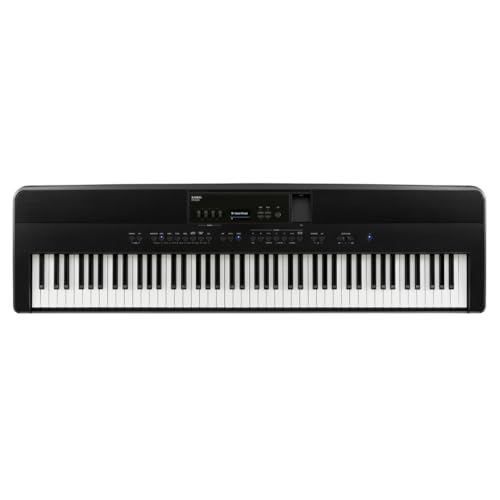
The ES520 sits between the ES120 and ES920 with the Responsive Hammer Compact II action, 34 sounds, 192-note polyphony, Bluetooth MIDI, USB audio and a 40 watt Onkyo-designed speaker system that is the loudest in any mid-range portable. This review covers what the speakers and sound set add, what the listing confirms, and how it compares with the Roland FP-60X and the ES920.
Our Verdict
Research Score 86/100The Kawai ES520 is the portable to buy if you want Kawai's warm 88-key sampled grand played through speakers that can fill a room. The 40 watt Onkyo system is its reason to exist, and 34 sounds, USB audio and Bluetooth MIDI round out a complete home-and-stage instrument. The RHC II action is comfortable rather than flagship; the ES920's RHIII is the step up for touch, and Bluetooth audio is not stated on the listing.
Editorial research score based on published specifications and documented features, not a customer rating or lab test.

Kawai
Kawai ES520
Best for: Players who want Kawai tone with speakers strong enough for a living room or a small venue in a portable
Skip it if: you want the RHIII action of the ES920 or the lightest Kawai
Check Price on AmazonWe may earn a commission at no extra cost to you.
Listing verified: October 2026
Who Should Buy It
Buy it if
- You play through the built-in speakers in a living room or at small gigs
- You want 34 sounds and USB audio recording
- You prefer RHC II's lighter touch to the ES920's RHIII
Skip it if
- Touch is the priority and the ES920 is within reach
- Weight matters; the ES120 is far lighter
- You want Bluetooth audio confirmed
Key Specifications
| Key Action | Responsive Hammer Compact II (RHC II) |
| Sound Engine | Harmonic Imaging with 88-key sampling |
| Voices | 34 |
| Polyphony | 192 notes |
| Speakers | 40 W Onkyo stereo system |
| Bluetooth | MIDI |
| USB | USB audio and MIDI |
| Pedals | F-10H pedal included; F-302 triple pedal optional |
| Weight | Not published reliably; listing figure may include packaging |
| Form Factor | Mid-range portable with 40 W speakers |
Where the ES520 Fits
Kawai's ES portables run ES60, ES120, ES520 and ES920. The ES520 keeps the compact action family but adds the speaker system and sound set of a performance instrument. The listing confirms the Responsive Hammer Compact II action, the 40 watt Onkyo stereo speaker system, Bluetooth MIDI, 192-note polyphony and dual and split modes. Kawai's specification adds 34 sounds, USB audio and MIDI, line outputs and two headphone jacks. The listing's 48.6 pound weight may include packaging; Kawai's own figure is lower.
Responsive Hammer Compact II
RHC II is the refined compact action shared with the KDP120 and CX202: graded, smooth, quiet and slightly lighter than Roland's PHA-4 Standard, with two sensors and no let-off. It suits long sessions and players who find heavy actions tiring. The ES920's RHIII adds a third sensor, let-off and counterweights, and it is the reason to spend more if touch leads your list.
Sound, Speakers and Tones
Harmonic Imaging samples Kawai's concert grand on all 88 keys with damper resonance, and the ES520's grand is warm and natural. Thirty-four sounds add a second grand, uprights, electric pianos, organs, strings, pads and bass. Polyphony is 192 notes.
The Onkyo-designed 40 watt speaker system is the headline: it is louder and fuller than any speaker system in a mid-range portable, enough for a living room, a rehearsal or a small venue without an amplifier. It changes how the ES520 is used; owners play through the piano rather than around it.
Connectivity
USB carries audio and MIDI, so the ES520 records its own sound into a DAW. Bluetooth MIDI connects apps wirelessly; Bluetooth audio is not stated on the listing and should be confirmed with Kawai's specification. Quarter-inch line outputs, two headphone jacks, a line input, a sustain jack and a port for the F-302 triple pedal cover the rest.
Setup and Accessories
The ES520 ships with a music rest, the F-10H pedal and a power adapter. Kawai's HM-5 stand and F-302 triple pedal turn it into a slim console. It needs a double-braced X-stand and is heavier than the ES120 because of the speakers.
Daily Use
At home the ES520 is the rare portable that fills a living room without external speakers, so families play it for each other through its own system and use the two headphone jacks only at night. The PianoRemote app over Bluetooth MIDI handles sounds and the Virtual Technician, USB audio records practice into a computer, and Four Hands mode splits the keyboard for teacher and student. On stage its line outputs feed a PA and its speakers serve as monitors.
ES520 Against the Alternatives
Against the ES120, the ES520 adds the 40 watt speakers, 34 sounds, USB audio and RHC II for a substantial premium; it is the choice when the speakers matter. Against the ES920, the ES920 has RHIII with let-off, both the SK-EX and EX grands, 256-note polyphony and an OLED display at a higher price. Against the Roland FP-60X, the Roland has PHA-4 Standard with escapement, a display and a mic input; the Kawai has louder speakers and the warmer tone.
Buy the ES520 for the speakers and the tone; buy the ES920 for the action.
Pedals, Stand and Transport
The F-10H pedal in the box is a switch-type sustain; Kawai's F-302 triple pedal with half-damper support mounts to the HM-5 stand and turns the ES520 into a console with proper pedaling. For gigs the ES520 travels in a standard 88-key case, heavier than the ES120 because of the speaker system but still a one-person lift onto a double-braced X-stand. The quarter-inch line outputs mean the onboard speakers can serve as stage monitors while the PA carries the room.
Long-Term Fit
The ES520 is a portable owners keep because it serves as both a home piano and a gig instrument. The upgrade path is the ES920 for touch or a CN console for a cabinet. As a current Kawai model it holds value well.
Strengths and Limitations
Strengths
- 40 watt Onkyo-designed speaker system, the loudest in a mid-range portable
- RHC II action and 34 sounds
- Bluetooth MIDI and USB audio
- Kawai's 88-key sampled grand with 192-note polyphony
Limitations
- Bluetooth audio not stated on the listing
- Heavier than the ES120
- Costs close to the ES920
How We Scored It
Scores reflect published specifications, documented features and value against the alternatives below. They are editorial research scores, not laboratory measurements.
Alternatives to Consider
Kawai ES920
Serious pianists who want the best action and sound in a portable before the price of a Kawai console
Read the Kawai ES920 review →
Kawai ES120
Players who prize a warm, acoustic-like piano tone and a light, well-connected portable
Read the Kawai ES120 review →
Roland FP-60X
Performers and home players who want the FP-30X's action with far louder speakers, a display and a mic input
Read the Roland FP-60X review →Head-to-Head Comparisons
- Roland FP-60X vs Kawai ES520 Compare →
Questions Buyers Ask
Kawai ES520
See the current listing, price and included accessories.
About This Review
Mandrillis Team
The Mandrillis editorial team researches and compares audio and music gear using manufacturer documentation, verified specs and real buyer feedback, so you can make a confident purchase without wading through marketing claims.
Read our full research methodology.