Speakers Review
Polk XT10 Review: Budget 10 Inch Home Theater Bass
The Polk XT10 is a lower mid-range powered subwoofer with a 10 inch driver, 100 watt Class D amplifier, and a listed low end of 24 Hz. It offers LFE and line level connections plus simple controls for home theater integration.
Our Verdict
Research Score 76/100The Polk XT10 presents a compelling value for buyers wanting a name-brand powered subwoofer with a 10 inch driver and a listed 24 Hz low end. Its down firing Dynamically Balanced woofer, 100 watt Class D amplifier, and LFE input make it easy to integrate into a home theater. The variable crossover and phase polarity controls cover the essential setup needs. The main drawbacks are missing specifications like dimensions, weight, upper frequency response, and maximum output, which makes online buying harder. The lack of wireless or app control is acceptable at this price tier. Overall, for a lower mid-range subwoofer, the Polk XT10 appears to be a solid choice for Monitor XT system builders and anyone seeking affordable deep bass for movies and music.
Editorial research score based on published specifications and documented features, not a customer rating or lab test.

Polk
Polk XT10
Best for: Home theater users who want a lower mid-range powered subwoofer to add deep bass to a Polk Monitor XT speaker system or any AV receiver with an LFE or line level output.
Skip it if: You require a subwoofer with published dimensions, wireless connectivity, or very high output for a large open room.
Check Price on AmazonWe may earn a commission at no extra cost to you.
Listing verified: October 2026
Who Should Buy It
Buy it if
- Buyers building a Polk Monitor XT surround system
- Home theater fans who need a budget friendly powered subwoofer
- Users with AV receivers that have a dedicated subwoofer or LFE output
- Listeners who prefer a wired subwoofer with simple controls
Skip it if
- You need a subwoofer with wireless or app based control
- You have a very large room and need more than a single 10 inch driver can likely provide
- You require published dimensions and weight before purchasing
Key Specifications
| Type | Powered subwoofer |
| Drivers | 10-inch long-throw high excursion Dynamically Balanced Woofer |
| Power or sensitivity | 100W Class D amplifier (continuous or peak not specified in listing) |
| Frequency response | 24 Hz low end according to listing; upper limit not published |
| Inputs and connectivity | Line level, LFE (unfiltered/low pass disabled) |
| Bluetooth and streaming | Not published in listing |
| Dimensions | Not published in listing |
| Weight | Not published in listing |
| Finish | Black |
| Included accessories | Not published in listing |
Overview
The Polk XT10 is a powered subwoofer in the Monitor XT series, positioned as an affordable way to add low-frequency impact to a home theater. The listing places it in the lower mid-range price tier, making it a candidate for budget-conscious buyers who still want a dedicated subwoofer rather than relying on tower speakers for bass. Polk Audio markets it as compatible with Dolby Atmos, DTS:X, and Auro 3D, but that compatibility refers to working with AV receivers that decode those formats, not to any decoding inside the subwoofer itself.
The published specifications focus on the essentials: a 10-inch long-throw high excursion Dynamically Balanced Woofer, a 100 watt Class D amplifier, and a claimed low frequency extension down to 24 Hz. The subwoofer uses a down-firing driver in a braced cabinet, which the listing says reduces resonances and isolates the woofer's output for cleaner bass. It offers line level and LFE inputs, along with volume, variable crossover, and phase polarity controls for integration with a main speaker system.
Sound Quality
The most notable performance claim in the listing is the 24 Hz low frequency extension, which is low for a 10-inch subwoofer in this price tier. A subwoofer that can reach into the mid-20 Hz range can add tangible rumble to movie explosions and deep bass lines in music. The long-throw high excursion design of the 10-inch woofer suggests it is built to move air efficiently, which helps produce that extension without an excessively large cabinet. However, the listing does not publish the upper frequency response limit, so the exact crossover range for blending with bookshelf or tower speakers is left to the user's variable crossover control.
The listing describes the cabinet as rigid and critically braced, with a down-firing woofer that isolates sound and minimizes unwanted resonances. This design can improve bass clarity by reducing cabinet vibration that muddies low frequencies. On paper, the Polk XT10 appears intended to deliver distortion-free audio for home theater effects, but without independent measurements or a in-person evaluation, the actual sound quality remains based on the published engineering choices and the brand's reputation. Buyers should expect a noticeable upgrade from TV speakers or small satellite systems, especially in small to medium rooms.
Drivers, Power and Room Fit
The driver is a 10-inch long-throw high excursion Dynamically Balanced Woofer. Polk's Dynamically Balanced designation refers to a design process that aims to reduce resonances and distortion by analyzing the driver's behavior, though the listing does not go into further technical detail. The amplifier is a 100 watt Class D unit, which is efficient and should produce enough power for most small to medium rooms. The listing does not specify whether the 100 watt figure is continuous RMS or peak, so buyers should treat it as a general output rating rather than a precise measurement.
The frequency response is listed as extending as low as 24 Hz. That is a useful specification for a subwoofer of this size, but the upper limit is not published, and there is no maximum sound pressure level given. This makes it difficult to predict exactly how loudly the subwoofer will play in a given room. For a typical living room or dedicated home theater under about 2,000 cubic feet, the XT10 should provide satisfying low end. In a very large open space, a single 10-inch driver with 100 watts may run out of headroom, but that is a limitation of many subwoofers in this price class.
The down-firing orientation of the woofer can help distribute bass more evenly in a room than a front-firing design, and it allows flexible placement without a visible driver. However, because the listing does not provide dimensions or weight, buyers cannot easily determine whether the subwoofer will fit in a specific location until they receive it. For room fit planning, the lack of physical measurements is a real drawback, but the overall footprint of a 10-inch subwoofer is generally moderate.
Features and Connectivity
The Polk XT10 keeps connectivity simple. It provides line level and LFE inputs, with the LFE input described as unfiltered or low pass disabled, meaning the subwoofer can accept a bass signal already crossed over by an AV receiver. This is the standard connection for modern home theater receivers with a dedicated subwoofer output. The listing does not mention high level speaker inputs, so users with older stereo receivers that lack a subwoofer or line out will need a separate adapter or a different subwoofer.
The control set includes volume, variable crossover, and phase polarity. These are the basics needed to integrate the subwoofer with main speakers: the volume matches output level, the crossover sets where the subwoofer hands off to the main speakers, and the phase switch helps align the subwoofer with other speakers to avoid bass cancellation. The listing does not mention any auto calibration, room correction, app control, or wireless streaming, so the XT10 is a wired, manually adjusted subwoofer.
- 10-inch long throw high excursion Dynamically Balanced Woofer
- 100 watt Class D amplifier
- Line level and LFE inputs
- Volume, variable crossover, and phase polarity controls
- Down firing driver in a braced cabinet
Build, Design and Finish
The listing describes the subwoofer as having a premium build quality and modern design, with a black finish. The cabinet is rigid and critically braced, which is intended to reduce resonances that can color the sound. A down-firing driver hides the woofer and protects it from accidental damage, while the black finish keeps the subwoofer visually unobtrusive in most home theater setups. The brand is Polk Audio, which has a long history in home and car audio, and the Monitor XT series is designed to be timbre matched.
The listing does not publish dimensions, weight, or included accessories, which makes it hard to evaluate the physical build beyond the material description. There is no mention of feet, spikes, grille, or power cord in the listing, though a power cord is typically included with powered subwoofers. The lack of dimensions is a notable omission for an online purchase, as buyers may need to know the footprint before ordering. Despite that, the design language follows the Monitor XT series, suggesting a cohesive look with other Polk Monitor XT speakers.
Setup and Placement
Setting up the Polk XT10 should be straightforward for anyone with an AV receiver that has a subwoofer or LFE output. The user connects a single RCA cable from the receiver's subwoofer output to the LFE input on the subwoofer, plugs in power, and then adjusts volume, crossover, and phase. The listing describes the controls as convenient, but does not specify whether they are on the front, top, or rear panel. Most powered subwoofers place controls on the rear, which can be slightly less accessible once the subwoofer is in position.
Placement is flexible due to the down-firing design, which radiates bass in all directions rather than from a front-facing driver. This can allow the subwoofer to be placed near a wall or in a corner without the same beaming effect as a front-firing model, though corner placement may increase output but also excite room modes. The phase polarity control helps correct for placement-related cancellations when the subwoofer is not the same distance from the listener as the main speakers. Without published dimensions, users should measure their intended space and be prepared for a typical 10-inch subwoofer footprint, which is often around 12 to 15 inches per side.
Daily Use
In daily use, the Polk XT10 is designed to work in the background, adding low-frequency effects to movies and weight to music. The user sets the subwoofer level once during initial setup and then leaves it alone, though the volume control is available for quick adjustments. The listing does not mention an auto-on or standby mode, so the subwoofer may need to be powered on and off manually or may remain on continuously, depending on its power supply behavior, which is not specified.
The down-firing driver means there is no visible woofer to worry about, and the cabinet should be stable on a floor or carpet. The lack of a grille on the bottom could be a concern if the subwoofer is placed on uneven surfaces, but the listing does not address this. For home theater use, the subwoofer will handle the LFE channel from Dolby Atmos and DTS:X soundtracks, delivering rumble during action scenes. For music, the variable crossover allows the user to blend the subwoofer with bookshelf speakers to create a fuller sound without boomy overlap.
Who Should Buy It
The Polk XT10 is best suited to home theater users who are building a Polk Monitor XT speaker system and want a matching subwoofer at a lower mid-range price. It is also appropriate for anyone with an AV receiver that has a dedicated subwoofer or LFE output and needs affordable low-frequency reinforcement for movies and music. Buyers who appreciate simple wired connections and manual controls will find the XT10 easy to integrate without a smartphone app or network setup.
This subwoofer is a good fit for small to medium rooms where a 10-inch driver and 100 watts can pressurize the space without overwhelming it. It is not intended for users who want wireless streaming, advanced DSP room correction, or a subwoofer that can fill a very large open concept area with reference level bass. The lack of published dimensions may also deter buyers who need to plan placement precisely.
Alternatives Worth Considering
Shoppers in the same lower mid-range price tier may want to compare the Polk XT10 to other 10-inch powered subwoofers from established speaker brands. Some competitors in this class offer similar features like LFE inputs and variable crossovers, while others may include high level inputs or wireless connectivity. The right choice often depends on the existing speaker system and the receiver's output options. The listing for the XT10 does not provide enough data to compare maximum output or distortion levels against alternatives, so in-person research or third-party measurements would be useful.
For buyers with a larger budget, a step-up subwoofer like the SVS SB-1000 Pro offers a more sophisticated control app and more power, but it sits in a higher price tier and is not a direct price competitor. Within the Polk family, larger subwoofers in the Monitor XT line or a higher-end series may provide more headroom for larger rooms. The rule of thumb is that a 12-inch driver or more power is often preferable for open floor plans, while the 10-inch XT10 is sized for typical living rooms and dedicated home theaters.
Verdict
The Polk XT10 presents a compelling value proposition for buyers who want a name-brand powered subwoofer with a 10-inch driver and a listed 24 Hz low end without spending a lot. The combination of a down-firing Dynamically Balanced woofer, a 100 watt Class D amplifier, and simple LFE connectivity makes it straightforward to integrate into a home theater with an AV receiver. The variable crossover and phase polarity controls are the essential tools for blending it with main speakers.
The main drawbacks are the missing specifications: no dimensions, weight, upper frequency response, or maximum output are published in the listing. That lack of information makes it harder to buy with confidence, especially for online shoppers who cannot see the unit in person. The absence of wireless or app control is acceptable for a budget subwoofer but worth noting for comparison. Overall, for the lower mid-range price tier, the Polk XT10 appears to be a solid choice for Monitor XT system builders and anyone seeking affordable, deep bass for movies and music.
Strengths and Limitations
Strengths
- Listed low frequency extension down to 24 Hz
- 100 watt Class D amplifier for efficient power
- Down firing driver in a braced cabinet to reduce resonance
- Variable crossover and phase polarity controls for integration
- LFE input for dedicated home theater subwoofer output
- Timbre matched with Polk Monitor XT speaker series
Limitations
- No wireless or Bluetooth connectivity stated
- Dimensions and weight are not published, making placement planning difficult
- No high level speaker inputs for older receivers without sub out
- Power output of 100 watts may be modest for very large rooms
- Upper frequency response and maximum output not specified
How We Scored It
Scores reflect published specifications, documented features and value against the alternatives below. They are editorial research scores, not laboratory measurements.
Alternatives to Consider
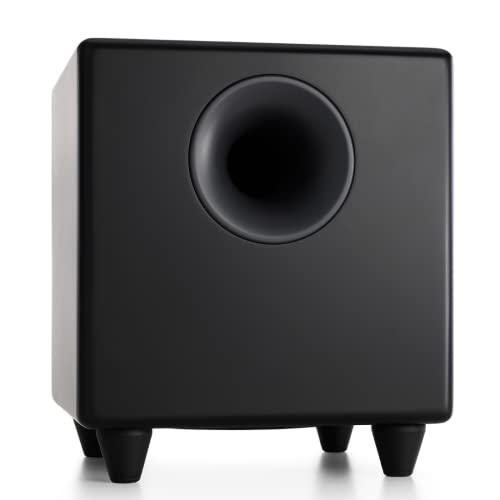
Audioengine S8
Buyers who want a powered subwoofer for a small to medium room and prefer a lower mid range, space conscious bass upgrade without running long signal cables.
Read the Audioengine S8 review →
Kali Audio LP-UNF-R 4” Ultra
Producers and desktop listeners who want compact powered monitors with deep bass and flexible wired or wireless input.
Read the Kali Audio LP-UNF-R 4” Ultra review →
Polk XT15
Buyers who want an affordable passive bookshelf speaker pair for a Polk XT series home theater or music system and already have an AV receiver.
Read the Polk XT15 review →Questions Buyers Ask
Polk XT10
See the current listing, price and included accessories.
About This Review
Mandrillis Team
The Mandrillis editorial team researches and compares audio and music gear using manufacturer documentation, verified specs and real buyer feedback, so you can make a confident purchase without wading through marketing claims.
Read our full research methodology.