Studio Gear Review
Audient iD44 MKII Review: Console Preamps, Compact Interface
The Audient iD44 MKII brings 4 Console derived mic preamps, JFET instrument inputs and fully balanced inserts to a compact USB interface. This research review covers what the listing confirms and the resolution and connection specs it leaves unstated.
Our Verdict
Research Score 73/100The Audient iD44 MKII leans on the manufacturer's mixing console heritage, bringing 4 Audient Console mic preamps, JFET instrument inputs and fully balanced inserts into a compact interface aimed at project studios. The listing is light on hard numbers, with no stated bit depth, sample rate, gain figure or phantom power specification, so buyers who need those details in writing should check Audient's own documentation. At a mid-range price tier, it suits buyers who trust the Audient preamp lineage and want digital expansion built in, more than buyers who need every specification confirmed by the listing itself before purchase.
Editorial research score based on published specifications and documented features, not a customer rating or lab test.

Audient
Audient iD44 MKII
Best for: Project studio owners who want Audient's console derived mic preamps and a fully balanced insert design in a compact 4 preamp USB interface.
Skip it if: You need more than 4 simultaneous mic inputs, or you require confirmed sample rate, gain and phantom power specifications before buying.
Check Price on AmazonWe may earn a commission at no extra cost to you.
Listing verified: November 2026
Who Should Buy It
Buy it if
- Home and project studio owners who want console grade preamp character in a compact interface
- Guitarists and bassists who want dedicated JFET instrument inputs for direct recording
- Engineers who value fully balanced inserts for patching in outboard compressors or EQs
- Studios that want digital expansion inputs and outputs for future growth
Skip it if
- You need more than 4 simultaneous microphone inputs for a larger session
- You need a confirmed sample rate, bit depth or phantom power specification before buying
- You require a stated USB or Thunderbolt connection standard confirmed in writing
Key Specifications
| Type | USB audio interface with Audient Console derived mic preamps, aimed at project and home studio recording |
| Inputs | 4 Audient Console mic preamps, plus 2 JFET instrument inputs, plus 2 digital inputs |
| Outputs | Independent headphone and stereo monitor outputs, plus 2 digital outputs |
| Preamps | 4 Audient Console mic preamps described in the listing as class leading, with no specific gain figure stated |
| Resolution | Not published in listing as a specific bit depth or sample rate figure; described generically as class leading converters |
| Phantom power | Not published in listing |
| Connection | Not published in listing as a specific USB version or Thunderbolt standard |
| Monitoring | Independent headphone and stereo outputs allowing separate control over each monitoring path |
| Bundled software | Not published in listing |
| Included accessories | Not published in listing |
Overview
The Audient iD44 MKII is a USB audio interface built around the manufacturer's Console mic preamp design, which traces its lineage back to Audient's own analog mixing consoles rather than a preamp designed purely for a budget interface. The listing frames this heritage as the primary selling point, ahead of any specific numeric specification.
Beyond the preamps, the listing describes a compact but capable routing layout, with JFET instrument inputs, independent headphone and stereo outputs, fully balanced inserts and digital expansion inputs and outputs, suggesting a unit meant to anchor a small but serious project studio rather than serve as a bare bones entry level interface.
What the listing does not do is publish the kind of specific numeric figures, bit depth, sample rate, gain range, that a buyer comparing interfaces side by side on paper would want, which means much of this review necessarily separates what Audient's console reputation implies from what this specific listing actually states, rather than filling in those gaps with assumptions drawn from other Audient products that may or may not share identical internal circuitry.
Preamps and Sound Quality
The listing names Audient Console mic preamps specifically, tying this interface to the company's console building background rather than treating the preamp as a generic, unbranded circuit, which is a meaningful point of differentiation for buyers familiar with Audient's reputation among engineers who have used the company's mixing consoles.
No specific gain range in decibels, equivalent input noise figure or headroom specification is published in this listing, so buyers who need an exact number to compare against another interface's published spec sheet should look to Audient's own documentation rather than relying on this listing alone.
The listing does describe the converters as class leading, a generic quality claim rather than a specific measured figure, so this review treats that language as marketing framing rather than a confirmed technical specification, while still noting that Audient's console pedigree gives the claim more credibility than it would carry from an unknown brand.
Inputs, Outputs and Routing
The confirmed input layout is 4 Audient Console mic preamps plus 2 dedicated JFET instrument inputs, giving a total of up to 6 simultaneous analog inputs when both microphone and instrument sources are used together, alongside 2 additional digital inputs for expansion.
On the output side, the listing states independent headphone and stereo outputs, which allows a user to set a separate headphone monitor level from the main stereo monitor level, a genuinely useful feature for tracking sessions where the performer's headphone mix needs different balance than the engineer's control room monitors.
2 digital outputs are also listed, mirroring the 2 digital inputs, which suggests this unit can both receive and send expansion channels, useful for pairing with an ADAT equipped preamp expander or a second interface down the line as a studio's needs grow.
Features, Monitoring and Software
Fully balanced inserts are called out specifically in the listing, letting an engineer patch outboard compressors, gates or equalizers into the signal path of an individual channel without breaking the balanced connection, which matters for maintaining a clean, noise free signal when running longer cable runs to rack mounted outboard gear.
Independent headphone and stereo outputs function as a monitoring feature as much as a routing one, letting an engineer dial in a control room monitor level while a performer in the next room hears a separately balanced headphone mix, without one adjustment affecting the other.
The listing does not mention any bundled software, plug ins or included accessories with this unit, so buyers who expect a software bundle as part of the purchase should confirm that separately with Audient or the specific retailer offering this listing.
- 4 Audient Console mic preamps
- 2 JFET instrument inputs
- Independent headphone and stereo outputs
- Fully balanced inserts
- 2 digital inputs and outputs
Build, Design and Controls
As a desktop interface aimed at project studios, the iD44 MKII is likely designed for a compact footprint on or near a desk, though the listing does not publish exact dimensions, weight or chassis material for this specific unit.
Control layout details such as the number of physical gain knobs, metering style, and whether instrument inputs are switched or always active are not broken down in the listing text, so buyers who care about a specific control surface should review product photography alongside this listing.
Audient's console heritage often extends into physical control design as well as preamp circuitry, with console style knobs and layouts sometimes carried into interface products, though this listing does not confirm whether that design language applies here beyond the preamp naming itself.
Connectivity, Drivers and Latency
The listing does not state a specific USB version or Thunderbolt connection standard for this interface, which is a notable gap for buyers trying to judge compatibility with their computer or expected channel count over that connection.
Digital input and output connectivity is mentioned generically as 2 digital inputs and outputs without naming a specific protocol such as ADAT or S/PDIF, so buyers planning to expand this interface with an external preamp box should confirm the exact digital connection type before purchase.
Driver requirements and latency performance are not detailed in this listing, so buyers with specific low latency tracking needs should look to independent measurements or Audient's own published driver documentation rather than relying on the feature bullets alone.
Setup and Daily Use
Setting up this interface involves installing Audient's control software, configuring gain on the 4 Console preamps and 2 instrument inputs, and setting independent levels for the headphone and stereo monitor outputs before a session begins.
Daily use benefits from the fully balanced insert points when an engineer regularly patches in the same outboard compressor or EQ, since those connections can remain wired in semi-permanently without needing to be reconfigured for every session.
For studios growing their channel count over time, the 2 digital inputs and outputs offer a reasonably clear expansion path, letting a future preamp expander or second interface be added without needing to replace this unit outright.
Who Should Buy It
This interface suits project studio owners who want Audient's console heritage preamps and a well rounded set of routing features, fully balanced inserts, independent monitor outputs and digital expansion, in one compact unit.
It is a weaker fit for larger ensembles needing more than 4 simultaneous mic inputs, and for buyers who need a confirmed sample rate, bit depth or phantom power specification in writing before they are willing to commit to a purchase.
Singer-songwriters and small production teams who track vocals, an instrument or two, and a direct guitar or bass signal at the same time are a particularly good match, since the preamp count and instrument inputs line up neatly with that kind of session without any need for an external expander.
Alternatives Worth Considering
Buyers who need more than 4 mic preamps for a larger band tracking session should look at a larger format interface or pair this unit with a digital preamp expander through its digital input and output connections.
Buyers who specifically need a confirmed sample rate and bit depth figure published up front might consider a competing interface whose listing states those numbers directly, rather than relying on Audient's general console reputation as this listing does.
Buyers who do not need fully balanced inserts or digital expansion, and simply want two clean preamps for a basic home setup, could also save money with a smaller two channel interface rather than paying for the additional routing flexibility this unit offers.
Verdict
The Audient iD44 MKII trades on real console building heritage, with 4 named Audient Console mic preamps, JFET instrument inputs and fully balanced inserts giving it a genuinely useful feature set for a project studio.
The absence of published bit depth, sample rate, gain and phantom power figures is the main caveat, and buyers who need those confirmed in writing should supplement this listing with Audient's own specification sheet before finalizing a purchase at this mid-range price tier.
Taken together, this is an interface for buyers who trust the Audient name and want a well rounded routing layout more than buyers who shop purely by comparing numeric spec sheets line for line across competing listings.
Strengths and Limitations
Strengths
- 4 Audient Console mic preamps carried over from the manufacturer's mixing console lineage
- 2 JFET instrument inputs for guitar or bass direct recording
- Independent headphone and stereo outputs for separate monitor control
- Fully balanced inserts available on the inputs
- 2 digital inputs and outputs for expanding channel count
Limitations
- No stated bit depth, sample rate or preamp gain figure
- No stated phantom power specification or USB connection standard
- No bundled software or included accessories are listed
- Limited to 4 mic preamps, which may be tight for larger ensemble tracking
How We Scored It
Scores reflect published specifications, documented features and value against the alternatives below. They are editorial research scores, not laboratory measurements.
Alternatives to Consider

Pioneer DJ XDJ-RX3
DJs who want club-standard standalone playback from USB with a large touchscreen and a familiar two-channel layout.
Read the Pioneer DJ XDJ-RX3 review →
Yamaha DM3-D 22
Small venues, houses of worship and production companies that want a compact 96 kHz digital console with Dante networking for stage boxes and multitrack recording.
Read the Yamaha DM3-D 22 review →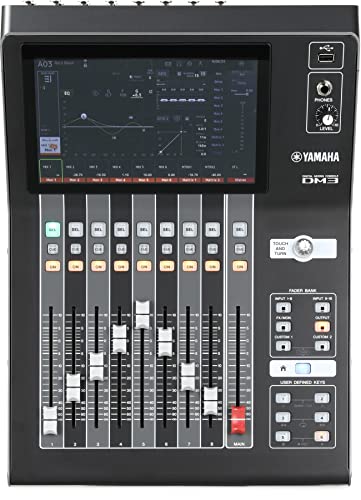
Yamaha DM3
Bands, small venues and project studios that want a compact 96 kHz digital console that doubles as an 18x18 USB recording interface.
Read the Yamaha DM3 review →Questions Buyers Ask
Audient iD44 MKII
See the current listing, price and included accessories.
About This Review
Mandrillis Team
The Mandrillis editorial team researches and compares audio and music gear using manufacturer documentation, verified specs and real buyer feedback, so you can make a confident purchase without wading through marketing claims.
Read our full research methodology.