Studio Gear Review
Behringer ECM8000 Review: Flat Omni Measurement Mic
The Behringer ECM8000 is a budget condenser microphone marketed for measurement and recording. Its listing highlights a flat frequency response and omnidirectional pattern, but key specs like sensitivity and included accessories are not published. This review examines what the listing states and what buyers should verify before purchase.
Our Verdict
Research Score 70/100The Behringer ECM8000 is a niche tool for room measurement and flat-response recording. The listing makes strong claims about an ultra-linear condenser design and omnidirectional pattern, and the wide phantom power range is convenient. However, the absence of published frequency response graphs, sensitivity, max SPL, and included accessories makes it hard to evaluate fully from the product page alone. On paper it suits users who already own an audio interface and need an inexpensive reference microphone. For those users, it may be a practical buy. For anyone needing a vocal stage mic or a plug-and-play USB mic, this is not the right choice.
Editorial research score based on published specifications and documented features, not a customer rating or lab test.

Behringer
Behringer ECM8000 Measurement Microphone
Best for: Room measurement, room equalization, and recording tasks where a flat omnidirectional condenser microphone is useful.
Skip it if: You need a mic with published frequency response, sensitivity, and included accessories or you need a USB plug-and-play microphone.
Check Price on AmazonWe may earn a commission at no extra cost to you.
Listing verified: October 2026
Who Should Buy It
Buy it if
- Home studio owners who want a budget measurement microphone for room correction
- Live sound engineers who need an omnidirectional reference mic for system tuning
- Recordists who need a neutral condenser for capturing room ambience or instruments
- Buyers who already have an audio interface with phantom power
Skip it if
- You need a cardioid mic for stage vocals or untreated room isolation
- You want a USB microphone that plugs directly into a computer
- You require complete published specifications before purchasing
Key Specifications
| Type | Condenser microphone |
| Polar pattern | Omnidirectional |
| Frequency response | Not published in listing |
| Connection | Not published in listing |
| Phantom power | +15 to +48 V |
| Max SPL or sensitivity | Not published in listing |
| Controls | Not published in listing |
| Mount and stand | Not published in listing |
| Weight | Not published in listing |
| Included accessories | Not published in listing |
Overview
The Behringer ECM8000 is a small condenser microphone positioned as an ultra-linear tool for measurement and recording. The product listing highlights its use for room equalization, studio recording, and live applications. It is marketed as having an exceptionally flat frequency response and a true omnidirectional pattern. These claims place it in the category of reference and measurement microphones rather than general-purpose stage mics.
This product listing is short on hard numbers. It does not publish a frequency response graph, sensitivity figure, maximum SPL rating, or even the physical output connection type. Buyers know it is a condenser microphone that works with phantom power from +15 to +48 V, but many other specs remain unstated. This review focuses on what the listing says, what it omits, and how the ECM8000 fits into typical use cases.
Sound Quality
On paper, the ECM8000 promises an ultra-linear sound with high resolution. The listing claims an exceptionally flat frequency response, which is desirable for measurement microphones because it means the mic should capture sound without adding tonal coloration. For room equalization, that flatness helps software analyze the actual room response rather than the microphone's own curve.
However, the listing does not provide a frequency response graph or any numerical range such as 20 Hz to 20 kHz. Without that data, buyers cannot verify how flat the microphone really is. Compared to a Shure SM58, which is known for a tailored vocal presence, the ECM8000 is designed for neutrality. But the published information is too limited to confirm its performance claims.
For recording, a flat omnidirectional condenser can capture room ambience and instruments with a natural tone, but it will also pick up more room noise than a cardioid. Buyers report using it for measurement more than for close-miked vocals, which makes sense given its omnidirectional design. The sound quality, therefore, depends heavily on the application and the acoustic environment.
Pickup Pattern and Noise Handling
The ECM8000 uses a true omnidirectional polar pattern, according to the listing. That means it picks up sound equally from all directions. This is useful for measurement because you want the microphone to hear the room's response from every angle. It is also useful for capturing room ambience or a group of instruments in a balanced way.
The downside is that an omnidirectional microphone does not reject sounds from the rear or sides. In a noisy room, it will pick up computer fans, HVAC hum, and reflections. The listing does not publish a self-noise specification, so buyers cannot evaluate how quiet the microphone is. Without a noise figure, it is hard to know whether the ECM8000 is suitable for very quiet sources or distant miking.
Compared to a cardioid mic like the Audio-Technica AT2020, the ECM8000 will capture more environmental sound. For measurement, that is often the point. For podcasting or untreated rooms, it can be a problem. The lack of published noise performance is a notable gap in the listing.
Build Quality
The listing does not describe the build materials, weight, or included mount for the ECM8000. Typically, measurement condenser microphones are small and lightweight, but without published data, no specific claims can be made here. The product name suggests a compact cylindrical design, but that is based on general knowledge rather than the listing.
Buyers should note that the listing omits whether a mic clip, stand adapter, or carrying case is included. This makes it hard to assess the value of the package. A microphone of this type often requires a separate clip or shock mount, but that is not stated. The absence of build details is a limitation of the product listing.
- Build material and finish are not stated in the listing
- Weight is not published
- Included mount or stand adapter is not listed
- No carrying case or protective pouch is mentioned
- Durability claims are not provided
Connectivity and Setup
The ECM8000 requires phantom power, and the listing states it can operate from +15 to +48 V. That wide range is convenient because many audio interfaces and mixers provide 48 V phantom power, while some portable recorders supply less. The microphone should work with standard equipment that provides at least +15 V.
The listing does not state the output connection type. Measurement condenser microphones like this typically use an XLR connector, but the listing does not confirm it. Buyers should assume a standard balanced connection but verify before purchase. Setup is likely straightforward with an audio interface and a measurement software such as Room EQ Wizard, though the listing does not mention any software.
For users coming from USB microphones like the Blue Yeti or Samson Q2U, the ECM8000 will require an interface or mixer with phantom power. It will not plug directly into a computer. That is an important setup consideration not highlighted in the listing's feature bullets.
Features, Controls and Extras
The ECM8000 has almost no listed features beyond its core function. There are no pad switches, low-cut filters, or polar pattern selectors described in the listing. This is common for measurement microphones, which prioritize flat response over built-in controls. The only flexibility mentioned is the wide phantom power voltage range.
No included accessories such as a calibration file, windscreen, or carrying case are mentioned in the listing. Some measurement microphones ship with individual frequency response calibration data, but that is not stated for the ECM8000. Without a calibration file, the flatness claim is harder to verify for precise measurement work.
Overall, the feature set is minimal. That is not necessarily a weakness for a budget measurement tool, but buyers who want extra controls or bundled accessories will need to look elsewhere. The main extra is the claimed ultra-linear design and omnidirectional pattern, which are the core selling points.
Use Cases: Vocals, Streaming, Podcasting and Instruments
The most obvious use case is room measurement and equalization. The ECM8000 is marketed for room equalization application, and its omnidirectional pattern helps capture how sound behaves in a space. With appropriate software, users can measure speaker response and adjust room treatment or EQ.
The listing also mentions high-resolution studio recording and live applications. In the studio, an omnidirectional condenser can capture room ambience, choirs, orchestras, or acoustic instruments with a natural balance. For live sound, it may be used as a measurement mic for tuning PA systems, though the listing does not specify that exact task.
For close-miked vocals or podcasting, an omnidirectional measurement mic is not ideal. It will pick up too much room sound and lacks the presence curve that flatters spoken or sung vocals. If you need a mic for untreated room podcasting, a cardioid dynamic like the Shure SM58 or a USB option like the Samson Q2U would be more practical.
Who Should Buy It
The ECM8000 is a sensible choice for home studio owners who want an inexpensive measurement microphone to analyze room acoustics. If you already own an audio interface with phantom power and use room correction software, this mic may fit your workflow.
It also suits live sound technicians who need a budget reference mic for system tuning and basic measurements. Recordists looking for a neutral omnidirectional condenser for ambience or ensemble recording may find it useful, provided they understand its limitations. Buyers who are comfortable with the missing specifications and just need a basic measurement tool will be the best match.
Alternatives Worth Considering
If you need a cardioid condenser for vocals or instruments, the Audio-Technica AT2020 is a common alternative. It offers a more directional pickup and is widely used in home studios. For spoken word or podcasting, a dynamic cardioid like the Shure SM58 or the Shure MV7 may provide better room rejection.
For those who want a plug-and-play USB microphone, the Blue Yeti or Samson Q2U offers direct computer connection and built-in headphone monitoring in some models. For a low self-noise large diaphragm condenser, the Rode NT1 is often considered, but it is a different class and purpose. None of these are measurement microphones, so the choice depends on whether you need flat omnidirectional capture or a more tailored recording tone.
If precise measurement is critical, some buyers look for microphones that include individual calibration files and published frequency response graphs. The ECM8000 listing does not provide those, so users who require documented accuracy should consider alternatives that publish full specifications.
Verdict
The Behringer ECM8000 is a budget condenser microphone with a very specific purpose. The listing sells it on flat response and omnidirectional pickup, and the wide phantom power range is convenient. However, the lack of published frequency response, sensitivity, max SPL, and connection details weakens the buying confidence from the product page alone.
It is best viewed as a low-cost measurement tool for users who already have an interface and know what to expect from a small omnidirectional condenser. If you need a no-fuss reference mic for room tuning, it may be worth trying. If you need a vocal mic or a USB mic, look elsewhere. The final score reflects the strong intended use case but limited documented specifications.
Strengths and Limitations
Strengths
- Ultra-linear condenser design for measurement and recording
- True omnidirectional polar pattern
- Works with a wide phantom power range from +15 to +48 V
- Claimed exceptionally flat frequency response
- Suitable for room equalization and studio recording
Limitations
- Listing does not publish frequency response graph or numbers
- No sensitivity or maximum SPL specifications
- Connection type not stated in the listing
- Included accessories and mount are not described
- Requires phantom power, so no direct USB connection
How We Scored It
Scores reflect published specifications, documented features and value against the alternatives below. They are editorial research scores, not laboratory measurements.
Alternatives to Consider

Shure MOTIV MV51 USB Condenser Microphone
Existing Shure MOTIV MV51 owners who need a replacement MicroB to USB-C cable and do not require microphone specifications.
Read the Shure MOTIV MV51 USB Condenser Microphone review →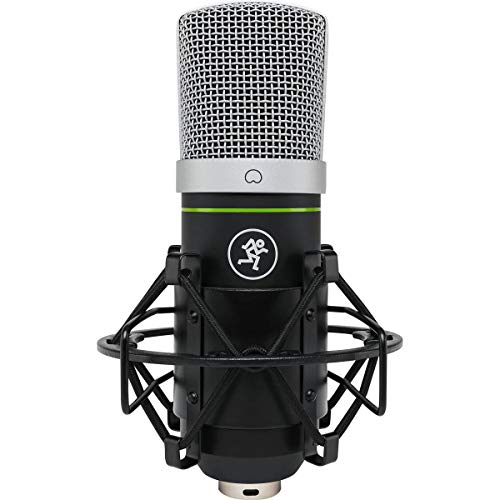
Mackie EM 91CU USB Condenser Microphone
Budget-conscious creators who need a simple USB microphone for podcasting, streaming or computer voice recording without an audio interface.
Read the Mackie EM 91CU USB Condenser Microphone review →
Behringer CB100 GUITAR Condenser Microphone for
Acoustic guitar players who need a budget clip-on condenser microphone for instrument amplification or recording.
Read the Behringer CB100 GUITAR Condenser Microphone for review →Questions Buyers Ask
Behringer ECM8000 Measurement Microphone
See the current listing, price and included accessories.
About This Review
Mandrillis Team
The Mandrillis editorial team researches and compares audio and music gear using manufacturer documentation, verified specs and real buyer feedback, so you can make a confident purchase without wading through marketing claims.
Read our full research methodology.