Studio Gear Review
Lauten Audio LA-220 V2 Review: Filtered FET Condenser
The Lauten Audio LA-220 V2 is a large-diaphragm FET condenser with a 1.25 inch capsule, built-in highpass and lowpass filters, and a transformer-balanced output. This research review covers what the listing confirms and the frequency response it leaves unstated.
Our Verdict
Research Score 72/100The Lauten Audio LA-220 V2 is a focused cardioid FET condenser built around a sizable 1.25 inch pressure gradient capsule, with genuinely useful onboard filtering, a 120Hz highpass and a 12kHz lowpass, plus a transformer-balanced output for a robust signal path. That combination gives engineers real tonal shaping tools built directly into the microphone rather than needing outboard processing. The listing does not state frequency response, sensitivity or phantom power voltage, so buyers who need those details in writing should check Lauten Audio's own documentation. At a lower mid-range price tier, this is a sensible choice for engineers who want onboard filtering without needing pattern switching flexibility.
Editorial research score based on published specifications and documented features, not a customer rating or lab test.
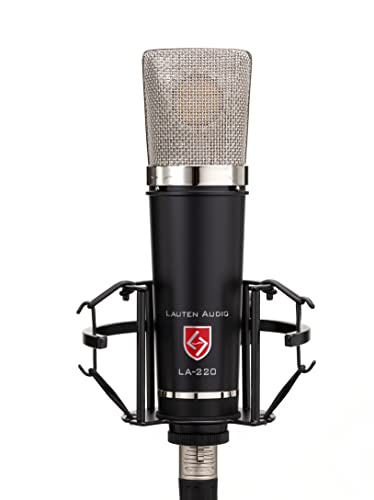
Lauten Audio
Lauten Audio LA-220 V2
Best for: Studio engineers who want a FET condenser with a sizable 1.25 inch capsule, a transformer-balanced output, and built-in highpass and lowpass filtering, at a lower mid-range price tier.
Skip it if: You need a confirmed numeric frequency response or sensitivity figure before purchase.
Check Price on AmazonWe may earn a commission at no extra cost to you.
Listing verified: November 2026
Who Should Buy It
Buy it if
- Studio engineers who want built-in highpass and lowpass filtering rather than relying on software EQ
- Buyers who value a transformer-balanced output for a cleaner signal path
- Producers who want a sizable 1.25 inch capsule for a fuller, more sensitive capture
- Buyers comfortable with a single fixed cardioid pattern rather than needing pattern switching
Skip it if
- You need multiple switchable polar patterns for different recording techniques
- You need confirmed frequency response and sensitivity figures before purchase
- You need confirmed included accessories such as a shockmount before buying
Key Specifications
| Type | Large-diaphragm FET condenser microphone with a 1.25 inch pressure gradient capsule |
| Polar pattern | Cardioid |
| Frequency response | Not published in listing as a specific numeric range |
| Connection | Transformer-balanced output |
| Phantom power | Not published in listing as a specific voltage figure |
| Max SPL or sensitivity | Not published in listing |
| Controls | A 120Hz highpass filter and a 12kHz lowpass filter |
| Mount and stand | Not published in listing |
| Weight | Not published in listing |
| Included accessories | Not published in listing |
Overview
The Lauten Audio LA-220 V2 is a large-diaphragm FET condenser microphone built around a 1.25 inch pressure gradient capsule, a notably sizable capsule dimension that the listing states directly rather than leaving as a vague large-diaphragm claim.
Rather than leaning on pattern variety, this listing emphasizes two specific onboard features, a transformer-balanced output and a pair of filters, a 120Hz highpass and a 12kHz lowpass, giving engineers genuine tonal shaping control built directly into the microphone.
Lauten Audio has built a reputation in the market for offering tube and FET condenser microphones aimed at project and professional studios, and this specific model's combination of a fixed cardioid pattern and dual filtering suggests a design intended for a specific, well defined use case rather than maximum general-purpose flexibility.
The transformer-balanced output in particular ties this microphone to a design philosophy that values signal robustness and a touch of harmonic coloration from the transformer itself, rather than a transformerless, maximally clean signal path.
Sound Quality
No frequency response range, sensitivity figure or self-noise specification is published in this listing, which is a meaningful gap for buyers trying to judge tonal character before committing to a purchase.
The 1.25 inch pressure gradient capsule is a specific, sizable dimension, generally associated with a fuller, more sensitive capture than a smaller capsule design, though the listing does not provide a numeric frequency response curve to confirm the resulting tonal balance.
The transformer-balanced output adds a further layer of coloration, since transformers are widely recognized in audio engineering for adding subtle harmonic character to a signal passing through them, suggesting this microphone is voiced for a slightly warmer, more harmonically rich sound rather than a strictly transparent, clinical capture.
Buyers who need a specific, confirmed frequency response curve or sensitivity rating to compare directly against another microphone's published specification should check Lauten Audio's own documentation, since this listing's feature bullets do not provide that level of numeric detail.
Pickup Pattern and Noise Handling
The listing confirms a single, fixed cardioid polar pattern, meaning this microphone does not offer the pattern switching flexibility found on some other condensers in this product category.
A cardioid pattern is the most common choice for single microphone vocal and instrument recording, rejecting sound from directly behind the microphone while remaining sensitive to sound arriving from the front and, to a lesser degree, the sides.
The 120Hz highpass filter contributes directly to noise handling, letting an engineer remove low frequency rumble, handling noise or proximity effect buildup before it reaches the rest of the signal chain, which is especially useful on a basic desk mounted stand where vibration can otherwise travel upward directly into the capsule itself.
Build Quality
The listing does not state chassis dimensions, weight or body material for this microphone, leaving physical build details largely unaddressed beyond the general FET condenser classification and capsule size.
The transformer-balanced output is itself a build quality signal of sorts, since including a transformer in the output stage is a deliberate engineering choice that adds cost and complexity compared with a simpler transformerless output design.
Buyers who want confirmed chassis weight, body material or finish details before purchase should check Lauten Audio's own product page or specification sheet, since none of that information is present in the available listing data for this particular model.
- Large-diaphragm FET condenser design
- 1.25 inch pressure gradient capsule
- Fixed cardioid polar pattern
- 120Hz highpass, 12kHz lowpass filters
- Transformer-balanced output
Connectivity and Setup
The listing confirms a transformer-balanced output, which generally contributes to a more robust signal over longer cable runs and can offer some resistance to electrical interference compared with an unbalanced or transformerless design.
Phantom power requirements are not addressed with a specific voltage figure in the listing, which matters for buyers confirming compatibility with their existing interface or mixer before adding this microphone to their signal chain.
Setup for this microphone is otherwise straightforward, connecting via a standard microphone cable to a phantom powered input, with the onboard filters available to engage as needed for a given source.
Buyers already running other transformer-balanced condensers on their current interface should expect no unusual compatibility surprises, though confirming the exact phantom power voltage directly with Lauten Audio remains good practice given how little this listing states.
Features, Controls and Extras
The 120Hz highpass and 12kHz lowpass filters are genuinely useful onboard features, letting an engineer remove unwanted low frequency rumble or tame excessive high frequency harshness directly at the microphone before the signal reaches an interface or mixer.
The transformer-balanced output doubles as both a sound quality feature and a practical connectivity feature, contributing tonal character while also supporting a more robust signal path for longer cable runs.
No included accessories, such as a shockmount or carrying case, are itemized in the listing, so buyers should budget for potentially needing to source those separately if required.
Use Cases: Vocals, Streaming, Podcasting and Instruments
A fixed cardioid FET condenser with built-in filtering like this one is well suited to vocal recording in a home or project studio, where the highpass filter can help manage proximity effect or room rumble directly at the source.
Instrumentalists recording acoustic sources at a fairly consistent, close distance may also find this a solid choice, though the lack of pattern switching means it is less adaptable to room miking or distant capture techniques than a multi-pattern condenser.
Podcasters and streamers considering this microphone should weigh the studio condenser design and phantom power requirement against the added complexity compared with a simpler USB microphone, though the onboard filtering could be a genuine convenience for voice-focused recording.
Who Should Buy It
This microphone suits studio engineers and producers who want FET condenser character in a fixed cardioid design, along with onboard filtering that reduces the need for extensive software EQ afterward.
It is a weaker fit for buyers who need multiple switchable polar patterns for different recording techniques, or for buyers who need confirmed frequency response and sensitivity figures before purchase.
Buyers who specifically want a transformer-balanced output for its tonal and practical signal robustness benefits will find that feature clearly confirmed here, even where broader numeric specifications remain unaddressed.
Home studio owners who primarily record vocals from a consistent position, rather than needing flexible multi-pattern capability, are a particularly good match for this focused, single-pattern design.
Engineers who regularly patch outboard filtering into their signal chain for similar reasons will appreciate having the 120Hz and 12kHz options built directly into the microphone, simplifying a session's setup before any software processing begins.
Alternatives Worth Considering
Buyers who need multiple switchable polar patterns should look at a multi-pattern condenser instead of this fixed cardioid design.
Buyers who want a confirmed numeric frequency response and sensitivity specification published directly in the listing should compare this model against a competing condenser with fuller published data.
Buyers who do not need a transformer-balanced output or built-in filtering, and want the lowest possible price, might consider a simpler condenser without those specific features.
Buyers who want an included shockmount or carrying case as part of their purchase should look for a bundle listing that itemizes those accessories specifically.
Verdict
The Lauten Audio LA-220 V2 is a focused rather than flexible condenser, offering a single cardioid pattern backed by a sizable 1.25 inch capsule, genuinely useful onboard filtering, and a transformer-balanced output.
The unpublished frequency response and sensitivity figures are the main gap in this listing, and buyers who need those confirmed should check Lauten Audio's own documentation before relying on general FET condenser expectations.
For engineers who specifically want onboard filtering and a transformer-balanced signal path in a fixed cardioid design, this is a reasonable choice at its lower mid-range price tier.
Buyers who need pattern switching flexibility should look elsewhere in the broader condenser market, since this model's design does not offer that option according to the available listing data.
Taken together, the sizable capsule, dual filtering and transformer-balanced output make a coherent case for a microphone built around a specific, considered sound rather than maximum flexibility, which should appeal to engineers who already know what they want from a close-miked cardioid condenser.
Strengths and Limitations
Strengths
- Large-diaphragm FET condenser design with a 1.25 inch pressure gradient capsule
- Confirmed cardioid polar pattern
- 120Hz highpass and 12kHz lowpass filters built in
- Transformer-balanced output for a robust signal path
Limitations
- No stated frequency response, sensitivity or maximum SPL figures
- No stated phantom power voltage
- No stated included accessories such as a shockmount or case
- No stated microphone weight
How We Scored It
Scores reflect published specifications, documented features and value against the alternatives below. They are editorial research scores, not laboratory measurements.
Alternatives to Consider

Beyerdynamic M 160
Recording guitar amplifiers, drum overheads, strings and brass with a smooth, directional ribbon character.
Read the Beyerdynamic M 160 review →
Shure BLX288/SM58 Dual Vocal
Bands, worship teams and event companies that need two dependable wireless SM58 vocal channels in one simple package.
Read the Shure BLX288/SM58 Dual Vocal review →
Sennheiser XSW 1-835
Worship teams, schools and gigging duos who want two wireless e835 vocal channels with the simplest possible setup.
Read the Sennheiser XSW 1-835 review →Questions Buyers Ask
Lauten Audio LA-220 V2
See the current listing, price and included accessories.
About This Review
Mandrillis Team
The Mandrillis editorial team researches and compares audio and music gear using manufacturer documentation, verified specs and real buyer feedback, so you can make a confident purchase without wading through marketing claims.
Read our full research methodology.