Best Condenser Microphones: Eight Picks for Detailed, Sensitive Recording
This guide is for home and project studio owners, podcasters, streamers and musicians who want a condenser microphone sensitive enough to capture vocal and instrumental detail. The eight picks were pulled from 356 researched microphones and compared on sound quality, pickup pattern and noise handling, build quality, connectivity and setup, features and extras, and overall value, using only the specifications, pros, cons and best for notes published in each listing, so every claim below traces back to that documented data rather than outside assumptions about how any microphone actually performs.
Quick Answer
The best overall pick is the Audio-Technica AT4040, chosen for its true externally polarized condenser capsule, transformerless circuitry and high SPL capability at a lower mid-range price. The Sennheiser Neumann TLM 102 MT ties close behind for best value with a 144 dB maximum sound pressure level in a compact body. Creators who need wireless lavalier audio should look at the Rode GO III Gen 3, while engineers tracking instruments can choose the Se Electronics sE2200 for its switchable pads and low-cut filters. The Lewitt LCT441Flex is the budget pick for anyone wanting eight polar patterns in one capsule.
Why You Can Trust This Guide
We compared products using verified manufacturer specifications, available manuals and documentation, retailer listings, owner feedback, and editorial research.
We focus on measurable differences such as performance, compatibility, usability, build quality, features, and value.
Mandrillis presents editorial research as editorial research, not as laboratory testing, unless physical testing was actually performed.
Read our full research methodology.
Quick Picks
Comparison Table
| Model | Type | Polar pattern | Connection | Frequency response | Best For | Main Advantage | Score |
|---|---|---|---|---|---|---|---|
| Audio-Technica AT4040 | Large-diaphragm true condenser, externally polarized (DC bias) | Cardioid | Not published in listing | Not published in listing | Home and project studios that want one serious large-diaphragm condenser for vocals, acoustic instruments and loud sources alike. | True externally polarized condenser with a large diaphragm | 86/100 |
| Sennheiser Neumann TLM 102 MT | Large-diaphragm condenser, pressure gradient transducer | Cardioid | Not published in listing | Not published in listing (slight presence boost above 6 kHz stated) | Home and project studios that want one refined condenser for vocals, voice-over and loud instruments alike. | Large-diaphragm cardioid condenser with Neumann consistency | 85/100 |
| Rode GO III Gen 3 | Dual-channel 2.4 GHz digital wireless system with two clip-on transmitters, one receiver and two bundled omnidirectional lavalier condenser microphones | Built-in transmitter microphones not published in listing; bundled lavaliers are omnidirectional | Series IV 2.4 GHz digital with 128-bit encryption; locking 3.5 mm lavalier inputs on transmitters; TRRS input on receiver; USB-C; analog and digital device cables included | Not published in listing | Solo creators, interviewers and small video crews who need two wireless voices on one camera or phone with a safety recording on the transmitter. | Two transmitters and a dual-channel receiver in a compact kit | 83/100 |
| Se Electronics sE2200 | Large diaphragm cardioid condenser microphone with Class-A, fully discrete circuitry | Cardioid, fixed | Not published in listing as a specific connector type; a custom-built transformer is confirmed in the output stage | Not published in listing as a specific numeric range | Engineers who want a fixed-cardioid condenser with genuine Class-A discrete circuitry, a custom transformer, and a complete isolation accessory pack, at a lower mid-range price tier. | 1 inch large-diaphragm capsule with dual gold-sputtered diaphragms, individually tuned | 82/100 |
| Warm Audio WA-87 R2 | Large-diaphragm condenser microphone described as a faithful reproduction of the original vintage 87-style circuit | 3 switchable patterns: cardioid, figure-8 and omnidirectional | Not published in listing as a specific connector type | Not published in listing as a specific numeric range | Studio engineers who want a faithful vintage 87-style circuit reproduction with genuine discrete premium components, 3 switchable patterns. | Faithful reproduction of the original vintage 87-style circuit | 79/100 |
| Logitech G Blue Yeti 2 | USB condenser microphone with a redesigned three-capsule array | Multiple patterns auto-adjusted by the microphone; individual patterns not named in listing | USB to PC or Mac; 24-bit, 48 kHz | Not published in listing | Gamers and streamers who want a USB condenser that automatically manages levels, noise and pickup as they move and talk at a desk. | Redesigned three-capsule array recording at 24-bit, 48 kHz | 78/100 |
| Audio-Technica AT2020USB+ | Cardioid condenser USB microphone | Cardioid | USB output with onboard 16-bit, 44.1 or 48 kHz analog-to-digital converter | Not published in listing | Creators and home musicians who want a plug-in USB condenser with proper no-delay monitoring and a mix control for recording to backing tracks. | Proven AT2020 cardioid condenser capsule | 77/100 |
| Lewitt LCT441Flex | 1 inch true condenser microphone with a multi-pattern design | 8 types of directionality to choose from, including 3 reverse polar pattern options; specific pattern names are not individually itemized in the listing | Not published in listing as a specific connector type | Not published in listing | Engineers who want extensive polar pattern flexibility, including unusual reverse pattern options, in a 1 inch true condenser microphone with a complete included accessory package. | 1 inch true condenser capsule | 77/100 |
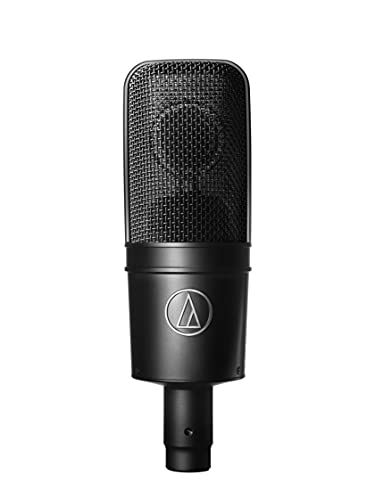
#1. Audio-Technica AT4040 (Best Overall)
Mandrillis Research Score: 86/100
This is an editorial research score, not a customer rating or laboratory test score.
Who Should Buy It
- Vocalists and voice-over artists recording in a treated or quiet room
- Project studios upgrading from an entry-level condenser
- Engineers who need one microphone for vocals, guitar amps and overheads
- Buyers who value published design detail over marketing gloss
Skip It If
- You record in an untreated, noisy space where a dynamic would be more forgiving
- You need figure-eight or omnidirectional patterns
- You want a USB connection without an audio interface
Pros
- True externally polarized condenser with a large diaphragm
- Transformerless circuitry for low-frequency clarity and fast transients
- Described as exceptionally low noise with wide dynamic range
- High-SPL capability suits loud sources as well as vocals
- Nickel-plated brass baffle for element stability
- Long-established studio reputation at a lower mid-range price
Cons
- Frequency response, self-noise and max SPL figures not published in listing
- Accessories, mount and connector not stated
- Cardioid only, no multi-pattern option
- Requires phantom power and a quiet room to shine
Key Specs
Type: Large-diaphragm true condenser, externally polarized (DC bias)
Polar pattern: Cardioid
Frequency response: Not published in listing
Connection: Not published in listing
Phantom power: Required for an externally polarized condenser; voltage not published in listing
Max SPL or sensitivity: Not published in listing; described as high-SPL capable with exceptionally low noise
Controls: Not published in listing
Mount and stand: Not published in listing
Weight: Not published in listing
Included accessories: Not published in listing
Why We Picked It
The Audio-Technica AT4040 earns the top spot as a true externally polarized large-diaphragm condenser with transformerless circuitry for low-frequency clarity and fast transients. Described as exceptionally low noise with a wide dynamic range and high-SPL capability, it suits both vocals and loud sources, backed by a nickel-plated brass baffle and a long-established studio reputation at a lower mid-range price.
Read our full Audio-Technica AT4040 review →
Check Price on AmazonWe may earn a commission at no extra cost to you.
Last verified: October 2026
Why This Product Ranks Best Overall
#2. Sennheiser Neumann TLM 102 MT (Best Value)

Mandrillis Research Score: 85/100
This is an editorial research score, not a customer rating or laboratory test score.
Who Should Buy It
- Vocalists stepping up from an entry-level condenser
- Voice-over artists and narrators wanting a clean, airy sound
- Multi-instrumentalists recording guitar cabinets, brass and acoustic sources
- Video creators who want a non-reflective studio microphone
Skip It If
- Your interface cannot supply phantom power
- You need a pad, low-cut switch or switchable patterns
- A dynamic would suit your noisy room better
Pros
- Large-diaphragm cardioid condenser with Neumann consistency
- 144 dB maximum sound pressure level handles loud sources
- Slight presence boost above 6 kHz flatters vocals
- Compact body fits tight spaces
- Matte black finish suits stage and video
Cons
- No pad or low-cut switch
- Connector, phantom power and self-noise not published in listing
- Accessories not confirmed
- Picks up more room sound than a dynamic
Key Specs
Type: Large-diaphragm condenser, pressure gradient transducer
Polar pattern: Cardioid
Frequency response: Not published in listing (slight presence boost above 6 kHz stated)
Connection: Not published in listing
Phantom power: Not published in listing
Max SPL or sensitivity: 144 dB maximum sound pressure level
Controls: Not published in listing
Mount and stand: Not published in listing
Weight: Not published in listing
Included accessories: Not published in listing
Why We Picked It
The Sennheiser Neumann TLM 102 MT ties for best value as a large-diaphragm cardioid condenser rated for a 144 dB maximum sound pressure level, handling loud sources without strain. A slight presence boost above 6 kHz flatters vocals, and a compact body in a matte black finish suits tight spaces and on-camera use despite no pad or low-cut switch being published.
Read our full Sennheiser Neumann TLM 102 MT review →
Check Price on AmazonWe may earn a commission at no extra cost to you.
Last verified: October 2026
Why This Product Ranks Best Value
#3. Rode GO III Gen 3 (Best for Vocals)

Mandrillis Research Score: 83/100
This is an editorial research score, not a customer rating or laboratory test score.
Who Should Buy It
- YouTube and documentary shooters recording two subjects on one camera
- Interviewers and podcasters who record on location with a phone or recorder
- Wedding and event videographers who want 32-bit float backup files
- Creators moving up from a wired lavalier to a flexible wireless kit
Skip It If
- You need more than seven hours of continuous runtime without recharging
- You want a handheld vocal microphone for a live stage
- You require published frequency response and sensitivity figures
Pros
- Two transmitters and a dual-channel receiver in a compact kit
- 32 GB onboard storage per transmitter with 32-bit float backup recording
- Approximately 853 ft range with 128-bit encrypted transmission
- GainAssist plus a 30 dB manual gain range
- Locking 3.5 mm inputs and two lavaliers included
- USB-C charging in about two hours with a charging hub
Cons
- Seven hour battery life and sealed cells mean no hot swap
- 2.4 GHz band can still struggle in extremely crowded venues
- Frequency response, SPL and weight not published in listing
- Receiver and transmitter microphone patterns not stated
Key Specs
Type: Dual-channel 2.4 GHz digital wireless system with two clip-on transmitters, one receiver and two bundled omnidirectional lavalier condenser microphones
Polar pattern: Built-in transmitter microphones not published in listing; bundled lavaliers are omnidirectional
Frequency response: Not published in listing
Connection: Series IV 2.4 GHz digital with 128-bit encryption; locking 3.5 mm lavalier inputs on transmitters; TRRS input on receiver; USB-C; analog and digital device cables included
Phantom power: Not applicable; internal rechargeable batteries, up to seven hours per charge
Max SPL or sensitivity: Not published in listing
Controls: GainAssist automatic output, manual gain with 30 dB range, pad, safety track and LED settings via Rode Central; headphone monitoring on receiver
Mount and stand: Clip-on transmitters and receiver; charging hub included
Weight: Not published in listing
Included accessories: Charging hub, three locking furry windshields, digital and analog cables, two lavalier microphones, microfiber cloth
Why We Picked It
The Rode GO III Gen 3 wins best for vocals as a dual-channel 2.4 GHz wireless system with two transmitters, a receiver and two bundled omnidirectional lavalier microphones. GainAssist automatic output, 32 GB onboard storage per transmitter with 32-bit float backup recording and roughly 853 ft of encrypted range suit creators who need two wireless voices on one camera.
Read our full Rode GO III Gen 3 review →
Check Price on AmazonWe may earn a commission at no extra cost to you.
Last verified: October 2026
Why This Product Ranks Best for Vocals
#4. Se Electronics sE2200 (Best for Instruments)

Mandrillis Research Score: 82/100
This is an editorial research score, not a customer rating or laboratory test score.
Who Should Buy It
- Engineers who want Class-A discrete circuitry rather than integrated circuit based designs
- Buyers who want a custom-built transformer for added depth and natural weight
- Producers who want both pad and low-cut filter options for flexible close-mic use
- Buyers who want a shockmount and integrated pop filter included rather than purchased separately
Skip It If
- You need multiple switchable polar patterns rather than a fixed cardioid design
- You need confirmed numeric frequency response and sensitivity figures before purchase
- You need a confirmed phantom power voltage specification in writing
Pros
- 1 inch large-diaphragm capsule with dual gold-sputtered diaphragms, individually tuned
- Class-A circuitry, fully discrete electronics, with no integrated circuits
- Custom-built transformer adds depth and weight without harshness
- Switchable minus 10dB and minus 20dB pads for loud sources
- Selectable 80Hz and 160Hz low-cut filters
- All-metal housing and shielding, with a shockmount and integrated metal pop filter included
Cons
- Fixed cardioid pattern only, with no pattern switching
- No stated numeric frequency response, sensitivity or maximum SPL figures
- No stated phantom power voltage
- No stated microphone weight
Key Specs
Type: Large diaphragm cardioid condenser microphone with Class-A, fully discrete circuitry
Polar pattern: Cardioid, fixed
Frequency response: Not published in listing as a specific numeric range
Connection: Not published in listing as a specific connector type; a custom-built transformer is confirmed in the output stage
Phantom power: Not published in listing as a specific voltage figure
Max SPL or sensitivity: Not published in listing as a specific numeric figure; switchable minus 10dB and minus 20dB pads are confirmed for handling high SPL sources
Controls: Switchable minus 10dB and minus 20dB attenuation pads, plus selectable 80Hz and 160Hz low-cut filters
Mount and stand: A shockmount and an integrated metal pop filter are included as an Isolation Pack
Weight: Not published in listing
Included accessories: A shockmount and an integrated metal pop filter are included
Why We Picked It
The Se Electronics sE2200 wins best for instruments with a 1 inch large-diaphragm capsule using dual gold-sputtered diaphragms and Class-A, fully discrete circuitry with no integrated circuits. Switchable minus 10dB and minus 20dB pads, selectable 80Hz and 160Hz low-cut filters and an included shockmount with an integrated metal pop filter suit loud instrument sources at a lower mid-range price.
Read our full Se Electronics sE2200 review →
Check Price on AmazonWe may earn a commission at no extra cost to you.
Last verified: November 2026
Why This Product Ranks Best for Instruments
#5. Warm Audio WA-87 R2 (Best Large Diaphragm)

Mandrillis Research Score: 79/100
This is an editorial research score, not a customer rating or laboratory test score.
Who Should Buy It
- Studio engineers who want a vintage 87-style circuit with genuine premium discrete components
- Buyers who want full pattern flexibility across cardioid, figure-8 and omnidirectional options
- Producers who want a built-in pad and highpass filter for handling loud or boomy sources
- Buyers comfortable with Warm Audio's accessible approach to classic microphone circuit reproduction
Skip It If
- You need a confirmed numeric frequency response or sensitivity figure before purchase
- You need confirmed included accessories such as a shockmount before buying
- You only need a single fixed pattern and do not value the added pattern flexibility
Pros
- Faithful reproduction of the original vintage 87-style circuit
- All discrete premium components, including a NOS Fairchild transistor and Wima and Nichicon capacitors
- 3 switchable polar patterns: cardioid, figure-8 and omnidirectional
- Minus 10dB pad and 80Hz highpass filter built in
Cons
- No stated frequency response, sensitivity or maximum SPL figures
- No stated phantom power voltage
- No stated included accessories such as a shockmount or case
- No stated microphone weight
Key Specs
Type: Large-diaphragm condenser microphone described as a faithful reproduction of the original vintage 87-style circuit
Polar pattern: 3 switchable patterns: cardioid, figure-8 and omnidirectional
Frequency response: Not published in listing as a specific numeric range
Connection: Not published in listing as a specific connector type
Phantom power: Not published in listing as a specific voltage figure
Max SPL or sensitivity: Not published in listing as a specific numeric figure; a switchable minus 10dB pad is confirmed for handling high SPL sources
Controls: 3-position polar pattern switch, a minus 10dB pad switch, and an 80Hz highpass filter switch
Mount and stand: Not published in listing
Weight: Not published in listing
Included accessories: Not published in listing
Why We Picked It
The Warm Audio WA-87 R2 wins best large diaphragm as a faithful reproduction of the original vintage 87-style circuit, built with discrete premium components including a NOS Fairchild transistor and Wima and Nichicon capacitors. Three switchable polar patterns, cardioid, figure-8 and omnidirectional, plus a minus 10dB pad and an 80Hz highpass filter give serious tonal flexibility in one microphone.
Read our full Warm Audio WA-87 R2 review →
Check Price on AmazonWe may earn a commission at no extra cost to you.
Last verified: November 2026
Why This Product Ranks Best Large Diaphragm
#6. Logitech G Blue Yeti 2 (Best Small Diaphragm)

Mandrillis Research Score: 78/100
This is an editorial research score, not a customer rating or laboratory test score.
Who Should Buy It
- Streamers who move and shout during energetic gaming sessions
- Creators in Logitech's G HUB ecosystem who want custom presets and display graphics
- Podcasters who prefer onboard processing to software chains
- Remote workers who want consistent levels without adjusting settings
Skip It If
- You record vocals or instruments and want manual control
- You need confirmed direct headphone monitoring and a mute button
- You prefer a simple microphone without a display or software
Pros
- Redesigned three-capsule array recording at 24-bit, 48 kHz
- Voice proximity sensor tracks a moving speaker within 2 meters
- Automatic gain, EQ and pattern adjustment 48,000 times a second
- Multi-level de-noiser for fans and keyboards
- 1.3-inch color LED display with five onboard presets
- Blue VOICE processing works on the hardware without software
Cons
- Polar patterns, frequency response and sensitivity not published in listing
- No mute button or headphone jack described in the listing
- Automation may feel unpredictable for music recording
- Weight, stand and accessories not stated
Key Specs
Type: USB condenser microphone with a redesigned three-capsule array
Polar pattern: Multiple patterns auto-adjusted by the microphone; individual patterns not named in listing
Frequency response: Not published in listing
Connection: USB to PC or Mac; 24-bit, 48 kHz
Phantom power: Not required; powered over USB
Max SPL or sensitivity: Not published in listing
Controls: 1.3-inch color LED display, five onboard presets, Blue VOICE processing on the microphone, further settings in G HUB software
Mount and stand: Not published in listing
Weight: Not published in listing
Included accessories: Not published in listing
Why We Picked It
The Logitech G Blue Yeti 2 wins best small diaphragm as a USB condenser with a redesigned three-capsule array recording at 24-bit, 48 kHz, automatically adjusting gain, EQ and pattern 48,000 times a second. A voice proximity sensor, a multi-level de-noiser and a 1.3-inch color LED display with five onboard presets suit gamers and streamers who move while talking.
Read our full Logitech G Blue Yeti 2 review →
Check Price on AmazonWe may earn a commission at no extra cost to you.
Last verified: October 2026
Why This Product Ranks Best Small Diaphragm
#7. Audio-Technica AT2020USB+ (Best Premium)

Mandrillis Research Score: 77/100
This is an editorial research score, not a customer rating or laboratory test score.
Who Should Buy It
- First-time podcasters and streamers recording at a computer
- Home musicians who sing or play along to backing tracks
- Remote workers upgrading from a headset microphone
- Voice-over hobbyists who want a simple, quiet setup
Skip It If
- Your room is noisy and a dynamic would reject it better
- You want 24-bit, 96 kHz conversion and USB-C
- You already own an interface and XLR microphones
Pros
- Proven AT2020 cardioid condenser capsule
- Headphone jack with no-delay monitoring
- Mix control blends microphone and computer audio
- High output headphone amplifier per the listing
- Simple USB setup on Windows and Mac
Cons
- 16-bit converter trails newer 24-bit USB microphones
- No mute button or gain control on the body
- Frequency response, sensitivity and weight not published in listing
- Picks up room noise more than a dynamic
Key Specs
Type: Cardioid condenser USB microphone
Polar pattern: Cardioid
Frequency response: Not published in listing
Connection: USB output with onboard 16-bit, 44.1 or 48 kHz analog-to-digital converter
Phantom power: Not required; powered over the USB connection
Max SPL or sensitivity: Not published in listing
Controls: Headphone volume control and mix control blending microphone signal with computer audio
Mount and stand: Not published in listing
Weight: Not published in listing
Included accessories: Not published in listing
Why We Picked It
The Audio-Technica AT2020USB+ earns best premium as a cardioid condenser USB microphone built around the proven AT2020 capsule, with a 16-bit, 44.1 or 48 kHz onboard converter. A headphone jack with no-delay monitoring, a mix control blending microphone and computer audio, and a high output headphone amplifier suit creators recording to backing tracks on a simple USB setup.
Read our full Audio-Technica AT2020USB+ review →
Check Price on AmazonWe may earn a commission at no extra cost to you.
Last verified: October 2026
Why This Product Ranks Best Premium
#8. Lewitt LCT441Flex (Best Budget)

Mandrillis Research Score: 77/100
This is an editorial research score, not a customer rating or laboratory test score.
Who Should Buy It
- Engineers who want to experiment with unusual reverse polar pattern options
- Buyers who want the broadest possible pattern selection in a single condenser microphone
- Producers who want a complete included package with shock mount, windscreen and pop filter
- Buyers who value a 1 inch true condenser capsule for a fuller, more sensitive capture
Skip It If
- You need confirmed numeric frequency response and sensitivity figures before purchase
- You only need a single fixed pattern and do not value extensive pattern switching
- You need the specific names of all 8 directionality types confirmed before buying
Pros
- 1 inch true condenser capsule
- 8 types of directionality for extensive pattern flexibility
- 3 reverse polar pattern options for creative experimentation
- Comes with a shock mount, windscreen and pop filter included
Cons
- Specific pattern names are not individually itemized in the listing
- No stated frequency response, sensitivity or maximum SPL figures
- No stated phantom power voltage
- No stated microphone weight
Key Specs
Type: 1 inch true condenser microphone with a multi-pattern design
Polar pattern: 8 types of directionality to choose from, including 3 reverse polar pattern options; specific pattern names are not individually itemized in the listing
Frequency response: Not published in listing
Connection: Not published in listing as a specific connector type
Phantom power: Not published in listing as a specific voltage figure
Max SPL or sensitivity: Not published in listing
Controls: A pattern selector across 8 directionality types, including 3 reverse polar pattern options
Mount and stand: A shock mount is included per the listing
Weight: Not published in listing
Included accessories: A shock mount, a windscreen, and a pop filter are included
Why We Picked It
The Lewitt LCT441Flex is the budget pick, a 1 inch true condenser offering 8 types of directionality including 3 reverse polar pattern options for creative experimentation. A shock mount, windscreen and pop filter are all included, giving engineers extensive pattern flexibility and a complete accessory package in one microphone despite no published frequency response or sensitivity figures.
Read our full Lewitt LCT441Flex review →
Check Price on AmazonWe may earn a commission at no extra cost to you.
Last verified: November 2026
Why This Product Ranks Best Budget
Which One Should You Buy?
These eight picks split between traditional studio condensers built for vocals and instruments, a dedicated wireless lavalier system, and USB condensers aimed at creators who want a simple plug and play setup. The Audio-Technica AT4040 and Sennheiser Neumann TLM 102 MT anchor the top of the studio group for general purpose recording, while the Se Electronics sE2200 and Warm Audio WA-87 R2 add switchable pads, filters and multiple polar patterns for instruments and tonal flexibility. The Rode GO III Gen 3 stands apart as a wireless lavalier kit built for video rather than a studio stand. The Logitech G Blue Yeti 2 and Audio-Technica AT2020USB+ suit anyone who wants USB simplicity, and the Lewitt LCT441Flex rounds out the group with the widest polar pattern selection at a lower price.
Buy the Audio-Technica AT4040 if...
you want one serious large-diaphragm condenser for vocals, acoustic instruments and loud sources alike, with transformerless circuitry, high SPL handling and exceptionally low noise at a lower mid-range price tier for a home or project studio.
Buy the Sennheiser Neumann TLM 102 MT if...
you want a refined cardioid condenser with a 144 dB maximum sound pressure level and a slight presence boost for vocals, in a compact body that fits tight recording spaces or on-camera setups without a pad switch.
Buy the Rode GO III Gen 3 if...
you are a solo creator or small video crew who needs two wireless voices on one camera, with GainAssist automatic gain, 32-bit float backup recording, locking lavalier inputs and roughly 853 ft of encrypted wireless range.
Buy the Se Electronics sE2200 if...
you want a fixed-cardioid condenser with genuine Class-A discrete circuitry, switchable pads and low-cut filters for loud instrument sources, with a complete shockmount and a sturdy metal pop filter isolation pack already included right in the box.
Buy the Warm Audio WA-87 R2 if...
you want a faithful vintage 87-style circuit reproduction with genuine discrete premium components, three switchable polar patterns and a built-in pad plus a highpass filter for genuinely flexible tracking across vocal and instrument sources alike.
Buy the Logitech G Blue Yeti 2 if...
you game or stream and want a USB condenser that automatically manages gain, EQ and pickup pattern as you move and talk, with a proximity sensor and a multi-level de-noiser for fans and background noise.
Buy the Audio-Technica AT2020USB+ if...
you want a plug-in USB condenser built around the proven AT2020 capsule, with no-delay headphone monitoring and a mix control for recording vocals over backing tracks without extra interface hardware or software setup at all.
Buy the Lewitt LCT441Flex if...
you want extensive polar pattern flexibility, including unusual reverse pattern options, in a 1 inch true condenser that ships with a shock mount, windscreen and pop filter already included in the box at a budget price.
Buying Guide
Polar Pattern and Pickup Shape
Polar pattern describes the directions from which a microphone picks up sound, and this guide ranges from fixed cardioid designs that favor sound from the front to a multi-pattern condenser offering eight types of directionality including reverse options. A fixed cardioid pattern suits straightforward vocal or instrument tracking with less to configure, while a switchable or multi-pattern design lets one microphone handle a solo vocal, a room recording or a figure-8 interview setup. Listings that do not name specific pattern types individually still confirm pattern count, so check both the number and whether each pattern is actually named before buying.
Phantom Power and Circuit Type
Externally polarized condensers, including several picks in this guide, require phantom power from an audio interface or mixer to operate at all, while USB condensers draw power directly from the computer connection instead. Circuit type also varies meaningfully, from transformerless designs valued for low-frequency clarity to genuine Class-A discrete circuitry or a custom-built transformer that adds tonal character. Several listings do not state a specific phantom power voltage, so when connecting a microphone to existing gear, confirm your interface actually supplies phantom power before assuming any externally polarized condenser will work.
Maximum SPL and Pad Switches
Maximum sound pressure level states how loud a source can get before a microphone distorts, and only a couple of listings in this guide publish a specific decibel figure, such as a 144 dB maximum. A switchable pad, commonly minus 10dB or minus 20dB, attenuates the signal before it reaches the capsule, letting a microphone handle louder instruments without distortion even when no maximum SPL number is published. If you plan to mic loud drums, amplifiers or brass instruments, prioritize a microphone with a stated pad switch over one with no attenuation option at all.
Diaphragm Size and Capsule Design
Diaphragm size affects both sensitivity and tonal character, and this guide includes large-diaphragm condensers measured at 1 inch alongside a small three-capsule USB array and a dual gold-sputtered diaphragm design tuned for instruments. A larger diaphragm generally captures more low-frequency detail and a warmer tone, while a smaller or multi-capsule design can offer more flexibility in pattern switching or automatic adjustment. Several listings describe capsule construction in detail, down to specific materials, while others leave diaphragm size entirely unpublished, so compare what is actually confirmed rather than assuming a standard size.
Connectivity: XLR, USB and Wireless
Connectivity decides how a microphone fits into an existing setup, and this guide spans traditional externally polarized condensers needing an XLR cable and phantom power, USB condensers that connect directly to a computer with no interface required, and a dedicated 2.4 GHz wireless lavalier system with encrypted transmission and onboard recording. A USB microphone suits a simple one person setup with no extra hardware, while an XLR condenser demands an interface or mixer but typically integrates more flexibly into a larger studio. Confirm which connection type matches your existing gear before comparing any other spec on this list.
Included Accessories and Isolation
Included accessories vary sharply across this category, from a complete shockmount, windscreen and pop filter bundle included with a couple of picks, to listings that publish no accessory information at all. A shockmount reduces handling noise and vibration reaching the capsule, while a pop filter cuts plosive bursts of air from vocal consonants, and skipping either accessory on a microphone that does not include one means budgeting separately for mounting and isolation hardware. Before buying, check whether a stand mount, cable or case is actually confirmed in the listing rather than assumed to be standard across this category.
How We Compared
- Each listing's published specifications, pros, cons and best for notes were compared side by side within the same scoring categories before any pick was ranked.
- Scores were split into weighted categories covering sound quality, pickup pattern and noise handling, build quality, connectivity and setup, features and value.
- Best Overall and Best Value titles went to the two highest scoring picks that also covered the widest range of buyer needs in this category.
- Any spec, feature or accessory not stated in a given listing was marked as not published rather than filled in with an assumption.
- The 356 researched microphones in this category were narrowed down by removing duplicate listings and models with too little published detail to score.
- Remaining rank labels, such as Best for Vocals or Best for Instruments, reflect the category where that specific pick scored highest relative to the rest.
FAQ
Related Guides

About This Guide
Mandrillis Team
The Mandrillis editorial team researches and compares audio and music gear using manufacturer documentation, verified specs and real buyer feedback, so you can make a confident purchase without wading through marketing claims.
Read our full research methodology.