Studio Gear Review
Warm Audio WA-87 R2 Review: Vintage Circuit Reproduction
The Warm Audio WA-87 R2 is a faithful reproduction of the original vintage 87-style circuit, with discrete premium components, 3 switchable patterns, and a built-in pad and filter. This research review covers what the listing confirms and the specs it leaves unstated.
Our Verdict
Research Score 79/100The Warm Audio WA-87 R2 makes a specific and checkable claim, a faithful reproduction of the original vintage 87-style circuit, and backs it with genuinely named component details, a NOS Fairchild transistor and Wima and Nichicon capacitors, rather than vague premium components language. Three switchable patterns, cardioid, figure-8 and omnidirectional, give this microphone real versatility, and the built-in minus 10dB pad and 80Hz highpass filter add practical tools for handling loud or boomy sources. The listing does not state frequency response, sensitivity or phantom power voltage. At a mid-range price tier, this is a well specified, versatile choice for engineers drawn to vintage circuit character.
Editorial research score based on published specifications and documented features, not a customer rating or lab test.

Warm Audio
Warm Audio WA-87 R2
Best for: Studio engineers who want a faithful vintage 87-style circuit reproduction with genuine discrete premium components, 3 switchable patterns.
Skip it if: You need a confirmed numeric frequency response or sensitivity figure before purchase, since this listing focuses on circuit design and components rather than numeric specifications.
Check Price on AmazonWe may earn a commission at no extra cost to you.
Listing verified: November 2026
Who Should Buy It
Buy it if
- Studio engineers who want a vintage 87-style circuit with genuine premium discrete components
- Buyers who want full pattern flexibility across cardioid, figure-8 and omnidirectional options
- Producers who want a built-in pad and highpass filter for handling loud or boomy sources
- Buyers comfortable with Warm Audio's accessible approach to classic microphone circuit reproduction
Skip it if
- You need a confirmed numeric frequency response or sensitivity figure before purchase
- You need confirmed included accessories such as a shockmount before buying
- You only need a single fixed pattern and do not value the added pattern flexibility
Key Specifications
| Type | Large-diaphragm condenser microphone described as a faithful reproduction of the original vintage 87-style circuit |
| Polar pattern | 3 switchable patterns: cardioid, figure-8 and omnidirectional |
| Frequency response | Not published in listing as a specific numeric range |
| Connection | Not published in listing as a specific connector type |
| Phantom power | Not published in listing as a specific voltage figure |
| Max SPL or sensitivity | Not published in listing as a specific numeric figure; a switchable minus 10dB pad is confirmed for handling high SPL sources |
| Controls | 3-position polar pattern switch, a minus 10dB pad switch, and an 80Hz highpass filter switch |
| Mount and stand | Not published in listing |
| Weight | Not published in listing |
| Included accessories | Not published in listing |
Overview
The Warm Audio WA-87 R2 is described in its listing as a faithful reproduction of the original vintage 87-style circuit, a specific and checkable claim that ties this microphone directly to one of the most referenced vintage condenser microphone designs in recording history.
What distinguishes this listing from a vague marketing claim is the level of component detail provided, naming all discrete premium components including a NOS, or new old stock, Fairchild transistor and Wima and Nichicon capacitors, giving buyers genuine, researchable reference points for the quality of components used in this reproduction.
Beyond circuit fidelity, the listing confirms three switchable polar patterns, cardioid, figure-8 and omnidirectional, along with a minus 10dB pad and an 80Hz highpass filter, giving this microphone genuine versatility beyond simply replicating a vintage tonal character.
Warm Audio has built its reputation specifically around offering accessible reproductions of classic, often expensive vintage microphone designs, and this particular listing's level of component detail suggests a serious attempt at circuit fidelity rather than a loosely inspired, budget alternative.
Sound Quality
No frequency response range, sensitivity figure or self-noise specification is published in this listing, which is a gap worth noting even though the circuit reproduction claim itself carries real weight given the specific component details provided.
The original vintage 87-style circuit this microphone reproduces is widely known in the recording industry for a smooth, flattering vocal character with a notable presence boost, and a faithful reproduction claim backed by matching discrete components suggests this microphone aims to capture that same general tonal signature.
The inclusion of a NOS Fairchild transistor specifically is a meaningful detail, since using genuine new old stock components rather than modern equivalents is a deliberate and often more costly choice manufacturers make specifically to match a vintage circuit's original electrical characteristics as closely as possible.
Buyers who need a specific, confirmed frequency response curve or sensitivity rating to compare directly against another microphone's published specification should check Warm Audio's own documentation, since this listing's feature bullets focus on circuit and component fidelity rather than numeric detail.
Pickup Pattern and Noise Handling
The listing confirms three switchable polar patterns, cardioid, figure-8 and omnidirectional, giving this microphone genuine flexibility across a wide range of recording techniques rather than locking a buyer into a single fixed pattern.
This pattern range specifically supports more advanced stereo recording techniques, such as mid-side recording using the figure-8 pattern, alongside standard single-source cardioid recording and ambient or room capture using the omnidirectional setting.
The 80Hz highpass filter also contributes to noise handling, letting an engineer reduce low frequency rumble or proximity effect buildup directly at the microphone rather than needing to address it entirely in post-production.
Build Quality
The listing's emphasis on all discrete premium components, rather than integrated circuit shortcuts, suggests a build philosophy prioritizing component quality and circuit fidelity over cost cutting, consistent with the vintage reproduction framing of this listing.
Naming specific capacitor brands, Wima and Nichicon, alongside the NOS Fairchild transistor, gives buyers concrete, researchable component references rather than a vague premium components claim, which is relatively unusual detail for a microphone listing at this price tier.
Beyond circuit components, the listing does not state chassis dimensions, weight or body material, so buyers who want those specific physical details confirmed should check Warm Audio's own product page or specification sheet.
- Faithful vintage 87-style circuit reproduction
- NOS Fairchild transistor, Wima/Nichicon capacitors
- 3 switchable patterns: cardioid, figure-8, omnidirectional
- Minus 10dB pad
- 80Hz highpass filter
Connectivity and Setup
The listing does not state a specific connector type for this microphone, though large-diaphragm condenser microphones in this general category commonly use a standard balanced connector, a detail buyers should still confirm directly rather than assume.
Phantom power requirements are not addressed with a specific voltage figure in the listing, which matters for buyers confirming compatibility with their existing interface or mixer before adding this microphone to their signal chain.
Because connector type and phantom power voltage are both unconfirmed here, buyers planning a specific interface pairing should verify compatibility with Warm Audio's own documentation before finalizing a purchase around this particular listing.
Features, Controls and Extras
The three-pattern switch is a major functional feature, giving this microphone the flexibility to serve as a general-purpose studio workhorse across vocals, instruments and stereo recording techniques rather than a single-purpose design.
The minus 10dB pad switch is specifically useful for recording loud sources such as drum overheads or amplified instruments, reducing the signal level before it reaches the microphone's internal circuit to help prevent distortion.
The 80Hz highpass filter rounds out the onboard controls, giving an engineer a way to manage low frequency content directly at the source, which is particularly useful when working with sources prone to handling noise or significant proximity effect.
Use Cases: Vocals, Streaming, Podcasting and Instruments
The vintage 87-style circuit this microphone reproduces is historically associated with vocal recording, where its particular presence character has made the original design a long standing studio favorite for lead vocals across many genres.
Instrumentalists recording acoustic guitar, piano or other detailed sources will also benefit from the pattern flexibility and highpass filter, letting an engineer adapt the microphone's pickup characteristics to the specific instrument and room.
Podcasters and streamers considering this microphone should weigh its studio condenser design, requiring phantom power and an audio interface, against the added complexity compared with a simpler dedicated USB microphone, though the pattern flexibility here is a genuine advantage for multi-person podcast setups.
Who Should Buy It
This microphone suits studio engineers and producers who specifically want a faithful vintage circuit reproduction, backed by genuinely named premium components, along with practical pattern flexibility and built-in pad and filter controls.
It is a weaker fit for buyers who need a confirmed numeric frequency response or sensitivity figure before purchase, given how much this listing's detail centers on circuit and component fidelity rather than numeric specifications.
Engineers who specifically value the historical reputation of the original 87-style circuit for vocal recording will find this a reasonable and relatively affordable way to access that general tonal character.
Buyers building a single, versatile studio microphone capable of covering vocals, instruments and basic stereo recording techniques will find the three-pattern design a genuine practical advantage over a single-pattern alternative.
Buyers assembling a small locker of microphones on a limited budget will also appreciate that this single unit's pattern switching can reasonably substitute for owning several more narrowly specialized microphones.
Alternatives Worth Considering
Buyers who need a confirmed numeric frequency response and sensitivity specification published directly in the listing should compare this model against a competing condenser with fuller published data.
Buyers who do not need figure-8 or omnidirectional patterns, and only need cardioid, might find a simpler, single-pattern condenser a better value than this three-pattern design.
Buyers who want included accessories such as a shockmount or case confirmed as part of the purchase should look for a bundle listing that itemizes those items specifically.
Buyers who want the original vintage microphone this circuit reproduces, rather than a modern reproduction, would need to look at the considerably more expensive vintage original or a different manufacturer's reproduction entirely.
Verdict
The Warm Audio WA-87 R2 backs up its vintage circuit reproduction claim with genuinely specific, named component details, a NOS Fairchild transistor and named capacitor brands, giving buyers real confidence in the seriousness of this reproduction.
Three switchable patterns and built-in pad and highpass filter controls add genuine practical versatility beyond the circuit fidelity claim alone, making this a well rounded choice for engineers wanting one flexible studio microphone.
The unpublished frequency response, sensitivity and phantom power figures are worth resolving with Warm Audio directly if those details matter to a buyer's specific technical comparison needs.
At a mid-range price tier, this microphone represents strong value for engineers drawn to vintage circuit character who also want modern pattern flexibility built into the same unit.
Buyers weighing this against a pricier, genuinely vintage original should remember that component level fidelity, while impressive, does not guarantee an identical measured result, and should treat this listing's claims as a strong, specific starting point rather than a substitute for independent comparison if that distinction matters to their work.
Strengths and Limitations
Strengths
- Faithful reproduction of the original vintage 87-style circuit
- All discrete premium components, including a NOS Fairchild transistor and Wima and Nichicon capacitors
- 3 switchable polar patterns: cardioid, figure-8 and omnidirectional
- Minus 10dB pad and 80Hz highpass filter built in
Limitations
- No stated frequency response, sensitivity or maximum SPL figures
- No stated phantom power voltage
- No stated included accessories such as a shockmount or case
- No stated microphone weight
How We Scored It
Scores reflect published specifications, documented features and value against the alternatives below. They are editorial research scores, not laboratory measurements.
Alternatives to Consider

Beyerdynamic M 160
Recording guitar amplifiers, drum overheads, strings and brass with a smooth, directional ribbon character.
Read the Beyerdynamic M 160 review →
Shure BLX288/SM58 Dual Vocal
Bands, worship teams and event companies that need two dependable wireless SM58 vocal channels in one simple package.
Read the Shure BLX288/SM58 Dual Vocal review →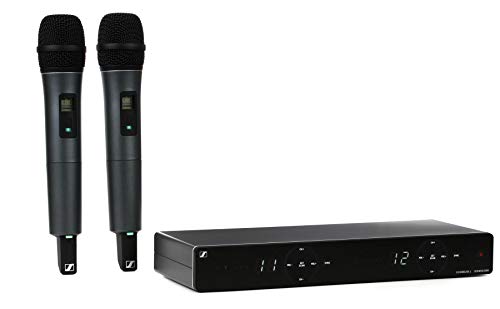
Sennheiser XSW 1-835
Worship teams, schools and gigging duos who want two wireless e835 vocal channels with the simplest possible setup.
Read the Sennheiser XSW 1-835 review →Questions Buyers Ask
Warm Audio WA-87 R2
See the current listing, price and included accessories.
About This Review
Mandrillis Team
The Mandrillis editorial team researches and compares audio and music gear using manufacturer documentation, verified specs and real buyer feedback, so you can make a confident purchase without wading through marketing claims.
Read our full research methodology.