Studio Gear Review
Neumann TLM 102 Review: Compact Transformerless Condenser
The Neumann TLM 102 is a compact, transformerless large-diaphragm cardioid condenser microphone. This research review covers what the listing confirms and the frequency response and sensitivity figures it leaves unstated.
Our Verdict
Research Score 68/100The Neumann TLM 102 trades on a focused, specific design, a transformerless, large-diaphragm cardioid condenser in a compact body, rather than on pattern switching or an extensive feature list. The transformerless circuit is a meaningful design choice, generally associated with a cleaner, lower distortion output than a transformer coupled design, and the confirmed compact size is a genuine practical advantage in tight recording spaces. The listing does not state frequency response, sensitivity, phantom power voltage or included accessories, so buyers who need those details in writing should check Neumann's own documentation. At a mid-range price tier, this is a reasonable choice for buyers drawn to the Neumann name.
Editorial research score based on published specifications and documented features, not a customer rating or lab test.

Neumann
Neumann TLM 102
Best for: Buyers who want a compact, transformerless Neumann cardioid condenser for vocals or instruments in tight studio spaces, at a mid-range price tier.
Skip it if: You need multiple switchable polar patterns or a confirmed numeric frequency response before purchase, since this listing states only type, pattern and circuit design.
Check Price on AmazonWe may earn a commission at no extra cost to you.
Listing verified: November 2026
Who Should Buy It
Buy it if
- Home and project studio owners who want Neumann build quality in a compact form
- Buyers who want a transformerless design for a clean, low-distortion signal path
- Engineers working in tight studio spaces where a compact microphone is an advantage
- Buyers drawn to the Neumann name who do not need every specification confirmed
Skip it if
- You need multiple switchable polar patterns for different recording techniques
- You need a confirmed frequency response and sensitivity figure before purchase
- You need confirmed included accessories such as a shock mount before buying
Key Specifications
| Type | Large-diaphragm condenser microphone with a transformerless circuit design |
| Polar pattern | Cardioid |
| Frequency response | Not published in listing |
| Connection | Not published in listing as a specific connector type |
| Phantom power | Not published in listing as a specific voltage figure |
| Max SPL or sensitivity | Not published in listing |
| Controls | Not published in listing |
| Mount and stand | Not published in listing |
| Weight | Not published in listing |
| Included accessories | Not published in listing |
Overview
The Neumann TLM 102 is described in its listing with four short feature bullets, confirming a cardioid condenser microphone with a large diaphragm, a transformerless circuit design, and a compact physical size, rather than a lengthy list of switchable features or pattern options.
That brevity reflects a genuinely focused product design philosophy, since the TLM 102 within Neumann's broader catalog has historically been positioned as a more compact, accessible entry point into the brand's large-diaphragm condenser lineup rather than a feature-laden flagship model.
Transformerless circuit design is a specific and meaningful engineering choice worth noting directly, since it generally trades the subtle coloration a transformer can add for a cleaner, more direct signal path with potentially lower distortion, a tradeoff some engineers specifically seek out.
Compact size is confirmed directly in the listing as well, which is a genuinely practical consideration for engineers working in smaller studio spaces or needing to position a microphone in a tight spot relative to an instrument or vocalist.
Sound Quality
No frequency response range, sensitivity figure or self-noise specification is published in this listing, which is a notable gap for buyers trying to judge tonal character before committing to a purchase, even accounting for Neumann's strong general reputation.
The transformerless design is the clearest sound quality signal in this listing, generally associated in the broader industry with a cleaner, more transparent signal path than a transformer coupled condenser, since there is no transformer in the circuit to add its own subtle harmonic coloration.
Large-diaphragm condensers in general tend to offer a fuller, more sensitive capture than small-diaphragm designs, which combined with the transformerless circuit suggests a microphone aiming for clarity and accuracy rather than vintage-style coloration, though this remains general context rather than a measured claim about this specific unit.
Buyers who need a specific, confirmed frequency response curve or sensitivity rating to compare directly against another microphone's published specification should check Neumann's own documentation, since this listing's feature bullets do not provide that level of numeric detail.
Pickup Pattern and Noise Handling
The listing confirms a cardioid polar pattern, which is the most common choice for single microphone vocal and instrument recording, rejecting sound from directly behind the microphone while remaining sensitive to sound arriving from the front and, to a lesser degree, the sides.
A cardioid pattern is generally well suited to home and project studios without extensive acoustic treatment, since it provides meaningfully better room noise rejection than an omnidirectional pattern.
The listing does not mention any additional switchable patterns, so buyers who need pattern flexibility for techniques requiring omnidirectional or figure-8 pickup should look elsewhere, since this appears to be a single, fixed pattern design based on the available listing data.
Build Quality
The listing confirms a compact physical size as a defining characteristic of this microphone, though it does not state exact dimensions or weight beyond that general description.
Neumann's general reputation for build quality and precision manufacturing is well established in professional audio, though this listing itself does not provide specific chassis material or construction details beyond the compact size claim.
Buyers who want confirmed chassis weight, body material or finish details before purchase should check Neumann's own product page or specification sheet, since none of that information is present in the available listing data for this particular model.
The combination of a compact body and a simplified, transformerless circuit suggests a deliberate engineering choice toward a smaller footprint rather than a scaled down, lower quality version of a larger flagship design, though buyers should still confirm this impression against official specifications.
- Large-diaphragm cardioid condenser
- Transformerless circuit design
- Compact size
Connectivity and Setup
The listing does not state a specific connector type for this microphone, though large-diaphragm condenser microphones in this general category commonly use a standard balanced connector, a detail buyers should still confirm directly rather than assume.
Phantom power requirements are not addressed in the listing, which matters for buyers confirming compatibility with their existing interface or mixer before adding this microphone to their signal chain.
Because connector type and phantom power voltage are both unconfirmed here, buyers planning a specific interface pairing should verify compatibility with Neumann's own documentation before finalizing a purchase around this particular listing.
Buyers who already run other condenser microphones from a similar category on their current interface are likely to face no real compatibility surprises here, though it remains good practice to confirm rather than assume given how little this specific listing states.
Features, Controls and Extras
No onboard controls, such as a pad switch for handling loud sources or a low frequency roll off filter, are mentioned in the listing, consistent with a more streamlined, compact design philosophy.
The transformerless circuit itself functions as the primary feature distinguishing this microphone from other condensers in a similar category, rather than any switchable control or added accessory.
Included accessories such as a shock mount, clip or case are not itemized in this listing, so buyers should budget for potentially needing to source basic mounting accessories separately if they are not included.
Buyers who already own a standard microphone stand clip or shock mount sized for a typical large-diaphragm condenser body may be able to reuse existing accessories, though confirming physical fit against this specific compact chassis is still a sensible precaution.
Use Cases: Vocals, Streaming, Podcasting and Instruments
A compact, cardioid, transformerless large-diaphragm condenser like this one is generally well suited to vocal recording and close miked acoustic instruments in a treated or semi-treated studio space, based on general knowledge of this microphone category.
The compact size specifically benefits instrumentalists who need to position a microphone in a tight spot, such as close miking a hi-hat or a smaller acoustic instrument where a larger microphone body might be awkward to place.
Podcasters and streamers considering this microphone should understand it is a studio condenser requiring phantom power and an audio interface, rather than a simple USB plug and play unit, which adds some setup complexity compared with a dedicated USB microphone.
Who Should Buy It
This microphone suits home and project studio owners who want genuine Neumann build quality in a compact form, along with the clean, transparent character generally associated with a transformerless circuit design.
It is a weaker fit for buyers who need multiple switchable polar patterns, or for buyers who need a confirmed frequency response curve or sensitivity figure in writing before purchase.
Engineers who specifically need to position a microphone in a tight space, such as inside a drum kit or close to a small acoustic instrument, will find the confirmed compact size a genuine practical advantage.
Buyers newer to studio recording who want a reputable brand name without committing to a large, expensive flagship model will also find this a reasonable entry point into Neumann's catalog.
Alternatives Worth Considering
Buyers who need multiple switchable polar patterns should look elsewhere in Neumann's catalog or at a competing multi-pattern large-diaphragm condenser instead of this single-pattern design.
Buyers who want a confirmed numeric frequency response and sensitivity specification published directly in the listing should compare this model against a competing condenser with fuller published data.
Buyers who specifically want transformer coupled coloration rather than a transformerless design should look at a different condenser microphone built around a transformer output stage.
Buyers on a tighter budget who do not need the Neumann name specifically might find a more affordable compact cardioid condenser from another manufacturer offering similar core features.
Verdict
The Neumann TLM 102 offers a focused, specific design, a compact, transformerless, cardioid large-diaphragm condenser, that trades feature breadth for a clean signal path and practical ease of positioning in tight spaces.
The unpublished frequency response, sensitivity and phantom power figures are the main gaps buyers should be aware of, and those who need those details confirmed should check Neumann's own documentation directly.
For engineers who value Neumann's reputation and want a compact, transformerless condenser without pattern switching complexity, this is a reasonable choice at its mid-range price tier.
Buyers who need pattern flexibility or a fully documented numeric spec sheet should weigh those priorities against this microphone's more streamlined, focused design before deciding.
Strengths and Limitations
Strengths
- Large-diaphragm cardioid condenser design
- Transformerless circuit, typically associated with a clean, low-distortion output
- Compact size, confirmed directly in the listing, for easier positioning in tight spaces
- Carries the Neumann name, a top-tier studio microphone brand
Limitations
- No stated frequency response, sensitivity or maximum SPL figures
- No stated phantom power voltage
- No stated included accessories or mount
- Single fixed cardioid pattern, with no pattern switching mentioned
How We Scored It
Scores reflect published specifications, documented features and value against the alternatives below. They are editorial research scores, not laboratory measurements.
Alternatives to Consider

Beyerdynamic M 160
Recording guitar amplifiers, drum overheads, strings and brass with a smooth, directional ribbon character.
Read the Beyerdynamic M 160 review →
Shure BLX288/SM58 Dual Vocal
Bands, worship teams and event companies that need two dependable wireless SM58 vocal channels in one simple package.
Read the Shure BLX288/SM58 Dual Vocal review →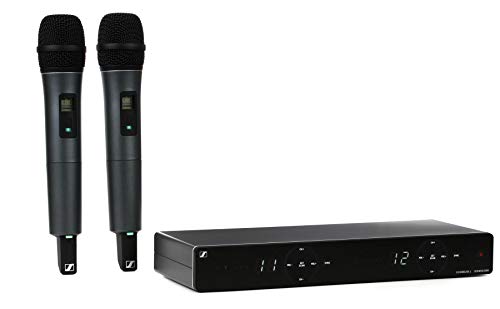
Sennheiser XSW 1-835
Worship teams, schools and gigging duos who want two wireless e835 vocal channels with the simplest possible setup.
Read the Sennheiser XSW 1-835 review →Questions Buyers Ask
Neumann TLM 102
See the current listing, price and included accessories.
About This Review
Mandrillis Team
The Mandrillis editorial team researches and compares audio and music gear using manufacturer documentation, verified specs and real buyer feedback, so you can make a confident purchase without wading through marketing claims.
Read our full research methodology.