Best Podcast Microphones: Eight Mics That Make Voices Sound Professional
This guide is for podcasters, streamers, and voice-over creators choosing a microphone for clear, professional sounding speech. Picks were narrowed from 356 researched microphones by comparing published polar patterns, sound quality claims, build quality, connectivity, and included accessories, then matching each model's pros and cons against its stated best use case. Dynamic and condenser designs, wired and wireless systems, and single and multi-microphone bundles are all represented, so the lineup covers a range of budgets and recording setups.
Quick Answer
The Shure SM7B is the best overall pick, a broadcast standard dynamic microphone with bass rolloff and presence boost switches plus a 20 foot XLR cable included. The Audio-Technica AT4040 is the best value alternative, a true condenser with low noise and high SPL handling for vocals and loud sources alike. Budget conscious buyers should consider the Shure BLX24/SM58, a wireless handheld system built around the familiar SM58 capsule with a complete kit. For a two-host setup, the Rode PodMic Dynamic Podcasting bundle supplies two microphones, two boom arms, and two headphones in one purchase.
Why You Can Trust This Guide
We compared products using verified manufacturer specifications, available manuals and documentation, retailer listings, owner feedback, and editorial research.
We focus on measurable differences such as performance, compatibility, usability, build quality, features, and value.
Mandrillis presents editorial research as editorial research, not as laboratory testing, unless physical testing was actually performed.
Read our full research methodology.
Quick Picks
Comparison Table
| Model | Type | Polar pattern | Connection | Controls | Best For | Main Advantage | Score |
|---|---|---|---|---|---|---|---|
| Shure SM7B | Dynamic (XLR) | N/A | N/A | N/A | podcasters and streamers who want a broadcast-quality voice | Rejects room noise exceptionally well | 87/100 |
| Audio-Technica AT4040 | Large-diaphragm true condenser, externally polarized (DC bias) | Cardioid | Not published in listing | Not published in listing | Home and project studios that want one serious large-diaphragm condenser for vocals, acoustic instruments and loud sources alike. | True externally polarized condenser with a large diaphragm | 86/100 |
| Sennheiser Neumann TLM 102 MT | Large-diaphragm condenser, pressure gradient transducer | Cardioid | Not published in listing | Not published in listing | Home and project studios that want one refined condenser for vocals, voice-over and loud instruments alike. | Large-diaphragm cardioid condenser with Neumann consistency | 85/100 |
| Electro-Voice RE20 | Large-diaphragm dynamic broadcast announcer microphone, bundled with a mic activator and an XLR cable | Cardioid | XLR, with a cable included in this bundle | A mid-bass tone-shaping switch built into the microphone | Broadcasters and podcasters who want the industry standard RE20 dynamic microphone ready to use with a bundled mic activator and cable, plus a built-in tone-shaping switch. | An industry standard dynamic cardioid microphone, a firm favorite for broadcasting, podcasting and sound engineering worldwide | 85/100 |
| Rode PodMic Dynamic Podcasting | Two-host podcasting bundle: two Rode PodMic dynamic microphones, two broadcast boom arms with integrated cables, two closed-back headphones | Cardioid | XLR; each boom arm carries an integrated 10 ft XLR cable | None described on the microphone; internal pop filter built in | Two-person podcasts and interview shows that want matching broadcast microphones, arms and monitoring headphones in one purchase. | Two PodMics, two boom arms and two headphones for a complete two-host setup | 82/100 |
| Se Electronics sE4100 | Large diaphragm true condenser microphone, described as the cardioid-only version of the sE4400 | Cardioid, fixed | Not published in listing as a specific connector type | Switchable 80Hz and 160Hz low-cut filters, plus switchable minus 10dB and minus 20dB attenuation pads | Engineers who want a precise, fixed-cardioid large diaphragm condenser with genuine dual-stage pad and filter control and all-metal construction, at a lower mid-range price tier. | Hand-crafted twin 1 inch gold-sputtered capsule, individually tuned in-house | 81/100 |
| Sennheiser EW-D 835-S | Digital UHF wireless handheld microphone set with a dynamic capsule | Not published in listing | Digital UHF wireless with 56 MHz switching bandwidth; XLR connectivity stated in the listing title | Mobile app for setup and operation, automated setup; on-body controls not published in listing | Venues and performers stepping up from analog wireless who want a clean digital handheld with app-based setup. | Digital link removes analog hiss and static bursts | 80/100 |
| Shure BLX24/SM58 | Single-channel UHF wireless handheld system with integrated SM58 dynamic capsule | Cardioid | Analog UHF wireless, H10 band (542 to 572 MHz); receiver output connectors not published in listing | QuickScan frequency selection on the BLX4 receiver; transmitter switch layout not published in listing | Singers, presenters and worship leaders who want the familiar SM58 sound on a cable-free handheld with simple setup. | Genuine SM58 capsule in a wireless handheld | 80/100 |
#1. Shure SM7B (Best Overall)
Mandrillis Research Score: 87/100
This is an editorial research score, not a customer rating or laboratory test score.
Who Should Buy It
- You want a broadcast-quality voice for podcasting or streaming
- You record in an untreated room and need strong noise rejection
- You have or plan to add a clean-gain boost like a Cloudlifter
Skip It If
- Your interface or preamp can't provide enough clean gain
- You want the most affordable entry point into XLR microphones
Pros
- Rejects room noise exceptionally well
- Smooth, broadcast-ready sound
- Built-in pop filter
- Industry standard for podcasting and streaming
Cons
- Needs a lot of clean gain, most interfaces need a boost like a Cloudlifter
- More expensive than entry mics
Key Specs
Type: Dynamic (XLR)
Connectivity: XLR, needs a strong preamp
Pattern: Cardioid
Why We Picked It
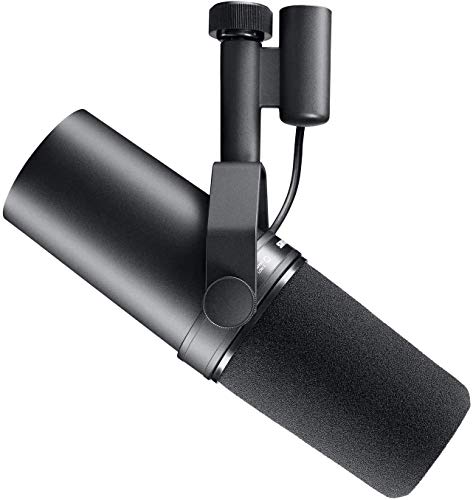
The Shure SM7B is the best overall pick because its cardioid pattern delivers a smooth, flat, wide-range sound with shock isolation, a built-in pop filter, and electromagnetic shielding against monitor hum. Bass rolloff and presence boost switches let it adapt to different voices, and a 20 foot XLR cable, windscreen, and two-year warranty are all included in the box.
Check Price on AmazonWe may earn a commission at no extra cost to you.
Last verified: September 2026
Why This Product Ranks Best Overall
#2. Audio-Technica AT4040 (Best Value)
Mandrillis Research Score: 86/100
This is an editorial research score, not a customer rating or laboratory test score.
Who Should Buy It
- Vocalists and voice-over artists recording in a treated or quiet room
- Project studios upgrading from an entry-level condenser
- Engineers who need one microphone for vocals, guitar amps and overheads
- Buyers who value published design detail over marketing gloss
Skip It If
- You record in an untreated, noisy space where a dynamic would be more forgiving
- You need figure-eight or omnidirectional patterns
- You want a USB connection without an audio interface
Pros
- True externally polarized condenser with a large diaphragm
- Transformerless circuitry for low-frequency clarity and fast transients
- Described as exceptionally low noise with wide dynamic range
- High-SPL capability suits loud sources as well as vocals
- Nickel-plated brass baffle for element stability
- Long-established studio reputation at a lower mid-range price
Cons
- Frequency response, self-noise and max SPL figures not published in listing
- Accessories, mount and connector not stated
- Cardioid only, no multi-pattern option
- Requires phantom power and a quiet room to shine
Key Specs
Type: Large-diaphragm true condenser, externally polarized (DC bias)
Polar pattern: Cardioid
Frequency response: Not published in listing
Connection: Not published in listing
Phantom power: Required for an externally polarized condenser; voltage not published in listing
Max SPL or sensitivity: Not published in listing; described as high-SPL capable with exceptionally low noise
Controls: Not published in listing
Mount and stand: Not published in listing
Weight: Not published in listing
Included accessories: Not published in listing
Why We Picked It
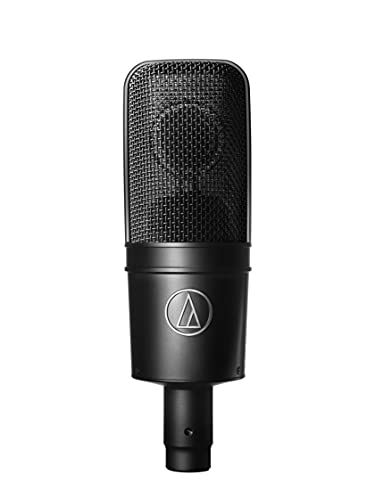
The Audio-Technica AT4040 earns best value as a true externally polarized condenser with a large diaphragm and transformerless circuitry for clear low end and fast transients. It is described as exceptionally low noise with a wide dynamic range and high SPL capability, and a nickel-plated brass baffle adds element stability, all at a lower mid-range price.
Read our full Audio-Technica AT4040 review →
Check Price on AmazonWe may earn a commission at no extra cost to you.
Last verified: October 2026
Why This Product Ranks Best Value
#3. Sennheiser Neumann TLM 102 MT (Best USB)

Mandrillis Research Score: 85/100
This is an editorial research score, not a customer rating or laboratory test score.
Who Should Buy It
- Vocalists stepping up from an entry-level condenser
- Voice-over artists and narrators wanting a clean, airy sound
- Multi-instrumentalists recording guitar cabinets, brass and acoustic sources
- Video creators who want a non-reflective studio microphone
Skip It If
- Your interface cannot supply phantom power
- You need a pad, low-cut switch or switchable patterns
- A dynamic would suit your noisy room better
Pros
- Large-diaphragm cardioid condenser with Neumann consistency
- 144 dB maximum sound pressure level handles loud sources
- Slight presence boost above 6 kHz flatters vocals
- Compact body fits tight spaces
- Matte black finish suits stage and video
Cons
- No pad or low-cut switch
- Connector, phantom power and self-noise not published in listing
- Accessories not confirmed
- Picks up more room sound than a dynamic
Key Specs
Type: Large-diaphragm condenser, pressure gradient transducer
Polar pattern: Cardioid
Frequency response: Not published in listing (slight presence boost above 6 kHz stated)
Connection: Not published in listing
Phantom power: Not published in listing
Max SPL or sensitivity: 144 dB maximum sound pressure level
Controls: Not published in listing
Mount and stand: Not published in listing
Weight: Not published in listing
Included accessories: Not published in listing
Why We Picked It
The Sennheiser Neumann TLM 102 MT stands out in this lineup for its compact, large-diaphragm cardioid condenser design and Neumann's reputation for consistency. A 144 dB maximum sound pressure level handles loud sources without distortion, and a slight presence boost above 6 kHz flatters vocals, all in a compact, matte black body that fits tight recording spaces.
Read our full Sennheiser Neumann TLM 102 MT review →
Check Price on AmazonWe may earn a commission at no extra cost to you.
Last verified: October 2026
Why This Product Ranks Best USB
#4. Electro-Voice RE20 (Best XLR)

Mandrillis Research Score: 85/100
This is an editorial research score, not a customer rating or laboratory test score.
Who Should Buy It
- Broadcasters and podcasters who want the industry standard RE20 with no additional accessory shopping
- Buyers who want a mic activator included to help drive this dynamic microphone with sufficient gain
- Voice talent who want a built-in mid-bass tone-shaping switch for on the fly tonal adjustment
- Buyers who value Variable-D design for minimizing proximity effect during close-in voice work
Skip It If
- You already own an RE20 and only need a mic activator or XLR cable separately
- You need a confirmed numeric frequency response or sensitivity figure before purchase
- You need the mic activator's specific power requirement confirmed before buying
Pros
- An industry standard dynamic cardioid microphone, a firm favorite for broadcasting, podcasting and sound engineering worldwide
- Variable-D design minimizes proximity effect for close-in voice work
- Heavy-duty internal pop filter and internal element shock mount built in
- Mid-bass tone-shaping switch to alter vocal tone on the go
- Bundle includes a mic activator and XLR cable, ready to use out of the box
Cons
- No stated numeric frequency response, sensitivity or maximum SPL figures
- No stated power requirement for the included mic activator
- No stated microphone weight
- As a dynamic microphone, it may still benefit from additional clean gain even with the bundled activator
Key Specs
Type: Large-diaphragm dynamic broadcast announcer microphone, bundled with a mic activator and an XLR cable
Polar pattern: Cardioid
Frequency response: Not published in listing as a specific numeric range
Connection: XLR, with a cable included in this bundle
Phantom power: Not required for the microphone itself; the included mic activator is an inline preamp booster whose own power requirement is not stated in the listing
Max SPL or sensitivity: Not published in listing as a specific numeric figure
Controls: A mid-bass tone-shaping switch built into the microphone
Mount and stand: An internal element shock mount is built in, along with a heavy-duty internal pop filter
Weight: Not published in listing
Included accessories: A mic activator and an XLR cable are included in this bundle
Why We Picked It
The Electro-Voice RE20 takes best XLR for being an industry standard dynamic cardioid microphone with a Variable-D design that minimizes proximity effect on close-in vocals. A heavy-duty internal pop filter, built-in shock mount, and a mid-bass tone-shaping switch are built into the mic, and the bundle adds a mic activator and XLR cable so it is ready to use immediately.
Read our full Electro-Voice RE20 review →
Check Price on AmazonWe may earn a commission at no extra cost to you.
Last verified: November 2026
Why This Product Ranks Best XLR
#5. Rode PodMic Dynamic Podcasting (Best Dynamic)

Mandrillis Research Score: 82/100
This is an editorial research score, not a customer rating or laboratory test score.
Who Should Buy It
- Co-hosted podcasts setting up a permanent two-seat studio
- Interview shows that need a guest position ready at all times
- Streamers moving from a USB microphone to an XLR dynamic on a boom
- Small offices and schools building a simple voice recording room
Skip It If
- You are a solo podcaster who only needs one microphone
- You do not own an interface or mixer with XLR inputs
- You prefer a USB microphone with no additional gear
Pros
- Two PodMics, two boom arms and two headphones for a complete two-host setup
- Broadcast dynamic cardioid design with built-in internal pop filter
- Solid metal body built for daily use
- Boom arms route the XLR cable internally for a tidy desk
- 35 inch arm reach with silent internal springs
- Rode warranty with a one-year extension on registration
Cons
- Needs an audio interface or mixer with two XLR inputs and plenty of gain
- Frequency response, SPL and weight not published in listing
- Headphone specifications are not detailed
- Internal cables mean an arm failure takes the cable with it
Key Specs
Type: Two-host podcasting bundle: two Rode PodMic dynamic microphones, two broadcast boom arms with integrated cables, two closed-back headphones
Polar pattern: Cardioid
Frequency response: Not published in listing
Connection: XLR; each boom arm carries an integrated 10 ft XLR cable
Phantom power: Not required (dynamic)
Max SPL or sensitivity: Not published in listing
Controls: None described on the microphone; internal pop filter built in
Mount and stand: Two broadcast boom arms with internal springs, 35 inch reach and desk mount clamps
Weight: Not published in listing
Included accessories: Two broadcast arms with 10 ft integrated XLR cables, two desk clamps, two closed-back studio monitor headphones
Why We Picked It
The Rode PodMic Dynamic Podcasting bundle wins best dynamic for two-host shows by including two broadcast cardioid microphones, two boom arms with internal 10 foot XLR cables, and two closed-back headphones in a single purchase. The internal pop filter, solid metal bodies, and 35 inch arm reach make it a complete, tidy setup for interview style podcasts right out of the box.
Read our full Rode PodMic Dynamic Podcasting review →
Check Price on AmazonWe may earn a commission at no extra cost to you.
Last verified: October 2026
Why This Product Ranks Best Dynamic
#6. Se Electronics sE4100 (Best Condenser)

Mandrillis Research Score: 81/100
This is an editorial research score, not a customer rating or laboratory test score.
Who Should Buy It
- Engineers who want precise cardioid pickup with strong off-axis rejection for clean, direct capture
- Buyers who want both low-cut filtering and attenuation pads for flexible close-mic use
- Producers who want all-metal, die-cast construction for long-term durability
- Buyers who may want to add a matched stereo pair later for the same model line
Skip It If
- You need multiple switchable polar patterns rather than a fixed cardioid design
- You need confirmed numeric frequency response and sensitivity figures before purchase
- You need a confirmed phantom power voltage specification in writing
Pros
- Hand-crafted twin 1 inch gold-sputtered capsule, individually tuned in-house
- Precise cardioid pickup with impressive off-axis rejection
- Switchable 80Hz and 160Hz low-cut filters
- Switchable minus 10dB and minus 20dB attenuation pads for handling loud sources
- All-metal construction: die-cast housing, spring steel grille, all-metal switches
- A matched stereo pair version is available for buyers who need two units
Cons
- No stated numeric frequency response, sensitivity or maximum SPL figures
- No stated phantom power voltage
- Fixed cardioid pattern only, with no pattern switching
- No stated microphone weight
Key Specs
Type: Large diaphragm true condenser microphone, described as the cardioid-only version of the sE4400
Polar pattern: Cardioid, fixed
Frequency response: Not published in listing as a specific numeric range
Connection: Not published in listing as a specific connector type
Phantom power: Not published in listing as a specific voltage figure
Max SPL or sensitivity: Not published in listing as a specific numeric figure; switchable minus 10dB and minus 20dB pads are confirmed for extending dynamic range
Controls: Switchable 80Hz and 160Hz low-cut filters, plus switchable minus 10dB and minus 20dB attenuation pads
Mount and stand: A shockmount is included per the listing
Weight: Not published in listing
Included accessories: A shockmount is included; a matched stereo pair version is also available separately
Why We Picked It
The Se Electronics sE4100 earns best condenser with a hand-crafted twin 1 inch gold-sputtered capsule, individually tuned in-house, for precise cardioid pickup and impressive off-axis rejection. Switchable 80Hz and 160Hz low-cut filters plus minus 10dB and minus 20dB pads give genuine dual-stage control over loud sources, and all-metal construction backs up its lower mid-range price.
Read our full Se Electronics sE4100 review →
Check Price on AmazonWe may earn a commission at no extra cost to you.
Last verified: November 2026
Why This Product Ranks Best Condenser
#7. Sennheiser EW-D 835-S (Best Premium)

Mandrillis Research Score: 80/100
This is an editorial research score, not a customer rating or laboratory test score.
Who Should Buy It
- Churches and theaters tired of analog wireless noise
- Corporate AV teams who want tablet-based monitoring
- Singers who prefer the Sennheiser 835 capsule sound
- Venues planning to scale to many channels
Skip It If
- You only need wireless occasionally and budget is tight
- You cannot verify the frequency variant for your region
- A wired e835 would serve your static use
Pros
- Digital link removes analog hiss and static bursts
- Mobile app and automated setup replace menus
- 56 MHz bandwidth with up to 90 channels
- XLR connectivity confirmed in the listing
- Respected 835 family dynamic capsule
Cons
- Band, range and battery life not published in listing
- Polar pattern not stated
- Included accessories unconfirmed
- Costs more than analog UHF alternatives
Key Specs
Type: Digital UHF wireless handheld microphone set with a dynamic capsule
Polar pattern: Not published in listing
Frequency response: Not published in listing
Connection: Digital UHF wireless with 56 MHz switching bandwidth; XLR connectivity stated in the listing title
Phantom power: Not published in listing
Max SPL or sensitivity: Not published in listing
Controls: Mobile app for setup and operation, automated setup; on-body controls not published in listing
Mount and stand: Not published in listing
Weight: Not published in listing
Included accessories: Not published in listing
Why We Picked It
The Sennheiser EW-D 835-S takes best premium with a digital UHF wireless link that removes analog hiss and static bursts from a handheld dynamic capsule. A mobile app with automated setup, 56 MHz switching bandwidth, and up to 90 channels give venues and performers a clean step up from analog wireless, even though band and battery details are not published.
Read our full Sennheiser EW-D 835-S review →
Check Price on AmazonWe may earn a commission at no extra cost to you.
Last verified: October 2026
Why This Product Ranks Best Premium
#8. Shure BLX24/SM58 (Best Budget)

Mandrillis Research Score: 80/100
This is an editorial research score, not a customer rating or laboratory test score.
Who Should Buy It
- Vocalists moving from a wired SM58 to wireless on a lower mid-range budget
- Churches, schools and small venues that want AA-powered, easy-to-maintain wireless
- Mobile DJs and event hosts who need one dependable announcement mic
- Bands running a handful of wireless channels who value interference-free scanning
Skip It If
- You need a microphone for streaming or podcasting at a fixed desk
- You want digital wireless with rechargeable packs and remote monitoring
- Your country does not permit operation on the H10 UHF band
Pros
- Genuine SM58 capsule in a wireless handheld
- Up to 14 hours from two AA batteries per the listing
- Approximately 300 ft line-of-sight range
- QuickScan makes first-time setup quick
- Complete kit with receiver, power supply and batteries
- Up to 12 compatible systems per band
Cons
- H10 band is region dependent and must be checked before buying
- Frequency response, weight and output connectors not published in listing
- Single channel only, no second handheld without another receiver
- Analog UHF with no rechargeable pack or app control
Key Specs
Type: Single-channel UHF wireless handheld system with integrated SM58 dynamic capsule
Polar pattern: Cardioid
Frequency response: Not published in listing
Connection: Analog UHF wireless, H10 band (542 to 572 MHz); receiver output connectors not published in listing
Phantom power: Not required (dynamic capsule, battery-powered transmitter)
Max SPL or sensitivity: Not published in listing
Controls: QuickScan frequency selection on the BLX4 receiver; transmitter switch layout not published in listing
Mount and stand: Microphone clip included; stand not included
Weight: Not published in listing
Included accessories: BLX4 single-channel receiver, BLX2 handheld transmitter, microphone clip, power supply, two AA batteries, user guide
Why We Picked It
The Shure BLX24/SM58 takes best budget as a wireless handheld system built around the genuine SM58 capsule, with up to 14 hours from two AA batteries and roughly 300 foot line-of-sight range. QuickScan frequency selection and a complete kit including receiver, power supply, and batteries make first-time wireless setup quick for singers and presenters.
Read our full Shure BLX24/SM58 review →
Check Price on AmazonWe may earn a commission at no extra cost to you.
Last verified: October 2026
Why This Product Ranks Best Budget
Which One Should You Buy?
Choosing among these eight microphones mostly comes down to connection type, voice character, and whether a second host or performer is part of the plan. The Shure SM7B and Electro-Voice RE20 are broadcast grade dynamic microphones that need a strong preamp but reward it with a smooth, controlled sound. The Audio-Technica AT4040, Sennheiser Neumann TLM 102 MT, and Se Electronics sE4100 are condensers that pick up more detail and room sound, suited to treated spaces. The Rode PodMic Dynamic Podcasting bundle is built specifically for two hosts, while the Shure BLX24/SM58 and Sennheiser EW-D 835-S trade cables for wireless freedom, one on a budget and one with a cleaner digital link for venues and performers. Matching microphone type to room treatment and recording style matters more here than chasing the highest score alone.
Buy the Shure SM7B if...
Buy the Shure SM7B if you want the broadcast standard dynamic microphone for podcasting and streaming, with bass rolloff and presence boost switches, shock isolation, and a 20 foot XLR cable included, as long as your interface has enough clean gain.
Buy the Audio-Technica AT4040 if...
Buy the Audio-Technica AT4040 if you want one serious large-diaphragm condenser for vocals and acoustic instruments, with low noise, high SPL handling, and transformerless circuitry, as long as your room is quiet enough for a condenser.
Buy the Sennheiser Neumann TLM 102 MT if...
Buy the Sennheiser Neumann TLM 102 MT if you want a compact large-diaphragm condenser with 144 dB of maximum SPL headroom and a presence boost above 6 kHz that flatters vocals and voice-over work in a tight recording space.
Buy the Electro-Voice RE20 if...
Buy the Electro-Voice RE20 if you want the industry standard broadcast dynamic microphone with Variable-D design for close voice work, a built-in pop filter and shock mount, and a bundled mic activator and XLR cable ready to use immediately.
Buy the Rode PodMic Dynamic Podcasting bundle if...
Buy the Rode PodMic Dynamic Podcasting bundle if you are recording a two-host or interview show and want matching microphones, boom arms, and monitoring headphones for both people in one purchase, plus an interface with two XLR inputs.
Buy the Se Electronics sE4100 if...
Buy the Se Electronics sE4100 if you want a precise fixed-cardioid large-diaphragm condenser with genuine low-cut filters and attenuation pads for handling loud sources, plus an all-metal build, at a lower mid-range price point that still delivers studio grade build quality.
Buy the Sennheiser EW-D 835-S if...
Buy the Sennheiser EW-D 835-S if you are stepping up from analog wireless and want a clean digital UHF link, app based automated setup, and a wide 56 MHz switching bandwidth with up to 90 available channels for venues.
Buy the Shure BLX24/SM58 if...
Buy the Shure BLX24/SM58 if you want the familiar SM58 sound on a cable-free handheld, with up to 14 hours from two AA batteries, roughly 300 foot range, and a complete kit of receiver, clip, and power supply at a budget price.
Buying Guide
Dynamic vs Condenser Microphones
Dynamic microphones, like the Shure SM7B and Electro-Voice RE20, use a simple moving coil design that rejects background noise well and needs no phantom power, making them forgiving in untreated rooms. Condenser microphones, such as the Audio-Technica AT4040 and Se Electronics sE4100, use an internally charged capsule that captures more detail and a wider frequency range, but they also pick up more room sound and require phantom power to operate. Choosing between the two often comes down to how treated the recording space is and how much gain the interface can supply.
Polar Pattern and Pickup Area
A microphone's polar pattern determines which direction it hears best. Every microphone in this guide uses a cardioid pattern, which picks up sound mainly from the front while rejecting noise from the sides and rear, a practical choice for one voice at a time in a typical room. The Se Electronics sE4100 is explicitly a fixed cardioid design with no switching, while others simply do not publish whether pattern switching is available. A tighter cardioid pattern generally helps keep room echo, computer fans, and other voices in a two-host setup out of each person's individual track.
Connection Type: XLR, USB, and Wireless
How a microphone connects determines what other gear is needed. XLR microphones, like the Shure SM7B and Electro-Voice RE20, need an audio interface or mixer with enough clean gain, especially for low output dynamic designs. Wireless systems such as the Shure BLX24/SM58 and Sennheiser EW-D 835-S remove cables entirely, trading that freedom for battery life and, in analog designs, region specific frequency bands that must be checked before buying. Checking what connection type a podcast setup already supports avoids buying a microphone that needs equipment not yet on hand.
Phantom Power Requirements
Condenser microphones need phantom power, usually 48 volts supplied through an XLR connection from a mixer or audio interface, to operate at all. The Audio-Technica AT4040 is described as requiring phantom power since it is an externally polarized condenser, and this applies to other condensers in this guide as well, even where the listing does not state an exact voltage. Dynamic microphones such as the Shure SM7B, Electro-Voice RE20, and the capsules inside the wireless handheld systems do not need phantom power, which simplifies setup for anyone without a mixer that supplies it.
Built-In Filters, Pads, and Tone Controls
Switches built into a microphone can shape tone without touching software. The Shure SM7B offers bass rolloff and presence boost switches, the Electro-Voice RE20 includes a mid-bass tone-shaping switch, and the Se Electronics sE4100 adds switchable 80Hz and 160Hz low-cut filters plus minus 10dB and minus 20dB attenuation pads for loud sources. Microphones without these controls rely entirely on interface or software EQ after recording, so a microphone with onboard shaping can save editing time for anyone who wants to adjust tone in the moment rather than afterward.
Included Accessories and Bundles
What ships alongside a microphone can change the real cost of getting started. The Shure SM7B includes a windscreen, a cover plate, and a 20 foot XLR cable, while the Electro-Voice RE20 bundle adds a mic activator and cable so it works right away. The Rode PodMic Dynamic Podcasting bundle goes furthest, supplying two microphones, two boom arms, and two headphones for a complete two-host setup in one purchase. Checking what a listing actually includes, rather than assuming a stand, cable, or pop filter comes along, avoids a surprise second purchase.
How We Compared
- Candidates came from 356 researched microphones, filtered to models marketed for podcasting, streaming, or voice-over work rather than purely instrument or studio recording.
- Each microphone was scored on sound quality, pickup pattern and noise handling, build quality, connectivity and setup, features and extras, and value.
- Polar pattern, connection type, phantom power needs, and included accessories were drawn directly from listing text rather than typical specs for the brand.
- Microphones missing figures such as frequency response or weight were kept only when their published strengths, like build quality or bundle contents, still stood out.
- Best for guidance matched each microphone to its actual connection type and bundle, since a wireless handheld and a wired studio condenser suit different shows.
- The eight finalists were ranked by overall score, then checked again against their best for descriptions to avoid near-duplicate picks in the lineup.
FAQ
Related Guides
 XLR vs USB Microphone for Beginners (Which Should You Buy?)
Do You Need a Pop Filter for a Dynamic Mic? (Clear Answer)
 Cardioid vs Supercardioid Microphone Pattern (Explained)
 How to Set Gain Staging on an Audio Interface (Easy Guide)
Dynamic vs Condenser Mic for an Untreated Room (Which Wins?)
Audio Interface vs Mixer for Home Recording (Which to Buy?)
About This Guide
Daniel Brooks
Daniel Brooks edits the buying guides and how-to articles at Mandrillis. He works from manufacturer manuals, published specifications and common owner questions to explain music and audio gear in plain language, from turntables and headphones to digital pianos and electronic drums.
Read our full research methodology.