Studio Gear Review
Se Electronics sE4100 Review: Precise Cardioid Condenser
The Se Electronics sE4100 is a fixed-cardioid large diaphragm condenser with a gold-sputtered capsule, dual-stage pads, low-cut filters, and all-metal construction. This research review covers what the listing confirms and the frequency response it leaves unstated.
Our Verdict
Research Score 81/100The Se Electronics sE4100 positions itself as the cardioid-only version of the sE4400, built around a hand-crafted, individually tuned twin 1 inch gold-sputtered capsule and backed by genuinely useful onboard controls, switchable 80Hz and 160Hz low-cut filters and minus 10dB and minus 20dB pads, that extend this microphone's versatility well beyond a bare fixed-pattern design. All-metal die-cast construction and a spring steel grille add real build confidence, and a matched stereo pair option exists for buyers who want to expand later. Numeric frequency response, sensitivity and phantom power voltage are not published. At a lower mid-range price tier, this is a well specified, durable choice for close-mic and studio work.
Editorial research score based on published specifications and documented features, not a customer rating or lab test.

Se Electronics
Se Electronics sE4100
Best for: Engineers who want a precise, fixed-cardioid large diaphragm condenser with genuine dual-stage pad and filter control and all-metal construction, at a lower mid-range price tier.
Skip it if: You need multiple switchable polar patterns, or a confirmed numeric frequency response before purchase.
Check Price on AmazonWe may earn a commission at no extra cost to you.
Listing verified: November 2026
Who Should Buy It
Buy it if
- Engineers who want precise cardioid pickup with strong off-axis rejection for clean, direct capture
- Buyers who want both low-cut filtering and attenuation pads for flexible close-mic use
- Producers who want all-metal, die-cast construction for long-term durability
- Buyers who may want to add a matched stereo pair later for the same model line
Skip it if
- You need multiple switchable polar patterns rather than a fixed cardioid design
- You need confirmed numeric frequency response and sensitivity figures before purchase
- You need a confirmed phantom power voltage specification in writing
Key Specifications
| Type | Large diaphragm true condenser microphone, described as the cardioid-only version of the sE4400 |
| Polar pattern | Cardioid, fixed |
| Frequency response | Not published in listing as a specific numeric range |
| Connection | Not published in listing as a specific connector type |
| Phantom power | Not published in listing as a specific voltage figure |
| Max SPL or sensitivity | Not published in listing as a specific numeric figure; switchable minus 10dB and minus 20dB pads are confirmed for extending dynamic range |
| Controls | Switchable 80Hz and 160Hz low-cut filters, plus switchable minus 10dB and minus 20dB attenuation pads |
| Mount and stand | A shockmount is included per the listing |
| Weight | Not published in listing |
| Included accessories | A shockmount is included; a matched stereo pair version is also available separately |
Overview
The Se Electronics sE4100 is explicitly described in its listing as the cardioid-only version of the manufacturer's sE4400, a positioning that tells buyers directly this is a more focused, fixed-pattern sibling to a multi-pattern model elsewhere in the same product line.
Rather than leaning on pattern variety, this listing emphasizes capsule craftsmanship and onboard control flexibility, naming a hand-crafted twin 1 inch gold-sputtered capsule individually tuned in-house, alongside switchable low-cut filters and attenuation pads that give engineers real tonal and gain shaping tools despite the single fixed pattern.
All-metal construction is called out specifically, a die-cast metal housing, a spring steel grille, and all-metal switches, which together suggest a microphone built for durability under repeated professional use rather than a lighter, more delicate design.
The listing also mentions a matched stereo pair version is available separately, giving buyers a clear upgrade path if they later need two coherently matched units for stereo recording rather than purchasing two individual microphones and hoping they match closely.
Sound Quality
No numeric frequency response range, sensitivity figure or self-noise specification is published in this listing, which is a real gap for buyers trying to judge tonal character numerically, even though the listing provides substantial qualitative detail elsewhere.
The listing describes a smooth, natural response, delivering clarity and precision across drum overheads, guitar amps, piano, brass and acoustic sources, a notably broad set of named applications suggesting genuine versatility in practice despite the fixed cardioid pattern.
The hand-crafted, individually tuned twin 1 inch gold-sputtered capsule is a specific manufacturing detail that speaks to quality control, since individually tuning capsules in-house, rather than relying purely on mass production tolerances, generally aims for more consistent sound between individual units.
Buyers who need a specific, confirmed frequency response curve or sensitivity rating to compare directly against another microphone's published specification should check Se Electronics' own documentation, since this listing's feature bullets describe tonal character qualitatively rather than numerically.
Pickup Pattern and Noise Handling
The listing confirms a fixed cardioid design, specifically describing impressive off-axis rejection that helps minimize bleed from unwanted sources, ensuring clean, direct capture with reduced room coloration, a genuinely specific and useful noise handling claim.
The switchable 80Hz and 160Hz low-cut filters contribute directly to noise handling as well, letting an engineer reduce unwanted low-frequency rumble and footfall noise while compensating for proximity effect, which the listing specifically frames as useful for close-mic applications.
Because this is a fixed cardioid design rather than a multi-pattern microphone, buyers who need pattern flexibility for techniques like mid-side recording should look to the related sE4400 model or a different multi-pattern microphone instead, since neither the filters nor the pads on this unit change its underlying directional behavior.
Build Quality
The listing specifically names die-cast metal housing, a spring steel grille, and all-metal switches as the construction approach for this microphone, which together suggest durability and long-term reliability rather than reliance on lighter plastic components.
An included shockmount rounds out the physical package, giving buyers a practical accessory for reducing handling noise and vibration transmitted through a stand without needing a separate purchase.
Beyond these confirmed construction details, the listing does not state chassis dimensions or weight, so buyers who want those specific figures confirmed should check Se Electronics' own product page or specification sheet.
- Hand-crafted twin 1 inch gold-sputtered capsule
- Fixed cardioid pattern, strong off-axis rejection
- 80Hz/160Hz low-cut filters
- Minus 10dB/minus 20dB attenuation pads
- Die-cast metal housing, spring steel grille
- Shockmount included
Connectivity and Setup
The listing does not state a specific connector type for this microphone, though large diaphragm condenser microphones in this general category commonly use a standard balanced connector, a detail buyers should still confirm directly rather than assume.
Phantom power requirements are not addressed with a specific voltage figure in the listing, which matters for buyers confirming compatibility with their existing interface or mixer before adding this microphone to their signal chain.
Because connector type and phantom power voltage are both unconfirmed here, buyers planning a specific interface pairing should verify compatibility with Se Electronics' own documentation before finalizing a purchase around this particular listing.
Buyers already running other large diaphragm condensers through their existing interface should expect no unusual compatibility issues, though confirming the exact voltage rather than assuming a standard figure remains the more careful approach given this listing's gaps.
Features, Controls and Extras
The switchable 80Hz and 160Hz low-cut filters give an engineer two distinct options for managing low frequency content, rather than a single fixed highpass point, allowing finer tuning to a specific source's proximity effect and room rumble characteristics.
The minus 10dB and minus 20dB attenuation pads similarly offer two stages of gain reduction rather than one, letting this microphone handle a wider range of loud sources, guitar amps, brass instruments and drum overheads specifically named in the listing, without distortion.
The included shockmount and the option to later add a matched stereo pair round out a genuinely thoughtful feature set for a fixed-pattern condenser at this price tier.
Use Cases: Vocals, Streaming, Podcasting and Instruments
The listing specifically names vocals, instruments, overheads, and studio and live use as suitable applications, alongside more detailed mentions of drum overheads, guitar amps, piano, brass and acoustic sources, suggesting genuine versatility across both vocal and instrument recording.
The dual-stage pad options make this microphone a reasonable choice for close-miking genuinely loud sources like guitar cabinets and brass, where a condenser without adequate pad headroom might otherwise distort.
Podcasters and streamers considering this microphone should weigh its studio condenser design, requiring phantom power and an audio interface, against the added complexity compared with a simpler dedicated USB microphone, though its named versatility covers voice work capably.
Who Should Buy It
This microphone suits engineers who want a precise, fixed-cardioid condenser with genuine dual-stage filtering and padding flexibility, backed by confident all-metal construction, rather than buyers who need pattern switching.
It is a weaker fit for buyers who need a confirmed numeric frequency response or sensitivity figure before purchase, or for buyers who specifically want a multi-pattern design.
Engineers recording a wide range of sources, drum overheads one day and acoustic guitar the next, will find the confirmed versatility and dual pad and filter options genuinely useful across those different applications.
Buyers considering a future stereo setup will appreciate that a matched pair version exists within this same model line, simplifying a later expansion.
Touring and rental engineers who need rugged gear that survives repeated load-in and load-out will also find the die-cast housing and spring steel grille a meaningful reassurance compared with a microphone built from lighter, less durable materials.
Alternatives Worth Considering
Buyers who need multiple switchable polar patterns should look at the related sE4400 model, which the listing itself references as the multi-pattern sibling to this cardioid-only design.
Buyers who need a confirmed numeric frequency response and sensitivity specification published directly in the listing should compare this model against a competing condenser with fuller published data.
Buyers who do not need dual-stage pads or filters, and want the simplest possible fixed cardioid condenser, might find a more basic model at a lower price point.
Buyers who already know they need two matched microphones from the outset should consider purchasing the matched stereo pair version directly rather than buying two individual units separately.
Verdict
The Se Electronics sE4100 earns a strong recommendation through genuinely specific, useful features, a hand-crafted gold-sputtered capsule, dual-stage low-cut filters and attenuation pads, and confident all-metal construction, all at a lower mid-range price tier.
The unpublished numeric frequency response, sensitivity and phantom power figures are the main gaps, and buyers who need those confirmed should check Se Electronics' own documentation directly.
For engineers who want a precise, durable, fixed-cardioid condenser with real tonal and gain flexibility, this is one of the stronger recommendations in this research series.
Buyers who need pattern switching or a fully documented numeric spec sheet should weigh those priorities against this microphone's otherwise well rounded, confirmed strengths.
Taken as a whole, the depth of confirmed detail here, from the capsule craftsmanship to the dual-stage controls and metal construction, makes this one of the more confidently recommendable fixed-pattern condensers covered in this research series.
Strengths and Limitations
Strengths
- Hand-crafted twin 1 inch gold-sputtered capsule, individually tuned in-house
- Precise cardioid pickup with impressive off-axis rejection
- Switchable 80Hz and 160Hz low-cut filters
- Switchable minus 10dB and minus 20dB attenuation pads for handling loud sources
- All-metal construction: die-cast housing, spring steel grille, all-metal switches
- A matched stereo pair version is available for buyers who need two units
Limitations
- No stated numeric frequency response, sensitivity or maximum SPL figures
- No stated phantom power voltage
- Fixed cardioid pattern only, with no pattern switching
- No stated microphone weight
How We Scored It
Scores reflect published specifications, documented features and value against the alternatives below. They are editorial research scores, not laboratory measurements.
Alternatives to Consider

Beyerdynamic M 160
Recording guitar amplifiers, drum overheads, strings and brass with a smooth, directional ribbon character.
Read the Beyerdynamic M 160 review →
Shure BLX288/SM58 Dual Vocal
Bands, worship teams and event companies that need two dependable wireless SM58 vocal channels in one simple package.
Read the Shure BLX288/SM58 Dual Vocal review →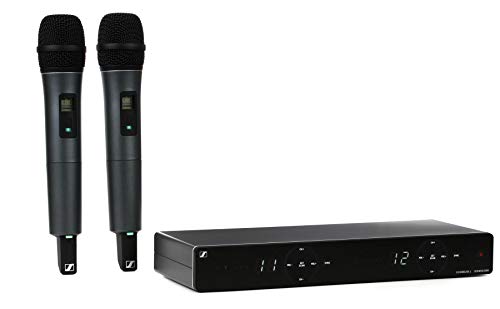
Sennheiser XSW 1-835
Worship teams, schools and gigging duos who want two wireless e835 vocal channels with the simplest possible setup.
Read the Sennheiser XSW 1-835 review →Questions Buyers Ask
Se Electronics sE4100
See the current listing, price and included accessories.
About This Review
Daniel Brooks
Daniel Brooks edits the buying guides and how-to articles at Mandrillis. He works from manufacturer manuals, published specifications and common owner questions to explain music and audio gear in plain language, from turntables and headphones to digital pianos and electronic drums.
Read our full research methodology.