Studio Gear Review
Rode Complete Studio Review: NT1 Condenser Meets AI-1 Interface
The Rode Complete Studio kit bundles the AI-1 USB audio interface with 48V phantom power, the NT1 1-inch diaphragm cardioid condenser microphone, an SM6 shock mount with pop shield, an XLR cable and USB-C and USB-A cables. This research review covers the published strengths and the interface details the listing leaves out.
Our Verdict
Research Score 72/100The Rode Complete Studio kit is built around a microphone worth owning. The listing confirms the NT1 as a 1-inch diaphragm cardioid condenser with ultra-low noise and wide dynamic range, supplied with the SM6 shock mount, a pop shield, an XLR cable and both USB-C and USB-A cables, and the AI-1 interface provides the 48V phantom power it needs. What the listing does not publish is the AI-1's input count, preamp gain, resolution, headphone monitoring or any bundled software. For a solo vocalist, narrator or single-host podcaster who wants one excellent microphone and a plain USB path into a computer, it is a sensible lower mid-range buy; multi-input or software-hungry buyers should look elsewhere.
Editorial research score based on published specifications and documented features, not a customer rating or lab test.

Rode
Rode Complete Studio
Best for: Solo vocalists, voice-over artists and single-host podcasters who want a respected large-diaphragm condenser with its shock mount.
Skip it if: You need two simultaneous inputs, an instrument jack, bundled software or published interface specifications before you buy.
Check Price on AmazonWe may earn a commission at no extra cost to you.
Listing verified: October 2026
Who Should Buy It
Buy it if
- Singers recording vocals one take at a time at a desk
- Voice-over artists and narrators who value low self-noise
- Single-host podcasters who want the mount and pop shield included
- Home recordists who already own a DAW and headphones
Skip it if
- You record guitar and vocals simultaneously
- You want a DAW or plugin bundle with the hardware
- You need confirmed direct monitoring before purchase
Key Specifications
| Type | USB audio interface and condenser microphone bundle built around the AI-1 interface and NT1 microphone |
| Inputs | Not published in listing (the AI-1 is described as adding studio-quality input to a computer) |
| Outputs | Not published in listing (the AI-1 is described as adding studio-quality output to a computer) |
| Preamps | Not published in listing (preamp count and gain not stated) |
| Resolution | Not published in listing |
| Phantom power | 48V |
| Connection | USB (USB-C and USB-A cables included per the listing) |
| Monitoring | Not published in listing |
| Bundled software | Not published in listing |
| Included accessories | NT1 condenser microphone with 1-inch diaphragm, SM6 shock mount, pop shield, XLR cable, USB-C and USB-A cables |
Overview
The Rode Complete Studio kit pairs the AI-1 USB audio interface with the NT1 condenser microphone and the accessories needed to connect them: an SM6 shock mount with pop shield, an XLR cable and USB-C and USB-A cables. The listing describes it as a complete studio in black, aimed at anyone who wants to record a voice or an instrument with one purchase.
It sits in the lower mid-range tier, where most buyers are weighing a bare two-input interface against a bundle. The difference here is that the microphone is the star rather than an afterthought: the NT1 is a 1-inch diaphragm condenser with a reputation for very low self-noise, and the AI-1 exists mainly to get it into a computer cleanly.
The published listing is short, and this review reflects that. The AI-1's input count, preamp gain, resolution and headphone provisions are not published, so the assessment leans on what the kit is designed to do rather than on numbers the listing does not provide.
Preamps and Sound Quality
The AI-1 is described as adding studio-quality input and output capabilities to a computer, which is as specific as the listing gets about its preamp. There is no published gain range or noise figure, and the preamp count is not stated. In practice, the interface needs enough clean gain for a condenser, which is an easier task than driving a low-output dynamic microphone.
The NT1 carries the sound-quality claims in this listing: ultra-low noise and wide dynamic range, with a cardioid polar pattern and a 1-inch diaphragm. Those are the attributes that make a large-diaphragm condenser suitable for vocals, acoustic guitar and voice-over, and cardioid pickup helps reject room reflections behind the microphone.
Phantom power at 48V is confirmed, which is essential because the NT1 cannot operate without it. Put together, the kit's front end is a well-regarded microphone feeding an interface about which the listing says little, so the sound of the system depends more on the room and the performer than on any published interface specification.
Inputs, Outputs and Routing
Input count is not published. The AI-1 is sold as a single-microphone solution in this kit, and the listing never mentions a second input, an instrument jack or stereo recording. Buyers who want to record a guitar and a vocal at the same time should confirm the input layout before assuming the kit can do it.
Outputs are described only as studio-quality, with no count, connector type or headphone output stated. Any interface intended for vocal recording needs a headphone output with direct monitoring, and the lack of confirmation here is the most important omission in the listing.
Routing is as simple as it gets: microphone to XLR cable to interface, interface to computer over USB. There is no mention of loopback, multiple mixes or MIDI, which keeps the device easy to understand but limits it to straightforward tracking.
Features, Monitoring and Software
The feature list is really the accessory list. The SM6 shock mount with integrated pop shield addresses the two most common problems with a condenser on a desk, which are handling vibration and plosives, and its inclusion saves a separate purchase that many beginners forget.
Monitoring is not described. There is no published headphone output, level control or zero-latency monitoring switch, so a buyer should check the manual before assuming they can hear themselves while recording without computer delay.
Bundled software is not mentioned in the listing. Competing bundles from other brands often include a DAW or plugin pack, and this kit's value proposition is hardware-only on paper, which is worth factoring into the price comparison.
- NT1 condenser microphone with 1-inch diaphragm and cardioid pattern
- SM6 shock mount with integrated pop shield
- 48V phantom power from the AI-1 interface
- XLR cable plus USB-C and USB-A cables included
- Black finish across the kit
Build, Design and Controls
The NT1 and SM6 combination has a long-standing reputation for solid construction, but the listing itself publishes no body material, weight or dimensions for the microphone or the interface. The black finish is the only cosmetic detail stated.
The AI-1's control layout is not described. Most single-input interfaces offer a gain knob, a headphone knob and a phantom power switch, and the listing's confirmation of 48V phantom power implies at least a switch for it, but nothing beyond that is confirmed.
Because the kit is built around a desk-mounted condenser, the shock mount's clamp and the stand threading matter in daily use. The listing does not state whether a stand or a thread adapter is included, so a microphone stand or boom arm will likely be a separate purchase.
Connectivity, Drivers and Latency
The kit ships with both USB-C and USB-A cables, which means the AI-1 can connect to older and newer computers without an adapter. That small detail is useful for anyone with a mix of laptops and desktops, and it is the kind of thing bare interfaces often leave out.
Sample rate, bit depth, driver requirements and latency are not published. Single-input interfaces of this type are usually class-compliant, meaning they work without a driver install on most systems, but the listing does not confirm that.
No wireless, network or digital expansion is mentioned, which is consistent with a kit intended to do one job well rather than to grow with a studio. Buyers who expect to add channels later should treat this as a starting point, not a platform.
Setup and Daily Use
Setting up is a matter of mounting the NT1 in the SM6, connecting the XLR cable, enabling 48V phantom power, plugging the interface into the computer with the matching USB cable and selecting it in the recording application. Nothing in the listing suggests a registration or activation step.
Day to day, the kit suits a voice-over artist, podcaster or singer who records one source at a time at a desk. The shock mount and pop shield mean the microphone can live permanently in position, and the cardioid pattern tolerates an untreated room better than an omnidirectional design would.
The unknowns in use are the headphone and gain situation. If the AI-1 provides direct monitoring and ample gain, the kit covers everything a solo vocalist needs; if it does not, a small headphone amplifier or a different interface would be the fix.
Who Should Buy It
Solo vocalists, voice-over artists and single-host podcasters who want a respected large-diaphragm condenser and the matching mount, pop shield and cables in one order are the natural buyers. The microphone is the reason to choose this kit over a generic bundle.
Home recordists who already have a DAW and headphones will find the hardware-only package complete enough, and the inclusion of both USB cable types avoids an immediate adapter purchase. It also suits a second recording position in a studio that already owns a main interface.
Anyone who needs two simultaneous inputs, an instrument jack, bundled software or published interface specifications should look at a stand-alone interface instead. The microphone can always be bought separately.
Alternatives Worth Considering
The Focusrite Scarlett 2i2 and PreSonus AudioBox both offer two inputs, published specifications and bundled software, and each is sold in a studio pack with a microphone and headphones. Their microphones are generally less celebrated than the NT1, which is the trade-off.
The Fender Quantum Complete Recording bundle goes further by adding monitors and a perpetual DAW license alongside a condenser microphone and headphones. That makes it the better choice for someone starting with nothing at all.
For a podcaster who expects to add guests, a console such as the Rode RØDECaster Pro provides four preamps, guest channels and multitrack recording. It costs more and pairs just as well with the NT1 or a dynamic microphone.
Verdict
The Rode Complete Studio kit is a microphone-led bundle, and that is its strength. The NT1's 1-inch diaphragm, cardioid pattern, ultra-low noise and wide dynamic range are the published qualities that matter, and the SM6 shock mount, pop shield, XLR cable and both USB cables remove the usual accessory shopping.
The AI-1 interface is the weak link in the listing rather than necessarily in practice: its input count, gain, resolution and monitoring are simply not published, and no software is bundled. Those gaps cap the score.
For a solo vocalist or podcaster who wants one excellent microphone and a simple way to record it, the kit is a sound lower mid-range buy. For anyone with broader needs, a more fully documented interface is the better foundation.
Strengths and Limitations
Strengths
- NT1 1-inch diaphragm condenser with ultra-low noise and wide dynamic range
- SM6 shock mount and pop shield included
- 48V phantom power confirmed
- Both USB-C and USB-A cables in the box
- Simple one-source recording path
Limitations
- AI-1 input count, gain and resolution are not published
- Headphone monitoring is not described
- No bundled software mentioned
- Stand or boom arm not included per the listing
How We Scored It
Scores reflect published specifications, documented features and value against the alternatives below. They are editorial research scores, not laboratory measurements.
Alternatives to Consider
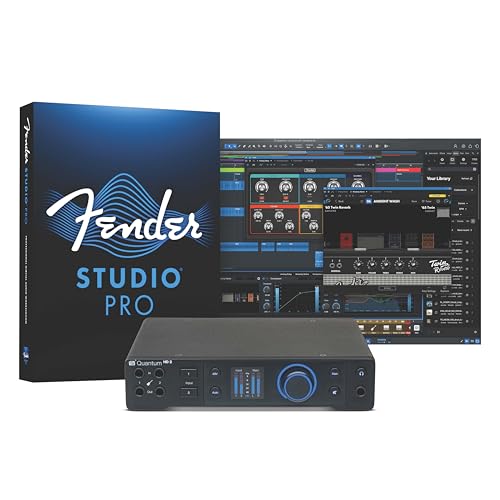
PreSonus Quantum HD 2 x 24
Guitarists, bassists and growing home studios that want high-gain digitally controlled preamps, Auto Gain, re-amp outputs.
Read the PreSonus Quantum HD 2 x 24 review →
PreSonus Quantum ES 4 x 4
Small bands, duos and multi-host podcasts that want four transparent, high-gain, recallable preamps with Auto Gain, 24-bit 192 kHz converters and app control at a lower mid-range price.
Read the PreSonus Quantum ES 4 x 4 review →
Rode RØDECaster Pro
Podcasters and live streamers with two to four in-room hosts and remote guests who want preamps, call-in channels, sound pads.
Read the Rode RØDECaster Pro review →Questions Buyers Ask
Rode Complete Studio
See the current listing, price and included accessories.
About This Review
Mandrillis Team
The Mandrillis editorial team researches and compares audio and music gear using manufacturer documentation, verified specs and real buyer feedback, so you can make a confident purchase without wading through marketing claims.
Read our full research methodology.