Studio Gear Review
Soundcraft EFX12 Review: Built-In Lexicon Effects
The Soundcraft EFX12 is a 12 channel analog mixer with a built in 24-bit Lexicon effects processor offering 32 FX settings and Tap Tempo. This research review covers what the listing confirms and the preamp and connectivity details it leaves unstated.
Our Verdict
Research Score 61/100The Soundcraft EFX12 is a straightforward analog mixer whose main selling point is a genuinely built in 24-bit Lexicon digital effects processor with 32 onboard settings and Tap Tempo control, rather than any computer connectivity or detailed preamp specification. The listing confirms the channel frame sizing and the effects processor but leaves preamp gain, phantom power and output bus count unpublished, so buyers who need those figures should check Soundcraft's own documentation. At a mid-range price tier, it suits bands and small venues that want reliable onboard effects on a simple analog desk rather than buyers who need a computer connected recording interface.
Editorial research score based on published specifications and documented features, not a customer rating or lab test.

Soundcraft
Soundcraft EFX12
Best for: Bands and small venues that want a straightforward analog effects mixer with a built in 24-bit Lexicon processor and 32 onboard FX settings, without needing a computer connection.
Skip it if: You need to record multitrack audio to a computer, since this mixer has no stated USB or digital output in the listing.
Check Price on AmazonWe may earn a commission at no extra cost to you.
Listing verified: November 2026
Who Should Buy It
Buy it if
- Bands who want a simple analog mixer with real onboard reverb and delay rather than no effects at all
- Small venues and rehearsal rooms that do not need computer recording from the mixer itself
- Operators who want Tap Tempo controlled delay effects for a live performance
- Buyers who prefer durable XLR and metal jack connectors over lighter weight combi connectors
Skip it if
- You need to record multitrack audio directly from the mixer to a computer
- You require a confirmed preamp gain and phantom power specification before buying
- You need a large channel count beyond the 12+2 frame size offered here
Key Specifications
| Type | High-performance analog effect mixer available in 8+2 and 12+2 channel frame sizes, with a built in 24-bit Lexicon digital effects processor |
| Inputs | 8+2 or 12+2 channel frame sizes; this listing describes the 12-channel EFX12 configuration (exact mic versus line breakdown not itemized) |
| Outputs | Not published in listing beyond the stated channel frame size |
| Preamps | Not published in listing (gain figure and preamp type are not stated) |
| Resolution | 24-bit Lexicon digital effects processor; overall mixer conversion resolution is not published |
| Phantom power | Not published in listing |
| Connection | Not published in listing; no USB or digital computer connection is mentioned |
| Monitoring | Not published in listing beyond general mixer bus routing implied by the channel count |
| Bundled software | Not published in listing |
| Included accessories | Not published in listing |
Overview
The Soundcraft EFX12 is a 12-channel analog mixer built around a single standout feature, a built in 24-bit Lexicon digital effects processor, which sets it apart from a purely bare bones mixer that would require a separate outboard reverb or delay unit. The listing describes it as high performance, framing the effects processor as the primary reason to choose this mixer over a cheaper alternative.
The EFX line is also offered in an 8+2 channel frame size according to the listing, giving buyers a smaller option within the same product family if a full 12 channels is more than a given setup needs, though this specific listing covers the 12 channel EFX12 configuration.
Because the listing is relatively brief, focusing mainly on the effects processor, FX settings and connector types, several core mixer specifications that buyers would normally expect, such as preamp gain and phantom power, are left unaddressed and should be treated as unknown rather than assumed.
That gap is worth stating plainly rather than papering over with assumptions, since the whole point of a research review is to separate what a listing actually says from what a shopper might simply expect because of the brand name on the front panel.
Preamps and Sound Quality
The listing does not state a preamp gain range, equivalent input noise figure or headroom specification for this mixer, which is a meaningful gap for anyone trying to judge how it will perform with quieter microphones or sources that need a lot of clean gain.
What can be said is that this is a conventional analog mixer design from a long established manufacturer, which generally implies a straightforward, clean preamp circuit rather than anything exotic, though without published numbers this remains a reasonable assumption rather than a confirmed fact.
The 24-bit Lexicon effects processor is a separate matter from the analog preamp stage, and buyers should not conflate the effects processor's bit depth with the overall mixer's input to output conversion quality, since the listing does not state the latter at all.
Inputs, Outputs and Routing
The listing confirms this model is available in 8+2 and 12+2 channel frame sizes, with this particular listing covering the 12 channel configuration, giving buyers a reasonably clear sense of overall channel count even without a detailed mic versus line breakdown.
Output bus structure, auxiliary send counts and any subgroup outputs are not detailed in the listing, so engineers planning a specific monitor or recording routing setup should confirm those figures with Soundcraft's own documentation before assuming a particular configuration.
Phantom power is also not stated, which is a genuine concern for any condenser microphones a band or venue might want to run through this mixer, and should be confirmed before relying on this unit for that purpose.
Features, Monitoring and Software
The built in 24-bit Lexicon digital effects processor is the headline feature, offering 32 onboard FX settings according to the listing, which gives an operator a reasonable variety of reverb and delay characters to choose from without needing outboard effects units patched in separately.
Tap Tempo functionality lets an operator sync delay based effects to the tempo of a song by tapping a button in time, which is a practical live sound feature that avoids guessing at delay time settings by ear during a performance.
An FX setting store function is also mentioned, allowing a preferred effects configuration to be saved and recalled rather than re-dialing settings at every show, which is a genuinely useful convenience for bands that play the same effects setup across multiple venues.
- 8+2 and 12+2 channel frame sizes
- Built in 24-bit Lexicon digital effects processor
- 32 onboard FX settings
- Tap Tempo and FX setting store
- XLR-type and quarter inch metal jack connectors
Build, Design and Controls
The listing notes XLR-type and quarter inch metal jack connector sockets throughout, which suggests a build favoring durable, standard connectors over lighter weight combi jacks, a reasonable choice for a mixer likely to see repeated setup and teardown for live use.
Beyond connector type, the listing does not publish chassis dimensions, weight or overall build material, so buyers planning rack space or transport cases around this mixer should confirm those figures separately.
Given the mixer's positioning as a straightforward analog desk with onboard effects, the control layout likely follows a conventional channel strip design with gain, EQ and fader per channel, though the listing does not itemize the exact number or type of controls on each strip.
Connectivity, Drivers and Latency
No USB or digital computer connection is mentioned anywhere in the listing, which means this mixer should be treated as a purely analog live sound and effects desk rather than a recording interface in any sense.
Buyers who want to record a performance from this mixer would need a separate recording device connected to its outputs, whether a standalone recorder or a separate audio interface, since the EFX12 itself does not appear to offer that connectivity.
Because there is no computer connection, there are no driver or latency considerations to evaluate for this unit, which simplifies setup for buyers who only need live sound reinforcement with onboard effects and nothing more.
Setup and Daily Use
Setting up this mixer for a show involves gain staging the 12 channels, selecting an appropriate Lexicon effect from the 32 onboard settings, and dialing in Tap Tempo for any delay based effects the set list calls for, all through conventional physical controls.
Because there is no computer or app layer involved, daily use should be relatively quick for anyone familiar with a traditional analog mixer, with the FX setting store function helping speed up setup at recurring gigs where the same effects configuration is used repeatedly.
Bands moving between venues with different acoustic characteristics will likely rely on the 32 preset FX settings to quickly find a reverb or delay character suited to each room, rather than programming custom effects from scratch at every show.
Who Should Buy It
This mixer suits bands and small venues that want a simple, effects equipped analog mixer for live sound without any need for computer recording, and who value durable XLR and metal jack connectors over more compact combi connectors.
It is a weaker fit for anyone who wants to record their performance directly from the mixer, since there is no stated USB or digital output, and for buyers who need a confirmed preamp gain or phantom power specification before purchase.
Mobile DJs and small production companies that move a mixer between venues often enough to value the FX setting store and Tap Tempo features will also find this a sensible fit, provided they pair it with a separate recorder or interface when a show needs to be captured digitally.
Alternatives Worth Considering
Buyers who need to record multitrack audio to a computer should look at a mixer that explicitly states USB connectivity, since this EFX12 listing does not mention any digital computer connection at all.
Buyers who need fewer channels could consider the 8+2 frame size within the same EFX line, trading some channel count for a smaller, lighter mixer while keeping the same built in Lexicon effects processor.
Buyers who need confirmed phantom power and preamp gain figures in writing, perhaps for a church or school procurement process requiring a full spec sheet, may be better served by a mixer from a manufacturer that publishes those numbers directly on the listing rather than leaving them to general brand reputation.
Verdict
The Soundcraft EFX12 is a focused analog mixer whose real value lies in its built in 24-bit Lexicon effects processor and the convenience features, Tap Tempo and FX setting store, built around it, rather than in any detailed preamp or connectivity specification.
For bands and venues that want straightforward live sound mixing with genuine onboard effects and no computer in the chain, this mixer at its mid-range price tier is a sensible choice, provided buyers accept the unpublished preamp and phantom power details.
Buyers weighing this mixer against a pricier digital alternative should remember that the core appeal here is simplicity: physical controls, a dependable analog signal path, and effects that work the moment the mixer is powered on, without any software setup or firmware update to manage beforehand.
Strengths and Limitations
Strengths
- Available in 8+2 and 12+2 channel frame sizes for flexible channel count
- Built in 24-bit Lexicon digital effects processor
- 32 onboard FX settings for varied reverb and delay character
- Tap Tempo and FX setting store function for quick recall
- XLR-type and quarter inch metal jack connectors throughout
Limitations
- No stated preamp gain, phantom power or output bus count
- No USB or digital computer connection is mentioned in the listing
- Overall mixer conversion resolution beyond the effects processor is not published
- No stated weight or chassis dimensions
How We Scored It
Scores reflect published specifications, documented features and value against the alternatives below. They are editorial research scores, not laboratory measurements.
Alternatives to Consider

Pioneer DJ XDJ-RX3
DJs who want club-standard standalone playback from USB with a large touchscreen and a familiar two-channel layout.
Read the Pioneer DJ XDJ-RX3 review →
Yamaha DM3-D 22
Small venues, houses of worship and production companies that want a compact 96 kHz digital console with Dante networking for stage boxes and multitrack recording.
Read the Yamaha DM3-D 22 review →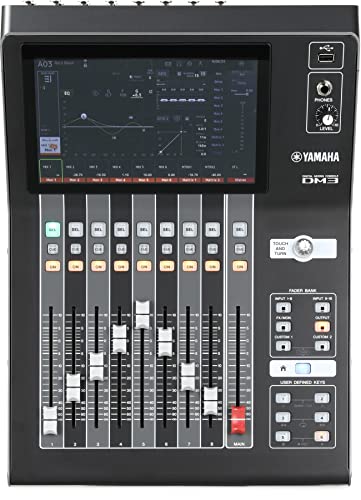
Yamaha DM3
Bands, small venues and project studios that want a compact 96 kHz digital console that doubles as an 18x18 USB recording interface.
Read the Yamaha DM3 review →Questions Buyers Ask
Soundcraft EFX12
See the current listing, price and included accessories.
About This Review
Mandrillis Team
The Mandrillis editorial team researches and compares audio and music gear using manufacturer documentation, verified specs and real buyer feedback, so you can make a confident purchase without wading through marketing claims.
Read our full research methodology.