Studio Gear Review
Universal Audio Apollo Twin X DUO Gen 2 Review: Modeled Preamps
The Apollo Twin X DUO Gen 2 pairs Unison modeling preamps with a large bundled plug in library and Thunderbolt 3 connectivity. This research review weighs the console style preamp modeling and onboard DSP against the input count and resolution figures the listing leaves unstated.
Our Verdict
Research Score 82/100The Universal Audio Apollo Twin X DUO Gen 2 is built around two ideas, Unison preamp modeling and a deep, included plug in library that runs on the unit's own DSP rather than straining a computer's processor. Together those make a strong case for producers who want console character and effects processing available while tracking, not only after the fact at mixdown. The listing leaves exact input count, resolution and phantom power unstated, so buyers who need every number confirmed in writing should check the manufacturer's own specification sheet. At an upper mid-range price tier, it suits home and project studios that already value the UAD plug in ecosystem more than buyers who simply want a basic two channel interface with no software commitment attached.
Editorial research score based on published specifications and documented features, not a customer rating or lab test.

Universal Audio
Universal Audio Apollo Twin X DUO Gen 2
Best for: Producers and engineers who want console style modeled preamp character along with a deep bundled plug in library built around near zero latency DSP processing.
Skip it if: Your computer has no Thunderbolt 3 port and you are not willing to add a compatible adapter or expansion card to use one.
Check Price on AmazonWe may earn a commission at no extra cost to you.
Listing verified: November 2026
Who Should Buy It
Buy it if
- Home and project studio owners who want modeled vintage preamp character without buying separate outboard gear
- Mixers who want DSP powered plug in processing available while tracking, not only at mixdown
- Producers who will use the included room correction feature to mix accurately in a less than ideal space
- Buyers who already use UAD style plug ins and want tighter integration with an existing library
Skip it if
- Your computer lacks a Thunderbolt 3 port and cannot be upgraded to one
- You need a confirmed exact input and output channel count before buying
- You want the simplest possible interface without an ongoing plug in ecosystem to manage
Key Specifications
| Type | Desktop Thunderbolt 3 audio interface with Unison modeling mic preamps and onboard DSP for near zero latency plug in processing |
| Inputs | Not published in listing as an exact channel count; the listing centers on Unison preamp modeling rather than a stated input total |
| Outputs | Not published in listing |
| Preamps | Unison modeling preamps described as emulating classic console and preamp circuits in the style of Neve, Avalon, Manley and Fender designs |
| Resolution | Not published in listing (bit depth and sample rate are not stated) |
| Phantom power | Not published in listing |
| Connection | Thunderbolt 3 |
| Monitoring | Apollo Monitor Correction room correction feature, built on a third party calibration engine, plus a bass management option for adding a subwoofer to the monitor path |
| Bundled software | Includes a library of more than 200 DSP and native plug ins, among them Capitol Chambers, Sound City Studios and EL8 Distressor titles |
| Included accessories | Not published in listing |
Overview
The Universal Audio Apollo Twin X DUO Gen 2 is a desktop Thunderbolt 3 audio interface built around two pillars, Unison preamp modeling and a bundled library of onboard DSP plug ins. Rather than treating the interface as a plain signal path from microphone to computer, Universal Audio positions this unit as a front end that can also shape tone in real time while tracking, using processing power built into the hardware itself.
That approach differs from a conventional interface, where effects and modeling are normally applied after recording, inside a digital audio workstation, using whatever processing power the host computer has free. Here, the Unison preamps and the bundled plug ins run on dedicated onboard DSP, which is the reasoning behind the near zero latency claim that runs through the feature bullets for this listing.
This generation, labeled Gen 2, follows earlier Apollo Twin X models, and the listing frames it primarily around the preamp modeling and plug in bundle rather than around a fresh hardware input and output count, which is why several of the more basic specifications are left for buyers to confirm separately.
Preamps and Sound Quality
The headline feature here is Unison technology, which the listing describes as letting a user record through authentic emulations of several well known console and preamp circuits, citing styles associated with Neve, Avalon, Manley and Fender designs among others. Unison modeling works by matching the interface's own preamp circuit behavior, including impedance and gain staging, to the character of the modeled unit, which is a more involved approach than a simple digital EQ curve applied after the fact.
Because the listing does not publish a specific gain range in decibels or a noise floor figure, this review treats the modeling claim as the headline fact and leaves the underlying numeric specification as unconfirmed. Buyers who want an exact equivalent input noise figure or maximum gain value should check Universal Audio's own published specification sheet rather than relying on this listing alone.
In practical terms, buyers moving from a plain, uncolored interface preamp to this unit should expect a genuinely different tracking experience, since the modeled circuits are meant to be used while recording rather than applied only during mixing, which changes how a vocalist or instrumentalist hears themselves monitored in real time.
It is also worth separating the marketing language from the underlying mechanism. Unison is not simply a digital filter overlaid on a flat signal after conversion, it adjusts the analog input stage itself to present the correct load and gain structure to a connected microphone or instrument before the signal ever reaches the converter, which is the reason Universal Audio markets it as closer to swapping real preamp hardware than to applying a plug in.
Inputs, Outputs and Routing
The listing does not state an exact input or output channel count for this unit, focusing instead on the preamp modeling and software bundle. Buyers who need a precise number of combination mic and line inputs, instrument inputs, or balanced outputs should confirm that figure with the manufacturer before assuming a specific routing layout based on general knowledge of the Apollo Twin line.
What the listing does make clear is the presence of a built in talkback style workflow implied by the monitor correction and bass management features, both of which point to a unit designed to sit at the center of a small studio's monitoring chain rather than simply passing a stereo signal through to a computer.
Buyers relying on the Twin X name alone from earlier generations should be cautious about assuming identical input and output counts here, since product revisions sometimes adjust connector types or counts between generations. Confirming the exact routing layout against current product photography and the manufacturer's page is the safer path before building a session template around a specific channel count.
Features, Monitoring and Software
The bundled plug in library is a major part of the value proposition, with the listing citing more than 200 included DSP and native titles, among them named packages like Capitol Chambers, Sound City Studios and the EL8 Distressor collection. These run on the interface's own processing power, which is the basis for the near zero latency claim when tracking through them.
Apollo Monitor Correction, described as powered by a third party room calibration engine, is aimed at mixers working in rooms without full acoustic treatment, helping flatten problematic frequency buildups at the mix position. The accompanying bass management feature is meant to let a user integrate a subwoofer into the monitor path cleanly, which matters for anyone trying to judge low end accurately on small monitors.
Auto Gain is also listed as a feature, intended to set input levels across multiple channels quickly rather than requiring manual trim adjustment on every input before a session starts, which can save meaningful setup time in a busy project studio.
- Unison modeling preamps
- 200+ bundled DSP and native plug ins
- Apollo Monitor Correction room calibration
- Bass management for subwoofer integration
- Auto Gain level setting
Build, Design and Controls
As a desktop unit, the Apollo Twin X DUO Gen 2 is designed to sit within reach on a desk rather than in a rack, consistent with the rest of the Apollo Twin line, though this listing does not publish exact dimensions, weight or chassis material.
Physical control details such as the number and type of front panel knobs, metering style and headphone output count are not broken out in the listing text, so buyers who care about a specific control layout should review product photos and the manufacturer's page alongside this listing.
Desktop units in this format generally favor a compact footprint over rack mount rigidity, which suits a bedroom studio or a mobile rig more than a flight cased touring setup, though buyers who need a rack mounted version of similar functionality should look elsewhere in the broader Apollo range.
Connectivity, Drivers and Latency
Connectivity runs over Thunderbolt 3, which the listing states directly. That connection standard generally offers low latency and high bandwidth compared with standard USB audio class interfaces, which supports the near zero latency claims made elsewhere in the listing for the bundled DSP plug ins.
Buyers should note that Thunderbolt 3 requires a compatible port on the host computer, and older machines or certain Windows laptops may need an adapter or simply lack support entirely. Driver requirements and operating system compatibility details beyond the connection standard itself are not published in this listing.
Latency in practice depends on buffer size settings within the host digital audio workstation as well as on the onboard DSP handling the bundled plug ins, and while Thunderbolt 3 removes one common bottleneck, overall system performance still depends on the host computer's own processor and memory when running a large session alongside the interface.
Setup and Daily Use
Setting up this interface involves installing the manufacturer's control software, which also manages access to the bundled plug in library, authorizing the included titles, and then configuring the Unison preamp models for whichever circuits a session calls for. That extra software layer is the tradeoff for the deeper modeling and plug in access this unit offers over a plainer interface.
Day to day, the appeal is being able to dial in a preamp model and a compressor or EQ while tracking, monitor through room correction, and manage a subwoofer crossover without leaving the interface's own control panel, which can reduce how much a user needs to open a full digital audio workstation just to get a usable monitoring setup.
Who Should Buy It
This interface suits producers and engineers who specifically want modeled vintage preamp character and are willing to engage with a software ecosystem to get it, rather than buyers who want the simplest possible plug and record experience. It is a strong fit for home studios that lack acoustic treatment and will lean on the room correction feature.
It is a weaker fit for buyers on a tight budget, since the modeling and plug in bundle add cost relative to a plain interface with similar basic input and output counts, and for buyers whose computers do not have a Thunderbolt 3 port available.
Alternatives Worth Considering
Buyers who want a simpler two channel interface without preamp modeling or a large bundled plug in library might consider a more basic USB interface from a different manufacturer, trading the modeling feature for a lower price and a smaller software footprint.
Buyers who need more physical inputs for a full band tracking session, rather than the two combination inputs typical of this Twin format, should look at larger interfaces or rack mounted preamp expanders that add channel count without necessarily adding preamp modeling.
Verdict
The Universal Audio Apollo Twin X DUO Gen 2 earns its upper mid-range price tier through Unison preamp modeling and a genuinely large bundled plug in library running on dedicated onboard DSP, rather than through an exceptional raw input count, which the listing does not even state.
For producers already invested in, or willing to invest in, the modeling and plug in ecosystem, this is a compelling front end that does real work beyond simply getting audio into a computer. Buyers who just want a plain, uncolored interface with a confirmed spec sheet may be better served elsewhere.
Strengths and Limitations
Strengths
- Unison modeling preamps aim to emulate several classic console and preamp circuits
- A large bundled plug in library with more than 200 included titles
- Auto Gain feature to set input levels quickly across multiple channels at once
- Room correction based monitoring feature aimed at mixing accurately in untreated rooms
- Bass management option to integrate a subwoofer into the monitoring path
Limitations
- The listing does not state an exact input and output channel count
- Thunderbolt 3 connection requires a compatible port that some older computers lack
- The bundled plug in library depends on a software account and ecosystem to activate
- Phantom power and preamp gain range are not published in the listing
How We Scored It
Scores reflect published specifications, documented features and value against the alternatives below. They are editorial research scores, not laboratory measurements.
Alternatives to Consider

Pioneer DJ XDJ-RX3
DJs who want club-standard standalone playback from USB with a large touchscreen and a familiar two-channel layout.
Read the Pioneer DJ XDJ-RX3 review →
Yamaha DM3-D 22
Small venues, houses of worship and production companies that want a compact 96 kHz digital console with Dante networking for stage boxes and multitrack recording.
Read the Yamaha DM3-D 22 review →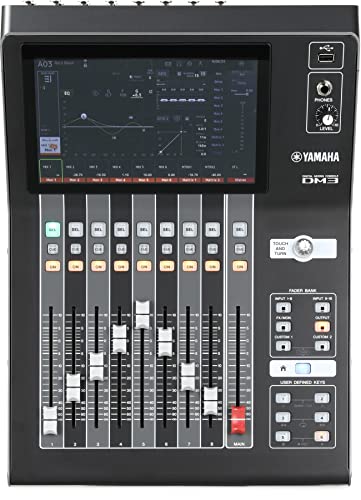
Yamaha DM3
Bands, small venues and project studios that want a compact 96 kHz digital console that doubles as an 18x18 USB recording interface.
Read the Yamaha DM3 review →Questions Buyers Ask
Universal Audio Apollo Twin X DUO Gen 2
See the current listing, price and included accessories.
About This Review
Mandrillis Team
The Mandrillis editorial team researches and compares audio and music gear using manufacturer documentation, verified specs and real buyer feedback, so you can make a confident purchase without wading through marketing claims.
Read our full research methodology.