Studio Gear Review
Yamaha HS8 Review: Full Range Reference With a 38 Hz Floor
The Yamaha HS8 brings the HS family's honest balance to an 8 inch cabinet with a published 38 Hz to 30 kHz response. This research review covers the 120W bi-amplification, 2 kHz crossover, Room Control and High Trim switches and balanced inputs, and explains which rooms suit it and which do not.
Our Verdict
Research Score 82/100The Yamaha HS8 is a lower mid-range monitor with a professional specification sheet. The listing publishes an 8 inch cone woofer, a 1 inch dome tweeter, 75W plus 45W bi-amplification, a 38 Hz to 30 kHz response, a 2 kHz crossover and a three part control set with Room Control, High Trim and a center click level knob. That is more documentation than most rivals provide. The sound is honest rather than flattering, and the bass extension needs a medium sized room with some wall clearance to shine. Dimensions and weight are unpublished and the speaker is sold individually. For buyers with the space, it is one of the most sensible full range references available at this tier.
Editorial research score based on published specifications and documented features, not a customer rating or lab test.
Yamaha
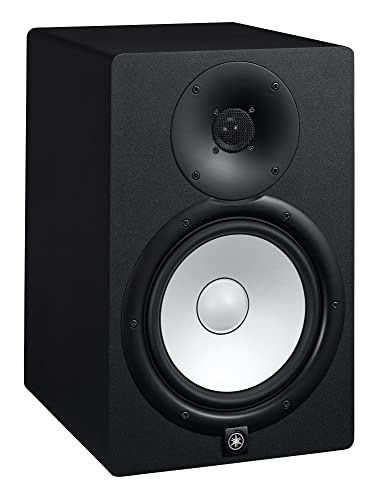
Yamaha HS8
Best for: Producers and mix engineers in medium sized rooms who want full range low end from a trusted reference without a subwoofer.
Skip it if: Your desk sits against a wall in a small bedroom studio or you want convenience inputs like Bluetooth.
Check Price on AmazonWe may earn a commission at no extra cost to you.
Listing verified: October 2026
Who Should Buy It
Buy it if
- Electronic and hip hop producers who need to hear sub bass
- Engineers upgrading from 5 inch monitors into a treated room
- Film and game audio workers handling low frequency content
- Existing HS users who want the same character with more reach
Skip it if
- Your room is very small or untreated
- You need a headphone output or wireless streaming on the monitor
- You want dimensions and weight confirmed on the listing
Key Specifications
| Type | 2-way bi-amplified powered studio monitor, 8 inch, black, sold individually |
| Woofer | 8 inch cone woofer |
| Tweeter | 1 inch dome tweeter |
| Power | 75W LF plus 45W HF bi-amp system, 120W total; power consumption 60 watts; crossover 2 kHz |
| Frequency response | 38 Hz to 30 kHz |
| Inputs | XLR and TRS phone jack inputs |
| Room controls | Level control with center click (listed as 4dB/center click), High Trim switch 2 dB at HF, Room Control switch 0/2/4 dB under 500 Hz |
| Dimensions | Not published in listing |
| Weight | Not published in listing |
| Included accessories | Not published in listing |
Overview
The Yamaha HS8 is the largest of Yamaha's HS nearfield monitors, built around an 8 inch cone woofer and a 1 inch dome tweeter in a black cabinet. This listing covers a single speaker, so a stereo pair means ordering two. At the lower mid-range tier it is one of the most affordable routes to a published 38 Hz low end from a respected studio brand.
The HS8 shares its family's reputation for a flat, revealing balance, and adds the bass reach that the 5 inch model cannot offer. That makes it the HS to choose for producers of electronic music, hip hop and film audio who need to hear the bottom octave rather than guess at it. It does ask for a room that can handle an 8 inch monitor.
This listing is unusually detailed for the series. It publishes the amplifier split, the 2 kHz crossover, the power consumption, the exact steps of the Room Control switch and the input types. Dimensions and weight are still missing, and those matter for an 8 inch cabinet, so they are flagged below.
Accuracy and Sound Signature
A 38 Hz to 30 kHz published response is the headline. At the low end that reaches below the lowest note of a standard four string bass and into the territory of 808 style sub bass, which is precisely what buyers step up from a 5 inch monitor to get. The top end extends far beyond hearing, which matters less for tone than for tweeter headroom.
Yamaha states that the drivers produce low distortion sound with a well defined bottom end at any output level, and buyers report that the HS8's bass stays tight rather than bloated when the room allows. Combined with the forward HS midrange, the result is a monitor that exposes muddy low mids and loose kick drums quickly.
The 2 kHz crossover places the handover from woofer to tweeter in a sensitive part of the range for vocals and guitars. A well executed crossover at that point sounds seamless, and the HS series is generally praised for a coherent midrange. Compared with a Kali Audio LP-6 or an Adam Audio T5V, the HS8 is drier and less forgiving, which is the house character.
Drivers, Amplification and Power
The 8 inch cone woofer is driven by a 75W amplifier and the 1 inch dome tweeter by a 45W amplifier, for a total of 120W per cabinet. Bi-amplification with a dedicated amplifier per driver is the standard professional layout, and the generous tweeter allocation helps keep transients clean at higher volumes.
The listing also publishes a power consumption figure of 60 watts, which is useful for anyone planning a studio on a power budget or running monitors from a conditioner. The 2 kHz crossover is stated explicitly, something many monitor listings omit.
Peak SPL is not published. In practice, 120W behind an 8 inch woofer is more than enough for nearfield and midfield use in a home or project studio, and the HS8 is often used at modest levels where its bass reach matters more than raw loudness. Buyers who need stage level output are in the wrong category.
Room Fit, Placement and Controls
The HS8 publishes the clearest control set in the family. The Room Control switch reduces output under 500 Hz by 0, 2 or 4 dB, the High Trim switch adjusts high frequencies by 2 dB, and a level control with a center click detent sets the input sensitivity. Those three controls cover near wall bass build up, bright rooms and gain matching between a pair.
An 8 inch monitor moves a lot of air, and in a small untreated room the 38 Hz extension can excite room modes that a 5 inch speaker never reaches. The 4 dB Room Control setting helps, but it cannot fix a room that is simply too small. Buyers with a desk against a wall in a bedroom studio should think carefully about size.
On the other hand, in a medium sized room with some treatment, the HS8 offers a complete picture without a subwoofer. That saves money and avoids the crossover integration headaches that come with adding a separate low frequency cabinet. Dimensions are not published, so measure the stands or desk before ordering.
- Room Control: 0, 2 or 4 dB cut under 500 Hz
- High Trim: 2 dB adjustment at high frequencies
- Level control with center click detent
- Best in medium rooms with wall clearance
- Can overload a very small untreated room
Build, Design and Finish
The HS8 keeps the series' signature look: a white cone woofer, a black cabinet and a plain front with no lights or logos competing for attention. The listing confirms the black finish and notes that the speaker is not waterproof, which is an unusual detail to publish but a reminder that this is indoor studio equipment.
Cabinet material, port design, dimensions and weight are not stated. For an 8 inch active monitor, weight is a practical concern because it determines what stands or shelves are safe, and buyers should obtain that figure from the manufacturer. The absence on the page is a documentation gap rather than a product flaw.
Yamaha's HS cabinets have a reputation for durability in schools, broadcast rooms and rental studios where equipment is handled by many people. The rear mounted controls and the lack of fragile front panel features suit that kind of use.
Connectivity and Inputs
The listing specifies XLR and TRS phone jack inputs. Those are the two professional connections found on audio interfaces, mixers and monitor controllers, and they allow balanced cable runs that reject hum and interference over distance.
No RCA, aux or wireless input is published, which is consistent with the HS8's studio focus. Consumer sources can be connected through a simple adapter cable, but this is not a monitor designed for casual listening from a phone.
Because each HS8 is an active speaker with its own amplifier, a pair needs two mains outlets and two signal cables, and the page does not state whether any cables are included. Budgeting for a pair of good balanced cables of the right length is sensible.
Setup and Daily Use
Placement is the main setup decision with an 8 inch monitor. The usual guidance applies: an equilateral triangle with the listening position, tweeters at ear height and as much clearance from the rear wall as the room allows. Then set Room Control to 2 or 4 dB if bass sounds heavy, and leave High Trim flat until familiar tracks have been heard.
The center click on the level control makes it easy to match two cabinets exactly, which is valuable when the pair arrives as two individual purchases. Once the levels are set the interface or monitor controller handles daily volume, and the rear panel is rarely touched again.
In daily work the HS8's advantage is confidence in the low end. Decisions about kick and bass balance, sub bass tails and low cut filters can be made by ear rather than by meter, and that speeds up mixing considerably for anyone used to a smaller monitor.
Who Should Buy It
The HS8 suits producers of bass heavy genres who want to hear the bottom octave without buying a subwoofer, and mix engineers moving up from 5 inch monitors into a medium sized, partly treated room. It is also a strong choice for film and game audio where low frequency content matters.
It suits anyone who already trusts the HS sound and wants the same character with more reach. The published controls and the straightforward balanced inputs make it an easy fit into an existing studio chain.
It is a poor match for a very small bedroom studio with the desk hard against a wall, where the bass extension becomes a liability. Buyers who want built in Bluetooth, a headphone output or front panel controls should also consider other models.
Alternatives Worth Considering
Within Yamaha's own line the HS5 is the compact alternative for small rooms, trading bass extension for easier placement. For buyers who want 8 inch reach from a different voicing, the larger siblings of the Adam Audio T5V and the Kali Audio LP-6 are frequently compared, with Kali in particular known for strong boundary compensation controls.
The JBL 305P MkII and the KRK Rokit 5 G5 are smaller monitors that compete on price rather than bass reach. A pair of either plus a subwoofer can approach the HS8's low frequency coverage, but with more setup complexity.
The HS8 remains compelling because it delivers a complete published range in a single cabinet at a lower mid-range price. Buyers who have the room should compare it directly against the 8 inch options from Kali and Adam before deciding on character.
Verdict
The Yamaha HS8 is the most complete HS monitor and one of the best documented listings in its tier. An 8 inch woofer, a 1 inch dome tweeter, 120W of bi-amplification, a 38 Hz to 30 kHz response, a 2 kHz crossover and a precisely described control set are all published.
Its honest, slightly dry balance is a feature for mixing and a drawback for casual listening, and the bass extension demands a room that can absorb it. Dimensions and weight are not stated, which is the one notable gap.
For a producer with a medium sized room who wants a full range reference without a subwoofer, it is a straightforward recommendation. For a small desk against a wall, the HS5 is the wiser choice.
Strengths and Limitations
Strengths
- Published 38 Hz to 30 kHz response from a single cabinet
- 120W bi-amplification with a 45W tweeter amplifier
- 2 kHz crossover and 60W power consumption stated
- Room Control 0/2/4 dB and High Trim switches
- XLR and TRS balanced inputs
- Trusted HS family translation character
Limitations
- Bass extension can overload small untreated rooms
- Dimensions and weight not published in the listing
- No RCA, aux or wireless input
- Sold individually, so a pair doubles the outlay
How We Scored It
Scores reflect published specifications, documented features and value against the alternatives below. They are editorial research scores, not laboratory measurements.
Alternatives to Consider

ADAM Audio T-Series Nearfield
Producers who want ADAM Audio's ribbon-style treble and DSP shelving in a nearfield pair and will confirm the exact model with the seller first.
Read the ADAM Audio T-Series Nearfield review →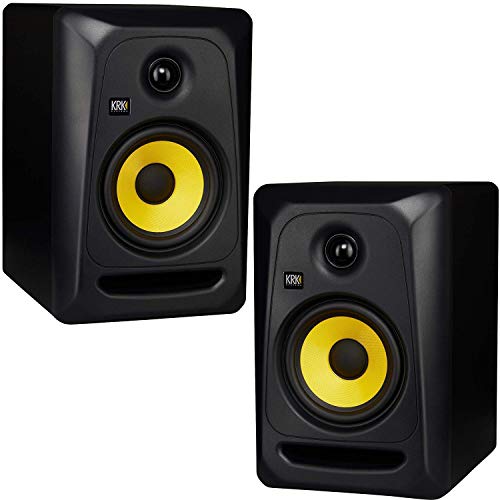
KRK Rokit 5 G3
Beginners and hobbyist producers in small rooms who want a familiar, forgiving Rokit pair with a flat option for mixing.
Read the KRK Rokit 5 G3 review →
Yamaha HS8 W 8-Inch
Producers with a medium sized, light colored or camera facing studio who want HS8 bass reach in a white cabinet.
Read the Yamaha HS8 W 8-Inch review →Questions Buyers Ask
Yamaha HS8
See the current listing, price and included accessories.
About This Review
Mandrillis Team
The Mandrillis editorial team researches and compares audio and music gear using manufacturer documentation, verified specs and real buyer feedback, so you can make a confident purchase without wading through marketing claims.
Read our full research methodology.