Studio Gear Review
KRK Rokit 5 G3 Review: Rokit 5 Gen 3 Pair on Paper
The KRK Rokit 5 G3 is a Rokit 5 Generation 3 pair with a soft-dome tweeter on an optimized waveguide, a glass-aramid composite woofer and a switchable plus 2 dB bass boost. This research review explains what the sparse listing confirms, what it leaves out, and who the older Rokit still suits.
Our Verdict
Research Score 72/100The KRK Rokit 5 G3 is a lower mid-range Rokit 5 Generation 3 pair that remains a sensible beginner purchase if the price reflects its age. The listing publishes a soft-dome tweeter with optimized waveguide reaching 35 kHz, a lightweight glass-aramid composite woofer and a low frequency adjustment with a flat setting and an optional plus 2 dB bass boost. It does not publish amplifier power, the low frequency limit, inputs, dimensions or weight. The monitor is forgiving and versatile when the boost is left off for mixing, but it lacks a published bass cut for near wall desks. Buyers who want DSP room tuning and fuller documentation should compare the current Rokit 5 G5 before choosing this pair.
Editorial research score based on published specifications and documented features, not a customer rating or lab test.
KRK
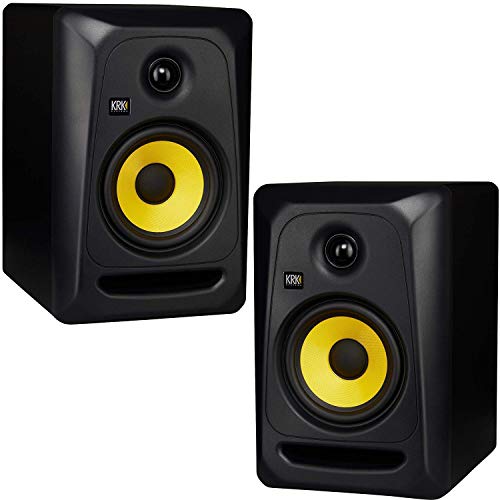
KRK Rokit 5 G3
Best for: Beginners and hobbyist producers in small rooms who want a familiar, forgiving Rokit pair with a flat option for mixing.
Skip it if: You need published power, inputs and a bass cut switch, or you want the current generation's DSP tuning.
Check Price on AmazonWe may earn a commission at no extra cost to you.
Listing verified: October 2026
Who Should Buy It
Buy it if
- First time buyers who want a matched pair in one purchase
- Electronic and hip hop producers who like a warmer presentation
- Owners matching an existing Generation 3 unit
- DJ and home setups where forgiving sound matters
Skip it if
- You mix near a wall and need a published bass cut
- You want the newer Rokit 5 G5 features
- You require confirmed specifications before buying
Key Specifications
| Type | Rokit 5 Generation 3 powered nearfield studio monitor, sold as a pair |
| Woofer | Lightweight glass-aramid composite woofer, diameter not published in listing |
| Tweeter | Soft-dome tweeter with optimized waveguide, high frequency reach to 35 kHz |
| Power | Not published in listing |
| Frequency response | High frequencies up to 35 kHz, low frequency limit not published in listing |
| Inputs | Not published in listing |
| Room controls | Low frequency adjustment with a flat setting and an optional plus 2 dB bass boost |
| Dimensions | Not published in listing |
| Weight | Not published in listing |
| Included accessories | Not published in listing |
Overview
The KRK Rokit 5 G3 is the Rokit 5 Generation 3, the third iteration of the yellow coned nearfield that introduced a whole generation of bedroom producers to studio monitoring, sold here as a pair. It sits in the lower mid-range tier. This is an older generation listing, since KRK has since moved the Rokit line on, which matters both for price and for feature comparison.
KRK's pitch for the Generation 3 was versatility: a monitor that worked for any style of music, with a soft-dome tweeter on an optimized waveguide, a glass-aramid composite woofer and a low frequency adjustment that could be left flat or switched to a modest bass boost. That combination of neutral option and flattering option defined the series.
The listing is thin on numbers. It publishes the tweeter type and its reach to 35 kHz, the woofer material and the bass adjustment options, but not the woofer diameter, the amplifier power, the full frequency response, the inputs, the dimensions or the weight. The score reflects a well known product described by a sparse page.
Accuracy and Sound Signature
The Rokit sound has always been a point of debate. The Generation 3 is described as versatile and great for any style, with highs that are smooth, pristine and articulate thanks to the soft-dome tweeter and its waveguide. Buyers report a presentation that is more generous in the low end than a Yamaha HS5, especially with the bass boost engaged.
That is where the flat low frequency adjustment becomes important. The listing describes it as adding versatility and improved accuracy for mixes that translate in different environments, which is a direct acknowledgement that the flattering setting is for enjoyment and the flat setting is for work. A producer who leaves the boost on while mixing will tend to under mix the bass.
Soft-dome tweeters are generally associated with a forgiving top end, and the waveguide's job is to control dispersion so the stereo image stays stable across the desk. Against the JBL 305P MkII, another waveguide design, the Rokit is usually heard as warmer; against the Adam Audio T5V it lacks the ribbon style detail but is also less revealing of harsh recordings.
Drivers, Amplification and Power
The woofer is a lightweight glass-aramid composite cone, a material chosen for stiffness without mass so the driver starts and stops quickly. The listing credits it with clear midrange and tight bass. The diameter is not published on the page, although the 5 in the model name follows KRK's convention for the compact Rokit.
The tweeter is a soft dome mounted in an optimized waveguide, with published high frequency reach up to 35 kHz. That extension is beyond audible range and mainly indicates that the tweeter is not straining at the top of the spectrum, which tends to keep cymbals and air smooth rather than brittle.
Amplifier power, the amplifier class and the crossover frequency are not published in this listing. Rokit monitors are active designs with internal amplification, but a buyer comparing wattage against a Kali Audio LP-6 or a PreSonus Eris 3.5 will need to source the number elsewhere. Peak SPL is likewise unstated.
Room Fit, Placement and Controls
Two settings are described for the low end: a flat adjustment for accuracy and an optional plus 2 dB bass boost that KRK says is acclaimed by music creators worldwide. The boost is a taste control rather than a room correction, since it adds low end instead of removing the build up that near wall placement causes.
That distinction matters for a compact monitor that often ends up on a desk close to a wall. With no published bass cut or high frequency trim, a Rokit Generation 3 owner in a boomy corner may have fewer tools than an owner of a Yamaha HS5 with its Room Control switch. The flat setting is the right default for mixing.
The compact format itself is easy to place on a desk, on isolation pads or on stands, and a pair leaves room for a screen between them. Dimensions and weight are not published, so buyers should check the manufacturer's figures before committing to a particular shelf or stand.
- Flat low frequency setting for mixing
- Optional plus 2 dB bass boost for listening
- No bass cut or high trim published
- Compact pair fits most desks
Build, Design and Finish
The Rokit's yellow woofer cone is one of the most recognizable looks in home studio gear, and the Generation 3 continued the curved front baffle that KRK uses to reduce diffraction around the drivers. The listing does not describe the cabinet material, finish or port placement in detail.
KRK built the Rokit line to be affordable and robust, and the Generation 3 shipped in huge numbers to bedroom studios, schools and DJ setups. That volume means plenty of secondhand units and plenty of owner experience to draw on, even though this listing offers a new pair.
Weight and dimensions are not stated, which is a recurring theme on this page. For a compact monitor that is a minor inconvenience, but anyone planning wall brackets or a narrow shelf should confirm the numbers before ordering.
Connectivity and Inputs
The listing does not publish an input list for the KRK Rokit 5 G3. Monitors in this tier normally provide balanced professional inputs and sometimes an unbalanced consumer input as well, but the page does not confirm what the Generation 3 pair carries, so the connectivity rating here is limited by documentation.
As an active pair, each cabinet needs its own power connection and its own signal cable from the interface, mixer or controller. No wireless, headphone or front panel connections are mentioned, which is normal for a monitor of this generation.
Buyers with a DJ controller or a consumer source should plan on the appropriate adapter cables once the actual inputs are confirmed. Anyone using a standard audio interface with balanced outputs is unlikely to run into trouble.
Setup and Daily Use
Setup for a Rokit pair is simple: position the monitors in an equilateral triangle with the listening position, aim the tweeters at ear height, and set the low frequency adjustment to flat before doing any mixing. The bass boost can be switched in later for casual listening or for checking how a track feels with extra low end.
Daily use is undemanding. There is no software or firmware, and once the levels are matched between the two cabinets the interface handles volume. The soft-dome tweeter is generally easy to live with across long sessions, which is one reason the Rokit remained popular with producers who worked late into the night.
The main habit to build is remembering which low end setting is active. Because the boost flatters, it is easy to mix with it on and then find the bass thin everywhere else. Keeping the switch flat and using the boost only for playback keeps the monitor honest.
Who Should Buy It
The KRK Rokit 5 G3 suits beginners and hobbyist producers who want a recognizable, forgiving pair of monitors for a small room, particularly in electronic music, hip hop and DJ oriented genres where a touch of extra bass is welcome during creation. The pair packaging makes it a one purchase stereo setup.
It also fits buyers who specifically want the Generation 3 rather than the current Rokit 5 G5, perhaps to match an existing unit or because the older design is available at a lower tier price. The flat low frequency setting keeps it usable for serious mixing when needed.
It is a weaker choice for an engineer who needs a published bass cut for near wall placement, confirmed power figures or the newer DSP tuning found on the current generation. Buyers who prefer an analytical reference should look to the Yamaha HS5 instead.
Alternatives Worth Considering
The current KRK Rokit 5 G5 is the most direct alternative, adding DSP room tuning and updated drivers over the Generation 3. Buyers who like the Rokit character but want modern room controls should compare the two before settling on the older pair.
The Yamaha HS5 remains the analytical counterpart, with a flatter midrange and a published Room Control switch. The JBL 305P MkII competes on waveguide imaging, and the Kali Audio LP-6 offers a larger woofer with boundary compensation for a similar outlay.
For the smallest desks the PreSonus Eris 3.5 provides front panel controls and a headphone jack at a lower tier. None of these offers the Rokit's familiar look or its specific bass boost option, which is a matter of taste rather than quality.
Verdict
The KRK Rokit 5 G3 is a Rokit 5 Generation 3 pair described by a brief listing. The soft-dome tweeter with waveguide reaching 35 kHz, the glass-aramid composite woofer and the flat or plus 2 dB low frequency options are published; power, inputs, full response, dimensions and weight are not.
The monitor itself is well understood: forgiving, slightly warm, and versatile across genres when the boost is left off for mixing. The lack of a published bass cut is its main practical limitation in tight rooms.
As a lower mid-range pair for a beginner or hobbyist who likes the Rokit sound, it does the job. Buyers who want current features and fuller documentation should compare the Rokit 5 G5 first.
Strengths and Limitations
Strengths
- Sold as a pair for a one purchase stereo setup
- Soft-dome tweeter with optimized waveguide reaching 35 kHz
- Lightweight glass-aramid composite woofer
- Flat low frequency setting for accurate mixing
- Optional plus 2 dB bass boost for playback
Limitations
- Amplifier power and full frequency response not published
- Inputs not stated in the listing
- No published bass cut for near wall placement
- Older generation superseded by the Rokit 5 G5
- Dimensions and weight unpublished
How We Scored It
Scores reflect published specifications, documented features and value against the alternatives below. They are editorial research scores, not laboratory measurements.
Alternatives to Consider

ADAM Audio T8V
Bass heavy producers and film or game composers with a medium sized room who want full range monitoring without a subwoofer.
Read the ADAM Audio T8V review →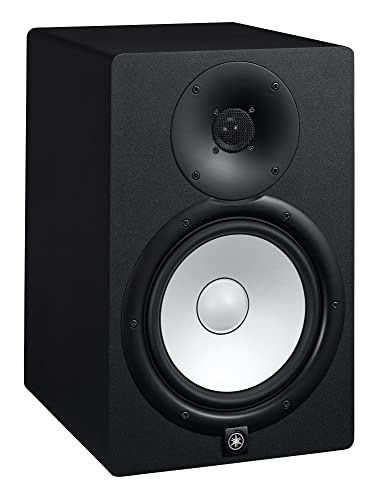
Yamaha HS8
Producers and mix engineers in medium sized rooms who want full range low end from a trusted reference without a subwoofer.
Read the Yamaha HS8 review →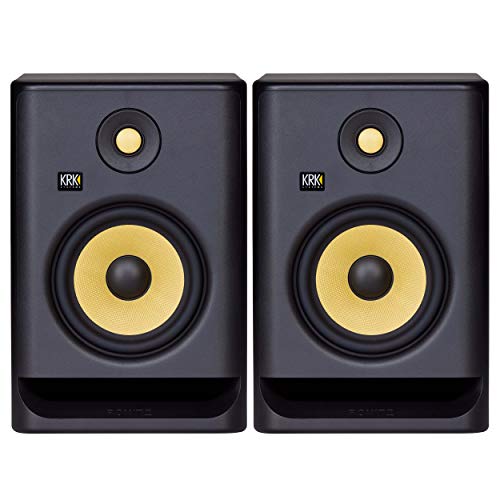
KRK Rokit 7 G4
Producers in a medium-sized room who want 7 inch bass reach and on-screen room correction from a matched pair at a lower mid-range tier.
Read the KRK Rokit 7 G4 review →Questions Buyers Ask
KRK Rokit 5 G3
See the current listing, price and included accessories.
About This Review
Mandrillis Team
The Mandrillis editorial team researches and compares audio and music gear using manufacturer documentation, verified specs and real buyer feedback, so you can make a confident purchase without wading through marketing claims.
Read our full research methodology.