Studio Gear Review
Yamaha MG12 12-Input 4-Bus Review: Analog Only, D-PRE Preamps
The Yamaha MG12 12-Input 4-Bus is a standalone analog mixer with discrete class-A D-PRE preamps, 3-band EQ with high-pass filters, one-knob compressors, four-bus routing and a powder-coated metal chassis, and no USB or effects by design. This research review covers what the listing documents and the details it leaves unpublished.
Our Verdict
Research Score 73/100The Yamaha MG12 12-Input 4-Bus is a deliberately simple analog mixer for buyers who already have their recording and effects covered. The listing documents discrete class-A D-PRE mic preamps with an inverted Darlington circuit, 3-band EQ with high-pass filters, one-knob compressors, a four-bus architecture with group outputs and a rugged, impact-resistant, powder-coated metal chassis, and it states plainly that there is no USB and no effects. It does not publish the mic channel count, phantom power, output connectors, aux sends, noise figures, dimensions or weight. For lecture halls, worship rooms, schools and recordists who want a durable analog front end with group routing, it is a sound lower mid-range choice. Streamers should look at a USB model.
Editorial research score based on published specifications and documented features, not a customer rating or lab test.

Yamaha
Yamaha MG12 12-Input 4-Bus
Best for: Lecture halls, worship rooms, schools and home recordists who want a durable analog mixer with clean D-PRE preamps and group routing and do not need USB or effects.
Skip it if: You want a direct USB feed for streaming or recording, rely on built-in reverb, or need a documented mic channel count and phantom power before buying.
Check Price on AmazonWe may earn a commission at no extra cost to you.
Listing verified: October 2026
Who Should Buy It
Buy it if
- Schools and lecture halls that need a rugged mixer with simple compression
- Worship rooms that route a choir or band through group buses
- Recordists who want a D-PRE front end ahead of an existing interface
- Rehearsal spaces that prefer an uncluttered analog surface
Skip it if
- You stream or podcast and want USB built in
- You need onboard effects for vocals
- You need more microphone channels than the manual confirms
Key Specifications
| Type | 12-input 4-bus analog mixer, standalone (listing states no USB and no effects) |
| Inputs | 12 inputs with discrete class-A D-PRE mic preamps (mic channel count and connector types not published in listing) |
| Outputs | 4-bus architecture with stereo main plus group outputs (connector types not published in listing) |
| Preamps | Discrete class-A D-PRE mic preamps with inverted Darlington circuit (count, gain range and noise figures not published in listing) |
| Resolution | Not applicable; the listing states no USB connection |
| Phantom power | Not published in listing |
| Connection | None; analog only, the listing states no USB |
| Monitoring | Not published in listing |
| Bundled software | None stated; the mixer has no USB connection |
| Included accessories | Not published in listing |
Overview
The Yamaha MG12 12-Input 4-Bus is a purely analog mixer, and the listing says so directly: twelve channels, no USB and no effects. What it offers instead is Yamaha's discrete class-A D-PRE preamps, 3-band EQ with high-pass filters, one-knob compressors, a four-bus architecture and a rugged powder-coated metal chassis, pitched at performances, recordings and lectures in the lower mid-range tier.
Leaving out USB and effects is a deliberate choice rather than an omission. Many buyers already own a dedicated interface or an outboard effects unit and simply want a well-built analog front end with good preamps and group routing. The MG12 serves that buyer, and the four-bus design is the clue that it is meant to be worked, not just plugged in.
This is a research review drawn from the product listing. The preamp design, EQ, compressors, bus count, chassis construction and the absence of USB and effects are documented. The number of mic channels, phantom power, output connectors, aux sends, dimensions and weight are not, and each of those gaps is called out where it affects a purchase.
Preamps and Sound Quality
D-PRE is Yamaha's discrete class-A microphone preamp, built around an inverted Darlington circuit, and the listing describes its character as fat, natural bass with smooth, soaring highs. Discrete class-A means individual transistors rather than an integrated chip, a design choice usually associated with more headroom and a more open sound than the preamps in budget mixers.
Unlike the related MG10XU listing, this one does not publish equivalent input noise or residual output noise figures, so the comparison with XENYX preamps in a Behringer or the Onyx preamps in a Mackie has to rest on the D-PRE reputation rather than numbers. Buyers consistently report D-PRE preamps as among the cleanest in their class, which is why the MG series is a common recommendation.
The channel strip pairs the preamp with a 3-band EQ and a high-pass filter. The high-pass filter is the quiet hero on a live mixer, removing stage rumble, handling noise and plosive energy below the useful range of a voice or guitar, and the listing is right to emphasize it. Whether the mid band is sweepable is not stated.
Inputs, Outputs and Routing
Twelve inputs is the total, and the listing does not say how many are microphone channels with D-PRE preamps versus stereo line pairs. MG series mixers conventionally split a twelve-input frame into a handful of mono mic channels plus stereo channels, but the exact arrangement must come from the manual, especially for buyers who need five or more microphones.
The four-bus architecture is the MG12's distinguishing feature against smaller MG models. In addition to the main stereo output, two group buses let the operator assign channels to a subgroup, balance them together and feed them to the mains or to a separate recorder or speaker zone. For a lecture hall that records to one device and amplifies through another, that flexibility matters.
Output connector types, aux send count, monitor sends, control room outputs and insert points are not published. A mixer intended for recordings would normally provide balanced main outputs and at least one aux send for monitors or an outboard effects unit, but none of that is confirmed in the listing text.
Features, Monitoring and Software
The feature list is intentionally short. One-knob compressors are the main convenience, and the listing credits them with livelier guitars, punchier bass lines, a tighter snare and cleaner vocals. A single knob that sets threshold and ratio together is well suited to a lecturer or a volunteer who needs consistent level without understanding compression.
There are no built-in effects, so reverb for a singer requires an external processor on an aux send and return, assuming the mixer provides them. For a lecture or a recording session that is no loss at all, and for a performance it is a reasonable trade for buyers who prefer a dedicated effects unit or add reverb in the DAW afterward.
Monitoring, metering, a headphone output and a solo system are not described in the listing. With no USB there is no bundled software, and recording requires an external interface or recorder fed from the main or group outputs. Buyers who want a one-box recording solution should look at the MG10XU or a USB-equipped mixer instead.
- Discrete class-A D-PRE mic preamps
- 3-band EQ with high-pass filters on channels
- One-knob compressors for simple dynamics control
- Four-bus routing with group outputs
- Standalone analog design with no USB or effects
Build, Design and Controls
Build is the MG12's strongest documented area after the preamps. The listing specifies a rugged, impact-resistant, powder-coated metal chassis, which is a step up from the plastic or thin steel enclosures common at this price. For a mixer that travels between a classroom, a hall and a rehearsal room, that durability is worth more than a feature it does not have.
Dimensions and weight are not published, so transport planning should wait for figures from the manual. Twelve-input MG mixers are tabletop units rather than rack mounts, and the four-bus layout implies a slightly wider master section than a two-bus frame to accommodate the group faders.
The control layout follows the clean MG series convention: gain, high-pass switch, compressor knob, 3-band EQ, aux, pan and fader on each mono channel, with the group assignment switches near the fader. The absence of an effects section and a USB panel keeps the surface uncluttered, which suits operators who want nothing between them and the mix.
Connectivity, Drivers and Latency
There is nothing to say about drivers or latency because the MG12 has no computer connection at all. The listing is explicit that this is a standalone mixer with no USB, so recording means taking the main or group outputs into an external interface, a handheld recorder or a camera. That is a feature for some buyers and a dealbreaker for others.
The upside of an all-analog signal path is zero processing latency and no driver installation, operating system compatibility or firmware questions, which is why institutions still favor analog mixers for lecture halls and multipurpose rooms. The downside is that any streaming or multitrack capture requires a second device.
Bluetooth, digital inputs and wireless options are not mentioned and would not be expected on a standalone analog mixer in this family. Phone or laptop playback goes into a stereo line channel through a cable, which is the simplest and most reliable arrangement in a room used by many people.
Setup and Daily Use
Setup is as direct as mixers get: microphones to the D-PRE channels, playback and keyboards to the stereo inputs, main outputs to the amplifier or powered speakers, and group outputs to a recorder or a second zone if the room needs one. There is no software to install and no driver to update.
In daily use the one-knob compressors and high-pass filters do most of the work for an untrained operator, keeping lecture audio consistent and clean. The group buses earn their place in a performance setting, letting a drum submix or a choir section be balanced once and controlled together.
The daily limitations are the absence of effects and USB and the unpublished mic channel count. Singers who want reverb need an external unit, streamers need an interface, and groups with many microphones need to confirm the channel layout before committing. For a lecture hall or a recording front end none of those is a problem.
Who Should Buy It
Schools, lecture halls, houses of worship and multipurpose rooms that need a durable analog mixer with clean preamps and group routing, and that either do not record or already have a recorder, are the ideal buyers. The metal chassis and simple controls suit shared spaces.
Home recordists who own a quality two-channel interface will find the MG12 a useful analog front end, using the D-PRE preamps and compressors on the way into the interface and the group buses to create a stereo submix. Small bands rehearsing without a need for effects also fit.
It is not the mixer for streamers or podcasters who want a direct USB feed, for performers who rely on built-in reverb, or for anyone who needs a documented phantom power specification and mic channel count before purchase. The MG10XU covers the first two needs within the same family.
Alternatives Worth Considering
The Yamaha MG10XU is the obvious in-family alternative, trading the MG12's four buses for USB and SPX effects while keeping D-PRE preamps and one-knob compressors, and its listing publishes noise figures. Buyers who need a single box for streaming or simple recording should look there first.
Behringer's Xenyx mixers of similar size add built-in effects and USB at a lower price, with XENYX preamps that are respected but less documented than D-PRE, and the Mackie ProFX series pairs Onyx preamps with a USB interface and GigFX effects. Both are more feature-rich and less focused than the MG12.
For a recording-first buyer, a Focusrite Scarlett 2i2, PreSonus AudioBox or Behringer UMC202HD captures two channels directly to a DAW and makes the MG12 unnecessary unless more than two sources must be mixed live. The MG12 only makes sense when live mixing is part of the job.
Verdict
The Yamaha MG12 12-Input 4-Bus is an honest, well-built analog mixer for buyers who know they do not need USB or effects. Its listing documents discrete class-A D-PRE preamps, 3-band EQ with high-pass filters, one-knob compressors, four-bus routing and a powder-coated metal chassis, and it is clear about what is absent.
What the listing does not publish is the mic channel count, phantom power, output connectors, aux sends, noise figures, dimensions and weight, and buyers should resolve those from the manual. The lack of a computer connection is stated plainly and should steer streamers and podcasters elsewhere.
Scored at 73, it sits in the mid-range band on preamp and build strength, with the connectivity score reflecting the deliberate absence of USB. For lecture halls, worship rooms, schools and recordists who want a durable analog front end with group routing, it is a sound lower mid-range choice.
Strengths and Limitations
Strengths
- Discrete class-A D-PRE mic preamps
- Four-bus routing with group outputs
- One-knob compressors and high-pass filters
- Rugged powder-coated metal chassis
- No drivers, software or latency to manage
Limitations
- No USB connection and no built-in effects
- Mic channel count and phantom power are not published
- Output connectors and aux sends are unstated
- No noise figures published for this model
How We Scored It
Scores reflect published specifications, documented features and value against the alternatives below. They are editorial research scores, not laboratory measurements.
Alternatives to Consider
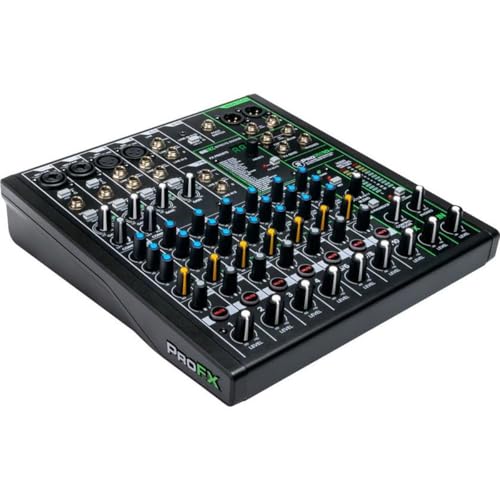
Mackie ProFX10v3 10-Channel
Singer-songwriters, duos, podcasters and streamers who want Onyx preamps, onboard effects and USB capture in one compact lower mid-range mixer for small gigs and home streams.
Read the Mackie ProFX10v3 10-Channel review →
Behringer XENYX QX1204USB 12-Input 2/2-Bus
Solo performers, small acts and podcasters who want four good mic channels, simple compression, editable Klark Teknik effects and a wireless microphone option in a compact lower.
Read the Behringer XENYX QX1204USB 12-Input 2/2-Bus review →
Yamaha MG10X CV
Solo performers, duos, rehearsal rooms and small halls with powered speakers that want documented D-PRE preamps, simple compression and SPX effects in a lower mid-range analog mixer.
Read the Yamaha MG10X CV review →Questions Buyers Ask
Yamaha MG12 12-Input 4-Bus
See the current listing, price and included accessories.
About This Review
Mandrillis Team
The Mandrillis editorial team researches and compares audio and music gear using manufacturer documentation, verified specs and real buyer feedback, so you can make a confident purchase without wading through marketing claims.
Read our full research methodology.