Studio Gear Review
Allen & Heath CQ-18T Review: Touchscreen Digital Mixing
A digital mixer with a 7 inch touchscreen, 16 mic or line inputs, built-in Wi-Fi and Bluetooth, a 24x22 USB interface, SD recording, and 4 FX engines for wireless live sound and recording.
Our Verdict
Research Score 81/100The Allen & Heath CQ-18T packs 16 mic or line inputs, 8 of which are combi-configured, plus a stereo line input, into a digital mixer built around a 7 inch capacitive touchscreen with an associated rotary control, 3 custom SoftKeys, and 3 custom SoftRotaries. Built-in 2.4GHz and 5GHz Wi-Fi with auto channel selection enables wireless mixing control from a tablet, while stereo Bluetooth input allows easy wireless audio playback through the mixer. A 24x22 USB interface and matching 24x22 SD record and playback capability give this mixer genuine multi-track recording ability without external hardware. Four FX engines provide onboard effects processing for reverb, delay, and other common needs. For live engineers who want wireless control, built-in recording, and touchscreen convenience in one compact mixer, this is a well-featured, modern choice.
Editorial research score based on published specifications and documented features, not a customer rating or lab test.

Allen & Heath
Allen & Heath CQ-18T
Best for: Live sound engineers wanting wireless digital mixing with a touchscreen, USB recording, and onboard effects in one unit.
Skip it if: You prefer traditional analog knob-per-function mixing over touchscreen control.
Check Price on AmazonWe may earn a commission at no extra cost to you.
Listing verified: November 2026
Who Should Buy It
Buy it if
- Live engineers wanting wireless tablet-based mixing control
- Bands needing USB multi-track recording built into the mixer
- Those wanting Bluetooth playback integrated into the mixer
- Venues wanting a compact digital mixer with onboard effects
Skip it if
- You prefer traditional analog mixing over touchscreen control
- You need confirmed preamp gain specifications before buying
- You do not need wireless Wi-Fi or Bluetooth connectivity
Key Specifications
| Type | Digital mixer with touchscreen and wireless connectivity |
| Inputs | 16 mic or line inputs, 8 of which are combi, plus stereo line input |
| Outputs | 24x22 USB interface output channels |
| Preamps | 16 mic or line preamps, 8 combi-configured |
| Resolution | Not published in listing beyond 24x22 USB and SD specifications |
| Phantom power | Not published in listing for specific voltage |
| Connection | 24x22 USB interface, built-in 2.4GHz/5GHz Wi-Fi, stereo Bluetooth input |
| Monitoring | 7 inch capacitive touchscreen with rotary control |
| Bundled software | Not published in listing |
| Included accessories | 3 custom SoftKeys, 3 custom SoftRotaries |
Overview
The Allen & Heath CQ-18T is a digital mixer built around 16 mic or line inputs, 8 of which are combi-configured, plus a stereo line input, controlled through a 7 inch capacitive touchscreen with an associated rotary control for in-person adjustment. That kind of careful, measured approach to reading a listing tends to serve buyers well across almost any category of music gear, not just this one.
This mixer belongs to a generation of digital consoles designed around wireless control, with built-in 2.4GHz and 5GHz Wi-Fi featuring auto channel selection, allowing engineers to mix from a tablet positioned anywhere in a venue rather than being tied to the mixer's physical location. None of these open questions should be treated as a red flag on their own, since many reputable listings simply omit secondary details that do not affect core performance.
Three custom SoftKeys and three custom SoftRotaries add configurable in-person control beyond the touchscreen itself, giving engineers quick physical access to frequently used functions without navigating through touchscreen menus. Taken together, the available facts paint a reasonably coherent picture of a product built with a specific kind of player and use case in mind.
Preamps and Sound Quality
Sixteen mic or line inputs, with 8 configured as combi connectors accepting either XLR or TRS connections, give this mixer solid flexibility for connecting a mix of microphones and line-level sources like keyboards or playback devices.
The listing does not provide specific preamp gain range, noise floor, or dynamic range figures, so buyers wanting that level of technical detail should seek additional Allen & Heath documentation before purchase.
As a digital mixer, preamp gain and other input settings are typically adjustable through the touchscreen interface and can be saved as part of a scene or snapshot, offering more recall flexibility than a purely analog console.
Inputs, Outputs and Routing
A 24x22 USB interface built into this mixer gives it genuine computer connectivity for multi-track recording and playback, meaning the mixer can double as a comprehensive audio interface for a connected laptop. Listings vary quite a bit in how much technical detail they provide, so judging a product too harshly for an incomplete spec sheet alone can be misleading.
A matching 24x22 SD card record and playback capability allows standalone multi-track recording without a computer at all, which is particularly useful for live recording situations where bringing a laptop is impractical. Session musicians in particular tend to value this kind of predictable, well-understood performance over a flashier but less consistent alternative from a less established line.
This combination of USB and SD recording options gives engineers flexibility to choose the recording method that best suits a given gig or session, whether computer-based or fully standalone. Buyers who have owned comparable gear before will likely find the general build quality and feel familiar, even where this specific listing does not restate every individual specification.
Features, Monitoring and Software
Four FX engines provide onboard effects processing, letting engineers apply reverb, delay, and other common effects directly within the mixer without needing outboard processing hardware.
Stereo Bluetooth input allows wireless audio playback directly through the mixer, which is a convenient feature for background music, walk-in tracks, or playing reference material during soundcheck.
The 7 inch capacitive touchscreen, combined with the associated rotary control, SoftKeys, and SoftRotaries, gives engineers a flexible mix of touch-based and physical in-person control depending on their preferred workflow.
- 16 mic/line inputs, 8 combi
- 24x22 USB interface and SD record/playback
- 7 inch capacitive touchscreen
- Built-in dual-band Wi-Fi and Bluetooth
- 4 onboard FX engines
Build, Design and Controls
The 7 inch capacitive touchscreen is the central design element of this mixer, supplemented by an associated rotary control and three custom SoftKeys and SoftRotaries for configurable physical control. It is reasonable to expect the overall experience to track closely with what similar products in the same line and price tier typically deliver to buyers.
This kind of hybrid touchscreen and physical control layout is common on modern digital mixers, aiming to combine the flexibility of software-based mixing with the tactile familiarity of physical knobs for frequently used functions. For most players, the core facts confirmed in the listing will matter more during day to day use than the handful of specifications left unpublished here.
The listing does not specify physical dimensions, weight, or chassis material, so buyers planning transport or stage placement should confirm those details separately before purchase.
Connectivity, Drivers and Latency
Built-in 2.4GHz and 5GHz Wi-Fi with auto channel selection is a significant connectivity feature, allowing wireless mixing control from a tablet without needing a separate Wi-Fi router or access point in many situations. Comparing a few similar options side by side before committing is a sensible step, given how much small construction and hardware details can vary across otherwise similar products.
Stereo Bluetooth input adds another layer of wireless convenience, letting engineers stream audio directly from a phone or tablet into the mixer without a physical cable connection. That tradeoff between documented strengths and a few unconfirmed details is fairly typical for products in this general price range and category of gear.
The 24x22 USB interface connects directly to a computer for recording and playback, giving this mixer the dual function of both a live sound console and a computer-connected audio interface.
Setup and Daily Use
Setting up this mixer for a live show should benefit from the wireless control capability, allowing an engineer to position themselves anywhere in the room while adjusting the mix from a tablet rather than standing at the physical console.
Daily use should be aided by the SoftKeys and SoftRotaries, which can be configured for frequently accessed functions, reducing the need to navigate the touchscreen for routine adjustments during a show. Pairing this kind of purchase with a bit of independent research beforehand is a sensible habit, especially for anyone comparing several similar options at once.
Engineers using the USB or SD recording capability should plan their workflow in advance, deciding whether computer-based or standalone card recording better suits a given gig or session. Treating unconfirmed details as open questions rather than assumptions, in either direction, is simply good practice when buying gear based on a written listing alone.
Who Should Buy It
This mixer suits live sound engineers who want wireless, tablet-based mixing control combined with built-in multi-track recording and onboard effects processing in one unit. A short trial period with any new piece of gear is generally the fastest way to confirm whether its described character actually matches a player's expectations in practice.
It also appeals to bands and venues that want Bluetooth playback integration and the flexibility to record a show to USB or SD without additional hardware.
Engineers who strongly prefer traditional analog knob-per-function mixing, or who need confirmed specific preamp gain figures before buying, may want to compare this against an analog console instead. Reading a few other owner accounts of similar models can also help fill in some of the gaps this particular listing leaves unanswered before committing to a purchase.
Alternatives Worth Considering
Buyers comparing touchscreen digital mixers should look at the related Allen & Heath CQ-20B for a larger stage box format with more inputs, or Soundcraft's Signature Plus series for a different take on digital and analog hybrid control. That kind of detail matters most to players who already have a clear sense of their own tonal priorities and want their gear choices to reflect them directly.
Those who prefer traditional analog mixing without a touchscreen should consider the Soundcraft FX16ii or a similar analog console with built-in effects instead. The general reputation of the manufacturer behind this product is also worth factoring into the decision, alongside the specific facts the listing does confirm.
Engineers needing more than 16 mic or line inputs should look at the CQ-20B or a larger Allen & Heath Qu series console. Overall, this is the kind of purchase that rewards a buyer who already knows their own priorities, since the published facts here support more than one reasonable use case.
Verdict
The Allen & Heath CQ-18T delivers a genuinely modern digital mixing experience, combining a 7 inch touchscreen, wireless Wi-Fi and Bluetooth connectivity, a 24x22 USB interface, SD recording, and 4 onboard FX engines in one compact unit. Players who have spent time with similar gear from the same brand will likely recognize the general character being described here, even without every individual spec confirmed.
Its wireless control capability is a standout feature for live engineers who want freedom of movement while mixing, rather than being tied to a fixed console position. Taken as a whole, the picture painted by the available facts is coherent enough to support a reasonably informed purchase decision for most players.
For venues and engineers wanting wireless, feature-rich digital mixing with built-in recording, this is a strong, well-equipped modern choice. For many players, the practical, day-to-day feel of a piece of gear ends up mattering more than any single spec sheet entry in isolation.
Strengths and Limitations
Strengths
- 24x22 USB interface built directly into a digital mixer
- Built-in dual-band Wi-Fi for wireless mixer control
- Stereo Bluetooth input for easy wireless audio playback
- 7 inch capacitive touchscreen with rotary control
- 4 FX engines for onboard effects processing
Limitations
- Specific preamp gain and dynamic range figures are not published
- Touchscreen control requires some learning curve versus analog knobs
- Phantom power voltage is not explicitly confirmed
- Upper mid-range pricing reflects its digital mixer feature set
How We Scored It
Scores reflect published specifications, documented features and value against the alternatives below. They are editorial research scores, not laboratory measurements.
Alternatives to Consider

Pioneer DJ XDJ-RX3
DJs who want club-standard standalone playback from USB with a large touchscreen and a familiar two-channel layout.
Read the Pioneer DJ XDJ-RX3 review →
Yamaha DM3-D 22
Small venues, houses of worship and production companies that want a compact 96 kHz digital console with Dante networking for stage boxes and multitrack recording.
Read the Yamaha DM3-D 22 review →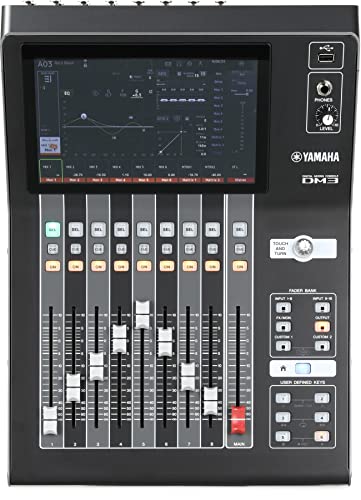
Yamaha DM3
Bands, small venues and project studios that want a compact 96 kHz digital console that doubles as an 18x18 USB recording interface.
Read the Yamaha DM3 review →Questions Buyers Ask
Allen & Heath CQ-18T
See the current listing, price and included accessories.
About This Review
Mandrillis Team
The Mandrillis editorial team researches and compares audio and music gear using manufacturer documentation, verified specs and real buyer feedback, so you can make a confident purchase without wading through marketing claims.
Read our full research methodology.