Best Audio Mixers: Eight Analog, USB and Podcast Mixers
This guide is for podcasters, bands and houses of worship choosing an audio mixer for recording, streaming or live sound. We looked at 356 researched mixers and consoles and narrowed the field to eight picks spanning an integrated podcast console, tablet-controlled digital rack mixers, and familiar analog boards with built-in USB recording. Each pick is scored from published listing data on preamp quality, input and output count, features, build, connectivity and value. Whether you need a four-person podcast rig or a 22-channel analog board, these selections match documented specs to real recording and mixing situations.
Quick Answer
The Rode RODECaster Pro 2 is our best overall pick because it bundles a complete four-person podcast kit with Revolution Preamps and dual USB interfaces for streaming to two devices. For value, the Behringer X AIR XR18 18-Channel pairs 16 Midas-designed preamps with tablet control and a built-in Wi-Fi router. The Fender Quantum LT 16 is the top USB mixer choice with eight high-gain preamps and standalone Mixer Mode. If you want the simplest small-venue setup, the Allen & Heath QU-SB is our best budget pick with a full Qu-32 processing core in a portable, iPad-controlled chassis.
Why You Can Trust This Guide
We compared products using verified manufacturer specifications, available manuals and documentation, retailer listings, owner feedback, and editorial research.
We focus on measurable differences such as performance, compatibility, usability, build quality, features, and value.
Mandrillis presents editorial research as editorial research, not as laboratory testing, unless physical testing was actually performed.
Read our full research methodology.
Quick Picks
Comparison Table
| Model | Inputs | Outputs | Connection | Monitoring | Best For | Main Advantage | Score |
|---|---|---|---|---|---|---|---|
| Rode RODECaster Pro 2 | XLR microphone inputs for up to four participants (bundle ships four PodMics and four XLR cables); USB and Bluetooth audio sources; exact input count not published in listing | Headphone connections for participants; USB outputs to two devices; other output types not published in listing | Dual USB interfaces for Mac, PC, iOS and Android; Bluetooth for phone calls and monitoring | Headphone outputs for the host and guests; count and level details not published in listing | Podcast and streaming teams of up to four people who want a complete desk-mounted studio with broadcast processing and standalone SD recording in one purchase. | Complete four-person kit with mics, boom arms, headphones, cables and SD card | 86/100 |
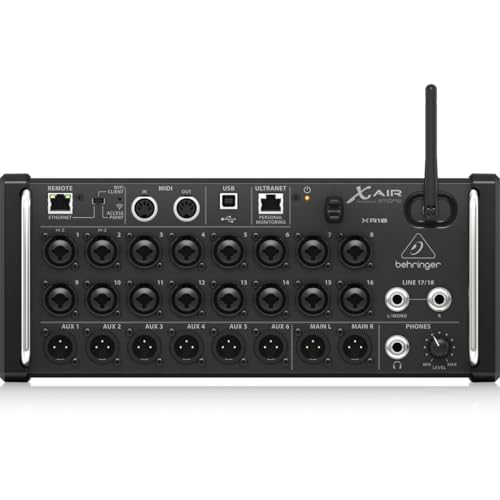
| Behringer X AIR XR18 18-Channel | 18 inputs including 16 Midas-designed programmable mic preamps | Main: 2 x XLR (aux outputs not published in listing) | Integrated tri-mode Wi-Fi router plus 18 x 18 bidirectional USB audio interface | Not published in listing | Bands, churches and small venues that want per-channel USB recording, remote mixing from a tablet and 16 recallable preamps in a rack unit that lives on stage. | 16 Midas-designed preamps with remote-programmable gain | 84/100 |
| Fender Quantum LT 16 | 16 inputs: six front-panel XLR/TRS combo inputs and eight rear-panel TRS line inputs with selectable +4 dBu / -10 dBV (the remaining inputs are not itemized in the listing) | 8 outputs: balanced TRS, DC-coupled for CV use, plus a headphone output and 5-pin MIDI out | USB-C to Mac or PC, 5-pin MIDI in and out | Balanced TRS outputs and a high-headroom headphone amp (number of headphone outputs not published in listing) | Hybrid studios and multi-mic tracking rooms that want eight high-gain preamps, fourteen line inputs, MIDI and CV-capable outputs in one USB-C interface with a DAW included. | Eight mic preamps with a published +75 dB gain figure | 83/100 |
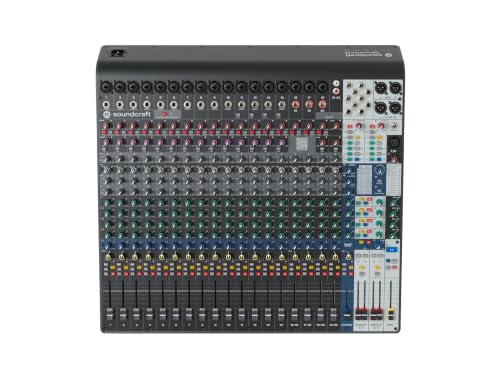
| Soundcraft Signature Plus 22 | 22 channel analog mixer inputs | 4x4 USB-C interface outputs at up to 192 kHz | 4x4 USB-C 192 kHz interface, corded electric power | Dedicated Listen bus, Talkback To routing, SSM metering | Studios and streamers wanting premium analog Ghost preamps, Lexicon effects, and a 4x4 USB-C interface in one mixer. | Soundcraft Ghost mic preamps with up to 65 dB of gain | 83/100 |
| Yamaha MG10XU | 10 channels; 4 mono channels with D-PRE mic preamps and 1-knob compressors; remaining input types not published in listing | Stereo main feed to the two DBR12 speakers, a monitor output and a phones output; connector types not published in listing | Class-compliant USB to computer or tablet, no driver required | Phones output on the console; HPH-MT5 closed-back headphones included | Bands, mobile DJs and worship teams that want a complete small-venue PA with a USB mixer, two 12-inch powered mains and monitoring headphones in one order. | Four Class-A D-PRE preamps with a published -128 dBu noise figure | 82/100 |
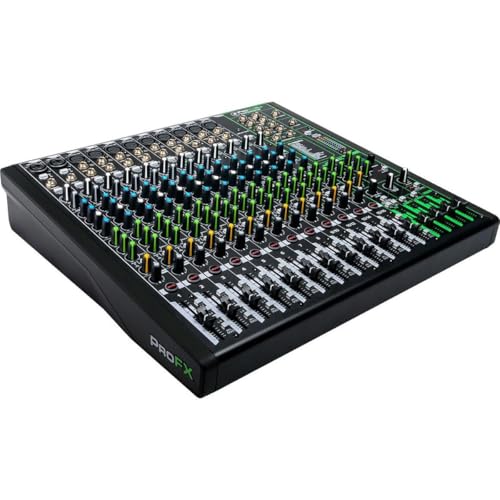
| Mackie ProFX16v3 16-Channel | 16 channels (number of mic channels not published in listing) | Not published in listing | USB recording interface built in (connector type and channel count not published in listing) | Not published in listing | Bands, churches and small venues that want a familiar 16-channel analog board that also delivers a multi-track recording of every show or service. | Records multi-track over USB while the operator mixes the room | 81/100 |
| Allen & Heath CQ-18T | 16 mic or line inputs, 8 of which are combi, plus stereo line input | 24x22 USB interface output channels | 24x22 USB interface, built-in 2.4GHz/5GHz Wi-Fi, stereo Bluetooth input | 7 inch capacitive touchscreen with rotary control | Live sound engineers wanting wireless digital mixing with a touchscreen, USB recording, and onboard effects in one unit. | 24x22 USB interface built directly into a digital mixer | 81/100 |
| Allen & Heath QU-SB | 16 mono inputs (TRS + XLR), 1 stereo input (TRS), Qu-32 core with 32 mono plus 3 stereo channels | 18-in/14-out, 12 onboard mix outputs, 1 stereo Matrix out | 32 x 32 USB audio interface, designed for iPad wireless remote control | Up to 11 monitor mixes, 4 mono plus 7 stereo | Engineers wanting full Qu-32 digital mixing power and multi-track recording in a compact, iPad-controlled portable mixer. | Compact digital mixer specifically designed for iPad control | 81/100 |
#1. Rode RODECaster Pro 2 (Best Overall)

Mandrillis Research Score: 86/100
This is an editorial research score, not a customer rating or laboratory test score.
Who Should Buy It
- Interview and panel podcasts with three or four regular voices
- Streamers who need to record locally while streaming from a second device
- Small studios and agencies setting up a client-ready podcast room
- Producers who want broadcast processing without plug-ins or outboard gear
Skip It If
- You are a solo creator with no plans for multiple guests
- You need published converter specs for critical music recording
- You already own microphones, arms and headphones you like
Pros
- Complete four-person kit with mics, boom arms, headphones, cables and SD card
- Revolution Preamps with built-in APHEX exciter, compressor and noise gate
- Dual USB interfaces allow recording and streaming to two devices at once
- Records up to 14 channels to SD card with no computer required
- Nine channels, six physical faders and eight SMART pads on one surface
- Bluetooth for phone call recording and wireless monitoring
Cons
- Listing does not publish sample rate, bit depth or preamp gain
- Phantom power and exact input count are not stated
- Bundled headphones are a third-party model rather than a Rode product
- Upper mid-range tier is a large outlay for a first podcast
- Bundled software and desktop apps are not listed
Key Specs
Type: Integrated podcast production console: multitrack audio interface, mixer, sound pad controller and broadcast processor, sold as a four-person bundle
Inputs: XLR microphone inputs for up to four participants (bundle ships four PodMics and four XLR cables); USB and Bluetooth audio sources; exact input count not published in listing
Outputs: Headphone connections for participants; USB outputs to two devices; other output types not published in listing
Preamps: Revolution Preamps, described as ultra-low-noise; gain figure not published in this listing
Resolution: Not published in listing
Phantom power: Not published in listing
Connection: Dual USB interfaces for Mac, PC, iOS and Android; Bluetooth for phone calls and monitoring
Monitoring: Headphone outputs for the host and guests; count and level details not published in listing
Bundled software: Not published in listing
Included accessories: 4 Rode PodMic microphones, 4 PSA1+ boom arms, 4 StreamEye Cans50 over-ear headphones, 4 XLR cables, 32GB SD card
Why We Picked It
The Rode RODECaster Pro 2 takes the best overall spot because it ships as a complete four-person kit with PodMics, boom arms, headphones, cables and an SD card, built around ultra-low-noise Revolution Preamps. Dual USB interfaces record and stream to two devices at once, and up to 14 channels save to SD card with no computer required, though sample rate, bit depth and phantom power are not published.
Read our full Rode RODECaster Pro 2 review →
Check Price on AmazonWe may earn a commission at no extra cost to you.
Last verified: October 2026
Why This Product Ranks Best Overall
#2. Behringer X AIR XR18 18-Channel (Best Value)
Mandrillis Research Score: 84/100
This is an editorial research score, not a customer rating or laboratory test score.
Who Should Buy It
- Bands that mix their own monitors from the stage on phones or tablets
- Churches that want scene recall so each service starts from a saved mix
- Small studios that need an 18 x 18 interface and a live mixer in one box
- Engineers who want to walk the room while adjusting the mix
Skip It If
- You want a traditional console with faders under your hands
- Your venue has heavy Wi-Fi congestion and you cannot run a wired network
- You need a confirmed phantom power and resolution specification before buying
Pros
- 16 Midas-designed preamps with remote-programmable gain
- 18 x 18 bidirectional USB interface for per-channel recording and playback
- Built-in tri-mode Wi-Fi router removes the need for an external access point
- 12 buses on an 18-channel frame for monitors and subgroups
- Rack format keeps the mixer on stage while the engineer mixes from anywhere
- Dugan-style auto-mixing noted for a firmware update
Cons
- No physical faders, every adjustment happens on a tablet
- Resolution, phantom power and aux output count are not published
- Wi-Fi reliability in crowded venues is a known concern for tablet mixers
- Auto-mixing was listed as a future firmware feature, not a shipping one
Key Specs
Type: 18-channel, 12-bus digital rack mixer controlled from iPad or Android tablets
Inputs: 18 inputs including 16 Midas-designed programmable mic preamps
Outputs: Main: 2 x XLR (aux outputs not published in listing)
Preamps: 16 Midas-designed, fully programmable mic preamps (gain figure not published in listing)
Resolution: Not published in listing
Phantom power: Not published in listing
Connection: Integrated tri-mode Wi-Fi router plus 18 x 18 bidirectional USB audio interface
Monitoring: Not published in listing
Bundled software: Tablet control app implied by the listing but not named
Included accessories: Not published in listing
Why We Picked It
The Behringer X AIR XR18 18-Channel earns best value for pairing 16 Midas-designed, remote-programmable preamps with an 18 x 18 bidirectional USB interface and a built-in tri-mode Wi-Fi router. Twelve buses on an 18-channel rack frame let an engineer mix monitors and subgroups from a tablet anywhere in the room, though there are no physical faders and resolution figures are not published.
Read our full Behringer X AIR XR18 18-Channel review →
Check Price on AmazonWe may earn a commission at no extra cost to you.
Last verified: October 2026
Why This Product Ranks Best Value
#3. Fender Quantum LT 16 (Best USB Mixer)

Mandrillis Research Score: 83/100
This is an editorial research score, not a customer rating or laboratory test score.
Who Should Buy It
- Producers with outboard synths and hardware who need many line inputs
- Drum recordists and small bands tracking eight microphones at once
- Modular synth users who want DC-coupled outputs for CV
- Streamers and educators who use loopback or the standalone mixer mode
Skip It If
- You need a confirmed sample rate and bit depth before purchase
- You want optical or other digital expansion for more channels later
- Your workflow needs only two inputs and a headphone jack
Pros
- Eight mic preamps with a published +75 dB gain figure
- Sixteen inputs and eight outputs at a lower mid-range price
- Standalone Mixer Mode and Mic Pre Mode work without a computer
- DC-coupled outputs for modular synth control plus 5-pin MIDI
- Loopback for streaming and content creation
- Perpetual Fender Studio Pro DAW license included
Cons
- Bit depth and sample rate are not published
- Phantom power is not stated despite eight mic preamps
- The listing counts eight preamps but describes only six combo jacks
- No digital expansion such as optical input is mentioned
- Chassis construction and weight are not published
Key Specs
Type: 16-in, 8-out USB-C audio interface with standalone mixer and mic preamp modes
Inputs: 16 inputs: six front-panel XLR/TRS combo inputs and eight rear-panel TRS line inputs with selectable +4 dBu / -10 dBV (the remaining inputs are not itemized in the listing)
Outputs: 8 outputs: balanced TRS, DC-coupled for CV use, plus a headphone output and 5-pin MIDI out
Preamps: Eight MAX-HD mic preamps with up to +75 dB of gain
Resolution: Not published in listing
Phantom power: Not published in listing
Connection: USB-C to Mac or PC, 5-pin MIDI in and out
Monitoring: Balanced TRS outputs and a high-headroom headphone amp (number of headphone outputs not published in listing)
Bundled software: Fender Studio Pro perpetual license with Mustang and Rumble amp plug-ins, plus the Fender Amp and FX Pack in the Fender Studio app on registration
Included accessories: Not published in listing
Why We Picked It
The Fender Quantum LT 16 wins best USB mixer honors with eight MAX-HD preamps offering up to plus 75 dB of gain across sixteen inputs and eight outputs. Standalone Mixer Mode and Mic Pre Mode work without a computer, and DC-coupled outputs plus 5-pin MIDI suit modular synth and hybrid setups, though bit depth, sample rate and phantom power are not stated in the listing.
Read our full Fender Quantum LT 16 review →
Check Price on AmazonWe may earn a commission at no extra cost to you.
Last verified: October 2026
Why This Product Ranks Best USB Mixer
#4. Soundcraft Signature Plus 22 (Best Podcast Mixer)
Mandrillis Research Score: 83/100
This is an editorial research score, not a customer rating or laboratory test score.
Who Should Buy It
- Studios wanting premium Ghost preamp character
- Streamers needing a hybrid analog mixer with USB-C output
- Engineers who value dbx compression and Sapphyre EQ
- Those wanting built-in Lexicon hardware effects
Skip It If
- You need a USB-C interface with more than 4x4 channels
- You want a fully digital, touchscreen-controlled mixer
- You require confirmed phantom power voltage specifications
Pros
- Soundcraft Ghost mic preamps with up to 65 dB of gain
- Sapphyre EQ and dbx one-knob compressors for musical tone shaping
- Built-in Lexicon hardware effects with preset store and tap tempo
- Advanced talkback, listening, and SSM metering across inputs and outputs
- 4x4 USB-C interface at up to 192 kHz for hybrid studio and streaming
Cons
- Specific phantom power voltage is not published in the listing
- 22 channel count may exceed what smaller setups need
- Corded electric power means no battery operation option
- Upper mid-range pricing reflects its premium analog feature set
Key Specs
Type: Analog mixer with Lexicon FX and USB-C interface
Inputs: 22 channel analog mixer inputs
Outputs: 4x4 USB-C interface outputs at up to 192 kHz
Preamps: Soundcraft Ghost mic preamps with up to 65 dB of gain
Resolution: Up to 192 kHz via the 4x4 USB-C interface
Phantom power: Not published in listing for specific voltage
Connection: 4x4 USB-C 192 kHz interface, corded electric power
Monitoring: Dedicated Listen bus, Talkback To routing, SSM metering
Bundled software: Included software bundle for hybrid studio and streaming use
Included accessories: Not published in listing beyond bundled software
Why We Picked It
The Soundcraft Signature Plus 22 takes best podcast mixer status with Soundcraft Ghost mic preamps offering up to 65 dB of gain, Sapphyre EQ, dbx one-knob compressors, and built-in Lexicon hardware effects with preset store and tap tempo. A 4x4 USB-C interface runs up to 192 kHz for hybrid streaming, though specific phantom power voltage is not published in the listing.
Read our full Soundcraft Signature Plus 22 review →
Check Price on AmazonWe may earn a commission at no extra cost to you.
Last verified: November 2026
Why This Product Ranks Best Podcast Mixer
#5. Yamaha MG10XU (Best Analog)

Mandrillis Research Score: 82/100
This is an editorial research score, not a customer rating or laboratory test score.
Who Should Buy It
- Gigging bands playing rooms of roughly 100 to 300 people
- Mobile DJs and event hosts who need a matched console and speaker pair
- Worship volunteers who want simple analog controls with onboard effects
- Home recordists who want a mixer, USB interface and headphones together
Skip It If
- You record several sources to separate tracks over USB
- Your band needs six or more microphone channels
- You already have powered speakers and headphones
Pros
- Four Class-A D-PRE preamps with a published -128 dBu noise figure
- 1-knob compressors on all four mono channels
- SPX engine with 24 reverb, delay and modulation programs
- 24-bit/192 kHz class-compliant USB recording with Cubase AI
- Two DBR12 speakers rated at 1,000 W and 131 dB SPL each
- HPH-MT5 closed-back headphones included for cueing
Cons
- USB captures the stereo mix only, not individual channels
- Listing does not publish phantom power or main output connectors
- Upper mid-range tier is driven by the speakers rather than the mixer
- Four microphone preamps limits full band setups
- Speaker cables and stands are not listed as included
Key Specs
Type: 10-channel analog USB mixing console sold as a live sound bundle with two DBR12 powered speakers and HPH-MT5 headphones
Inputs: 10 channels; 4 mono channels with D-PRE mic preamps and 1-knob compressors; remaining input types not published in listing
Outputs: Stereo main feed to the two DBR12 speakers, a monitor output and a phones output; connector types not published in listing
Preamps: 4 discrete Class-A D-PRE preamps, -128 dBu input noise
Resolution: 24-bit/192 kHz USB audio interface
Phantom power: Not published in listing
Connection: Class-compliant USB to computer or tablet, no driver required
Monitoring: Phones output on the console; HPH-MT5 closed-back headphones included
Bundled software: Cubase AI download
Included accessories: 2 Yamaha DBR12 12-inch 1,000 W powered loudspeakers, Yamaha HPH-MT5 closed-back studio headphones
Why We Picked It
The Yamaha MG10XU earns best analog status for its four discrete Class-A D-PRE preamps with a published minus 128 dBu noise figure and 1-knob compressors on every mono channel. The SPX engine adds 24 reverb, delay and modulation programs, and 24-bit/192 kHz USB recording with Cubase AI rounds out the package, though USB only captures the stereo mix, not individual channels.
Read our full Yamaha MG10XU review →
Check Price on AmazonWe may earn a commission at no extra cost to you.
Last verified: October 2026
Why This Product Ranks Best Analog
#6. Mackie ProFX16v3 16-Channel (Best Compact)
Mandrillis Research Score: 81/100
This is an editorial research score, not a customer rating or laboratory test score.
Who Should Buy It
- Gigging bands that want a live multi-track for later mixing
- Churches recording sermons and worship sets each week
- Small venues that need a house desk a visiting engineer can run immediately
- Rehearsal spaces that want recording without extra hardware
Skip It If
- You want a digital mixer with scene recall and tablet control
- You need confirmed phantom power and output specifications before buying
- Your source count is small and a compact interface would do
Pros
- Records multi-track over USB while the operator mixes the room
- Onyx preamps with 60 dB of gain on every mic channel
- GigFX engine with 24 built-in effects
- Analog surface with no digital learning curve
- USB interface built in, so no separate recording hardware is needed
Cons
- USB bit depth and sample rate are not published
- Phantom power and the output complement are not stated
- The number of mic channels among the 16 is not given
- No bundled DAW or accessories are named in the listing
Key Specs
Type: 16-channel analog mixer with built-in multi-track USB recording interface
Inputs: 16 channels (number of mic channels not published in listing)
Outputs: Not published in listing
Preamps: Onyx mic preamps with 60 dB of gain on every mic channel
Resolution: Not published in listing
Phantom power: Not published in listing
Connection: USB recording interface built in (connector type and channel count not published in listing)
Monitoring: Not published in listing
Bundled software: Not published in listing
Included accessories: Not published in listing
Why We Picked It
The Mackie ProFX16v3 16-Channel takes best compact honors because its Onyx preamps offer 60 dB of gain on every mic channel while a built-in multi-track USB interface records the whole show. The GigFX engine adds 24 built-in effects on a familiar analog surface with no digital learning curve, though USB bit depth, sample rate and the number of mic channels among the 16 are not published.
Read our full Mackie ProFX16v3 16-Channel review →
Check Price on AmazonWe may earn a commission at no extra cost to you.
Last verified: October 2026
Why This Product Ranks Best Compact
#7. Allen & Heath CQ-18T (Best Premium)

Mandrillis Research Score: 81/100
This is an editorial research score, not a customer rating or laboratory test score.
Who Should Buy It
- Live engineers wanting wireless tablet-based mixing control
- Bands needing USB multi-track recording built into the mixer
- Those wanting Bluetooth playback integrated into the mixer
- Venues wanting a compact digital mixer with onboard effects
Skip It If
- You prefer traditional analog mixing over touchscreen control
- You need confirmed preamp gain specifications before buying
- You do not need wireless Wi-Fi or Bluetooth connectivity
Pros
- 24x22 USB interface built directly into a digital mixer
- Built-in dual-band Wi-Fi for wireless mixer control
- Stereo Bluetooth input for easy wireless audio playback
- 7 inch capacitive touchscreen with rotary control
- 4 FX engines for onboard effects processing
Cons
- Specific preamp gain and dynamic range figures are not published
- Touchscreen control requires some learning curve versus analog knobs
- Phantom power voltage is not explicitly confirmed
- Upper mid-range pricing reflects its digital mixer feature set
Key Specs
Type: Digital mixer with touchscreen and wireless connectivity
Inputs: 16 mic or line inputs, 8 of which are combi, plus stereo line input
Outputs: 24x22 USB interface output channels
Preamps: 16 mic or line preamps, 8 combi-configured
Resolution: Not published in listing beyond 24x22 USB and SD specifications
Phantom power: Not published in listing for specific voltage
Connection: 24x22 USB interface, built-in 2.4GHz/5GHz Wi-Fi, stereo Bluetooth input
Monitoring: 7 inch capacitive touchscreen with rotary control
Bundled software: Not published in listing
Included accessories: 3 custom SoftKeys, 3 custom SoftRotaries
Why We Picked It
The Allen & Heath CQ-18T wins best premium status with 16 mic or line inputs, 8 of them combi, feeding a 24x22 USB interface built directly into a digital mixer. Built-in dual-band Wi-Fi, stereo Bluetooth input, a 7 inch capacitive touchscreen and 4 FX engines give live engineers wireless control, though specific preamp gain and dynamic range figures are not published.
Read our full Allen & Heath CQ-18T review →
Check Price on AmazonWe may earn a commission at no extra cost to you.
Last verified: November 2026
Why This Product Ranks Best Premium
#8. Allen & Heath QU-SB (Best Budget)

Mandrillis Research Score: 81/100
This is an editorial research score, not a customer rating or laboratory test score.
Who Should Buy It
- Engineers wanting portable, iPad-controlled digital mixing
- Bands needing Qu-Drive multitrack recording to USB drives
- Venues wanting dSnake remote audio port expansion
- Those needing up to 11 simultaneous monitor mixes
Skip It If
- You want a mixer with a built-in physical control surface
- You do not own or plan to use an iPad for control
- You need confirmed preamp specifications before buying
Pros
- Compact digital mixer specifically designed for iPad control
- Full Qu-32 processing core inside a portable chassis
- 32 x 32 USB audio interface for genuine multi-track recording
- Qu-Drive direct multitrack recording and playback on USB drives
- Up to 11 monitor mixes for comprehensive stage monitoring
Cons
- Specific preamp gain and dynamic range figures are not published
- Primarily designed around iPad control rather than a built-in screen
- dSnake expansion requires additional compatible hardware
- Upper mid-range pricing reflects its full Qu-32 core positioning
Key Specs
Type: Portable digital mixer with iPad wireless control
Inputs: 16 mono inputs (TRS + XLR), 1 stereo input (TRS), Qu-32 core with 32 mono plus 3 stereo channels
Outputs: 18-in/14-out, 12 onboard mix outputs, 1 stereo Matrix out
Preamps: Recallable Analogiq preamps across the Qu-32 core
Resolution: 32 x 32 USB audio interface
Phantom power: Not published in listing for specific voltage
Connection: 32 x 32 USB audio interface, designed for iPad wireless remote control
Monitoring: Up to 11 monitor mixes, 4 mono plus 7 stereo
Bundled software: iLive FX library, Qu-Drive multitrack recording software not detailed further
Included accessories: Not published in listing beyond dSnake remote expansion capability
Why We Picked It
The Allen & Heath QU-SB takes best budget status because it packs a full Qu-32 processing core, recallable Analogiq preamps, and a 32 x 32 USB audio interface into a portable chassis designed for iPad wireless control. Qu-Drive lets engineers record and play back multitrack audio straight to USB drives, though exact preamp gain and dynamic range figures are not published in the listing.
Read our full Allen & Heath QU-SB review →
Check Price on AmazonWe may earn a commission at no extra cost to you.
Last verified: November 2026
Why This Product Ranks Best Budget
Which One Should You Buy?
Across these eight mixers, the right choice depends on whether you are podcasting, running a stage, or recording at a desk. The Rode RODECaster Pro 2 leads as a complete four-person podcast kit with broadcast processing built in. The Behringer X AIR XR18 is the documented value pick for tablet-controlled live mixing, while the Fender Quantum LT 16 suits hybrid studios needing high-gain USB preamps. The Soundcraft Signature Plus 22 adds Lexicon effects for streaming and studio work, and the Yamaha MG10XU and Mackie ProFX16v3 both suit bands and churches that want a familiar analog board with built-in USB recording. The Allen & Heath CQ-18T and QU-SB round things out for engineers who want digital mixing and wireless tablet or iPad control at two different price points.
Buy the Rode RODECaster Pro 2 if...
You want a complete four-person podcast studio in one purchase, with PodMics, boom arms, headphones and cables included. Revolution Preamps, dual USB streaming to two devices, and standalone SD card recording up to 14 channels suit a dedicated podcast or streaming desk.
Buy the Behringer X AIR XR18 18-Channel if...
You want per-channel USB recording, remote mixing from a tablet, and 16 recallable Midas preamps in a rack unit that stays on stage. A built-in Wi-Fi router removes the need for a separate access point at the venue.
Buy the Fender Quantum LT 16 if...
You want eight high-gain mic preamps, fourteen line inputs, MIDI and CV-capable outputs, and a bundled DAW in one USB-C interface. Standalone Mixer Mode and Mic Pre Mode let you use it without a computer connected.
Buy the Soundcraft Signature Plus 22 if...
You want premium analog Ghost preamps, Sapphyre EQ, built-in Lexicon hardware effects, and a 4x4 USB-C interface running up to 192 kHz. This suits studios and streamers who want tone shaping beyond a basic analog board.
Buy the Yamaha MG10XU if...
You want a complete small-venue PA bundle with a USB mixer, two 1,000 watt DBR12 speakers, and closed-back monitoring headphones in one order. Four Class-A D-PRE preamps and built-in effects suit bands and worship teams.
Buy the Mackie ProFX16v3 16-Channel if...
You want a familiar 16-channel analog board with no digital learning curve that still records a multi-track USB mix of every show or service. Onyx preamps with 60 dB of gain suit bands and small venues.
Buy the Allen & Heath CQ-18T if...
You want wireless digital mixing with a touchscreen, built-in dual-band Wi-Fi, stereo Bluetooth input, and a 24x22 USB interface in one unit. This suits live sound engineers who want onboard effects, SoftKey control, and freedom from being tied to the mixer position.
Buy the Allen & Heath QU-SB if...
You want the full Qu-32 digital mixing core and genuine 32 x 32 multi-track recording in a compact, iPad-controlled chassis. Qu-Drive direct recording to USB drives suits engineers who want a portable but powerful console.
Buying Guide
Preamp Gain and Quality
Preamp gain determines how well a mixer drives different microphones and sources. The Fender Quantum LT 16 lists up to plus 75 dB of gain on its eight MAX-HD preamps, the Soundcraft Signature Plus 22 states up to 65 dB on its Ghost preamps, and the Mackie ProFX16v3 lists 60 dB on its Onyx preamps. The Yamaha MG10XU publishes a specific minus 128 dBu noise figure on its D-PRE preamps. Several listings, including the Rode RODECaster Pro 2, do not publish an exact gain number, so compare what is actually stated.
Channel Count and Input Types
Channel count should match how many sources you actually plug in at once. The Soundcraft Signature Plus 22 offers 22 channels, the Allen & Heath QU-SB and CQ-18T list 16 inputs apiece, and the Mackie ProFX16v3 and Fender Quantum LT 16 both state 16 channels with different input breakdowns. The Rode RODECaster Pro 2 is built around four XLR microphone inputs for a fixed podcast format rather than open channel counts. Buying far more channels than your sources fill adds cost and desk space without adding usable capability.
USB Recording and Multi-Track Capture
A built-in USB interface decides whether you capture a single stereo mix or every channel separately for editing later. The Behringer X AIR XR18 and Allen & Heath QU-SB both list full per-channel USB interfaces at 18 x 18 and 32 x 32 respectively, while the Mackie ProFX16v3 and Yamaha MG10XU capture only the stereo mix over USB. The Fender Quantum LT 16 adds loopback for streaming on top of its standard interface. Decide whether you need to fix individual tracks afterward or just a finished stereo file.
Wireless and Tablet Control
Several mixers here are designed to be controlled wirelessly rather than from physical knobs alone. The Behringer X AIR XR18 has no physical faders and relies entirely on tablet control through its built-in Wi-Fi router, while the Allen & Heath QU-SB is designed around iPad wireless control of its Qu-32 core. The Allen & Heath CQ-18T adds both dual-band Wi-Fi and stereo Bluetooth input alongside its touchscreen. If you prefer direct, tactile physical faders, the Soundcraft Signature Plus 22 and Yamaha MG10XU keep a traditional analog layout.
Built-In Effects and Processing
Onboard effects save you from carrying separate outboard gear. The Soundcraft Signature Plus 22 includes Lexicon hardware effects with a preset store and tap tempo, the Mackie ProFX16v3 runs a GigFX engine with 24 built-in effects, and the Yamaha MG10XU uses an SPX engine with 24 reverb, delay and modulation programs. The Allen & Heath CQ-18T lists 4 FX engines, and the Allen & Heath QU-SB offers an iLive FX library. The Rode RODECaster Pro 2 instead focuses on broadcast processing like an APHEX exciter, compressor and noise gate rather than musical effects.
Portability and Form Factor
Form factor affects where and how a mixer gets used. The Rode RODECaster Pro 2 is a desk-mounted console built for a fixed podcast setup, while the Behringer X AIR XR18 and Allen & Heath CQ-18T are rack-format units meant to live on stage while control happens remotely. The Allen & Heath QU-SB is specifically described as portable and iPad-controlled. The Soundcraft Signature Plus 22, Fender Quantum LT 16, Yamaha MG10XU and Mackie ProFX16v3 are all more traditional tabletop or rack mixers suited to a fixed desk or stage position.
How We Compared
- We started with 356 audio mixer and console models from public product listings and filtered by category, channel count, and features.
- Each remaining model was scored on preamps and sound quality, inputs and outputs, features and software, build, connectivity, and value.
- Scores reflect only published specs, pros, cons, and best_for notes from product listings, not in-person podcast or live sound sessions.
- We assigned roles like best overall, best value, and best budget based on the strongest documented feature set for each use case.
- No external source or tool is named; every fact in this guide comes from the listing information supplied for this roundup.
- The final eight picks were chosen to cover podcast production, tablet-controlled live sound, USB recording, and familiar analog mixing.
FAQ
Related Guides


About This Guide
Mandrillis Team
The Mandrillis editorial team researches and compares audio and music gear using manufacturer documentation, verified specs and real buyer feedback, so you can make a confident purchase without wading through marketing claims.
Read our full research methodology.